
木拱廊桥雨天慢行:听一座桥把山水说轻 | Walking Slowly Across a Wooden Covered Bridge in the Rain
木拱廊桥雨天慢行:听一座桥把山水说轻 | Walking Slowly Across a Wooden Covered Bridge in the Rain
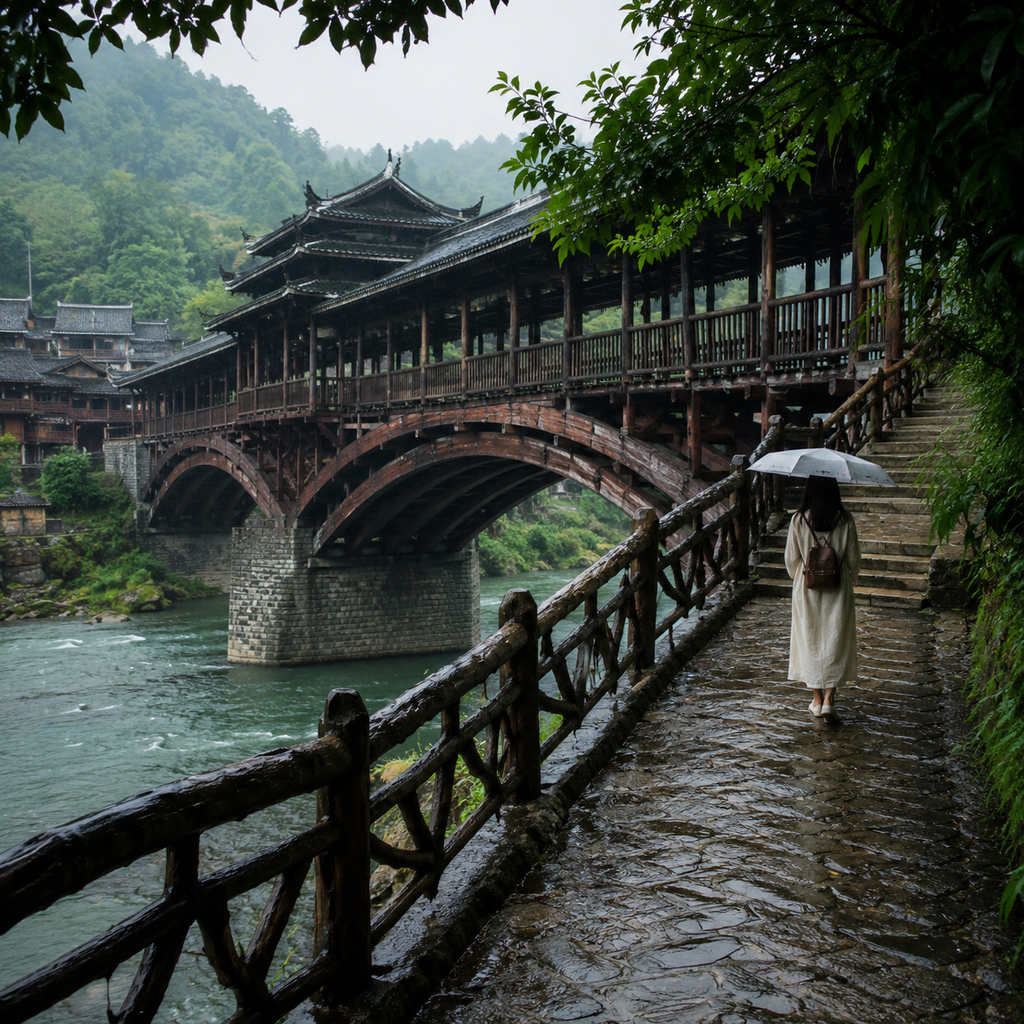
雨从午后开始落下,细而密,像有人把山里的声音筛过一遍,只留下屋檐、溪水、竹叶和鞋底。沈岚跟着村口的老木匠林伯走向那座木拱廊桥时,没有急着举伞。她看见桥身横在两岸之间,黑瓦被雨洗得发亮,木梁的颜色深下去,像一条安静伏在溪上的船。
The rain began after noon, thin and close, as if someone had sifted the mountain sounds and kept only the eaves, the stream, bamboo leaves, and soles on wet stone. When Shen Lan followed Uncle Lin, the old carpenter from the village entrance, toward the wooden covered arch bridge, she did not hurry to raise her umbrella. The bridge lay between the two banks, its dark tiles shining after the rain, its beams deepened in color, like a quiet boat resting over the creek.
林伯走得慢,不是年纪拖住了他,而像怕惊动什么。他把手背在身后,到了桥头才停住,示意沈岚先别进去。桥内传出一阵低低的回声,有人挑着菜担从另一头过来,扁担轻轻压着肩,竹筐里的青菜被雨气润出亮色。那人经过时笑了笑,说今天桥里比家里还暖。
Uncle Lin walked slowly, not because age held him back, but as if he feared disturbing something. With his hands behind his back, he stopped at the bridgehead and signaled Shen Lan not to enter yet. A low echo came from within: someone was crossing from the other end with baskets of vegetables, the shoulder pole pressing gently down, the greens in the bamboo baskets brightened by damp air. As he passed, he smiled and said the bridge felt warmer than home today.
沈岚原本是来写一篇旅行稿的。她准备过桥名、年代、结构和路线,也准备好了用几句话解释木拱如何不用一颗铁钉而托住岁月。可真正站到桥前,她发现那些资料忽然变轻了。雨落在瓦背上,不像背景音,更像桥在开口前清清嗓子。
Shen Lan had come to write a travel piece. She had prepared the bridge’s name, age, structure, and route, and had ready a few sentences about how a timber arch could hold up years without a single iron nail. Yet standing before the bridge, she found the information suddenly weightless. Rain on the tiled roof did not feel like background sound; it felt like the bridge clearing its throat before speaking.
林伯说,晴天来的游客多半看桥的全貌,站远一点,把桥、溪、山和人家收进同一张照片。雨天不一样,雨把远处抹淡,只留下眼前能触到的木纹。人走进廊桥,就得承认自己不是来看风景的主人,而是暂时借过桥腹的一位客人。
Uncle Lin said that on clear days most visitors looked at the bridge as a whole, stepping back to fit bridge, creek, mountain, and houses into one photograph. Rainy days were different. Rain softened the distance and left only the grain of wood close enough to touch. Once inside the covered bridge, a person had to admit they were not the owner of the scenery, only a guest briefly borrowing the bridge’s belly.
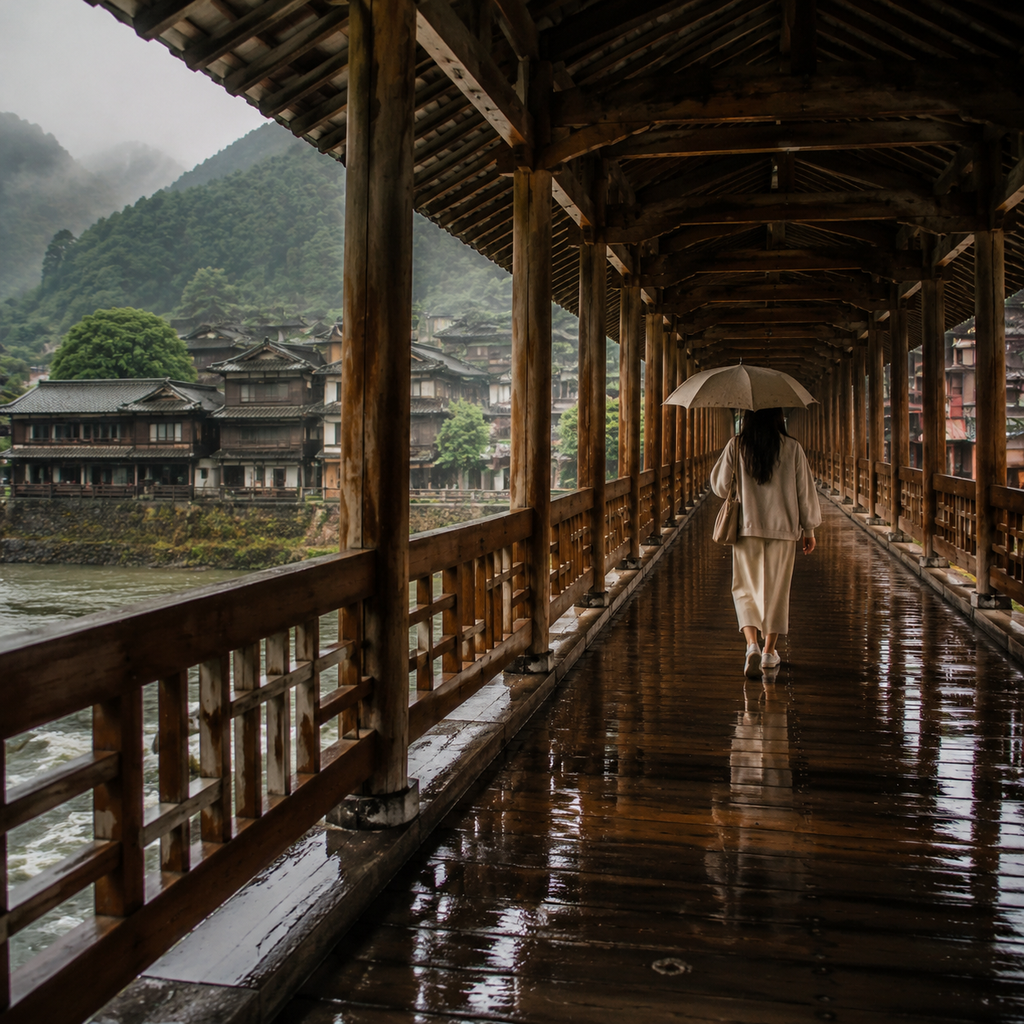
他们终于踏上桥面。木板在脚下微微发声,不响,却有弹性,像老人听见来客后挪了一下坐姿。沈岚把步子放轻,伞收在臂弯里,水珠从伞骨滴到板缝中。桥内有长凳,有供人歇脚的窄台,有被烟火熏暗的梁柱,也有一盏白天仍亮着的小灯,照着角落里两只避雨的狗。
At last they stepped onto the bridge deck. The planks made a faint sound underfoot, not loud but springy, like an elder shifting posture after hearing visitors arrive. Shen Lan softened her steps, folded her umbrella over her arm, and watched drops fall from its ribs into the seams of the boards. Inside were long benches, narrow ledges for resting, beams darkened by years of smoke, and a small lamp still lit in daytime, shining on two dogs sheltering in the corner.
桥外的溪水涨了一点,贴着石岸流,颜色不是清透的绿,而是雨天常见的灰青。几片叶子旋在水面,又被一股看不见的力带走。沈岚靠近栏杆,想听水声,却先听见桥顶雨声分成几层:瓦上的急,檐口的碎,落到溪里的轻,顺着柱脚滑下去的暗。
The stream outside had risen a little and ran close to the stone banks, not a transparent green but the gray-blue of rainy weather. A few leaves circled on the surface before being carried away by an unseen pull. Shen Lan leaned toward the railing, intending to listen to the water, but first heard the roof rain split into layers: quick on the tiles, scattered at the eaves, light as it fell into the creek, muffled as it slipped down the foot of the pillars.
这时,一个穿蓝色雨衣的小男孩从桥头跑进来,怀里抱着一只纸盒。林伯叫住他,问盒子里是不是又捡了蝌蚪。男孩摇头,打开给他们看,里面是一只被雨打湿翅膀的蜻蜓。他说要放到桥里等它干了再飞。沈岚看着那只蜻蜓轻轻抖动,忽然明白这座桥为什么总显得有人情。
Just then, a boy in a blue raincoat ran in from the bridgehead, holding a paper box against his chest. Uncle Lin stopped him and asked whether he had collected tadpoles again. The boy shook his head and opened the box for them. Inside was a dragonfly with rain-soaked wings. He said he would keep it inside the bridge until it dried and could fly. Watching the dragonfly tremble slightly, Shen Lan suddenly understood why the bridge always seemed to possess a human warmth.
廊桥不是一件摆在山水间的古物。它替赶路的人挡过雨,替挑担的人分过肩上的重,替孩子藏过秘密,也替老人留过午后的闲谈。木拱托住的不只是两岸,更是村里许多不必写进族谱的小事。那些小事一多,桥就不再只是结构,而成了共同生活的一部分。
The covered bridge was not an antique placed among mountains and water. It had shielded travelers from rain, shared the weight on porters’ shoulders, hidden children’s secrets, and held the afternoon conversations of elders. The timber arch supported not only two banks but also many village details too small for genealogies. When such details gathered, the bridge was no longer merely a structure; it became part of shared life.
林伯抬手摸了摸一根斜撑,指给沈岚看木头接合处的咬合。那不是展柜里的精巧,而是一种把力气藏起来的聪明。木料彼此压住、让开、借力,像村里人过日子,很少把话说满,却知道什么时候该搭一把手。雨声落在这些交错的木骨上,硬的东西也被说得温柔。
Uncle Lin raised his hand and touched a diagonal brace, showing Shen Lan how the joints bit into one another. It was not the refinement of a museum case, but a wisdom that hid strength. The timbers pressed, yielded, and borrowed force from each other, much like villagers living their days: rarely saying everything aloud, yet knowing when to lend a hand. Rain fell on these crossing wooden bones, and even hard things were spoken into gentleness.
沈岚问他,这桥最怕什么。她以为答案会是洪水、虫蛀或火。林伯却说,最怕人只把它当成到此一游的背景。他停了停,又说,木头不怕人看,怕人看得太快。看得太快,就只剩形状;慢一点,才听得出它怎样把山风、流水和脚步收在一起。
Shen Lan asked him what the bridge feared most. She expected the answer to be floods, insects, or fire. Uncle Lin said instead that it feared being treated only as a backdrop for a quick visit. After a pause, he added that wood did not fear being looked at; it feared being looked at too quickly. Look too fast and only the shape remains. Slow down, and one can hear how it gathers mountain wind, flowing water, and footsteps together.
桥中段有一处窗格,向外望去正对着一片梯田。雨雾把田埂磨得柔软,远山只剩淡墨似的轮廓。一个妇人撑着花伞从田边走来,伞面在雾里缓缓移动,像水面飘过一朵安静的花。她到桥里收伞,先把伞尖朝下甩了两下,才坐在长凳上换鞋。
At the middle of the bridge, a lattice window opened toward terraced fields. Rain mist softened the ridges, and the distant hills remained only as pale ink outlines. A woman came from the fields under a floral umbrella, the umbrella drifting through the mist like a quiet flower on water. When she reached the bridge, she closed it, shook the tip downward twice, and sat on the bench to change her shoes.
她认得林伯,问他又带城里人看桥。林伯说,不是看,是陪桥说会儿话。妇人笑起来,接过话头,说这桥脾气好,谁的脚步都收,急的、慢的、重的、轻的,它都不挑。她小时候怕雷,雷雨天就跑到桥里,觉得只要桥顶还响,村子就还在。
She knew Uncle Lin and asked whether he was showing another city visitor the bridge. Uncle Lin said it was not showing, but keeping the bridge company for a while. The woman laughed and said the bridge had a good temper: it accepted every kind of step, hurried or slow, heavy or light, without choosing. As a child she had feared thunder and would run into the bridge during storms, feeling that as long as the roof still sounded, the village was still there.
沈岚没有立刻记下这句话。她怕一写,话就失去刚才从嘴边落下来的温度。她只是靠着栏杆,看林伯和妇人谈收成、谈孩子、谈今年雨水比往年早。桥外的水一直流,桥内的话也一直流,两种声音互不争抢,像早已习惯彼此的邻居。
Shen Lan did not write the sentence down at once. She feared that once written, it would lose the warmth with which it had just fallen from the woman’s mouth. She simply leaned on the railing and watched Uncle Lin and the woman talk of harvests, children, and how this year’s rains had come earlier. Outside, the water kept flowing; inside, talk kept flowing too. The two sounds did not compete, like neighbors long used to each other.
又有人进桥,是一对年轻游客。男孩先举起手机,女孩拉住他,低声说等雨再大一点,桥会更好听。沈岚听见这句,忍不住回头。女孩不好意思地笑,说她昨天来过一次,才知道廊桥最好看的地方不一定在镜头里。她说完便把手机放进口袋,和男孩一起站到窗边。
More people entered: a young pair of travelers. The young man raised his phone first, but the young woman held him back and whispered that if the rain grew heavier, the bridge would sound better. Hearing this, Shen Lan could not help turning around. The young woman smiled shyly and said she had come the day before, learning that the most beautiful part of a covered bridge was not necessarily inside a lens. Then she put her phone in her pocket and stood with him by the window.
雨果然更密了。瓦面像被无数细指轻敲,整座桥都在微微回应。沈岚闭上眼,听见脚步从一端走到另一端,听见有人把竹篓放下又提起,听见狗翻身时爪子擦过木板,听见蜻蜓在纸盒里轻轻碰了一下盒壁。每个声音都小,却没有一个多余。
The rain did thicken. The tiled roof seemed tapped by countless fine fingers, and the whole bridge answered faintly. Shen Lan closed her eyes and heard footsteps moving from one end to the other, someone setting down and lifting a bamboo basket, a dog’s claws brushing the boards as it turned over, the dragonfly lightly touching the side of the paper box. Every sound was small, yet none felt unnecessary.
林伯说,慢行不是故意装得有诗意。山路湿,木板滑,雨天本来就应该慢。人一慢,眼睛和耳朵才跟得上身子。沈岚觉得这话比任何旅行建议都实在。许多地方并不拒绝游客,只是拒绝被匆忙地归纳;许多美也不是躲起来,而是等人把速度降到能相逢的程度。
Uncle Lin said slow walking was not a deliberate attempt to look poetic. Mountain paths were wet, planks were slippery, and rainy days simply required slowness. Once a person slowed down, the eyes and ears could catch up with the body. Shen Lan found this more practical than any travel advice. Many places did not reject visitors; they only resisted being hastily summarized. Much beauty was not hidden; it waited for people to slow to a speed at which meeting was possible.
他们走到桥的另一端时,天色暗了一层,村屋的炊烟从雨里低低升起。林伯没有马上下桥,而是回头看了看梁架,像确认一位老朋友今天也安好。沈岚跟着回望,才发现刚走过的路在昏光里显得更长,长得足以容纳一场雨、几段闲谈和一颗渐渐安静下来的心。
When they reached the other end, the sky had darkened a shade, and cooking smoke rose low through the rain from village houses. Uncle Lin did not leave the bridge at once. He turned to look back at the frame, as if checking that an old friend was well today too. Shen Lan looked back with him and found that the path they had just crossed seemed longer in the dim light, long enough to hold a rain, several conversations, and a heart gradually quieting down.
小男孩抱着纸盒跑来,兴奋地说蜻蜓翅膀干了。盒盖打开的一瞬,蜻蜓先停在边缘,像也在听雨。随后它忽地飞起,穿过桥口的潮湿空气,贴着溪面掠向竹林。所有人都看着它,没有人鼓掌。那种安静比掌声更像祝福。
The boy came running with the paper box, excited that the dragonfly’s wings had dried. When the lid opened, it first paused on the edge, as if listening to the rain as well. Then it lifted suddenly, crossed the damp air at the bridge opening, and skimmed over the creek toward the bamboo grove. Everyone watched it. No one applauded. That quiet felt more like a blessing than applause would have.
沈岚后来写那篇稿子时,没有把廊桥写成必须打卡的景点。她写雨天怎样让木头显出呼吸,写一座桥怎样把陌生人的脚步放轻,写山水在这里不需要被喊亮,只需要被听见。她也写林伯那句话:木头不怕人看,怕人看得太快。
When Shen Lan later wrote her piece, she did not turn the covered bridge into a place that had to be checked off. She wrote about how rain revealed the breathing of wood, how a bridge could soften the footsteps of strangers, how mountains and water here did not need to be shouted into brightness, only heard. She also wrote Uncle Lin’s sentence: wood does not fear being looked at; it fears being looked at too quickly.
如果有人在雨天来到这座木拱廊桥,最好的方式也许不是先找角度,而是先站一会儿。让眼睛适应廊内的暗,让耳朵分清雨声的层次,让手指摸到木纹里细小的起伏。等到脚步愿意慢下来,桥就会把山说轻,把水说近,也把人的心事说得不那么重。
If someone comes to this wooden covered arch bridge on a rainy day, the best way may not be to search first for an angle, but to stand still for a while. Let the eyes adjust to the dimness inside, let the ears distinguish the layers of rain, let the fingers feel the tiny rises in the wood grain. When the feet are willing to slow, the bridge will speak the mountains lighter, the water nearer, and the burdens of the heart less heavy.
- 和爸爸在周庄躲雨的半天,我第一次发现他其实比我更会旅行 | A Rainy Half Day in Zhouzhuang with My Father Showed Me He Was Better at Traveling Than I Was
- 苏州不是靠滤镜取胜的城市,先后顺序一错,再美也会被看空 | Suzhou Is Not a City Won by Filters; Get the Sequence Wrong and Even Beauty Goes Flat
- 美国人去中国旅行前必须知道的事 | What Americans Need to Know Before Traveling to China
- 我在夜里的重庆,学会把害怕也当成风景 | In Chongqing at night, I learned to treat fear as part of the view
- 北京三日线:第一次来中国,怎么走才不赶路 | Beijing in 3 Days: A First-Time Route Without Rush
- 张家界的山还没出现以前,我先学会把手机变成一把可靠的小工具 | Before Zhangjiajie’s Peaks Even Appeared, I Learned to Turn My Phone into a Reliable Tool
- 雨后的绍兴黄酒馆里,老板一句话让我重新理解“慢” | In a Shaoxing Yellow Wine Tavern After Rain, One Sentence Changed How I Understood Slowness
- 南京那场雨后,我在梧桐树下把行程表慢慢放下 | After the Rain in Nanjing, I Let My Itinerary Go Beneath the Plane Trees
- 珠海雨停以后,凤凰木下那条不着急的路比海景更先留住人 | After Rain in Zhuhai, the Unhurried Road Beneath the Flame Trees Held Me Before the Sea Did
- 凌晨五点的生料粉摊,把我带进了玉林 | A 5 A.M. Rice-Noodle Stall Led Me into Yulin
Comments (0)