
广州早茶桌上,孩子先学会了听,再学会了说 | At a Guangzhou Dim Sum Table, My Child Learned to Listen Before Speaking
广州早茶桌上,孩子先学会了听,再学会了说 | At a Guangzhou Dim Sum Table, My Child Learned to Listen Before Speaking
广州的早晨带着一点潮气。我们去吃早茶那天,才八点多,街边已经很热闹,树下有人骑车经过,茶楼门口也站了不少等位的人。餐厅里推车来来往往,瓷杯碰到桌面的声音很清脆,空气里混着虾饺、凤爪、叉烧包和热茶的香气,连大人都容易一下子兴奋起来。女儿坐下以后,显然有点不知道从哪里看起。
Mornings in Guangzhou carry a trace of humidity. On the day we went for dim sum, it was only a little after eight, yet the street was already lively. People cycled past under the trees, and several families were waiting outside the teahouse. Inside, carts moved back and forth, teacups clicked lightly against tabletops, and the air smelled of shrimp dumplings, chicken feet, barbecue pork buns, and fresh tea. Even adults can get excited quickly in that atmosphere. My daughter sat down and clearly did not know where to begin looking.
菜单上的字很多,旁边桌的人讲话又快,她先是小声问我:“妈妈,我要怎么点?”我本来想直接帮她选,可就在这时,隔壁桌一位奶奶带着小孙子点单。小男孩脆生生地说:“我要一个虾饺,一份叉烧包。”奶奶没有立刻替他做决定,而是问:“你想喝什么茶?”女儿立刻被吸引住了,看了一会儿,小声跟我说:“他们是先听,再说。”
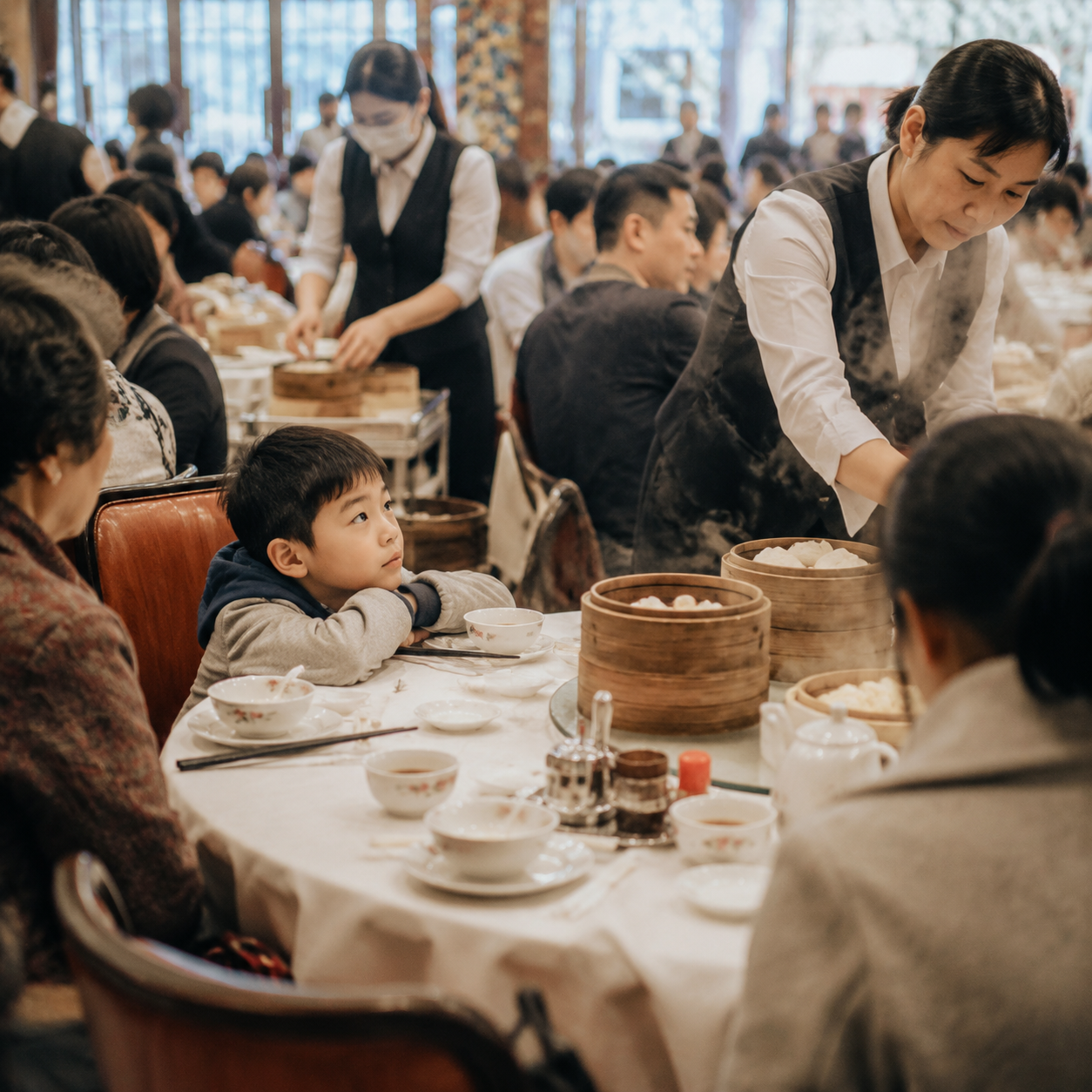
There were many words on the menu, and the people at the next table spoke quickly. My daughter leaned toward me and whispered, “Mom, how do I order?” I almost answered for her immediately. Just then, however, a grandmother at the next table was ordering with her grandson. The boy said brightly, “I want shrimp dumplings and barbecue pork buns.” Instead of deciding everything for him, the grandmother asked, “What tea would you like?” My daughter watched for a moment and then murmured to me, “They listen first, and then they speak.”
我点点头,对她说:“对,你也可以先听服务员怎么问别人。”于是她安静观察了好几轮。服务员怎么问茶,怎么确认人数,怎么推荐点心;别人怎么回答,怎么说“谢谢”,怎么补一句“不要太烫”。这些原本很生活化的小交流,在孩子眼里忽然变成了一堂特别实际的语言课。她没有背单词,也没有写练习册,可她正在学怎么抓重点、怎么等别人说完、怎么把自己的需求讲清楚。
I nodded and told her, “Yes. You can also listen to how the servers speak to other people first.” So she quietly observed several rounds. She listened to the way the server asked about tea, confirmed the number of guests, and recommended dishes. She listened to how customers answered, how they said thank you, and how one person added, “Please don’t make it too hot.” What looked like simple daily exchanges suddenly became a very practical language lesson in my daughter’s eyes. She was not memorizing vocabulary or filling out a workbook, but she was learning how to catch key information, wait until someone finished speaking, and express her own needs clearly.
轮到我们点单时,她先吸了一口气,然后认真地说:“请问,有没有不太烫的奶黄包?”服务员明显愣了一下,随后笑了:“有啊,小朋友还挺会点。”女儿听完特别开心,连坐姿都直了一点。更有意思的是,她后来没有像平时那样急着抢着说,反而开始注意听别人讲话。她听服务员怎么报菜名,听隔壁桌的小朋友怎么表达自己不喜欢太甜的东西,听一位爷爷慢慢补一句“给孩子先晾一晾”。

When it was finally our turn, she took a breath and asked seriously, “Excuse me, do you have custard buns that are not too hot?” The server looked surprised for a split second and then smiled. “Yes, we do. You order very well.” My daughter was so pleased that she sat a little straighter. What interested me even more was that she stopped rushing to speak and started paying attention to how other people spoke. She listened to dish names, to another child explaining that he did not like things too sweet, and to an older man calmly adding, “Let it cool for the child first.”
这种“先听别人怎么说,再组织自己怎么说”的能力,对很多孩子来说,比会背几个词更重要。广州很适合带孩子来体验这种生活中的中文交流,因为这里的餐桌不是只用来吃饭的,也是一个天然的观察场:礼貌怎么用,语气怎么放轻,别人讲话快的时候怎么抓重点,自己要表达需求时又该怎么说得清楚。孩子一边吃,一边学,而且不会觉得那是在上课。
For many children, this ability—listening first and then organizing their own words—is more important than simply memorizing a few phrases. Guangzhou is a wonderful city for this kind of everyday Chinese communication because the table is not only a place for eating. It is a natural site for observation. A child can learn how politeness works, how tone softens a request, how to catch key points when people speak quickly, and how to make a need clear. They learn while eating, and they do not even feel that they are in class.
吃到一半,女儿拿着叉烧包,忽然对我说:“原来交流不是一直讲话,先听懂也很重要。”这句话让我愣了一下。很多时候,大人总希望孩子胆子大、敢表达,却忘了好的沟通能力里,还有一半是认真听别人。广州这顿早茶,居然把这件事教得这么自然。它没有像课堂那样告诉孩子“你应该怎样”,而是让孩子在真实桌面上自己看见、自己比较、自己试一次。

Halfway through the meal, my daughter held a barbecue pork bun and suddenly said, “So communication is not just talking all the time. Understanding first matters too.” That sentence stopped me for a moment. Adults often hope children will be brave and expressive, but we forget that good communication is half listening. This dim sum breakfast in Guangzhou taught that lesson so naturally. It did not tell her what she should do in the style of a classroom. It let her see, compare, and try it herself at a real table.
从茶楼出来,街上的热气已经升起来了。她一路都在模仿刚才服务员和客人之间的对话,还主动跟门口阿姨说了句“谢谢,再见”。阿姨笑着挥手,她也笑,整个人像把早上的信心装进了口袋里。中国很适合带孩子来的一个原因,就是很多生活场景都能变成学习场景。不是刻意布置的,不是表演给孩子看的,而是本来就在发生,孩子只要被允许参与,就会学到东西。
When we left the teahouse, the day’s heat was already rising from the street. She spent the walk repeating bits of conversation she had just heard between the servers and customers. At the door she even told one of the staff, “Thank you, goodbye,” on her own. The woman smiled and waved, and my daughter smiled back, as if she had tucked the whole morning’s confidence into her pocket. One reason China works so well for family travel is that so many daily scenes can become learning scenes. They are not staged. They are not performances created for children. They are already happening, and children learn simply by being allowed to join in.
如果带孩子来广州,我很建议别急着把所有东西都替他点好。先给他一轮观察的时间,再教他几句实用表达:请问、有吗、谢谢、不要太烫。等他说出口以后,再让他复述一次点单过程。对孩子来说,这样的练习比单纯拍一桌点心更有价值。因为他带走的不只是味道,还有一种进入公共生活的办法。
If you bring a child to Guangzhou, I strongly recommend resisting the urge to order everything for them immediately. Give them one round of observation first, then teach a few practical expressions such as “Excuse me,” “Do you have this,” “Thank you,” and “Not too hot, please.” After they manage to say them aloud, ask them to retell the ordering process. For a child, that kind of practice is more valuable than taking a perfect photo of the table. They bring home not only flavors, but also a method for entering public life.

- 五一去哪儿?8个你可能没听过的宝藏目的地 | Where to Go for May Day? 8 Hidden Gems You Probably Haven't Heard Of
- 广东早茶:不只是吃,是一种生活方式 | Cantonese Morning Tea: More Than a Meal, It's a Way of Life
- 在写字楼大厅等外卖时,我第一次明白站得近不一定拿得更快 | Waiting for Takeout in an Office Lobby Was the First Time I Learned That Standing Closer Does Not Mean Getting Food Faster
- 合肥路口那些半秒钟的互让,比任何介绍都更像城市说明书 | The Half-Second Acts of Yielding at Hefei Crossings Explain the City Better Than Any Guide
- 我在中国学会先看队伍,再决定吃什么 | In China I Learned to Read the Queue Before Choosing What to Eat
- 那本被果汁弄湿的拼音本,让本人第一次学会声调不是唱歌,而是方向 | A Pinyin Notebook Spilled with Juice Taught Me That Tones Are Not Singing but Direction
- 广州雨后那条骑楼街,让我重新理解城市散步 | A Rain-Washed Arcade Street in Guangzhou Changed How I Understand City Walks
- 比“中国哪里最好玩”更重要的,是有人先把来华准备讲明白了 | More Important Than “Where to Go in China” Is Having Someone Explain the Preparation First
- 银川那家红招牌小馆没有摆盘,却把西北夜风后的饥饿接得很稳 | A Small Red-Sign Eatery in Yinchuan Offered No Fancy Presentation, Yet It Caught My Hunger After the Desert Wind
- 保持联网:中国SIM卡与WiFi指南 | Staying Connected: China SIM Cards and WiFi
Comments (0)