
凌晨五点的生料粉摊,把我带进了玉林 | A 5 A.M. Rice-Noodle Stall Led Me into Yulin
凌晨五点的生料粉摊,把我带进了玉林 | A 5 A.M. Rice-Noodle Stall Led Me into Yulin
我是在天还没有亮透的时候抵达玉林的。车门打开,潮湿的空气先钻进衣领,站前的地面泛着一层不明显的水光,远处偶尔有车灯从路口划过去。我拖着行李走出站点时,城市还没有进入白天那种完整的喧闹,只有清洁车辆的摩擦声、摩托车启动时短促的突突声,以及几个提着塑料袋、步子很快的人。那一刻我没有急着找景点,反而先想找一碗真正适合这个时间的早餐。
I arrived in Yulin while the sky was still short of full daylight. When the vehicle door opened, damp air slipped into my collar. The pavement near the station held a faint sheen, and headlights occasionally swept across the distant intersection. As I walked out with my luggage, the city had not yet reached its full daytime volume. I heard cleaning vehicles scraping along, motorcycles coughing briefly into life, and several people walking quickly with plastic bags. I did not look for a sightseeing spot first. I wanted a breakfast that belonged to this hour.
我提前知道玉林有生料粉,却没有把它想成一碗可以在清晨解决的普通米粉。抵达之前,我对“生料”的理解仍然停留在菜单上的词:肉片、猪杂或其他当天处理的食材,和米粉一起下锅。真正站在街边之后,我才发现这个词还带着一种时间压力。摊位要把食材切好、分盘,汤锅要一直保持滚动,食客的选择也不能拖得太久,因为后面的人已经在看锅、看案板、看前一位端走的碗了。
Before arriving, I knew that Yulin was associated with shengliao rice noodles, but I had not imagined them as an ordinary bowl of noodles that could simply be picked up at dawn. My understanding of shengliao was still a menu term: sliced meat, pork offal, or other ingredients prepared that day and cooked with the rice noodles. Standing beside the street changed that. The word carried a pressure of time. Ingredients had to be cut and portioned, the stock had to keep boiling, and diners could not take too long to decide because the people behind them were already watching the pot, the chopping board, and the bowls leaving the counter.
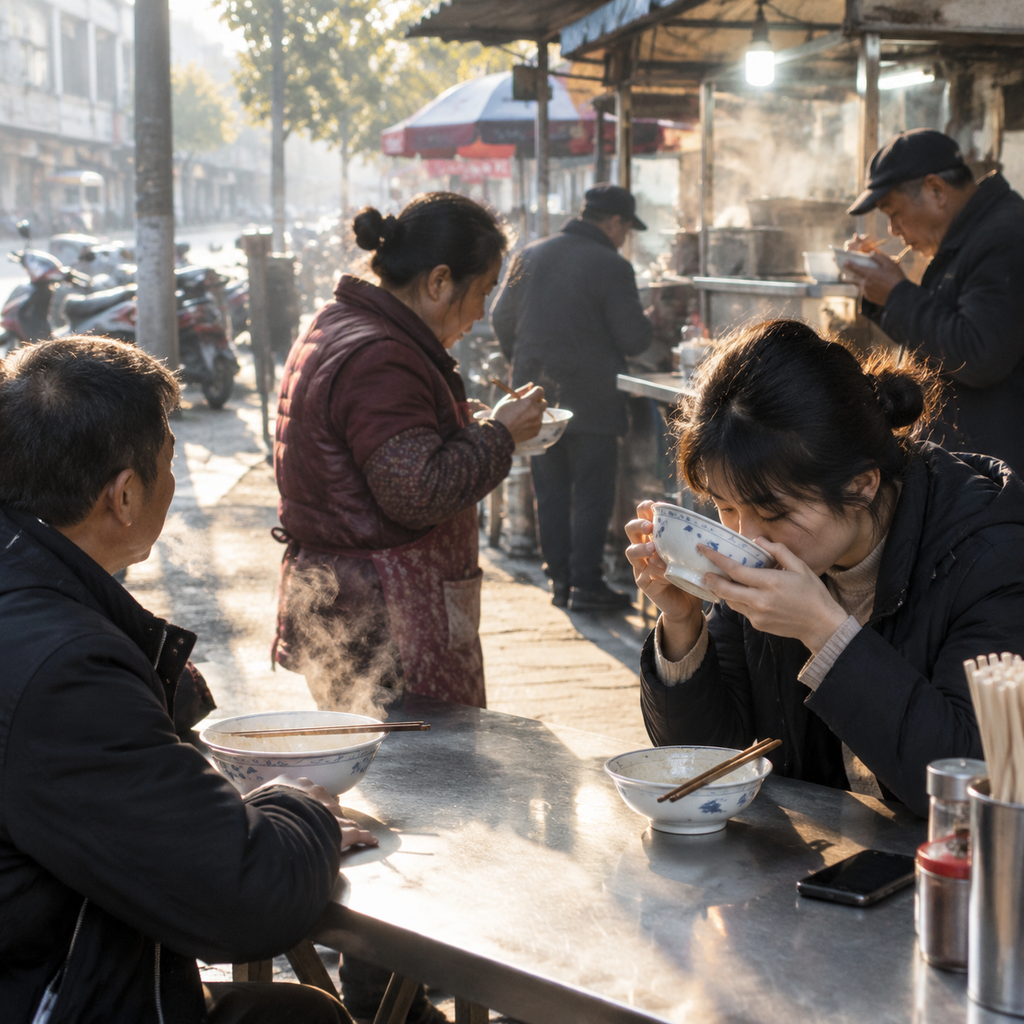
我沿着有灯的街道慢慢走,先用眼睛判断哪里有人停留,而不是只看招牌。一个路口旁边的摊位亮着白灯,案板上的食材被分成几小格,汤锅边有连续升起的热气。几位早起居民站在桌边,吃得很安静,筷子碰到碗沿的声音清清楚楚。摊主没有对我做特别招呼,只是在我靠近时把点单的位置让出来。我把行李放在脚边,先看别人怎么选,再决定自己怎么开口。
I walked slowly along the lit streets, judging where people actually stopped rather than relying only on signs. Near an intersection, a stall was lit by white lamps. Ingredients were divided into small sections on a chopping board, and steam rose steadily beside the stockpot. A few early risers stood at the tables and ate quietly; the sound of chopsticks touching bowls was distinct. The vendor did not make a special greeting to me. When I stepped closer, the space for ordering simply opened. I placed my luggage by my feet, watched how others chose, and then decided how to speak.
我点的是生料粉,并请摊主按我能吃完的分量来配。这里没有必要把自己想象成很懂本地吃法的人,我只说了自己第一次来、想先试一碗。摊主听完后看了一眼案板,取出米粉和已经分好的食材。整个过程没有夸张的仪式感,却有很强的秩序:先确认粉,再处理生料,最后把碗递到汤锅边。因为没有看到明确的价目,我也没有擅自猜价格,而是等摊主示意后付款。
I ordered shengliao rice noodles and asked the vendor to prepare a portion I could finish. There was no need to pretend that I understood every local habit. I simply said that it was my first visit and that I wanted to try one bowl first. The vendor glanced at the chopping board and selected rice noodles and the already-portioned ingredients. Nothing was theatrical, yet the process had a clear order: confirm the noodles, handle the raw ingredients, and bring the bowl to the stockpot. Since I had not seen a clear price list, I did not guess. I waited for the vendor to indicate the amount before paying.
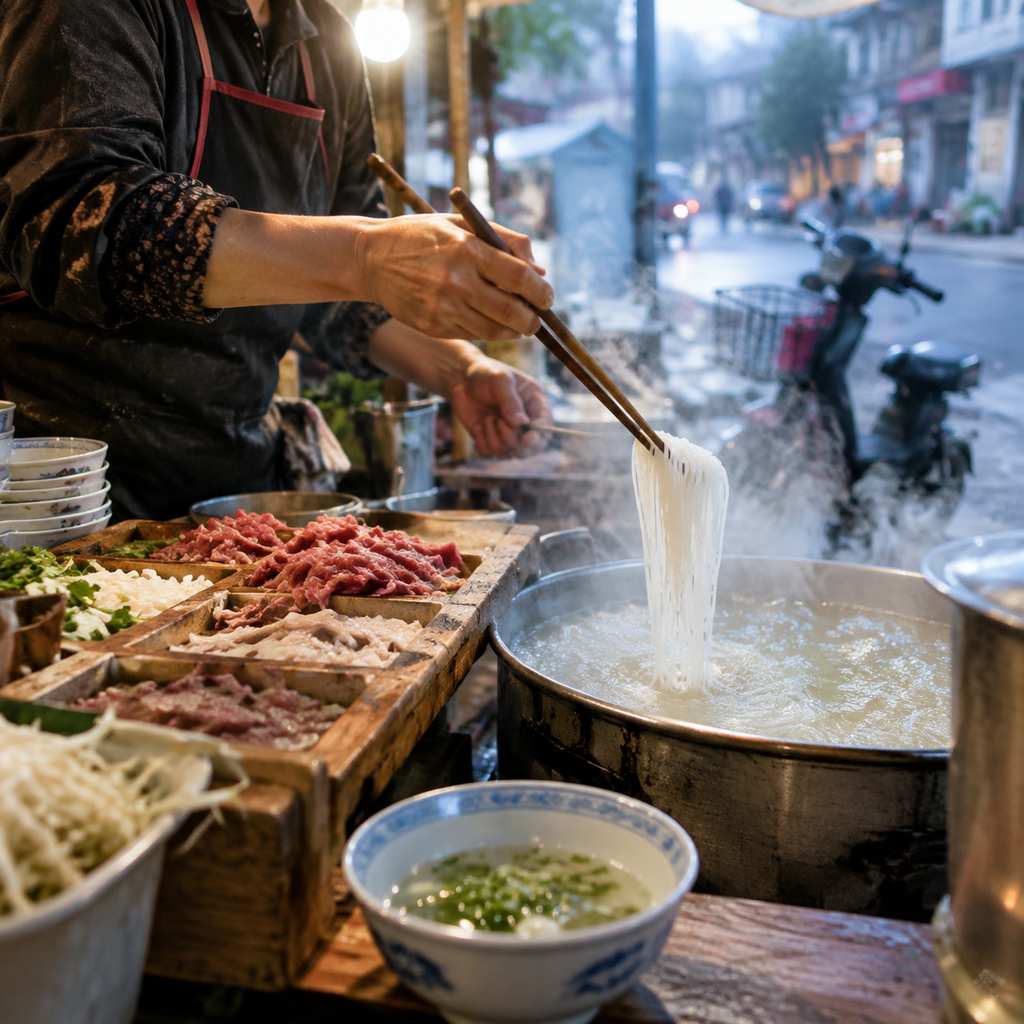
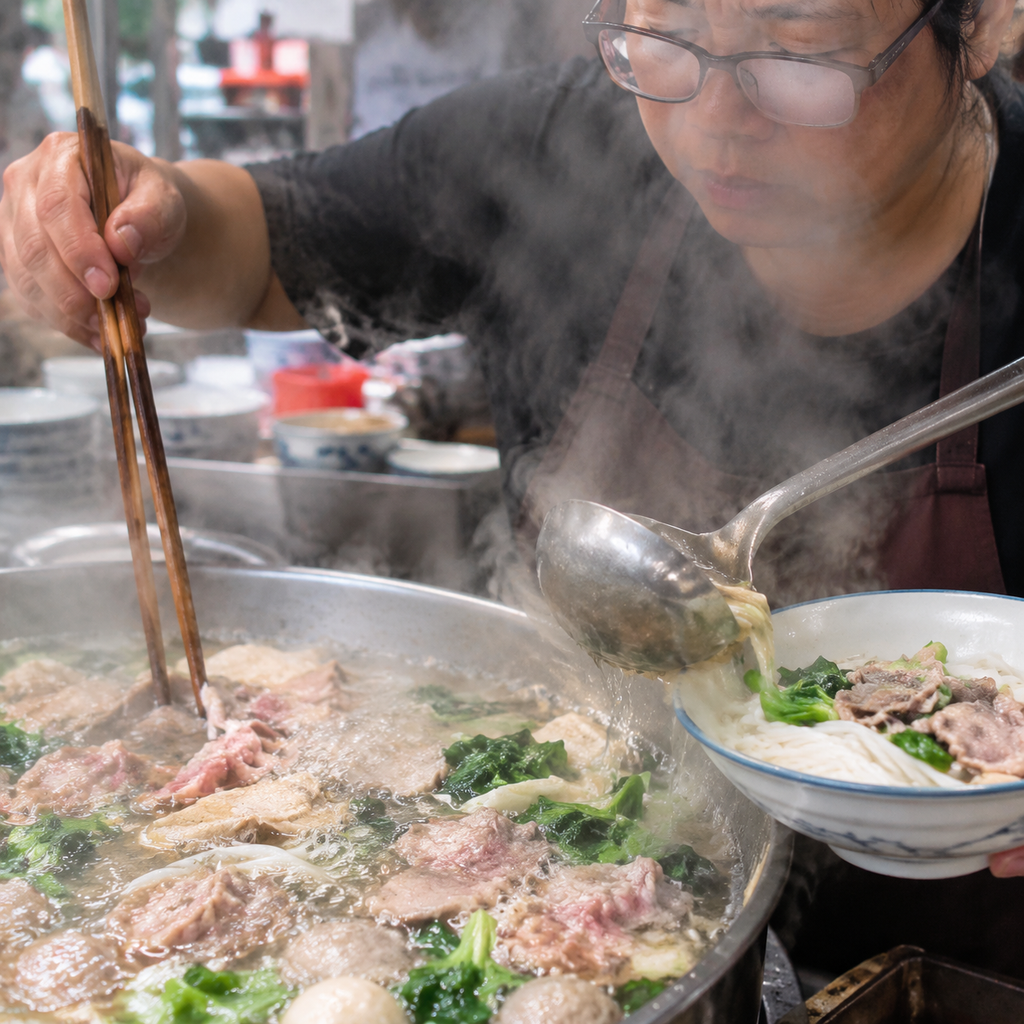
我站在锅边看食材入汤。米粉先在热水里舒展开,肉片和其他生料随后进入翻滚的汤里,颜色从鲜亮变得柔和,边缘微微收紧。摊主用长筷子拨动几下,又把粉捞回碗中。汤勺落下时,热气一下子扑到脸上,眼镜边缘立刻蒙了一层薄雾。这个动作让我明白,生料粉的好吃并不只来自食材本身,也来自下锅的先后和火候的短暂窗口。
I watched the ingredients enter the pot. The rice noodles loosened first in the hot water, and the slices and other raw ingredients followed into the rolling broth. Their bright color softened, and their edges tightened slightly. The vendor moved them with long chopsticks before lifting the noodles back into the bowl. When the ladle came down, steam rushed into my face and briefly fogged the edge of my glasses. I understood that the appeal of shengliao noodles was not only in the ingredients. It also depended on sequence and on a short window of cooking time.
第一口汤比我预想的清楚,热度先到,鲜味随后铺开。我没有立刻加调味料,而是先把汤喝了一小口,再夹起一段米粉。粉条柔软,却没有泡到失去弹性;肉片熟得快,入口是细嫩的收缩感;不同部位的口感并不相同,有的滑,有的带一点脆,有的需要多嚼两下。碗里没有单一的“肉味”,而是汤、粉和生料轮流出现,吃法也因此变得很慢。
The first sip of broth was clearer than I expected. Heat arrived first, followed by a fresh savory taste. I did not add seasoning immediately. I tasted the broth, then lifted a strand of rice noodles. They were soft without losing their spring. The slices cooked quickly and tightened gently between my teeth. Different pieces had different textures: some smooth, some lightly crisp, and some needing a few extra chews. The bowl did not offer one single meat flavor. Broth, noodles, and fresh ingredients took turns, which made me eat more slowly.
我后来加了一点桌上的调味料,但没有一次放得太多。辣椒、酸味或咸味一旦压过汤底,就很难再分辨食材的差别。我用小勺先取一点到碗边,拌开后再试。这个小动作看起来普通,却是我在玉林早餐里学到的第一个节奏:先尝原味,再按自己的身体和天气调整。凌晨的空气带着湿气,热汤已经足够让我暖起来,不需要用重口味证明自己吃得过瘾。
I eventually added a little seasoning from the table, but never all at once. Once chili, sourness, or salt covered the broth, it would be difficult to distinguish the ingredients. I used a small spoon to place a little at the edge of the bowl, mixed it in, and tasted again. This ordinary gesture taught me the first rhythm of breakfast in Yulin: taste the original flavor, then adjust according to your body and the weather. The damp dawn air was already being answered by the hot broth. I did not need an aggressive flavor to prove that I was enjoying the meal.
摊边的居民让我看见了另一种吃法。他们不像游客那样把一碗粉当成需要完整记录的体验,有人端起碗就站在原地吃,有人吃到一半才和旁边的人点头说几句。一个上班前来吃早餐的人把手机放在桌角,视线不断在碗和街口之间移动,吃完后很快收起东西。另一个人把汤喝得很干净,再把筷子整齐放回碗上。没人催促,却每个人都知道自己下一步要做什么。
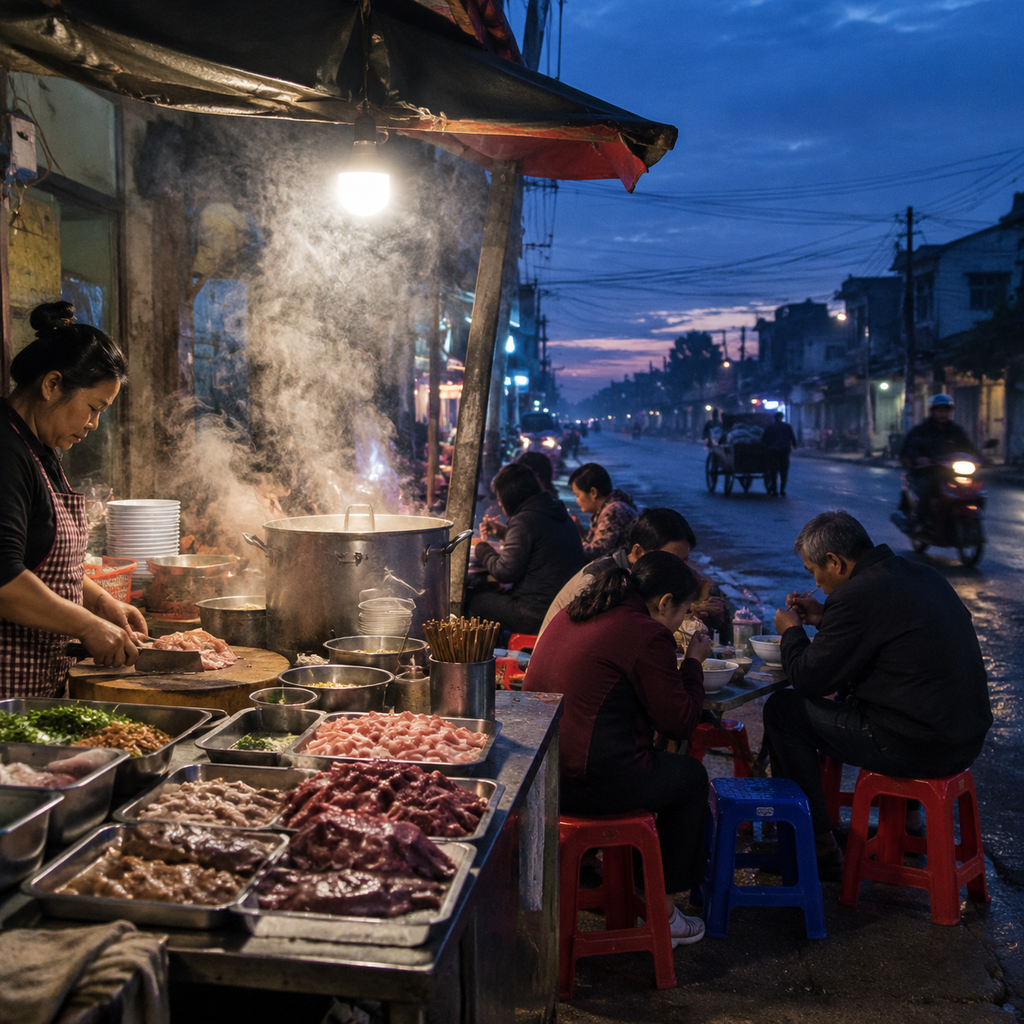
The residents around the stall showed me another way to eat. They did not treat a bowl of noodles as an experience that needed to be fully documented. One person lifted the bowl and ate standing where he was; another exchanged a few nods with someone nearby halfway through the meal. A worker stopping by before a shift left a phone at the corner of the table and kept moving his eyes between the bowl and the street. When he finished, he gathered his things quickly. Someone else drank the broth nearly clean and placed the chopsticks neatly across the bowl. No one hurried anyone, yet everyone knew what to do next.
我注意到摊主和熟客之间的交流很短,更多信息藏在动作里。有人还没有完全走近,摊主已经开始准备碗;有人坐下后只用手势表示自己的选择;有人吃完把碗往前推,摊主便知道桌面需要收拾。因为没有虚构对话可写,我只能记录自己听见和看见的部分:案板上的刀声、锅里翻水的声音、塑料袋被拉开的脆响、摩托车从街边经过时压低的发动机声。这些声音组成了早餐摊的语言。
I noticed that exchanges between the vendor and regular customers were brief, with much of the information carried by movement. Before one customer had fully approached, the vendor had already begun preparing a bowl. Another used a hand gesture to indicate a choice after sitting down. When someone pushed the bowl forward after eating, the vendor understood that the table needed clearing. I will not invent dialogue, so I can only record what I heard and saw: the knife on the chopping board, water rolling in the pot, the sharp crack of a plastic bag opening, and the lowered engine note of a motorcycle passing close by. Those sounds formed the language of the breakfast stall.
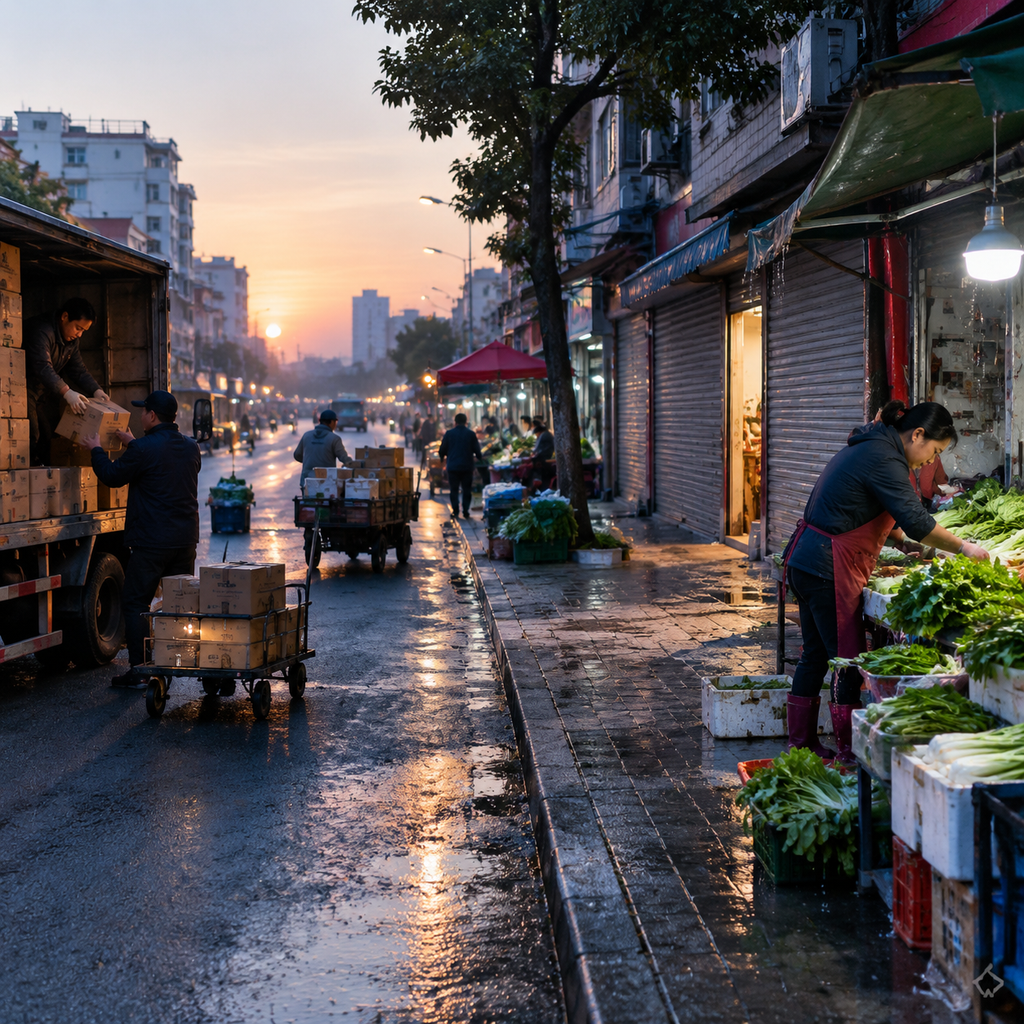
吃完以后,我没有马上离开。我把空碗放回指定的位置,站在摊边看街道逐渐变亮。五点多的玉林并不是一片安静的空城,安静和忙碌同时存在。市场方向传来推车轮子压过地面的声音,装货的人把纸箱一只只搬下车,卖菜的人在灯下整理叶子上的水。街边店铺有的还关着门,有的已经开了一条缝,里面的灯光从缝隙里落到人行道上。早餐先于城市的完整营业时间醒来。
I did not leave immediately after eating. I returned the empty bowl to the designated place and watched the street brighten from beside the stall. Yulin at five was not an empty, silent city. Quiet and activity existed together. From the market direction came the sound of cart wheels over the ground. People unloading goods carried down boxes one by one, while vegetable sellers sorted water-covered leaves under the lamps. Some street shops were still closed; others had opened a narrow gap, allowing light to fall onto the sidewalk. Breakfast woke before the city reached its full business day.
我原本计划吃完就去找一处市场,再按照白天的路线走街区,但拖着行李在湿滑路面上走了几段后,发现自己对方向的判断没有想象中可靠。几个相似的路口、尚未完全亮起的店面和不断经过的摩托车,让我一度把市场入口看错了。手机地图给出的线条很清楚,现实里的街口却需要抬头确认。我停在路边,把行李拉到不挡人的位置,重新对照周围的路牌和正在进出的车辆。
I had planned to find a market after breakfast and then walk through the neighborhood in daylight. After pulling my luggage across several damp stretches of pavement, I realized that my sense of direction was less reliable than I had assumed. Similar intersections, shops not yet fully lit, and motorcycles moving past made me mistake the market entrance for another street. The map on my phone was clear, but the real intersection required me to look up and confirm. I stopped at the roadside, moved my luggage out of the way, and compared the signs with the vehicles entering and leaving nearby.
这件小事改变了我的上午安排。我没有为了完成原来的顺序继续硬走,而是先找了一个能暂时放慢脚步的位置,等天色更清楚,再把市场、老街和后续住宿之间的方向连起来。旅行路线在纸面上看起来是几条线,到了清晨却受光线、行李、湿度和人流影响。对我来说,早餐并没有和路线分开,它直接提醒我:抵达日不要把所有移动都压在最早的一个小时里,尤其当你还没有真正认识这座城市的街口。
That small problem changed my morning plan. Instead of forcing myself to follow the original order, I found a place where I could slow down, waited for the light to become clearer, and then connected the market, the older streets, and my lodging on the map. A travel route looks like a few lines on paper, but at dawn it is affected by light, luggage, humidity, and traffic. Breakfast was not separate from the route. It gave me a direct reminder: on an arrival day, do not compress every movement into the first hour, especially before you have learned the city’s intersections.
天亮一些后,我再往市场方向走。街道的声音开始叠起来,卷帘门拉开的金属声和菜筐落地声混在一起,电动车在狭窄处放慢,行人彼此侧身让路。市场里没有统一的背景音乐,只有摊贩整理货物、顾客询问、袋子摩擦和脚步来回的声响。生料粉摊的热气还留在我的衣服上,鱼腥、蔬菜的湿土气和米粉汤的清香交替出现。我没有把每种气味都写成“浓郁”,因为它们其实一阵一阵地来。
Once the light improved, I walked toward the market. The street sounds began to layer: metal shutters rising, vegetable baskets landing, electric bikes slowing in narrow spaces, and pedestrians turning sideways to let one another pass. There was no single background soundtrack in the market. Instead, there were vendors arranging goods, customers asking questions, bags rubbing against each other, and footsteps moving in every direction. The steam from the noodle stall still clung to my clothes. The smell of fish, damp soil on vegetables, and clear rice-noodle broth arrived in alternating waves. I would not call every smell simply strong; they came and went.
我在市场里走得比计划慢,因为每个摊位都在展示广西早餐之外的另一种生活节拍。有人买完东西马上离开,有人站在摊前比较两篮相似的青菜,有人用手指检查叶片的水分。早起居民的路线不是为了参观市场,而是为了完成当天的第一批采购。看着他们,我开始理解玉林早餐为什么显得利落:并不是人们没有时间坐下来,而是清晨的每一个动作都和下一件事情连接得很紧。
I walked through the market more slowly than planned because every stall revealed another part of the morning rhythm beyond breakfast. One person bought something and left immediately. Another compared two baskets of similar greens. Someone checked the moisture on a leaf with a fingertip. The early risers were not visiting the market; they were completing the first shopping task of the day. Watching them helped me understand why breakfast in Yulin felt so brisk. It was not that people had no time to sit. Each dawn action was closely connected to the next one.
我又想起刚才那碗粉里“生料”的存在方式。它不是把一堆配料随意堆进碗里,而是把新鲜、火候和等待时间放在同一个小空间里处理。入口前我能看见食材的状态,入口后又能通过脆、滑、嫩和韧的差别判断它们在锅里的停留。对一个刚到玉林的人来说,这比记住某个店名更有用,因为摊位可能更换,菜单可能不同,但“先观察、再点单、先尝汤、按口感调整”的方法可以带走。
I thought again about how shengliao existed in that bowl. It was not a random pile of toppings. Freshness, heat, and waiting time were handled together in a very small space. Before eating, I could see the state of the ingredients. After eating, I could sense from their crispness, smoothness, tenderness, or resilience how long they had stayed in the pot. For someone newly arrived in Yulin, this was more useful than remembering a particular stall name. Stalls may change and menus may differ, but the method of observing first, ordering modestly, tasting the broth, and adjusting by texture can travel with you.
我的实际小故事发生在离开市场前。我把一只随身小袋暂时放在行李拉杆上,走到路口才发现它不见了,里面没有贵重物品,却装着车票存根、充电线和一把小钥匙。我先沿原路返回,边走边看自己停留过的摊位。卖菜的摊主没有替我编造任何确定答案,只是指了指我刚才经过的方向;我顺着那条线找,在早餐摊旁边的桌脚处看到了小袋。它被我的行李轮子挡住了,所以之前没有发现。那几分钟让我有些窘,也让我重新检查了当天的行走方式。
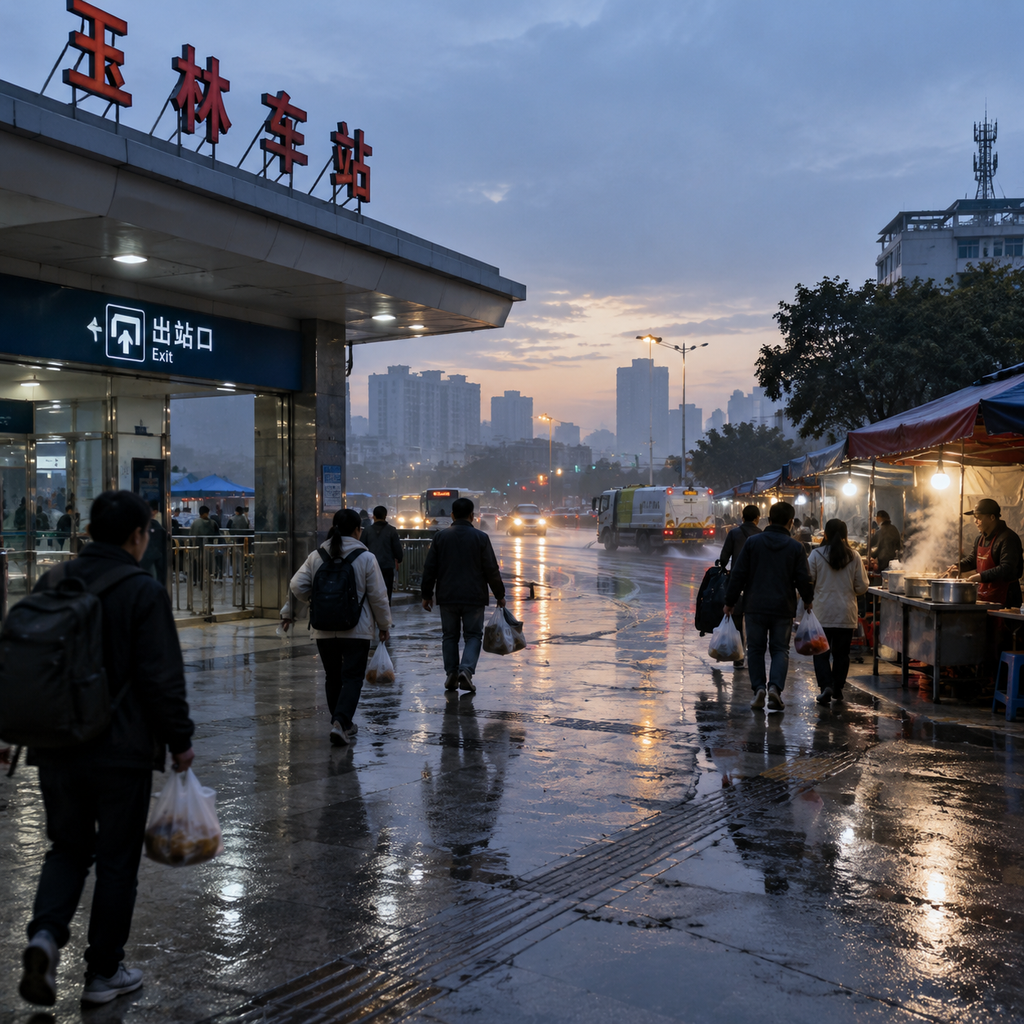
My small real-life story happened before I left the market. I had placed a small personal pouch on the handle of my luggage and only noticed at the intersection that it was gone. It held no valuables, but it contained a ticket stub, a charging cable, and a small key. I retraced my steps and looked at each stall where I had stopped. A vegetable seller did not pretend to know the answer; she simply pointed toward the direction I had come from. Following that path, I found the pouch beside the leg of the table near the noodle stall. My luggage wheel had blocked it from view. I felt embarrassed for those few minutes, and I also reconsidered how I would walk for the rest of the day.
我把小袋收好后,重新安排了路线:先完成能步行抵达的市场观察,再回到住宿处寄放行李,然后把白天的街区移动拆成几段,中间留出吃饭和休息的空档。这个安排不是因为玉林的路难走,而是因为初到一座城市时,身体还在适应,眼睛也在建立地图。凌晨抵达的人很容易被“既然已经醒了,就赶紧多走几个地方”推动着前进,可早餐摊边的人给我的感觉恰好相反,他们快,却不乱;他们知道什么时候该吃,什么时候该停。
After securing the pouch, I rearranged the route. I would finish the parts of the market that could be reached on foot, return to my lodging to leave the luggage, and divide the daytime neighborhood walk into several sections with space for food and rest. This was not because Yulin’s streets were especially difficult. On arriving in a city, the body is still adjusting and the eyes are still building a map. People arriving before dawn can easily be pushed by the thought that, since they are already awake, they should hurry to see more places. The people beside the breakfast stall gave me the opposite impression: they were quick, but not disordered. They knew when to eat and when to pause.
接下来的几天,我把广西早餐的节奏当成一条实际的旅行线索。早上不追求一次吃很多,也不把每一顿都安排成正式体验;先找到本地人自然经过的早餐节点,观察点单方式,再决定是否尝试。吃粉后给自己留出一段步行时间,让胃和眼睛一起醒来;遇到市场、街口或小店,不急着把所有名字记下来,而是先弄清楚它们和住处、车站之间的关系。这样安排之后,我对玉林的认识不是从景点列表开始,而是从一碗热汤怎样进入一天开始。
Over the following days, I treated the rhythm of Guangxi breakfast as a practical travel clue. I did not try to eat a large amount at once or turn every meal into a formal experience. I first found the breakfast points that local people naturally passed through, watched how ordering worked, and then decided whether to try something. After noodles, I left time to walk so that my stomach and my eyes could wake together. At markets and intersections, I did not rush to memorize every name. I first worked out how each place related to my lodging and the station. My understanding of Yulin therefore did not begin with a list of attractions. It began with how a bowl of hot broth entered the day.
我也开始注意早餐摊的空间尺度。几张桌子可能靠着墙,凳子并不整齐,行李没有专门的位置,客人却会自然把脚和袋子收进自己的范围。有人站着吃,有人坐下,有人吃完立即让出桌边。对我这样的外地人来说,最重要的礼貌不是说很多客套话,而是别挡住取餐和离开的通道,点单时把需求讲清楚,付款后把随身物品收好。那种微小的自觉,决定了我能否真正进入一个正在运转的早餐场景。
I also began noticing the scale of the breakfast space. A few tables might sit against a wall, the stools might not be arranged neatly, and there might be no designated place for luggage. Yet customers naturally kept their feet and bags within their own area. Some ate standing, some sat down, and some cleared the edge of the table as soon as they finished. For an outsider like me, the most important courtesy was not a long string of polite phrases. It was keeping the path to the food and the exit clear, stating my request clearly, and securing my belongings after paying. That small awareness determined whether I could enter a breakfast scene that was already in motion.
回想那一碗粉,我最先记住的不是某一种配料,而是口感变化的顺序。刚入口的米粉给人柔和的感觉,随后是汤的温度和鲜味,接着才轮到不同生料显出各自的质地。吃得快,只会得到一团热和鲜;稍微放慢,才能发现肉片的嫩、内脏的脆、粉条的滑,以及调味料加入后汤底如何改变。摊主掌握的是锅里的几秒钟,我掌握的是嘴里的几次停顿,两者合在一起才构成一顿早餐。
When I remember the bowl, I do not first remember one particular ingredient. I remember the order of the textures. The rice noodles arrived gently, followed by the heat and freshness of the broth, and only then did the different fresh ingredients reveal their own qualities. If I ate quickly, I would receive only heat and savoriness. Slowing down revealed tenderness in the slices, crispness in the offal, smoothness in the noodles, and the way seasoning changed the broth. The vendor controlled a few seconds in the pot; I controlled several pauses in my mouth. Together they made the breakfast.
玉林给我的第一印象因此不是一个被景点定义的地方,而是一座在凌晨就已经有清楚生活方向的城市。生料粉摊把我放进这套方向里:我从站点出来,跟着灯光和人流找到早餐;在锅边学习如何点单和辨认口感;在市场里听见采购、搬运和开门的声音;因为一只差点遗失的小袋重新调整路线。旅行中真正有用的路线,常常不是把更多地标连起来,而是把身体、时间、食物和街道的节奏接在一起。
Yulin’s first impression on me was therefore not a place defined by attractions. It was a city with a clear direction of daily life even before dawn. The shengliao noodle stall placed me inside that direction. I left the station, followed the lights and the flow of people to breakfast, learned beside the pot how to order and read texture, heard the sounds of shopping, carrying, and opening doors in the market, and changed my route after nearly losing a small pouch. The most useful route in travel is often not a chain of landmarks. It is the connection between the body, time, food, and the rhythm of the streets.
后来我再想起那个清晨,画面总是从一盏白灯开始。灯下的案板有水汽,锅边有人等着自己的碗,街口的天色一点点从灰变亮。我吃完粉后把最后一口汤咽下,拿起行李,先确认小袋还在,再向市场方向走。这个动作很小,却把那天的经验全部收拢起来:先看清楚,再往前走;先把眼前的一碗吃明白,再决定下一段路怎么走。玉林没有用一个宏大的场面迎接我,而是用凌晨的热汤和一条需要重新确认的街道,让我知道自己已经抵达。
When I think back to that morning, the image always begins with a white lamp. Steam gathered over the chopping board, someone waited for a bowl beside the pot, and the sky at the intersection slowly changed from gray to light. After swallowing the last mouthful of broth, I picked up my luggage, checked that the small pouch was still there, and walked toward the market. It was a small gesture, but it gathered the whole experience together: see clearly before moving on; understand the bowl in front of you before deciding how to take the next stretch of road. Yulin did not welcome me with a grand spectacle. Hot broth before dawn and a street I had to confirm again simply told me that I had arrived.
我把清晨之后的路线又拆得更细:从早餐摊走到市场边缘算一次方向确认,从市场边缘回到主路算一次体力测试,真正离开熟悉街区则等到自己已经补过水、确认行李没有遗漏之后。每一步都有返回点,遇到突然下雨、手机电量下降或道路比预想拥挤时,都可以退回上一处,而不用把整天的计划一起推翻。这个安排还让我有机会观察光线怎样改变同一条街:摊灯熄掉后,食材的颜色更清楚;湿地面不再只反射白光,行人的影子开始变长;刚才只能听见的市场动静,现在可以看见它们对应的动作。路线因此不只是从甲地到乙地,而是逐步增加自己对环境的把握。
I divided the route after breakfast into smaller checks. Walking from the stall to the market edge became one test of orientation; returning from the market edge to the main road became one test of energy; leaving the familiar block came only after I had drunk water and confirmed that nothing was missing from my luggage. Each step had a point of return. If rain arrived, the phone battery fell, or the road proved more crowded than expected, I could go back one step without overturning the whole day. The arrangement also let me watch the same street change with the light. After stall lamps went out, ingredients became easier to see; wet pavement stopped reflecting only white light, and pedestrians' shadows lengthened. Sounds I had first heard without seeing now had corresponding movements. A route was not merely a line from A to B, but a gradual increase in my understanding of the environment.
我在街口停留时,还把当天可能遇到的几个小问题提前想了一遍。若住处暂时不能办理入住,我需要在哪里坐十几分钟;若导航把我带到不适合拖行李的窄路,我能否退回大路;若早餐吃得太饱,下一次进食就不必立刻安排;若天气突然变亮变闷,帽子和水是否放在容易取的位置。这样的预想没有让旅行变得紧张,反而把紧张分成了可以处理的动作。早起的人群给我的启发也是如此:他们不是因为没有变化才行动自如,而是已经把许多变化纳入手上的次序。摊主知道先后,送货的人知道缝隙,居民知道何时坐下、何时起身。我只需要少做一点自我中心的安排,多看一眼周围的节奏。
While I stood at the intersection, I thought through a few small problems that might arise that day. If my lodging could not receive me yet, where could I sit for ten minutes? If navigation sent me down a narrow lane unsuitable for luggage, could I return to the main road? If breakfast left me too full, did I need to schedule another meal immediately? If the weather suddenly became brighter and more humid, were my hat and water easy to reach? This kind of preparation did not make the trip anxious. It broke anxiety into manageable actions. The early crowd offered the same lesson. They were not moving smoothly because nothing changed; they had already built many possible changes into the order of their hands. The vendor knew sequence, the delivery worker knew the gaps, and residents knew when to sit and when to rise. I only needed to make fewer self-centered arrangements and look once more at the rhythm around me.
我后来回想那碗粉,最清楚的并不是某一个可以被单独摘出来的味道,而是味道怎样随着动作出现。刚端来时,我先感到碗沿的热,再闻到汤气;第一口米粉把舌头从夜车的干涩里带回来,随后才轮到食材的鲜和调味的变化。等我把碗转过一点,才发现不同位置的汤温也不完全一样,靠近中心的地方更烫,边缘则适合先入口。吃饭的人其实一直在用小动作调节体验:吹气、搅动、等待、换一侧夹取。所谓口感并非悬在空中的形容词,它和时间、温度、器具以及我当时有多饿紧密相连。把这些写清楚,比简单说“好吃”更接近我真正经历的那一餐。
When I think back to the bowl, the clearest memory is not one isolated flavor but the way flavor appeared through movement. At first I felt the heat of the rim and then smelled the broth. The first mouthful of noodles brought my tongue back from the dryness of the night journey; only afterward did the freshness of the ingredients and the changes from seasoning arrive. When I turned the bowl slightly, I noticed that the temperature was not uniform: the center was hotter, while the edge was easier to taste first. People eating are constantly adjusting the experience with small actions: blowing, stirring, waiting, and reaching from another side. Texture is not an adjective floating in the air. It is tied closely to time, temperature, utensils, and how hungry I was. Describing those links is closer to what I actually experienced than simply saying the food was good.
玉林给我的第一印象因此没有停在“凌晨也有早餐”这件事上。更准确地说,我看见的是一座城市把不同人的时间叠放在同一条街上:夜里抵达的旅人还在寻找方向,摊主已经完成了几轮出餐,居民带着自己的碗和习惯短暂坐下,市场里的货物则沿着另一种节拍移动。大家并不需要互相认识,仍然会在过道、桌边和路口形成一种临时秩序。我用一顿饭进入这套秩序,也在离开时带走了一种更谨慎的走法。先听,后看,再问;先把身体安顿好,再扩大路线;先承认口味和信息都有差别,再决定是否继续探索。凌晨五点的玉林没有向我展示一个被布置好的舞台,它让我撞见了日常本身。
My first impression of Yulin therefore did not stop at the fact that breakfast was available before dawn. More precisely, I saw a city placing different people's schedules on top of one another along the same street: a traveler arriving at night still looking for direction, a vendor already completing several rounds of service, residents sitting briefly with their own habits, and market goods moving to another rhythm. People did not need to know one another to create temporary order in aisles, beside tables, and at intersections. I entered that order through a meal and left with a more careful way of moving. Listen first, then look, then ask. Settle the body before expanding the route. Admit that flavors and information differ before deciding whether to explore further. At five in the morning, Yulin did not present me with a prepared stage. It let me run into everyday life itself.
我想把点单这件事再说细一点,因为外地人最容易在这里露出急躁。站到案板前时,我面对的不是一张把所有选项写得整整齐齐的菜单,而是几种已经准备好的食材、正在沸腾的锅和身后不断靠近的人。那时最稳妥的做法不是一下子说出一串自己并不确定的部位,而是先说明第一次来,再问清楚今天能选什么、分量怎样组合。我的手指没有在案板上来回指点,也没有为了显得熟悉而随便追加;我让摊主按现场节奏确认。这个过程很短,却让我意识到,点单并不是考试,清楚表达自己的胃口比背出一套术语更重要。
I want to describe the ordering moment more carefully, because this is where an outsider can most easily become impatient. At the chopping board, I was not facing a menu with every option neatly listed. I was facing prepared ingredients, a boiling pot, and people steadily approaching from behind. The soundest approach was not to name a string of cuts I was unsure about. I first explained that it was my first visit, then asked what could be chosen that day and how portions were combined. I did not point back and forth across the board or add items just to appear experienced. I let the vendor confirm things at the pace of the stall. The exchange was brief, but it taught me that ordering is not an examination. Stating what my appetite could handle mattered more than reciting local terms.
我后来发现,“少一点”并不等于把体验削弱。对刚下车、睡眠不足、还要继续走路的人来说,先要的是一碗能吃完的粉,而不是把所有想象中的配料都堆在一起。第一碗如果分量适中,我可以把汤喝到温度合适的位置,辨出米粉和生料的差别,也能在吃完后判断身体是否适合继续去市场。若一开始就点得太多,口感会被饱胀感盖住,接下来的观察也会变成拖着身体赶路。我没有把这一点写成固定规则,因为每个人食量不同;我只记住,第一次试当地早餐时,给自己留下调整的余地往往更聪明。
I later found that asking for less did not weaken the experience. For someone who had just arrived, slept poorly, and still needed to walk, the first need was a bowl that could be finished, not every ingredient imagined in advance. With a moderate portion, I could taste the broth as its temperature settled, distinguish the noodles from the fresh ingredients, and decide whether my body was ready for the market afterward. Ordering too much at the beginning would let fullness cover the textures, turning the rest of the morning into a slow effort to drag myself along. I would not make this a fixed rule because appetites differ. I simply learned that a first taste of a local breakfast is easier when there is room to adjust.
生料粉的口感也不能只用“鲜”一个字带过。米粉入口时是柔软的,牙齿轻轻一压便散开,却没有变成糊状;薄肉片遇到热汤后收紧得快,咀嚼时有一种短促的弹性;若碗里有不同部位的食材,滑、脆、嫩和需要多嚼几下的部分会交替出现。这样的差异跟下锅先后有关,也跟我从碗的哪一边夹起有关。靠近中心的汤更热,我会先吹一吹;靠近边缘的粉较容易入口,适合在第一口时试温。吃饭的人并不是被动接受一碗完成品,而是在搅动、停顿和选择夹取位置中参与口感的形成。
Shengliao rice noodles cannot be reduced to the single word “fresh.” The rice noodles were soft when they entered my mouth, breaking gently under my teeth without turning pasty. Thin slices tightened quickly in the hot broth and gave a brief springiness while I chewed. When several kinds of ingredients were present, smooth, crisp, tender, and more resistant textures appeared one after another. Their differences were connected to the order in which they entered the pot and to which side of the bowl I reached from. The center was hotter, so I blew on it first. The edge was easier to taste and helped me judge the temperature. A diner does not simply receive a finished bowl. Stirring, pausing, and choosing where to pick up food all help shape the texture.
调味时我更愿意把桌面看成一个可以慢慢使用的工具,而不是必须一次完成的选择题。先喝原汤,确认咸淡和鲜味,再把一点辣椒或酸味放在勺子里试,舌头才有机会比较前后的变化。辣味带来的热并不等于汤底的温度,酸味提起味道也不代表所有食材都应该变酸。我每次只加一点,拌匀后重新夹一口粉,再决定是否继续。这个动作让吃饭从“得到一个味道”变成“观察味道怎样变化”。如果当天空气闷湿,清淡一些可能更舒服;如果一夜奔波后身体发冷,热汤本身已经承担了很大作用。
I prefer to treat the seasonings on the table as tools to use gradually, rather than as a multiple-choice decision that must be completed at once. I tasted the plain broth first, checked its saltiness and savoriness, and then tried a small amount of chili or sour seasoning from a spoon. That gave my tongue a chance to compare the bowl before and after. The heat from chili is not the same as the temperature of the broth, and sourness can lift a flavor without making every ingredient sour. I added a little, mixed it, tasted another strand of noodles, and decided whether to continue. Eating became an observation of change rather than the simple receipt of one flavor. On a humid morning, a lighter bowl might feel better; after a night of travel, the hot broth was already doing important work.
摊主的动作让我对熟练有了具体认识。切、取、下锅、捞粉、盛汤,每一步都没有多余停留,手却并不慌乱。面对熟客时,摊主往往从对方靠近的姿势、手里拿着的碗或一个很小的示意判断下一步;面对我这样的生客,则需要多确认一次。那并没有破坏出餐速度,因为确认也被放进了流程里。我没有把摊主写成一位专门给游客讲解地方饮食的人,他首先是在工作:让锅保持状态,让食材按顺序进入,让桌边的人能顺利吃完并离开。正是这种不为游客表演的认真,使我更愿意相信眼前的早餐。
The vendor gave me a concrete sense of what competence looked like. Cutting, selecting, cooking, lifting the noodles, and filling the bowl involved no unnecessary pause, yet the hands were not frantic. With regular customers, the vendor could often read the next request from an approach, a bowl in hand, or a small gesture. With an unfamiliar customer like me, one more confirmation was needed. That did not slow the stall in any meaningful way because confirmation was part of the workflow. I would not turn the vendor into someone performing a local-food lecture for visitors. The vendor was working: keeping the pot ready, sending ingredients in sequence, and allowing people at the tables to eat and leave. That work-focused care made the breakfast feel more trustworthy.
早起居民则让我看见,早餐摊不是一个孤立的饮食点,而是一天中许多事情的交汇处。有人先去市场再回来吃,有人吃完要赶去开门,有人把购物袋放在脚边,腾出两只手端碗。一个人坐下的时间可能很短,却足以完成一顿热早餐;另一个人站在桌旁,身体微微侧着,为后面取餐的人让出过道。没人把这种配合说成礼仪课程,大家只是根据现场需要移动。旅行者如果只盯着自己的碗,很容易错过这些细节;若抬头看一眼,就会发现每个人都在用很小的动作维护共同空间。
The early risers showed me that the breakfast stall was not an isolated food stop but a meeting point for many parts of the day. Someone ate after visiting the market; someone else needed to open a shop after finishing. Another person placed shopping bags by the feet and kept both hands free for the bowl. One diner sat only long enough to finish a hot breakfast. Another stood at the table, turning the body slightly to leave the passage open for customers collecting food. Nobody presented this cooperation as a lesson in etiquette. People simply moved according to what the space required. A traveler staring only at the bowl can miss it; looking up reveals many small actions maintaining a shared place.
市场的声音也有自己的层次。最先听见的可能是锅里持续的沸声和刀刃落在案板上的轻响,过一会儿,卷帘门的金属摩擦、推车轮子经过接缝的颠簸声、塑料筐相互碰撞的闷声会叠进来。摩托车经过时,发动机短暂盖住了旁边的谈话,驶远后,人的声音又从背景里浮出来。卖菜的人整理叶片,搬货的人调整纸箱位置,顾客把袋口拽紧,这些动作各自发声,却没有哪一种声音能够代表整个市场。对旅行者来说,听声音的意义不是寻找“最有地方特色”的响动,而是借此判断哪里正在启动、哪里仍然拥挤、哪里适合停下来观察。
The market had its own layers of sound. At first I heard the steady boil of the pot and the light strike of a blade against the chopping board. Later came the metal scrape of shutters, the bump of cart wheels over seams, and the dull knock of plastic baskets touching. A motorcycle briefly covered nearby conversation, and after it moved away, human voices rose back into the background. Vegetable sellers rearranged leaves, delivery workers shifted boxes, and customers pulled bags closed. Each action made its own sound, but no single sound represented the whole market. For a traveler, listening is not about hunting for the most “local” noise. It helps reveal what is starting, where movement remains tight, and where it is possible to pause without getting in the way.
我把广西早餐理解成一种时间上的分层,而不只是某几种食物的集合。玉林的清晨里,米粉摊承担的是快速恢复体力的任务,市场承担的是采购和流通,街边店铺则在一点点把白天的生意推上来。它们并排发生,互相影响,却不必被安排成一场给游客观看的演出。吃粉的人未必会去市场,买菜的人也未必在同一个摊位停留,但他们共享同一段光线变化和道路宽度。早餐之所以显得有节奏,是因为它嵌在工作、照看家庭、开门营业和赶路之间。旅行者若只问“哪里最好吃”,便会错过它与生活时间的关系。
I came to understand Guangxi breakfast as a layering of time, not merely a collection of foods. In Yulin’s early morning, the noodle stall helped people recover energy quickly, the market handled shopping and circulation, and street shops gradually brought the daytime economy to life. These activities happened alongside one another and influenced one another without needing to become a show for visitors. A person eating noodles might not go to the market, and a shopper might not stop at the same stall, but both shared the changing light and the limited width of the street. Breakfast felt rhythmic because it was embedded in work, family care, opening businesses, and travel. Asking only where the best food was would miss its relationship with daily time.
路线安排因此要给早餐留下缓冲,而不是把它当成地图上的一个小图钉。我会把第一段移动控制在自己能随时回头的范围内:从摊位到市场边缘,先确认街口方向;从市场边缘到较宽的主路,再观察行李是否适合继续拖行;如果已经开始出汗或注意力变散,就找不挡路的位置喝水,不把疲劳解释成必须完成更多景点的理由。等身体稳定下来,才决定是回住处放行李,还是继续沿街看店铺开门。这样的路线没有漂亮的连续箭头,却能把临时变化放进计划里,尤其适合凌晨抵达、对玉林还没有空间感的旅行者。
A route should therefore leave room around breakfast instead of treating it as a tiny pin on a map. I kept the first movement within a distance from which I could easily turn back. From the stall to the market edge, I first confirmed the direction of the intersections. From the market edge to a wider main road, I checked whether the luggage was still easy to pull. If I began sweating or losing focus, I drank water somewhere that did not block people, rather than treating fatigue as proof that I needed to complete more attractions. Only after my body settled did I decide whether to return to the lodging with the luggage or continue watching shops open along the street. The route had no elegant chain of arrows, but it allowed temporary changes into the plan, which helped when arriving before dawn in a city I had not yet learned spatially.
观察当地日常时,我也提醒自己不要把居民变成背景人物。站在早餐摊旁边,首先要注意自己的位置:不要把行李横在过道中间,不要举着手机挡住取餐口,不要为了拍一张完整画面反复要求别人停下来。可以记下摊位的光线、锅边的蒸汽、桌面留下的水痕,以及人们如何自然地收拢袋子和凳子;但这些记录应当服从现场,而不是让现场服从我的镜头。若有人快速离开,我无法知道他当天要去哪里,就不该替他编故事。旅行者真正能观察到的,是动作、顺序、声音和空间关系,至于没有发生在眼前的生活,应该留在未知里。
When observing daily life, I also reminded myself not to turn residents into background figures. Beside the breakfast stall, the first responsibility was choosing my position: keep luggage out of the passage, do not hold a phone across the collection point, and do not repeatedly ask people to pause for a complete photograph. I could note the light over the stall, steam beside the pot, water marks on the table, and the way people naturally gathered bags and stools. Those notes had to remain secondary to the scene, not make the scene serve my camera. If someone left quickly, I could not know where they were going that day, so I should not invent a story for them. A traveler can honestly observe movement, sequence, sound, and spatial relationships. What did not happen in front of us should remain unknown.
我还学会把“看见当地生活”和“打扰当地生活”分开。真正想了解摊主怎样工作,可以先在不妨碍出餐的位置看一会儿,等手上的忙碌稍微松开,再用很短的问题确认自己不懂的部分;如果对方没有时间回答,就接受这个答案。想拍食材时,我会先看周围是否有人等待,不把镜头贴到案板上方,也不把熟客的脸当成可随意使用的素材。想知道一条路通向哪里,可以先看本地人的行走方向,再到不挡路的边缘核对地图。对我而言,这些限制没有减少旅行的收获,反而让我获得了更可靠的观察:不是把日常占为己有,而是在它允许的缝隙里理解一点。
I also learned to distinguish seeing local life from interrupting it. If I wanted to understand how the vendor worked, I could watch from a position that did not interfere with serving, then ask a brief question when the hands were less busy. If there was no time for an answer, I had to accept that. When photographing ingredients, I checked whether people were waiting, kept the lens away from the chopping board, and did not treat regular customers’ faces as freely usable material. To learn where a street led, I first watched the direction of local movement, then checked the map from the side without blocking anyone. These limits did not reduce what I gained. They produced more reliable observation: I was not claiming daily life as my possession, only trying to understand a little through the space it allowed.
离开玉林之前,我想再吃一次类似的早餐,但没有把“复刻第一次”当成目标。第一次让我关注锅边的动作和口感顺序,后来的尝试则更关注自己怎样进入空间:先确认哪里点单,站在哪里不会影响别人,碗端到手后先喝什么,吃完把碗放到哪里,接下来往哪个方向走。相同的食物在不同状态下也会被身体读出不同答案。刚下夜车时,我需要热汤和柔软的米粉;走完市场、已经清醒之后,我会更注意生料的质地和调味的细微变化。所谓熟悉,不是把一切变得没有新鲜感,而是开始知道该把注意力放在哪个动作上。
Before leaving Yulin, I wanted another breakfast of the same general kind, but I did not aim to reproduce the first meal exactly. The first visit made me focus on the vendor’s movements and the order of textures. Later, I paid more attention to how I entered the space: where ordering happened, where I could stand without interfering, what to taste first, where to return the bowl, and which direction to take afterward. The same food can answer differently depending on the body receiving it. After the night journey, I needed hot broth and soft noodles. After walking through the market and becoming fully awake, I noticed the ingredients and seasonings more finely. Familiarity does not remove freshness; it tells me where to place my attention.
那几天我在玉林形成了一套很朴素的判断顺序。先看摊位是否有持续的本地客流,不用把人数理解成绝对答案,只把它当成一个进入现场的线索;再看点单是否清楚,自己能不能把分量和口味表达明白;端碗后先试汤和米粉,确认温度,再按口感决定调味;吃完不急着立刻穿过市场,把水、行李和下一段路先处理好;最后回头看一眼刚才的桌边有没有遗落物品。这个顺序没有神秘技巧,却能减少初来乍到时的慌乱,也让我把旅行从“赶去下一个地方”拉回到“把眼前这一段过完整”。
During those days in Yulin, I developed a plain sequence of judgments. First, I looked for a stall with a steady flow of local customers. I did not treat that flow as absolute proof, only as a clue for entering the scene. Then I checked whether ordering was clear and whether I could state my portion and taste preferences. Once the bowl arrived, I tasted the broth and noodles before deciding on seasoning. After eating, I did not rush straight through the market; I dealt with water, luggage, and the next stretch of road first. Finally, I looked back at the table to make sure I had left nothing behind. None of this was a secret technique. It reduced the confusion of arriving somewhere new and brought travel back from chasing the next place to completing the present moment.
我尤其喜欢清晨结束前那一小段过渡。锅里的水声渐渐被街上的车辆和人声盖住,摊边的桌子开始空下来,市场的货物却越来越多。刚才还需要白灯照亮的食材,在自然光里显出更准确的颜色;汤气散开后,衣服上的潮气和米粉香也慢慢分开。此时最适合做的不是急着宣布自己理解了玉林,而是把路线再检查一遍:手机电量够不够,行李是否稳妥,住处方向是否确认,下一段移动有没有必要。旅行者可以带走一碗粉的记忆,也可以带走这种在日常转换时重新整理自己的方法。
I especially liked the short transition before the morning was fully established. The sound of the pot was gradually covered by vehicles and voices, tables beside the stall began to empty, and market goods became more numerous. Ingredients that had needed white lamps a few minutes earlier showed more accurate colors in natural light. As the steam dispersed, the dampness in my clothes separated from the smell of rice noodles. This was not the moment to announce that I understood Yulin. It was the moment to check the route again: whether the phone had enough power, whether the luggage was secure, whether the direction of the lodging was confirmed, and whether the next movement was necessary. A traveler can carry away the memory of a bowl, but also the habit of reorganizing oneself when ordinary life changes pace.
这次清晨观察还让我明白,路线上的“当地感”并不只藏在偏远或特别漂亮的地方。它可能出现在一张被水汽打湿的桌面、一个刚吃完便让出位置的人、摊主把食材推回原处的动作、市场门口临时形成的通行缝隙里。这样的细节不需要被夸大,也不一定适合拍成醒目的照片,却能帮助旅行者判断一座城市怎样使用时间和空间。玉林的日常给我的信息不是“这里每天都发生奇观”,而是普通人把普通事情做得有次序、有速度,也给别人留下继续行动的空间。看懂这一点,才算真正靠近了早餐背后的城市。
That morning also taught me that a sense of place on a route is not limited to remote or beautiful destinations. It can appear on a tabletop damp with steam, in a diner who clears space immediately after eating, in the vendor returning ingredients to their place, or in a temporary passage opening at the market entrance. These details do not need exaggeration, and they may not make striking photographs, yet they help a traveler understand how a city uses time and space. Yulin did not tell me that wonders happen every day. It showed ordinary people completing ordinary tasks with order and speed while leaving room for others to continue. Recognizing that is what brought me closer to the city behind the breakfast.
我最后把凌晨生料粉留下的经验整理成几个会在路上重复使用的动作,却没有把它们写成僵硬的规则:先观察队伍如何移动,再决定站位;不懂就短短问清,不用假装熟悉;第一次点单控制分量,把口感和身体反应放在价格或名气之前;调味一勺一勺试,不让辣和酸替自己做判断;吃完检查随身物品,再把市场和住处接回路线;在拍照或停留前,先确认自己没有挡住别人。这些动作都来自一个具体的清晨,适用范围却不只在玉林。它们让我知道,旅行者的眼睛越打开,脚步越应该稳一点。
I carried the experience of dawn shengliao noodles into a few repeatable actions, without turning them into rigid rules. I watched how a queue moved before choosing where to stand. When I did not understand, I asked briefly instead of pretending. On a first order, I kept the portion moderate and placed texture and bodily response before reputation. I tested seasoning spoon by spoon rather than letting chili or sourness decide for me. After eating, I checked my belongings and connected the market back to the lodging. Before photographing or lingering, I made sure I was not blocking anyone. These actions came from one specific morning, but they are useful beyond Yulin. They taught me that the more open a traveler’s eyes become, the steadier the feet should be.
来源类型:个人现场观察与旅行记录;地方饮食与城市生活的一般性公开资料类型;公开地图与公共交通信息类型。
At the breakfast stall I learned something practical: just after arrival, the body processes information a little more slowly than usual. Sleep on a night vehicle is not complete sleep. Once outside the station, light, humidity, traffic, and hunger all crowd in together. If I pull luggage while staring at navigation and trying to decide every destination of the day, my attention scatters easily. The ten or so minutes spent eating noodles became a buffer. I put my bag by my legs and checked the location of my wallet and phone; I used hot broth to settle the hollow feeling in my stomach; only after my breathing and steps felt steadier did I look at the map again. These actions were not dramatic, but they were more effective at preventing repeated turns at later intersections than rushing out at once.
我后来把点单的过程重新想了一遍,发现它其实很像处理一个小型路线问题。先判断自己要什么,再看现场提供什么,最后用最少的话把选择说清楚。对我而言,最稳妥的开口不是问一连串“哪个最好”,而是说明自己第一次来、想吃一碗生料粉、希望按常见做法来。这样既给了摊主足够的判断空间,也避免我因为术语不熟而拖住后面的人。若听到的内容不完全明白,我会看碗里、案板上和前面客人的动作,再用点头、指向或简短确认补上。旅行中的沟通常常不需要完美语言;能让双方顺利完成眼前这一件事,已经是一种可靠的交流。
When I thought again about ordering, I saw that it resembled solving a small routing problem. First decide what I need, then see what the place offers, and finally state the choice in as few words as possible. For me, the safest opening was not a chain of questions about what was best. It was to say that I had just arrived, wanted a bowl of shengliao noodles, and hoped for a common preparation. This gave the vendor enough room to judge while keeping me from holding up people behind me because I did not know every term. If I did not fully understand what I heard, I could look at the bowl, the chopping board, and the movements of customers ahead of me, then use a nod, a point, or a short confirmation. Communication in travel does not always require perfect language. It is reliable when it lets both sides complete the task in front of them.
那天早晨的桌面也让我记住了许多小的触感。桌子经过反复擦拭,摸上去有一点湿凉;碗底接触桌面时会发出很轻的瓷声;筷子在热气里拿久了,手指会有一点潮。有人把纸巾压在碗下方,防止桌面上的水沾到袖口;有人把装好打包食物的塑料袋提在膝盖旁,起身时一提就走。我没有照抄所有动作,只是逐渐明白,地方早餐的节奏并不神秘,它由一连串节省空间、节省时间、避免烫到自己的小习惯组成。站在旁边观察几分钟,比急着把经验写成一套规则更诚实。
The tabletop that morning also left me with many small sensations. It had been wiped repeatedly and felt slightly cool and damp; the base of a bowl made a soft porcelain sound when it met the table; holding chopsticks in the steam left my fingers a little moist. Someone pressed a tissue beneath a bowl to keep water from reaching a sleeve. Someone else kept a plastic bag of takeaway food by their knee and lifted it in one motion when leaving. I did not copy every gesture. I gradually understood that the rhythm of local breakfast was not mysterious. It was made of small habits that saved space, saved time, and prevented burns. Watching from the side for several minutes was more honest than rushing to turn the experience into a fixed set of rules.
我也没有把市场里的每一个人都当作“提供素材”的对象。有人在搬货,有人在挑菜,有人只是匆忙穿过街口,他们的清晨本来就不需要被我打断。于是我把观察留在公共可见的部分:推车经过时轮子怎样避开水洼,卖菜的人怎样把叶片上的水抖进地面,顾客怎样把零钱或手机递出去后迅速收回。这样看下来,市场给我的不是一种可以消费的异乡感,而是一套明确的边界。旅人可以闻到、看见、学习,却不必凑得太近;可以写自己点单时的犹豫,却不应替别人编出情绪和故事。正因为不越过这条线,我后来回忆起那条街时,细节反而更清楚。
I did not treat every person in the market as someone who existed to provide material. Some were moving goods, some were choosing vegetables, and some were simply hurrying across the intersection; their morning did not need to be interrupted by me. I kept my observation to what was publicly visible: how cart wheels avoided puddles, how vegetable sellers shook water from leaves onto the ground, how customers handed over cash or phones and quickly put them away. Seen this way, the market gave me not a consumable sense of foreignness but a clear set of boundaries. A traveler can smell, watch, and learn without getting too close. I can write about my own hesitation while ordering, but should not invent emotions or stories for others. Because I did not cross that line, the details of the street became clearer in memory.
走到较宽的路口时,我开始考虑接下来该怎么安排早餐之后的时间。我的做法是先把必需事项和可选事项分开。必需的是放好行李、补水、确认手机电量和找回主路;可选的是继续逛市场、寻找适合步行的街段、在光线更好时拍几张远景。两类事情不混在一起,心里就不会因为少看一个摊位而觉得计划失败。我把当天最远的移动放到中午以后再判断,上午只给自己一个容易收束的半径。这样的路线听起来朴素,却与早餐摊上看到的秩序相同:先把眼前的一碗端稳,再考虑要不要多加一道菜;先把能确定的一步走完,再把下一步交给身体和天气。
At a wider intersection, I began deciding how to use the time after breakfast. I separated necessities from options. Necessities were storing the luggage, drinking water, checking my phone battery, and finding the main road again. Options were continuing through the market, looking for a street suitable for walking, and taking a few wider photographs once the light improved. Keeping the two categories apart meant I did not feel that the plan had failed just because I missed one stall. I postponed judgment about the farthest movement of the day until after midday and gave myself only a radius that could be easily closed in the morning. The route sounds plain, but it matched the order I saw at the breakfast stall: first hold the bowl in front of you steadily, then consider adding another dish; first complete the step that can be confirmed, then leave the next to the body and the weather.
如果有人问我凌晨到玉林后怎样把生料粉放进行程,我不会给出精确到店名和时间的答案。店铺情况会变化,我也不愿把自己没有核实过的信息包装成建议。我能提供的是一套现场判断:沿着已有晨间活动的街道走,选客流自然、出餐持续的摊位;先观察点单和用餐空间;以一碗自己能吃完的分量开始;吃完后不要立刻把早餐区当成“完成任务”,而是用十分钟确认周边的道路、湿滑地面和人流方向。这样做未必能让每个人吃到同样的一碗粉,却更可能让人在陌生的清晨里少一点焦虑,多一点余地。
If someone asked how to place shengliao noodles into an itinerary after arriving in Yulin before dawn, I would not offer an answer precise to a stall name or an opening time. Conditions change, and I do not want to package unverified information as advice. What I can offer is a way to judge on site: walk along streets that already have morning activity, choose a stall with a natural flow of customers and steady service, observe the ordering and eating space first, begin with a portion you can finish, and do not treat breakfast as a completed task the moment the bowl is empty. Use ten minutes afterward to confirm nearby roads, wet pavement, and the direction of people moving through the area. This may not give everyone the same bowl of noodles, but it is more likely to leave a person with less anxiety and more room in an unfamiliar dawn.
我离开时,生料粉摊仍然在出碗。没有人因为我来了而放慢,也没有人因为我走了而停下。那种持续性比任何旅游说明都更能说明早晨的重量:锅里的水继续翻,筷子继续碰碗,街口的人流一点点变密。我把行李杆拉直,确认小袋在身上,把刚才记住的路口放进脑子里,而不是急着寻找另一个必须完成的地点。走出几步后,我回头看见热气从灯下升起,很快散进越来越亮的空气。那碗粉已经在胃里安静下来,街道则开始把它的白天交给我。
When I left, the shengliao noodle stall was still sending out bowls. No one slowed because I had arrived, and no one stopped because I had gone. That continuity explained the weight of morning better than any travel description: water continued to roll in the pot, chopsticks continued to meet bowls, and the flow at the intersection gradually thickened. I straightened the luggage handle, confirmed that the small pouch was with me, and held the remembered intersection in my mind rather than searching immediately for another place I had to complete. A few steps away, I looked back and saw steam rise under the lamp before quickly dissolving into the brightening air. The bowl had settled quietly in my stomach, while the street began handing its daytime over to me.
天色彻底亮起来之前,我还在市场外侧做了一次很慢的确认。先从生料粉摊所在的方向走到最近的十字路口,再回头看摊位灯光是否还在视线里;接着沿着人流较多的一边走,注意哪里有台阶、哪里积水、哪里能让拖着行李的人绕过去。这个来回没有带我到新的景点,却把一小片街区变得可理解。走到陌生地方时,我过去总想用更远的距离证明自己已经进入城市,后来才知道,能把一条短街走明白也很重要。知道从哪里回来,知道雨落下来时能站到哪里,知道哪一段路需要把包提起来而不是继续拖着,这些判断会让之后的远路走得更轻。
Before daylight fully settled in, I made one more slow confirmation along the outside of the market. I walked from the direction of the shengliao noodle stall to the nearest intersection, then looked back to see whether the stall lights were still within sight. Next I followed the side with more foot traffic, noting where there were steps, where water had collected, and where a person pulling luggage could detour. This loop took me to no new attraction, but it made one small part of the city understandable. In unfamiliar places, I once tried to prove that I had entered a city by covering greater distance. Later I learned that understanding a short street matters too. Knowing where to return, where to stand if rain starts, and where to lift a bag rather than keep dragging it makes the longer routes afterward feel lighter.
我在路边停下喝水时,把早餐后的身体变化也当作路线信息。热汤带来的暖意过去以后,背上的包显得更重,肩膀也开始提醒我夜车上的姿势没有真正舒展开。我没有把这种疲惫当作扫兴的信号,而是把它写进当天的安排:下一段不再追求连续步行,中间找能坐下的地方,把想看的街区按路口分开;需要问路时,先把行李靠近自己,再抬头说话;若一时找不到合适方向,就回到刚才确认过的主路。早餐摊教给我的并不是一套神奇的旅行秘诀,只是一种不逞强的次序。先承认自己饿、困、陌生,才更容易注意到汤的温度、市场的声音和路面真正通向哪里。
When I stopped by the roadside to drink water, I treated the changes in my body after breakfast as route information too. Once the warmth from the broth had passed, the bag on my back felt heavier, and my shoulders reminded me that the posture from the night vehicle had not truly loosened. I did not take that fatigue as a signal that the day had been spoiled. I put it into the plan: the next stretch would not aim for uninterrupted walking; I would find places to sit in between and divide the streets I wanted to see by intersections. When asking for directions, I would first keep the luggage close, then look up and speak. If I could not find a suitable direction for a moment, I would return to the main road I had already confirmed. The breakfast stall did not teach me a magical travel trick. It taught an order that did not require bravado. Only by admitting that I was hungry, tired, and unfamiliar could I notice the broth's temperature, the market's sounds, and where the pavement actually led.
我又经过摊位附近时,看见最早那一批顾客已经换成了另一批人。有人提着刚买的菜,有人从街口匆匆进来,有人坐下时还在整理衣领。锅边的动作依旧连贯,汤气却不再像我刚到时那样显眼,因为晨光已经把街面照开。这个变化让我明白,清晨并不是一个固定的时刻,而是一段不断交接的时间。对旅人来说,早餐的价值也不只是填饱肚子。它给了我一个合适的速度,让我从夜间抵达的漂浮感里落下来,再用自己的脚步接上周围人的日常。等我真的把行李带往下一处时,心里已经不再急着要求玉林立刻回答所有问题;我只需要沿着已经看清的一段路继续走。
When I passed near the stall again, the earliest group of customers had been replaced by another. Some carried vegetables they had just bought, some hurried in from the intersection, and some were still adjusting their collars as they sat down. The movements by the pot remained continuous, but the steam no longer stood out as it had when I first arrived because morning light had opened across the street. The change showed me that dawn is not a fixed moment but a period of constant handover. For a traveler, breakfast is valuable for more than filling the stomach. It gave me an appropriate speed, bringing me down from the floating feeling of a night arrival and letting my own steps join the daily lives around me. When I finally took my luggage toward the next place, I no longer needed Yulin to answer every question at once. I only needed to continue along the stretch of road I had already learned to see.
我在早餐摊上还学到一个不太容易被攻略写出的判断:什么时候应该继续问,什么时候应该先让开位置。第一次点单时,我担心自己听错,差点把问题重复很多遍。后来我看见后面的人已经把手里的东西收好,便先把自己的选择说完整,再站到一旁等着碗做好。摊主有空时,我再确认食材;没有空时,我就观察案板和前一位客人的动作。这样既没有把自己的疑惑藏起来,也没有让沟通变成对整个摊位的占用。对我来说,这种边界感和味觉一样具体:它让我知道自己是来吃一碗粉、认识一条街,而不是把所有人的清晨变成我的课堂。
At the breakfast stall I learned another judgment that rarely appears in a guidebook: when to ask one more question and when to step aside. While ordering for the first time, I worried that I had misunderstood and almost repeated myself too many times. Then I noticed that the next customer had already gathered what he was carrying, so I stated my choice clearly and moved aside while the bowl was prepared. When the vendor had a free moment, I confirmed the ingredients; when she did not, I watched the chopping board and the previous customer’s movements. I neither hid my uncertainty nor turned the stall into a classroom for my questions. That sense of boundary was as concrete as taste. I was there to eat a bowl of noodles and get to know a street, not to convert everyone’s morning into a lesson about me.
Public Source Notes
- 玉林市及广西文化和旅游部门公开发布的城市旅游、餐饮文化与出行提示资料。
- 广西地方志、公共图书馆馆藏目录及公开出版的地方饮食文化资料。
- 国家级和地方市场监管、食品安全与公共交通部门公开的消费和出行信息。
- 可公开检索的新闻报道、学术论文与饮食文化研究资料;本文不以未核实的店名、价格、营业时间或人物引语作为事实依据。

- 花椒烫过舌尖之后,你才算见过川菜 | Sichuan Cuisine Begins Where the Pepper Numbs You
- 从贵阳到荔波的慢线 | The Slow Line from Guiyang to Libo
- 打车前多看一眼上车点,能少走很多冤枉路 | Checking the Pickup Point Before Hailing a Ride Saves Many Steps
- 中国节假日全解:春节、黄金周与调休制度 | Chinese Holidays Explained: Spring Festival, Golden Week & the Adjusted Schedule System
- 阿坝雨后的路面只给我半个答案 | Aba’s Wet Road Gave Me Only Half an Answer
- 我在中国高铁上学会安静地分享空间,不是靠规则,而是靠先读懂别人的节奏 | On a Chinese High-Speed Rail Trip, I Learned to Share Space Quietly Not Through Rules, but by Reading Other People’s Rhythm First
- 在中国使用手机支付的每日避坑清单 | Daily Mobile Payment Tips in China
- 南京那场雨后,我在梧桐树下把行程表慢慢放下 | After the Rain in Nanjing, I Let My Itinerary Go Beneath the Plane Trees
- 中国礼仪与风俗 | Chinese Etiquette and Customs
- 中山装与唐装:男士传统服饰怎么穿 | Zhongshan Suit & Tang Suit: Men's Traditional Wear
Comments (0)