
雨后的绍兴黄酒馆里,老板一句话让我重新理解“慢” | In a Shaoxing Yellow Wine Tavern After Rain, One Sentence Changed How I Understood Slowness
雨后的绍兴黄酒馆里,老板一句话让我重新理解“慢” | In a Shaoxing Yellow Wine Tavern After Rain, One Sentence Changed How I Understood Slowness
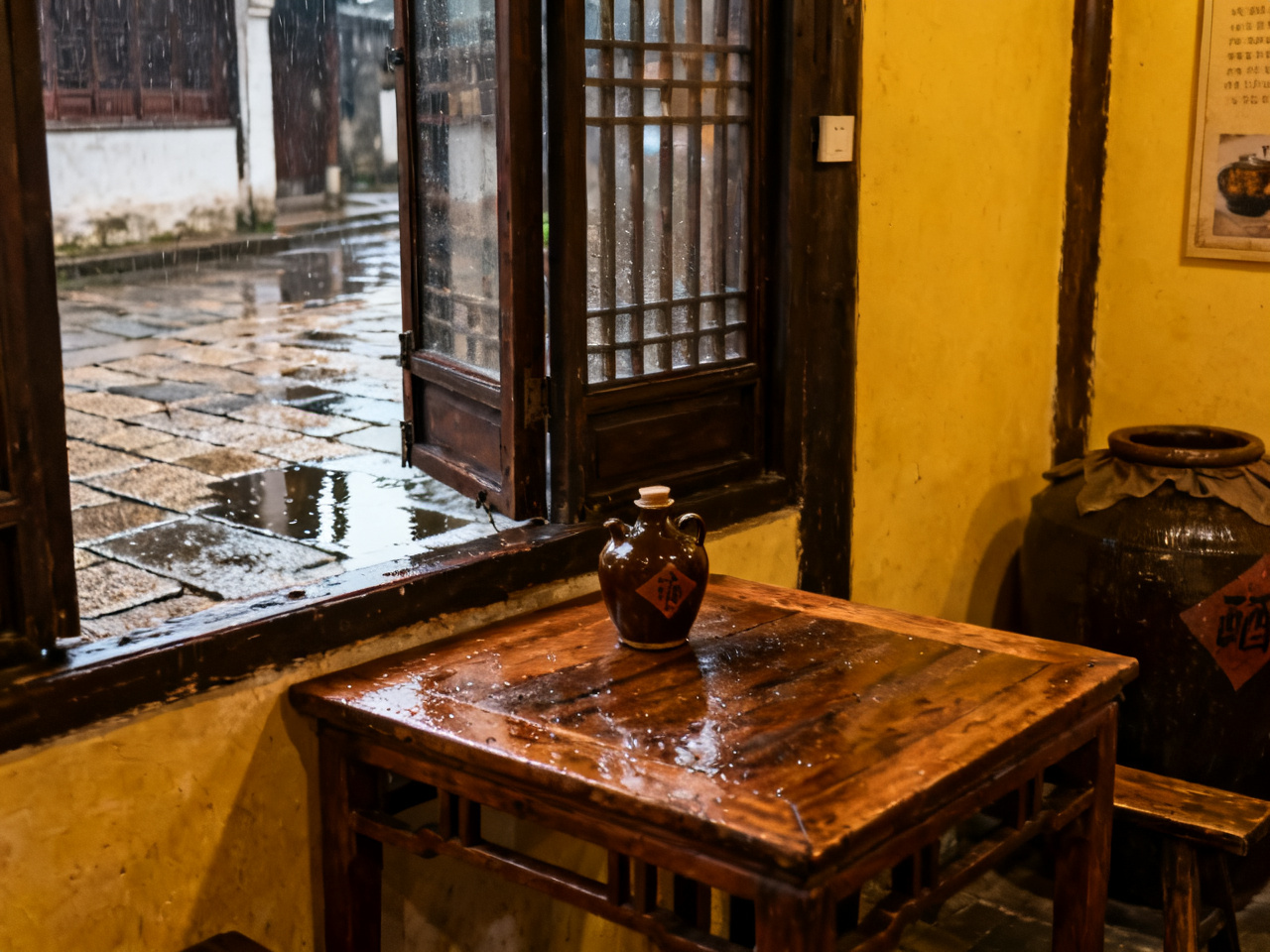
“急什么,酒又不会跑。”老板把温过的黄酒壶放到木桌上时,窗外雨刚停,绍兴仓桥直街的石板还亮着水光。屋里两位老人正在分一碟茴香豆,门边雨伞一把挨一把滴水,空气里有糯米发酵后温软的甜气,也有旧木头吸过潮气的沉香。这句话说出来不重,却像一只手,轻轻按住了整条街的节奏。
“What’s the hurry? The wine isn’t going anywhere.” The owner set a warmed pot of yellow wine on the wooden table just after the rain stopped, while the stone slabs of Cangqiao Straight Street in Shaoxing still glimmered with water outside. Two elderly men inside were splitting a small plate of fennel beans. Umbrellas by the door dripped one after another. The air held both the soft sweetness of fermented glutinous rice and the dense scent of old wood swollen with moisture. The sentence was not forceful, yet it landed like a hand gently pressing down on the tempo of the whole street.
绍兴很容易被人快速概括:水乡、黄酒、鲁迅、乌篷船。这样的词都没有错,但也都太快了,像拿几枚印章盖住一块还在冒气的蒸笼。真正进入这座城,往往不是从最响亮的地标开始,而是从一些不抢人的场景里慢慢浸进去:桥下水面轻轻蹭着船帮,店门口的青石边缘被无数双鞋磨圆,午后酒馆里有人把话说到一半,先低头闻一闻杯子里的热气。慢在这里不是抽象价值,而是具体动作。
Shaoxing is easy to summarize too quickly: water town, yellow wine, Lu Xun, black-awning boats. None of those words are wrong, but all of them are too fast, like stamping labels over a steaming basket before lifting the lid. To truly enter the city, one usually does not begin with the loudest landmarks. One slips in through scenes that do not compete for attention: the canal brushing softly against the side of a boat, the edges of bluestone steps rounded by countless shoes, someone in a tavern pausing mid-sentence to lower their head and smell the warmth rising from a cup. Here, slowness is not an abstract virtue. It is a physical action.
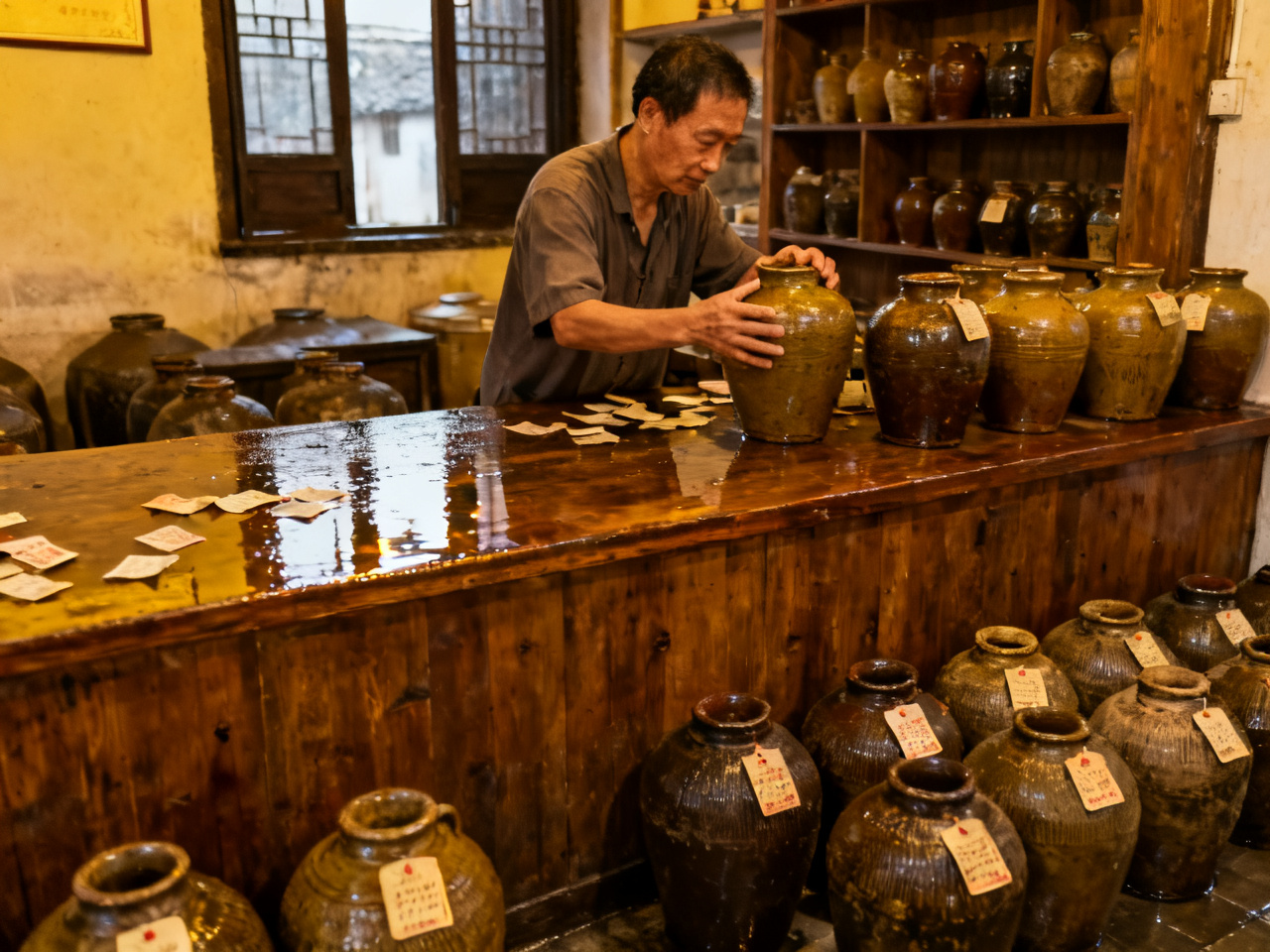
那家黄酒馆不大,门脸甚至有些低调。木招牌颜色被雨水泡得更深,门帘撩起时,会露出里头一排土黄色酒坛,坛口用红布和草绳封着,像一队沉默的老角色。柜台后面挂着几只旧锡壶,墙上有泛黄的菜单,字写得不漂亮,却叫人放心。靠窗位置能看见巷子里刚走过去的人:有人卷着裤腿,有人提着刚买的河鲜,有中学生骑车掠过,车轮压到积水,哗地溅开一片薄亮的弧线。
The yellow wine tavern was small, almost understated. Rain had darkened the wooden sign over the entrance. When the curtain lifted, a row of earth-toned wine jars appeared inside, their mouths sealed with red cloth and straw rope like a cast of silent old characters. Several old pewter pots hung behind the counter. The menu on the wall had yellowed with age; the handwriting was not elegant, yet somehow reassuring. From the window seats one could watch the lane outside: someone walking with trouser legs rolled up, someone carrying freshly bought river produce, a middle-school student passing on a bicycle, the wheel slicing through a puddle and sending up a thin bright arc.
馆子的老板姓周,五十多岁,说话不快,收桌子也不急。他给客人温酒的时候,总会先把壶口往自己这边转一下,像是习惯性地确认温度,也像是给酒一个短暂的停顿。那天下午来得早,屋里还没坐满。靠里一桌是一对外地母女,女儿拿手机拍酒坛,母亲小声问这种酒是不是都偏甜。门边两位本地老人不时插一句话,告诉她们温着喝会更圆,配茴香豆或霉干菜烧饼都好。绍兴很多好时刻,都是这样被陌生人共同托住的。
The owner’s surname was Zhou. He was in his fifties, spoke slowly, and cleared tables without hurry. Whenever he warmed wine for a guest, he turned the spout slightly toward himself first, as though checking the temperature by habit, or perhaps giving the wine one brief pause. It was still early that afternoon, and the room was not yet full. A mother and daughter from out of town sat at the inner table; the daughter was photographing the wine jars while the mother asked quietly whether this kind of wine tended to be sweet. The two local old men near the door chimed in now and then, telling them warmed wine would taste rounder, and that fennel beans or dried-preserved-vegetable flatbread went well with it. Many of Shaoxing’s best moments are supported exactly like this—by strangers holding a scene up together.
问题并不是突然而来的大事,而是一种现代旅行里常见的小冲突。同行的一位年轻游客一直盯着手机时间表,口中念着接下来还要去哪个故居、哪个桥、哪家书店,担心雨后天黑得快,一耽误就“来不及把绍兴看完”。这种焦虑很熟悉,也很有代表性:人们总想在有限时间里把一座城尽量吃干抹净,仿佛没打卡的部分都会变成损失。黄酒馆里的安静和手机里不断跳动的安排,彼此碰撞,像两种完全不同的钟表在一张桌上同时走。
The problem that emerged was not dramatic at all, but a familiar small conflict of modern travel. A younger visitor in the group kept staring at a schedule on the phone, listing the next former residence, the next bridge, the next bookshop, anxious that after the rain the sky would darken quickly and there would not be enough time to “finish Shaoxing.” The anxiety was recognizable and representative: people want to consume a city as completely as possible within limited time, as if everything not checked off becomes a loss. The quiet inside the tavern and the constantly updating schedule on the phone collided like two entirely different clocks trying to tick on the same table.
周老板并没有说教。他只是把热酒倒进浅口小碗,酒色琥珀里带一点褐红,边缘被蒸汽晕得发软,然后淡淡说了一句:你先喝到第二口,再决定还要不要赶。真正改变气氛的,恰恰是这句不争论的话。年轻人本来已经起身一半,听了反而坐回去,像出于礼貌,也像被一句很旧的生活经验拦住。第二口下去的时候,外面屋檐上积着的雨水正一点点往下滴,屋里有人剥开茴香豆壳,发出细碎、轻脆的响声。
Owner Zhou did not lecture anyone. He simply poured the warmed wine into a shallow bowl. The liquid was amber with a trace of reddish brown, its edge softened by steam, and then he said mildly, “Take the second sip first. Decide whether to rush after that.” What changed the atmosphere was precisely that non-argumentative sentence. The young traveler, already half-risen from the seat, sat back down again—partly out of politeness, partly because an old practical wisdom had intercepted the impulse. As the second sip went down, rainwater still collected under the eaves outside and dripped little by little, while someone in the room cracked fennel beans open with tiny crisp sounds.
黄酒入口和想象里不完全一样。它不是简单的“甜”,也不是一种需要被夸张解释的古老味道。温过之后,先上来的是圆润的米香,接着是很轻的药草气,再往后才有一点点贴着舌根的醇厚。它像被时间慢慢抛光过,不急着讨好谁,也不急着证明传统的重量。绍兴的许多文化经验都有这个特点:不是让你立刻惊叹,而是让你在第二层、第三层里逐渐认出门道。这和用快节奏逛博物馆时的误差很像;想看懂方法而不是只看见门面,这篇旧文有相似提醒:Museum visiting method in China。
Yellow wine did not enter the mouth exactly as expected. It was not simply “sweet,” nor was it some antique flavor that required exaggerated explanation. Once warmed, the first thing to rise was rounded rice aroma, then a light herbal note, and only afterward a certain thickness resting at the back of the tongue. It felt slowly polished by time, in no hurry to please anyone and in no hurry to prove the weight of tradition. Many cultural experiences in Shaoxing work the same way: they do not demand instant astonishment; they ask you to recognize their depth in a second and third layer. That is similar to the difference between merely rushing through a museum and actually learning how to see. The legacy article titled Museum visiting method in China offers a related reminder.
屋里的对话也慢,甚至带一点水乡特有的回旋。两位老人讲起年轻时冬天怎么温黄酒,说以前有的人家会把小壶搁在热水里慢慢养,不让它一下子冲得太烫。外地母亲笑着问,那是不是跟泡茶一样讲究火候?其中一位老人就摆摆手,说不是讲究,是不能欺负东西。旁边女儿听见这句,原本举着手机的手慢慢放下。人与食物、人与器物、人与时间之间那种不过分用力的关系,在这个瞬间露了个形。
The conversation in the room moved slowly too, with a kind of looping cadence particular to water-town life. The two older men began talking about how yellow wine was warmed in winter when they were young, saying some families would set a small pot in hot water and raise it gradually rather than forcing it too hot all at once. The visiting mother laughed and asked whether that meant judging heat like tea. One of the old men waved his hand and said, “It’s not fussiness. You just shouldn’t bully the thing.” Hearing that, the daughter beside her slowly lowered the phone she had been holding up. In that instant, a shape appeared: a way of relating to food, objects, and time without too much force.
绍兴的“慢”因此不是效率低,也不是姿态上的文艺。它更像一种对材料、天气、身体和情绪的匹配能力。雨后为什么适合进黄酒馆?因为湿气重,石板路反凉,人的呼吸也会不自觉放短,而温酒正好把身体重新往里收。为什么要坐下来等第二口?因为第一口常常只是尝新,第二口才开始进入。为什么本地人说话不急?因为他们知道太快的判断,会把水面的层次看扁,把酒里的回味看漏。
Shaoxing’s slowness, then, is not inefficiency, nor is it a performative kind of literary chic. It is more like a skill of matching materials, weather, body, and mood. Why does a yellow wine tavern feel right after rain? Because the air is damp, the stone streets turn cool again, breathing shortens without your noticing, and warmed wine draws the body inward at exactly the right moment. Why sit long enough for the second sip? Because the first sip often merely registers novelty; the second begins entry. Why do locals not rush their speech? Because they know quick judgments flatten the surface of water and miss the aftertaste inside the wine.
这一点和许多外地游客原本想象中的“地方文化体验”很不一样。很多人以为体验就是做一件代表性的事:坐一次船,喝一碗酒,拍一张有旧街背景的照片,然后继续赶路。可如果动作的内部节奏没有变,再“代表”的项目也容易变成空壳。就像成都喝盖碗茶,不是手里拿过一只碗就算懂了茶馆的呼吸,这篇旧文讲得很贴切:Gaiwan Tea in Kuanzhai Alley。
This differs sharply from what many visitors imagine as a “local cultural experience.” People often assume the experience means doing one representative thing: taking a boat ride, drinking a bowl of wine, snapping a photo against an old street, and then moving on. But if the internal tempo of the act never changes, even the most “representative” activity can become hollow. It is like drinking gaiwan tea in Chengdu: simply holding the cup does not mean you have understood the breathing rhythm of the teahouse. The legacy article titled Gaiwan Tea in Kuanzhai Alley expresses that especially well.
窗外的天色在不知不觉里往晚处走,河道上的水比刚下雨时更平,偶尔有乌篷船过去,船篷擦着低低的光。酒馆门口晾着的抹布已经不再滴水,反倒是木门槛被来往鞋底带得越来越亮。周老板收走空碗时没有问“还要不要再来一壶”,像是知道真正愿意留下的人会自己开口。那位一直看时间表的年轻游客此时也安静了,开始问酒坛封泥、不同年份、冬天与夏天喝法的区别。急切并没有被批评,只是被更有意思的问题替代了。
Outside, the light slipped toward evening almost without notice. The canal grew calmer than it had been during the rain. Now and then a black-awning boat passed, its canopy brushing low light. The rag hanging by the tavern door no longer dripped, while the wooden threshold grew shinier with each pair of shoes crossing it. When Zhou collected the empty bowls, he did not ask, “Another pot?” as though he knew anyone who truly wished to stay would speak up on their own. Even the young traveler who had been glued to the schedule was quiet now, asking instead about the clay seal on the jars, different vintages, and the difference between drinking in winter and summer. The hurry had not been scolded away. It had simply been replaced by better questions.
也许这正是绍兴最难被复制的一面。它不是没有景点,不是没有故事,而是它不急着把自己的好处一股脑塞给你。它允许你在桥上停一下,在弄堂口闻到酱香,在小馆里因为一句话而改变原本的行程秩序。真正耐看的地方,往往都保留着这种分寸:不讨好,不催促,也不怕你一开始没看懂。只要你愿意稍微慢下来,它就会自己展开。
Perhaps that is the hardest part of Shaoxing to reproduce elsewhere. It is not that the city lacks sights or stories. It is that it does not rush to stuff its virtues into your hands all at once. It allows you to pause on a bridge, catch the aroma of sauce brewing at the mouth of an alley, and let one sentence in a small tavern rearrange your schedule. Places with real staying power often preserve exactly this proportion: they do not flatter, do not hurry, and are not afraid if you fail to understand them immediately. If you are willing to slow down a little, they unfold on their own.
离开黄酒馆时,路面还留着雨后的湿意,灯笼已经亮起来,水里映着一截红,一截黄。街边有人把刚蒸好的梅干菜扣肉端到窗口散热,香气厚厚地压在夜色边上;桥头一个孩子穿着雨鞋踩过浅水,啪嗒一声,笑着跑开。周老板那句“酒又不会跑”留在身后,听上去像在说酒,其实也像在说一座城、一顿饭、一次相遇。慢不是把时间拉长,而是终于肯把自己放进眼前这件事里。
When leaving the tavern, the road still held the wetness of the rain. Lanterns had already lit up, and the water reflected one section of red and another of yellow. At a street-side window, someone set out freshly steamed preserved-vegetable pork belly to cool, its aroma pressing thickly against the edge of the evening. At the head of a bridge, a child in rain boots stamped through a shallow puddle with a slap of sound and ran off laughing. Zhou’s sentence—“The wine isn’t going anywhere”—remained behind, sounding as if it were about the wine but also about a city, a meal, an encounter. Slowness is not stretching time longer. It is finally agreeing to place yourself fully inside the thing before you.
再往前走,仓桥直街的店铺一间一间收起半扇门,河面上最后一点亮色被晚风揉开。石桥边有人立着吃臭豆腐,纸盒里冒着白汽;更远处,一户人家把竹帘放下,屋里暖黄的灯落在门槛上。没有人宣布这一晚结束,也没有哪个时刻被特意摆成高潮。只是整条街在雨后的气味、酒后的微热和慢下来的脚步里,安静地把“绍兴”两个字落成了实景。
Farther along, the shops on Cangqiao Straight Street each pulled half a door closed, while the last bright color on the canal was kneaded apart by the evening breeze. By the stone bridge, someone stood eating stinky tofu from a paper tray with white steam rising upward. A little farther away, a household lowered a bamboo blind, and the warm yellow indoor light fell across the threshold. No one announced that the evening was ending, and no moment had been arranged as a climax. The whole street simply settled the meaning of “Shaoxing” into a real scene—through the smell after rain, the mild warmth after wine, and footsteps that had finally slowed down.
- 中国武术文化体验:太极拳少林功夫 | Chinese Martial Arts: Tai Chi & Shaolin Kung Fu
- 漆扇体验之后,我第一次发现“流动的颜色”也能有秩序 | After Trying Lacquer Fans, I Realized for the First Time That Flowing Color Can Also Have Order
- 我站在屋檐下面,才明白中国古建筑为什么先让人慢下来 | I Understood Why Traditional Chinese Architecture Slows the Body Only After Standing Under the Eaves
- 在绍兴,一张公交卡小票和一座小桥一起把我领进了城 | In Shaoxing, a Transit Receipt and a Small Bridge Led Me into the City Together
- 桂林喀斯特山水:自然之美 | Guilin Karst Mountains: Nature at Its Best
- 糖画摊前的几分钟,让我第一次觉得“甜”也可以被画出来 | At a Sugar Painting Stall, I Realized for the First Time That Sweetness Can Be Drawn
- 中国西部丝绸之路探险 | Silk Road Adventures in Western China
- 我在中国县城汽车站学会先看人群走向,再找检票口 | I Learned at a Chinese County Bus Station to Watch Where People Flow Before Looking for the Gate
- 中国八大菜系全览 | The 8 Great Cuisines of China
- 成都出发的周末逃离:三条路线,三种节奏 | Weekend Escapes from Chengdu: Three Routes, Three Rhythms
Comments (0)