
罗平没有油菜花的那天,我还是走上了田野公路 | I Took Luoping’s Country Road Even Without the Canola Blooms
罗平没有油菜花的那天,我还是走上了田野公路 | I Took Luoping’s Country Road Even Without the Canola Blooms
我到罗平那天,天色一直没有完全亮透。不是大雨,只是云层压得低,山的轮廓像被一块湿布轻轻擦过。我把背包带重新收紧,从县城边缘一段不太宽的公路旁下车,准备往田野里走。出发前我已经知道自己来错了季节:这里最容易被记住的那片金黄色并不在眼前,油菜花没有铺满田畴,也没有把照片的边缘染成明亮的颜色。司机把车开走后,轮胎碾过潮湿路面,声音短促地响了几下,我忽然有些尴尬,像是为了一个已经离场的主角专程来到剧场。但我没有马上回头,还是把手机放进口袋,沿着公路的白线向前走。
When I arrived in Luoping, the sky never quite became fully bright. It was not a heavy rain, only a low ceiling of cloud that made the mountains look as if they had been gently wiped with a damp cloth. I tightened my backpack beside a fairly narrow road at the edge of town and set off toward the fields. I already knew I had come in the wrong season: the golden landscape for which Luoping is often remembered was not in front of me. There was no broad sweep of flowering rapeseed and no bright color at the edges of my photographs. After the driver pulled away, the tires made a few clipped sounds on the wet pavement. I felt slightly embarrassed, as if I had traveled to a theater especially for a leading actor who had already left. I did not turn back. I put my phone in my pocket and followed the white line along the road.
我原先把“非花期”理解成一种视觉上的缺席,到了现场才发现,它首先改变的是人的走路方式。花期里,人会不断寻找高处、拐弯处和一整片颜色;没有花的时候,眼睛反而要贴近地面。路肩的碎石被雨水冲出细小沟槽,黑褐色土壤在田边露出来,刚翻过的地块有一股湿泥和植物残根混在一起的味道。田里并不空,低矮的作物一行行伏在地面,叶片上挂着水珠,有些地方露出新翻的垄。远处的山也不再只是相片里的背景,它们以一层接一层的坡面收住视线,让我明白这里的田野从来不是一张平面图。
I had understood “out of flower season” as a visual absence. Only on site did I realize that it first changed the way I walked. During bloom season, a visitor looks constantly for high ground, bends in the road, and a whole field of color. Without the flowers, my eyes had to stay close to the ground. Rainwater had cut tiny channels through the gravel at the road edge. Dark soil showed beside the fields, and freshly turned plots carried the smell of wet earth mixed with old roots and plant residue. The fields were not empty. Low crops lay in orderly rows, their leaves holding beads of water, while new ridges showed where the soil had recently been worked. The mountains were no longer a background for photographs; their overlapping slopes stopped my gaze and made me understand that this countryside was never a flat picture.
我选择步行,是因为车窗里的罗平太容易被我误读。坐在车上,村庄、田地、山口和路旁的水沟会在几秒钟内滑过去,所有细节都被压缩成“乡间风景”。走路却很慢,慢到我能看见一位农人把工具靠在田埂边,先弯腰检查一段土,再用脚把松散的泥踩实;也能看见路旁的塑料薄膜被风吹起,挂在灌木上,发出轻微的拍打声。这些不够漂亮的东西,反而让地方变得有重量。它们告诉我,田野不是为了等游客按下快门才存在的。
I chose to walk because Luoping seen through a car window was too easy to misread. From a vehicle, villages, fields, mountain passes, and roadside ditches slide past in seconds, compressed into the phrase “rural scenery.” Walking is slow enough to reveal a farmer leaning a tool against the ridge, bending to inspect a patch of soil, then pressing loose mud firm with a shoe. I could also see a strip of plastic sheeting lifted by the wind and caught on a shrub, making a faint tapping sound. These less-than-pretty details gave the place weight. They reminded me that the fields did not exist simply to wait for tourists to press a shutter.
公路并不适合被浪漫化。它有来往车辆,弯道处的视线并不总是开阔,路边有积水、泥沙和偶尔散落的秸秆。我走在靠外的一侧,每次听见发动机声就提前收肩,必要时停到更宽的路肩上。几辆车经过时,司机没有连续鸣笛,只是放慢了一点,车身从我身边带过一阵潮冷的风。我不把这种短暂的礼让夸大成某种宏大结论,它更像乡间道路上彼此留出的一个小空隙。对步行者来说,判断车辆距离、观察弯道、避免戴着耳机走路,比寻找一个“最美机位”重要得多。
A country road should not be romanticized. Vehicles passed, sightlines were not always open around bends, and the edges held puddles, mud, sand, and occasional pieces of straw. I kept to the safer side and drew my shoulders in whenever I heard an engine, stepping onto a wider shoulder when necessary. A few drivers did not sound their horns repeatedly; they simply slowed a little, and the cars carried a damp, cool gust past me. I would not turn this brief courtesy into a grand conclusion. It was more like a small gap left for one another on a rural road. For a walker, judging the distance of vehicles, watching bends, and avoiding headphones mattered more than finding the “most beautiful viewpoint.”
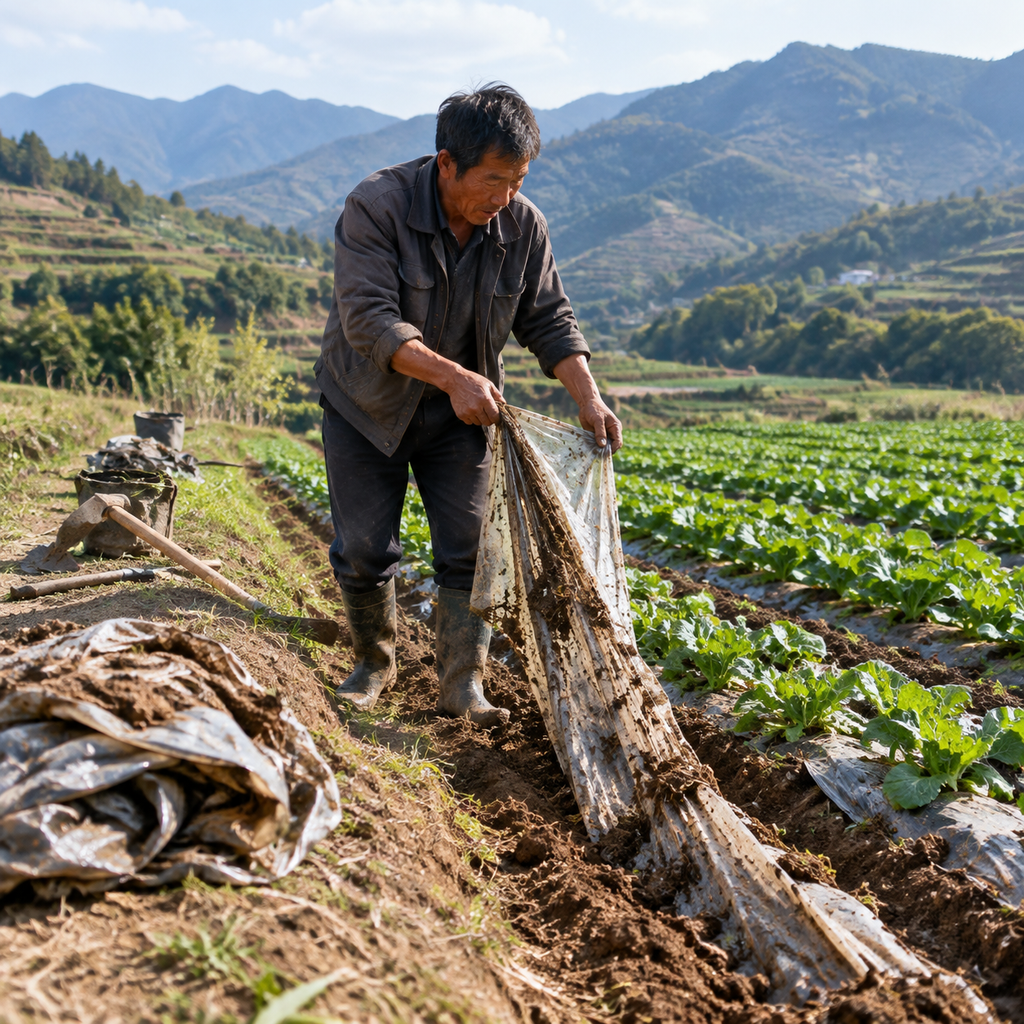
起初那片田野边,我遇到一位正在整理地膜的村民。他没有停下来和我交谈,我也没有贸然靠近,只在路边点头示意。过了一会儿,他把一截压在沟里的膜拉出来,抖掉上面的泥,又把它折到一旁。我从这个动作里看到一种很具体的农作节奏:土地需要被清理、翻动、覆盖,也需要等待。游客看到的是季节的颜色,农人面对的却是下一轮生长之前一连串没有观赏性的准备。没有油菜花的罗平,让我第一次认真看那些“花开以前”和“花谢以后”的工作。
During the first stretch through the fields, I saw a villager sorting out a sheet of agricultural plastic. He did not stop to talk, and I did not approach him without reason; I only nodded from the roadside. After a while, he pulled a section out of a ditch, shook the mud from it, and folded it aside. The gesture revealed a very concrete agricultural rhythm: land must be cleared, turned, covered, and then left to wait. A visitor sees the color of a season, while a farmer faces a chain of unphotogenic preparations before the next growth cycle. Luoping without rapeseed flowers made me look carefully, for the first time, at the work that comes before flowering and after it fades.
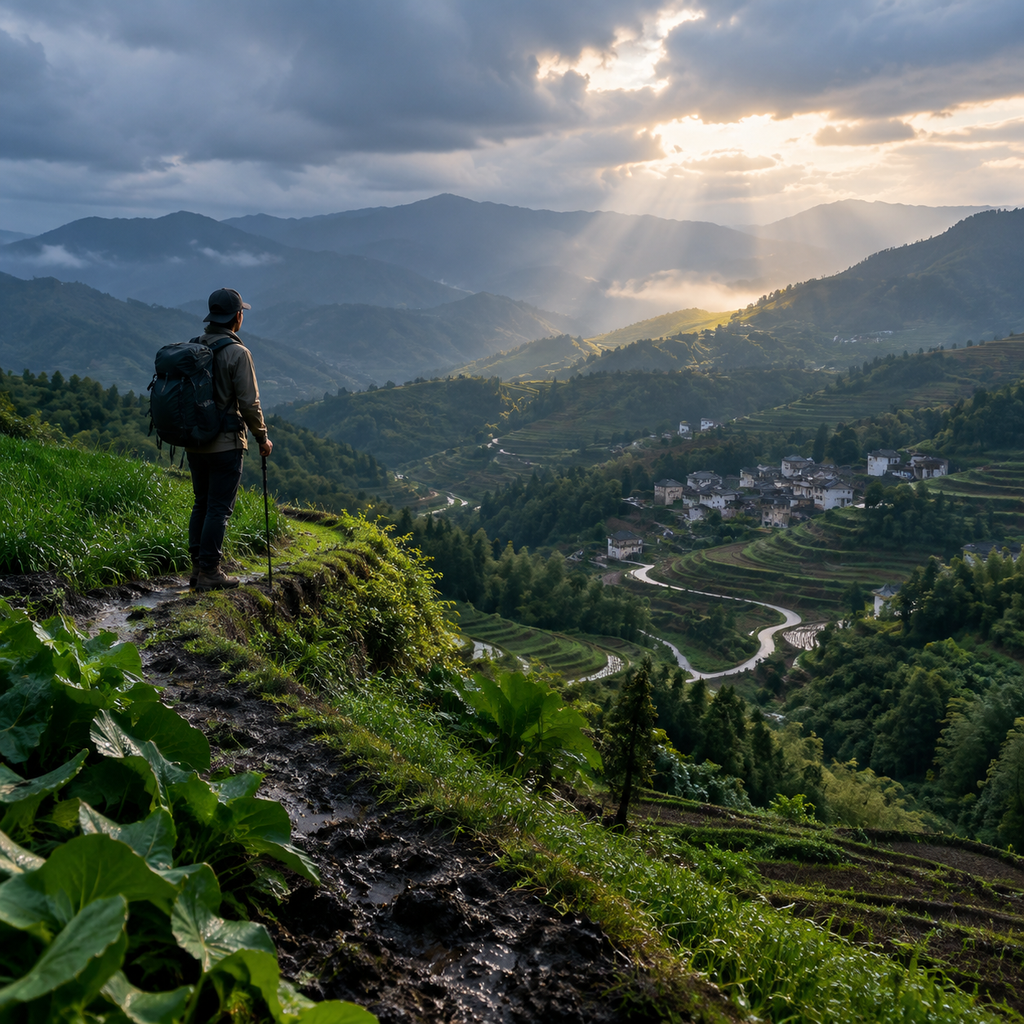
我走到一处田埂较高的地方,云层忽然裂开一点,光落在远处的坡地上。没有金色花海,光线仍然有自己的层次:近处的叶子是沉绿,湿泥接近黑色,山坡上的村屋灰白相间,几条道路像浅色的缝线嵌在起伏之间。我本来以为没有花就没有“景”,可那一刻我意识到,景观并不只靠单一颜色成立。地貌的起伏、田块的边界、道路的走向和天气的变化共同决定了视野。只不过这种风景不主动讨好人,需要我多走一会儿才肯显形。
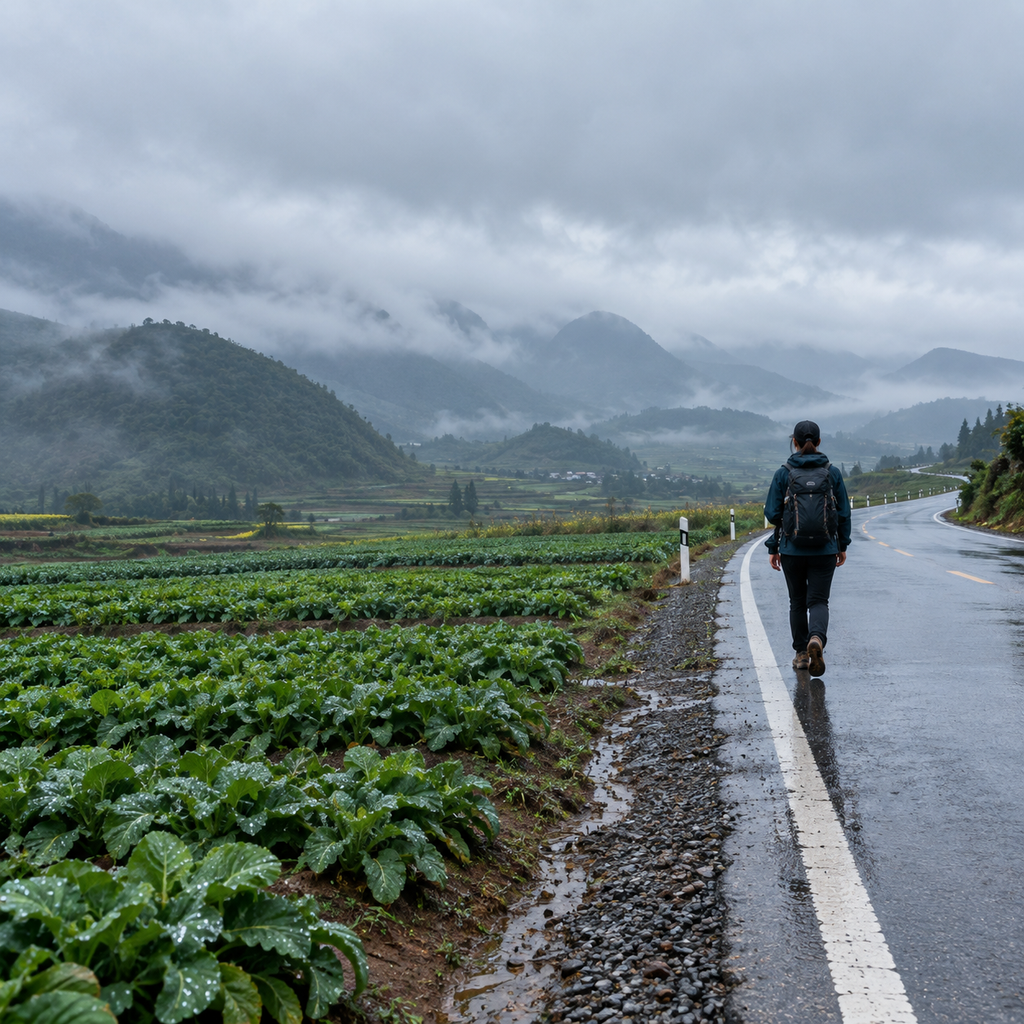
I reached a higher field ridge just as the cloud opened slightly and light fell onto a distant slope. Without a golden sea of flowers, the light still had layers. Leaves nearby were a deep green, wet mud was almost black, village houses on the slope were gray and pale, and several roads appeared as light seams stitched into the folds of the land. I had assumed that no flowers meant no “scenery,” but in that moment I understood that a landscape does not depend on one color alone. Relief, field boundaries, road direction, and changing weather all shape the view. This kind of scenery does not try to please me; I had to walk longer before it revealed itself.
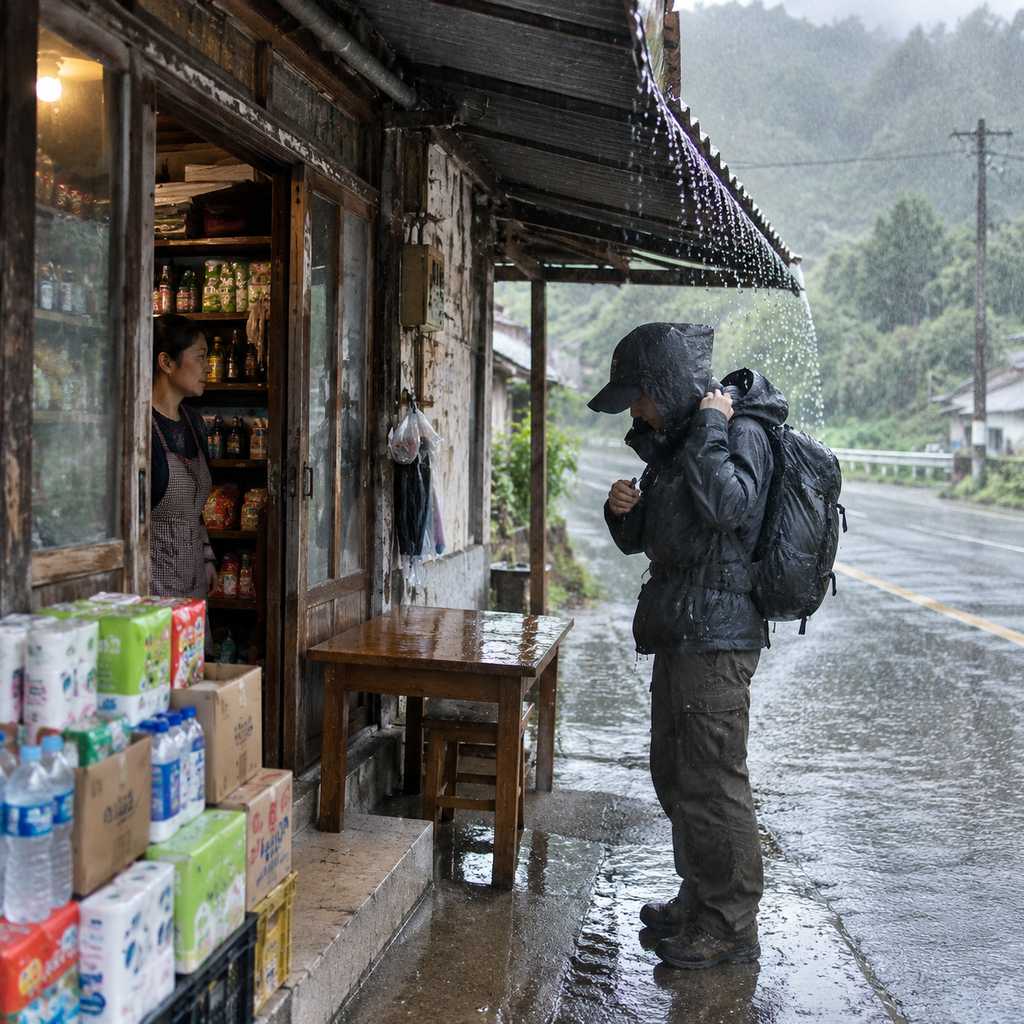
中午前后,雨势加重了一阵。我躲到一间路旁小店的雨棚下,店里没有被布置成专门接待游客的样子,门口放着几箱日常用品,墙边有一张擦得发亮的小桌。店主给我让出一块不挡人的位置,我买了一瓶水,站着把外套帽子上的水珠抖掉。我们之间没有发生戏剧性的对话,更多时候只是各自看着雨幕。她偶尔朝公路方向望一眼,确认车辆经过的情况;我则看着檐角的水线从断断续续变成连续的一道。这个小店没有替我“补上”油菜花,却让我在一场雨里重新找到旅途的节拍。
Around midday, the rain grew heavier for a while. I took shelter beneath the awning of a small roadside shop. It was not arranged as a place designed specifically for tourists: ordinary supplies stood by the entrance, and a small table near the wall had been polished bright through use. The shopkeeper made room for me without blocking anyone. I bought a bottle of water and shook droplets from the hood of my jacket. Nothing dramatic was said between us; most of the time we simply watched the rain. She occasionally looked toward the road to check the passing traffic, while I watched the thin stream from the awning change from intermittent drops into one continuous line. The shop did not replace the absent rapeseed flowers. It gave my day its rhythm back.
雨小一些后,我没有立刻继续往原定方向走,而是先问清楚哪一侧更适合步行。店主用手指向一条较窄的岔路,又指了指主路上车辆更密的方向。我听得不完全明白,便拿出地图,把两个路口放大给她看,再重复地名和方向。她点头后,用更慢的动作比划“那边可以走,但走到前面要看路”。这不是一段可以逐字引用的对话,也不是导游式的路线讲解,却足够让我修正计划。我把最靠近车流的路段缩短,转去一条穿过村边和田块的支路,接受它可能泥泞、可能绕远,也可能没有适合拍照的开阔角度。
When the rain eased, I did not immediately resume my original route. I first tried to confirm which side was better for walking. The shopkeeper pointed toward a narrower branch road and then toward the busier main road. I did not understand every detail, so I enlarged the two junctions on my map and repeated the place names and directions. She nodded, then gestured more slowly that the road was walkable but required attention farther ahead. This was not a quotation to reproduce, nor a guidebook route briefing. It was enough to make me revise my plan. I shortened the stretch closest to traffic and turned onto a lane passing the village edge and field plots, accepting that it might be muddy, longer, and lacking any wide photographic view.
支路上的生活感比主路更密。屋檐下挂着晾不干的衣物,院墙内传出鸡叫和金属碰撞声,地面有被雨水冲开的细沙。一个孩子从门口探头看我,很快又被大人叫回屋里;我抬手示意后便继续走,没有把别人的日常变成自己的拍摄对象。几户人家门前堆着编织袋和农具,袋口没有标签,我无法判断里面装的是什么,也没有必要替它们编故事。旅行中最容易犯的错误,就是看到一个陌生物件便急着给出解释。那天我学着把“我不知道”保留下来,让眼前的细节只停留在它确实呈现的范围内。
Life felt denser on the branch road than on the main one. Clothes that could not dry in the damp air hung beneath eaves; chickens called from inside courtyards, mixed with the clink of metal. Fine sand had been washed across the ground. A child looked out from a doorway and was soon called back inside by an adult. I raised a hand in greeting and kept walking, without turning someone else’s ordinary life into my subject. Woven sacks and farm tools stood before several homes. The sacks had no labels, so I could not know what they held, and there was no need to invent a story for them. One of the easiest mistakes in travel is to explain an unfamiliar object too quickly. That day I practiced keeping “I do not know” intact and letting each detail remain within what it actually showed.
我后来把罗平的田野看成一个由不同尺度拼起来的地方。脚边是碎石、泥块、枯叶和被踩扁的草;再往外是田埂、沟渠、作物行列;视线越过村舍后,才到达连绵的山体。花期照片往往把这些尺度统一成一片灿烂的颜色,而非花期迫使我把它们重新拆开。山不是孤零零的峰,田也不是无边的毯子,它们之间有道路、水流、房屋和劳动留下的线索。我走得越远,越难用“漂亮”或“不漂亮”做判断,只能问自己:这个地方的形状是怎样被生活一点点使用出来的?
I gradually began to see Luoping’s fields as a place assembled from different scales. At my feet were gravel, clods of mud, dead leaves, and flattened grass. Beyond that came ridges, ditches, and rows of crops. Only after my gaze passed the village houses did it reach the continuous mountains. Bloom-season photographs often merge these scales into one brilliant color, while the off-season forced me to separate them again. The mountains were not isolated peaks, and the fields were not endless carpets. Roads, water, houses, and labor left clues between them. The farther I walked, the less useful “beautiful” or “not beautiful” became. I had to ask instead: how had daily life gradually shaped and used this place?
下午的风把云吹薄,田地的颜色也变得更清楚。几块地的作物高度不同,有的叶片刚刚长开,有的已经形成较厚的绿色覆盖;田埂上留着脚印和车轮印,边缘被来回踩得发硬。我没有办法仅凭外观看出每一块地种的具体品种,所以只记录那些能确定的差异:高度、叶色、土壤湿度、垄的方向,以及有人正在做什么。偶尔,一辆装着农具的车从村口驶出,车厢里没有游客常见的装饰。我侧身让开,等它驶过,再把目光放回那几条平行的田垄。这里的季节不是日历上的一个词,而是作物状态和劳动安排的组合。
In the afternoon, the wind thinned the clouds and the field colors became clearer. Some plots held young plants, while others already had a dense green cover. Footprints and tire tracks marked the ridges, whose edges had hardened from repeated use. I could not identify the exact crop in every plot from appearance alone, so I recorded only differences I could actually see: height, leaf color, soil moisture, ridge direction, and the work being done. Now and then, a vehicle carrying farm tools came out from the village. It had none of the decoration tourists often notice. I stepped aside, waited for it to pass, and returned my gaze to the parallel ridges. Here, a season was not merely a word on a calendar. It was a combination of crop condition and work arrangements.
我在一处路口遇到一位等车的老人。他没有给我介绍景点,只看了看我的鞋,又看了看天。他的目光让我意识到自己穿的是一双偏城市的轻便鞋,鞋底已经沾满泥,走在下一段更软的土路上很可能会打滑。车还没有来,我便把裤脚往上卷了一点,把相机收进防水袋。等车驶近时,老人往路边挪了挪,我也跟着退开。那辆车没有停留很久,我没有上车,因为目的不是尽快抵达某个点,而是把这一段路走完。可这次短暂相遇提醒我,天气和鞋底一样,都是路线判断的一部分,不能等到狼狈时才想起。
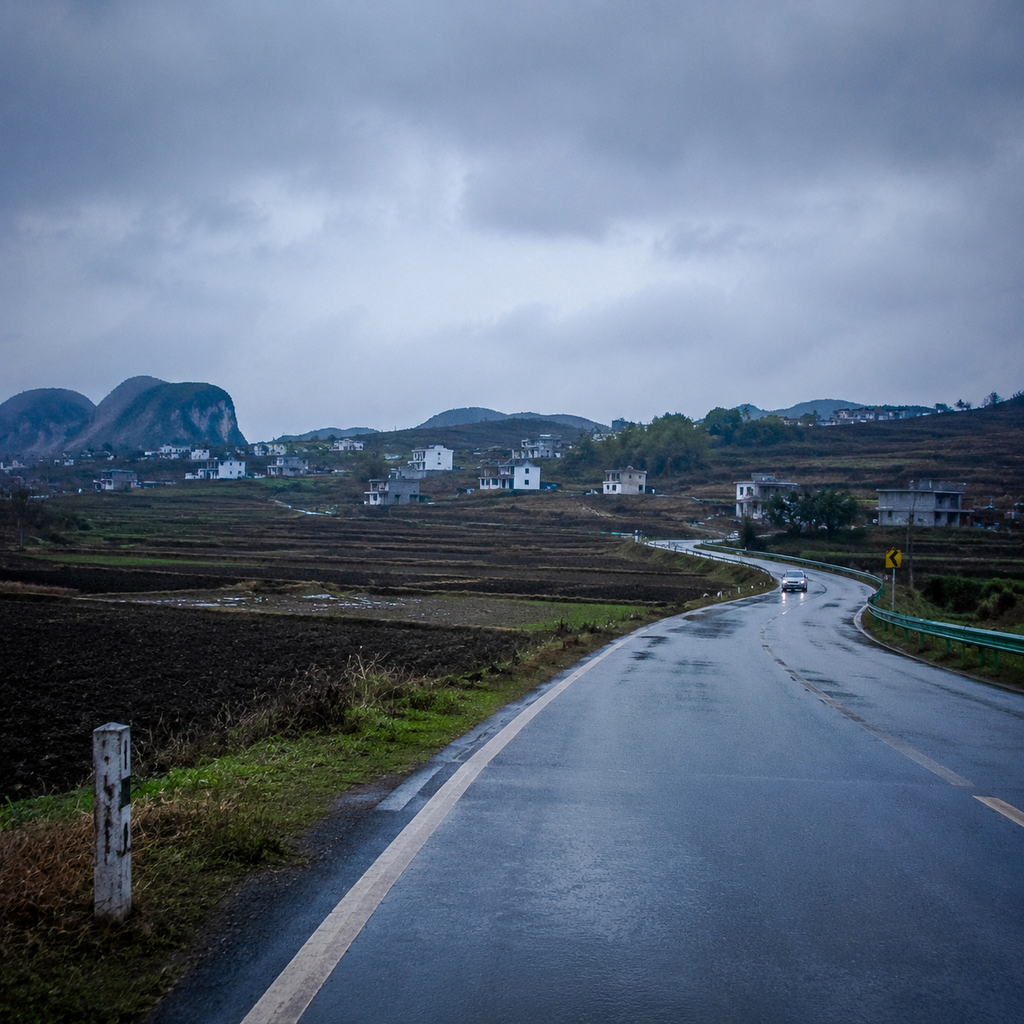
At a junction, I met an elderly man waiting for a vehicle. He did not introduce a scenic spot. He looked at my shoes, then at the sky. His glance made me notice that I was wearing light city shoes; their soles were already covered in mud, and the next stretch of softer ground could be slippery. While we waited, I rolled my trouser cuffs up and put my camera in a waterproof bag. When the vehicle approached, the man moved farther from the road, and I stepped back with him. It did not stop for long, and I did not board because my purpose was not to reach a point quickly but to finish this stretch on foot. That brief encounter reminded me that weather and footwear belong in route decisions just as much as maps do.
没有油菜花带来的失落并没有马上消失。每当我看到一张褪色的宣传画,或者在手机里翻到别人拍过的金色山坡,心里还是会短暂地空一下。我承认自己曾经把罗平想象得过于单一,仿佛只要错过花期,整个地方就只剩“没看成”的遗憾。可是这种落差也逼着我检查旅行期待是怎么形成的。很多目的地先通过一张极有冲击力的照片进入我的脑子,之后我才开始想象道路、食物、天气和人。到了现场,我才发现自己不是在寻找完整的地方,而是在寻找那张照片的复制品。非花期的田野没有满足这个要求,却给了我一次拆掉期待的机会。
The disappointment caused by the missing flowers did not disappear immediately. Whenever I saw a faded promotional image or glanced at a golden hillside in my phone, I still felt a brief hollow space. I admit that I had imagined Luoping too narrowly, as if missing the flowering season left only the regret of not seeing what I came for. Yet the gap also forced me to examine how travel expectations are formed. Many destinations enter my mind through one powerful image; only afterward do I imagine the roads, food, weather, and people. On site, I realized I had not been looking for the whole place but for a copy of that image. The off-season fields did not satisfy that demand, but they gave me a chance to take the demand apart.
我把原先想走的长线改成了两段:先沿较安全的主路走到一个能够看见田块和山坡的地方,再从支路回到村边,最后寻找车辆方便停靠的路口。这样的路线不够完整,却更符合当天的天气和体力。雨后的空气让衣服变得沉,背包肩带也磨得皮肤发热;如果继续追求一个遥远的终点,我很可能只会在天黑前疲惫地赶路,什么也看不清。旅行判断有时不是“还可以去哪里”,而是“今天应该停止追赶什么”。我把那个没有花海的远方从计划里划掉,给自己留出观察和回程的时间。
I changed my planned long route into two sections. First I followed the safer main road to a point where I could see the fields and slopes, then I returned through a branch lane to the village edge and looked for a junction where a vehicle could conveniently stop. The route was less complete, but it suited the day’s weather and my energy. The damp air made my clothes heavy, and the backpack straps had begun to warm and rub my skin. If I continued chasing a distant endpoint, I would probably spend the remaining daylight hurrying while seeing very little. Travel judgment is sometimes not about asking where else I can go, but about deciding what to stop pursuing today. I crossed the absent flower sea off my plan and kept time for looking and returning.
在回到主路之前,我在一家更靠近村口的小吃店坐下来。店里有人吃饭,也有人只是进来避一阵风,桌面上留着水汽和刚擦过的痕迹。我没有询问无法确认的店铺信息,也没有把一碗普通饭食写成“当地秘味”。我只记得热气从碗边升起来,入口的温度让我恢复了一点精神,咸淡和口感是我当时能诚实描述的全部。旁边的司机把车钥匙放在桌角,吃得很快,起身时先看了一眼门外的雨。我注意到他的节奏:在乡间移动的人,常常比游客更早把天气变化纳入下一步安排。
Before returning to the main road, I sat in a small eatery closer to the village entrance. Some people were eating, while others had come only to get out of the wind. The tables held traces of steam and recent wiping. I did not ask about shop details I could not verify, and I did not turn an ordinary bowl of food into a claim about a hidden local specialty. I remember steam rising from the rim, and the warmth restoring some energy. The saltiness and texture were all I could honestly describe. A driver placed his keys at the corner of a table and ate quickly, looking toward the rain before standing up. I noticed his rhythm: people who move through the countryside often include changing weather in their next decision earlier than visitors do.
吃完后我没有立即拍照,而是把湿纸巾、雨衣和地图重新整理好。这个动作看似琐碎,却改变了我接下来的心情。旅行失望时,人很容易用拍摄来证明自己没有白来:多拍几张路牌,多拍几张山,多拍一张田。整理物品让我停下来承认,我今天得到的不是一组理想照片。相机里有被云遮住的山、失焦的车轮印、田埂旁一小片被雨打弯的叶子,还有小店门口不断落下的水。它们不一定适合发在开头,却比一张过度完美的远景更接近我实际经过的罗平。
After eating, I did not immediately take photographs. I reorganized the wet tissues, rain gear, and map. The small task changed my mood. When disappointed, it is easy to use photography as proof that a trip was not wasted: take another road sign, another mountain, another field. Sorting my belongings made me admit that the day had not produced the ideal set of images. My camera held a cloud-covered mountain, a blurred tire track, a small leaf bent by rain beside a ridge, and the continuous water falling outside the shop. These might not belong at the beginning of a travel post, but they were closer to the Luoping I had actually walked through than an overly perfect panorama.
回程时,云层又压下来,山坡的颜色变得安静。我经过早上看见的那块田,整理地膜的村民已经离开,沟边多了一小堆被捡出的杂物。我没有知道他去了哪里,也没有把这件事解释成一天劳作的结局;我只是看见同一处景物在几个小时里发生了细小变化。公路上车流比来时稀疏,我仍然在弯道前放慢,经过积水时抬脚跨过去。鞋底每一次落下都带着泥的黏滞感,这种触觉比“田园气息”更具体,也更能提醒我今天的路线不是在屏幕上滑出来的,而是用脚一步步确认的。
On the way back, the cloud lowered again and the slopes grew quiet in color. The villager I had seen sorting plastic in the morning was gone, and a small pile of collected debris stood beside the ditch. I did not know where he had gone, and I did not turn the change into a story about the end of a workday. I simply saw the same place altered slightly over several hours. Traffic was lighter than before, but I still slowed before bends and lifted my feet over puddles. Each step carried the sticky drag of mud. That sensation was more concrete than the phrase “rural atmosphere,” and it reminded me that the route had not been produced by scrolling across a screen; I had confirmed it step by step.
如果有人问我,非花期还值不值得去罗平,我不会直接回答值得或不值得。我会先问他想从这趟旅行得到什么。如果目标是拍摄连续的黄色花海,那么季节确实是必须优先核对的条件,不能用“淡季也有惊喜”来掩盖错峰带来的落差。如果愿意把目的改成观察田野、公路步行、村落边缘和山地农业,那么非花期反而更适合慢慢看。前提是不要把它当成花期的低配版本,而要承认它是一种不同的旅行产品:色彩少一些,空镜头少一些,但土地和人的工作更容易被看见。
If someone asked whether Luoping is still worth visiting outside the flowering season, I would not answer with a simple yes or no. I would first ask what they want from the trip. If the goal is to photograph an uninterrupted sea of yellow, then the season must be checked first; the disappointment of traveling at the wrong time should not be covered by saying that “the off-season has its own surprises.” If the goal can shift toward observing fields, walking country roads, village edges, and mountain agriculture, then the off-season may suit a slower visit. The key is not to treat it as a cheaper version of flower season, but to recognize it as a different kind of journey: less color and fewer obvious vistas, yet more visible land and labor.
我也会把替代路线说得更具体一点。与其把一天全压在某个远景观景点,不如把行程拆成“县城边缘观察—较安全的乡间道路—村口小店休息—根据雨势回撤”这样的弹性结构。实际走哪一段,要看当天的能见度、路面、车辆密度和是否有人在田间作业。天气不稳时,短线比长线更容易保持判断;一个能随时回到主路的支路,也比地图上看起来很漂亮、实际无法确认路况的小道更可靠。若想看花,可以把花期核实放在订行程之前;若已经在非花期抵达,就别为了补偿心理落差而盲目加长步行距离。
I would describe the alternative route more concretely. Instead of placing the whole day on one distant viewpoint, divide it into a flexible sequence: observe the edge of town, walk a safer country road, rest at a village shop, and retreat according to the rain. The exact stretch should depend on visibility, road surface, traffic density, and whether fieldwork is taking place. In unstable weather, a short route is easier to judge. A branch road that can quickly return to the main road is more dependable than a lane that looks beautiful on a map but whose actual condition cannot be confirmed. If flowers are the priority, verify the flowering season before booking. If you have already arrived outside it, do not extend the walk blindly just to compensate for disappointment.
我离开罗平田野时,天还没有放晴,车窗上留着雨水干掉后的浅浅痕迹。我坐在后排,回头看那条走过的公路,它很快被一个弯道截断,只剩一段灰色的路面和几块深绿的田。那一刻我并没有突然爱上“没有油菜花的罗平”,也没有把遗憾改写成完美答案。我只是觉得,旅行有时应该允许目的地不配合预期:花没有开,天气没有帮忙,远景没有出现,而我仍然可以走下车,走一段路,和一个小店、一阵雨、几块正在耕作的土地相处。对我来说,那天最可靠的收获不是风景替我完成的,而是我重新学会了怎样判断自己为什么还要继续走。
When I left the fields of Luoping, the sky still had not cleared. Pale marks from dried rain remained on the car window. Sitting in the back seat, I looked at the country road I had walked; a bend soon cut it from view, leaving only a gray strip of pavement and several dark-green fields. I did not suddenly fall in love with “Luoping without rapeseed flowers,” nor did I rewrite the disappointment as a perfect answer. I simply felt that a destination should sometimes be allowed not to cooperate with expectation. The flowers did not bloom, the weather did not help, and the distant view did not appear. I could still step out, walk a stretch, and spend time with a small shop, a spell of rain, and land being worked. My most dependable gain that day was not a view completing the trip for me, but relearning how to decide why I should keep walking.
我后来才意识到,非花期的田野特别考验人的注意力。花朵会替风景完成大半的构图,视线只要顺着颜色走,就很容易得到一张完整的照片;没有花之后,任何一个画面都需要自己寻找秩序。我站在一段缓坡上,先看水沟如何把雨水引向低处,再看田埂怎样把不同地块分开,最后才抬头看山。视线这样移动,景色不再是“山下有田、田后有山”的一句概括,而变成一套互相牵连的关系。雨水决定泥土的松软,泥土决定车轮留下的深浅,车轮又提醒我哪一处路面可能比地图显示得更难走。
Only later did I realize how much attention the off-season fields demanded. Flowers do much of the composing for a landscape; once the eye follows the color, a photograph can feel complete. Without them, I had to find the order myself. On a gentle slope, I first watched the ditch carry rainwater downhill, then the ridges dividing one plot from another, and only afterward lifted my eyes to the mountains. The view became more than the summary “fields below, mountains behind.” It became a set of linked relationships. Rain made the soil soft, soft soil determined the depth of tire tracks, and those tracks warned me that the road might be harder than it appeared on a map.
公路两边的农作痕迹也让我改变了拍照习惯。我不再举起相机就按快门,而是先确认自己站的位置不会挡住车辆、不会踩进作物,也不会让正在干活的人为了避开我而改变动作。田埂很窄时,我宁愿把镜头对准脚边的泥,也不跨过去寻找更近的角度。有一次我看见一排刚被雨水压低的叶子,蹲下后才发现旁边有一条细沟,里面流着浑浊的水。如果再向前一步,鞋尖就会碰到沟边。这个小小的停顿让我明白,所谓接近自然,并不是把身体伸得更远,而是知道什么时候应该停下。
The traces of farming along the road also changed the way I photographed. I stopped raising the camera and pressing the shutter immediately. First I checked that I was not blocking vehicles, stepping into crops, or making workers alter their movements to avoid me. When a ridge was narrow, I preferred photographing mud at my feet rather than crossing it for a closer angle. Once I saw a row of leaves pressed low by rain and crouched down, only to notice a thin ditch carrying cloudy water beside them. One more step would have put my toe on its edge. That pause taught me that getting closer to nature does not mean extending my body farther into it. Sometimes it means knowing when to stop.
我还留意到,罗平的田野并不是安静得没有声音。雨停后的第一阵风吹过作物,叶片互相摩擦,声音细碎得像纸张被翻动;远处偶尔传来犬吠,公路上车辆驶过时又把这些声音压低。小店门口的雨棚在风里轻轻震动,水滴落到塑料布上,节奏快慢不一。城市里的我习惯用耳机把环境隔开,走在这里却不想这么做。声音给我提供了距离感:发动机声变近时要让路,沟水突然变响时要留意坡度,村里传来金属声时则知道附近有人在劳作。
I also noticed that Luoping’s fields were not silent. After the rain, the first wind moved through the crops and made the leaves rub together, a sound as fine as pages turning. A dog barked somewhere far off, while passing vehicles briefly drowned everything else. The awning outside the shop trembled lightly, and drops struck the plastic at an uneven pace. In cities I often use headphones to separate myself from the surroundings, but I did not want to do that here. Sound gave me a sense of distance: an approaching engine meant I should move aside, louder ditch water suggested a slope, and metallic noises from the village meant that someone was working nearby.
那天我也尝试用最朴素的方式确认方向。手机地图能够显示道路,却不能保证每条线都适合行人;有些路在屏幕上连得很顺,现场却可能被水沟、院墙或泥地截断。我每走一小段就回头看一次,记住最近的岔口、屋顶和路边的大树。并不是因为担心迷路到无法返回,而是乡间道路的方向感常常来自这些具体物件,而不是街道名称。后来雨雾变重,我把屏幕亮度调低以节省电量,同时把回程路线截图保存。这个准备没有让旅途变得紧张,反而让我可以放心地把注意力还给眼前的土地。
That day I tried to confirm direction in the simplest possible way. A phone map can show roads, but it cannot guarantee that every line is walkable. A route that connects neatly on the screen may be interrupted on site by a ditch, a courtyard wall, or mud. Every short distance, I looked back and remembered the nearest junction, a roof, and a large roadside tree. I was not afraid of becoming completely lost; rural orientation simply comes more from concrete objects than from street names. When the mist thickened, I lowered the screen brightness to save battery and saved a screenshot of the return route. The preparation did not make the trip anxious. It allowed me to return my attention to the land in front of me.
我对当地农作的理解也只能停留在观察层面。看到翻土、地膜、沟渠和成行的作物,并不意味着我就知道全部种植安排,更不应该凭一眼判断收成或收入。一个村民把一捆植物残梗搬到路旁,我不知道它是准备堆放、晾晒还是另有用途,于是没有写成确定的故事。旅行写作最难的地方有时不是找到漂亮形容词,而是控制自己的口气:见过什么就写什么,听懂多少就说多少,剩下的留给土地本身。这样的克制并不会削弱叙事,反而让我和当地人的距离保持得更诚实。
My understanding of local farming could only remain at the level of observation. Seeing turned soil, plastic sheeting, ditches, and rows of crops did not mean I knew the full planting plan, and I should not infer a harvest or income from one glance. A villager carried a bundle of plant residue to the roadside. I did not know whether it was being stored, dried, or used for something else, so I did not turn it into a definite story. Sometimes the hardest part of travel writing is not finding a beautiful adjective but controlling one’s voice: write what was seen, say what was understood, and leave the rest to the land itself. That restraint did not weaken the narrative. It kept my distance from local people more honest.
花期的罗平容易让人形成一种错觉,好像田野只在盛开时才拥有价值。非花期却让我看见另一种时间:播种与收割之间有很长的间隔,农地在不同阶段呈现出不同的颜色和密度,人的工作也会随雨水和土壤改变。那天我没有见到被游客反复描述的金色起伏,却看到了雨后作物的叶面、被车轮切开的泥、田埂上重新压实的脚印。它们没有一个能够单独成为明信片,却共同组成了地方真正持续的部分。花开是一个醒目的时刻,农作则是一条不以游客抵达为起点的长线。
Luoping in bloom can create the illusion that the fields have value only when they are flowering. The off-season revealed another kind of time. There is a long interval between planting and harvest; farmland changes in color and density, and people’s work changes with rain and soil. I did not see the golden waves repeatedly described by visitors. I did see wet leaves, mud cut by tires, and footprints pressed firm again along a ridge. None could stand alone as a postcard, but together they formed the part of the place that continues. Flowering is a striking moment. Farming is a long line that does not begin when a visitor arrives.
走得更深以后,我发现田野里的“空白”也有方向。没有花朵遮住地面,我能分辨出哪些田块靠近缓坡,哪些田块旁边有更宽的排水沟,哪些路段虽然平直,却因为两侧没有足够的避让空间而不适合久留。一个拐弯处的路面被反复碾压,留下浅浅的车辙;车辙外侧长着被尘土压低的野草,草叶上还挂着雨珠。我站在那里看了很久,最后没有走进车辙,而是沿着较硬的边缘绕过去。路线选择不必每次都产生戏剧性结果,能让下一步走得稳一些,就已经足够。
As I walked farther, I found that the “empty” parts of the fields also had direction. With no flowers covering the ground, I could tell which plots lay beside a gentle slope, which had wider drainage ditches, and which roads were straight but offered too little room to yield to traffic. At one bend, repeated vehicles had left shallow tracks in the surface. Outside the tracks, dust had pressed down the wild grass, and raindrops still clung to the blades. I watched for a long time and decided not to step into the ruts, taking the firmer edge instead. A route choice does not need a dramatic outcome every time. If it makes the next step steadier, it has done enough.
我开始注意田埂上那些被忽略的边界。田埂不是简单的土墙,它把水留在该留的位置,也把人的脚步限制在一条窄线上。雨量稍大时,低处的水会沿着沟汇集,泥土的颜色因此更深;高一点的地块则显得松散,脚踩下去会留下清楚的鞋印。我不懂当地全部的灌溉安排,只能从水流的去向判断哪条边更容易打滑。每一次停下来观察,都会让我重新安排速度。旅行者常说“慢下来”,可真正的慢不是摆出悠闲姿势,而是让身体配合地面正在发生的变化。
I began noticing the overlooked boundaries along the field ridges. A ridge is not merely a wall of soil. It keeps water where it belongs and limits footsteps to a narrow line. After heavier rain, water gathers in the lower places and darkens the soil, while slightly higher plots remain loose and record a clear shoeprint. I did not understand the whole local irrigation system, so I could only judge which edge was more likely to be slippery by following the water. Each pause changed my pace. Travelers often say “slow down,” but real slowness is not a pose of leisure. It is letting the body respond to what the ground is doing.
村边还有一些不属于风景宣传册的东西:一扇修补过的铁门、一段被晒褪色的墙面、屋后堆着的木料,以及挂在檐下等待晾干的农具。它们让我意识到,乡村空间的美感并不总是经过整理的。门轴发出尖细的声响,墙脚有青苔,木料表面留着刀具或搬运时产生的划痕。面对这些痕迹,我没有急着判断生活是“质朴”还是“落后”,因为这两个词都太快。更准确的说法是:这里的物品仍然在被使用,使用会让它们留下磨损,而磨损本身就是地方生活的一种记录。
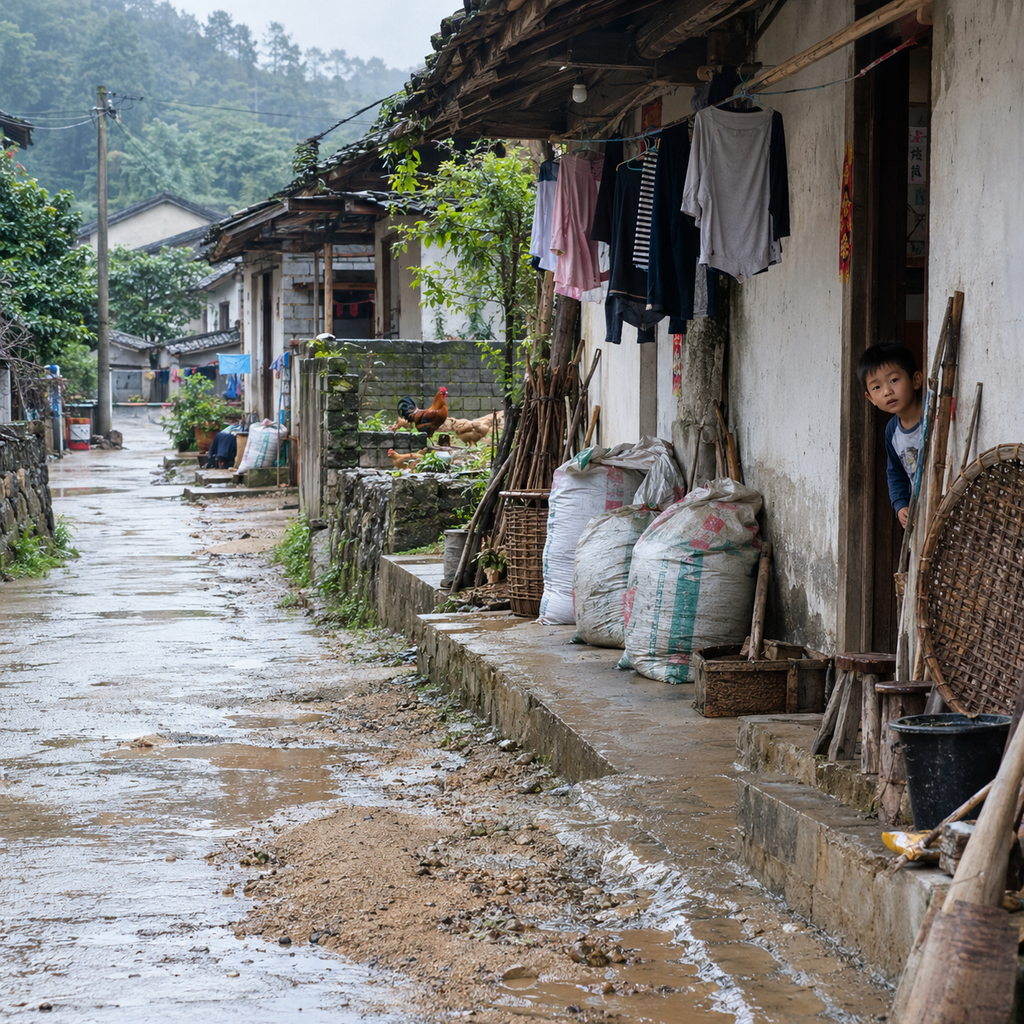
The village edge also held things that would not appear in a scenic brochure: a repaired metal gate, a wall faded by sunlight, timber stacked behind a house, and farm tools hanging beneath the eaves to dry. They reminded me that rural beauty is not always arranged. A hinge made a thin squeak, moss marked the base of a wall, and scratches from tools or carrying showed on the wood. I did not rush to call these signs “simple” or “backward”; both words would have been too quick. A more accurate description was that the objects were still being used. Use leaves wear, and wear records a form of local life.
天气变化还影响了我与人的相处方式。晴朗时,我可能会在路边停下来更久,也更容易把一个路人当作可以询问路线的人;雨雾加重后,大家的动作都变快了,村民要收东西,司机要看清路,我就不该因为好奇把别人拦住。一次我正准备向一位经过的骑车人问路,看到他车后捆着湿漉漉的东西,便把已经到嘴边的问题咽了回去,只退到一旁让他先过。没有获得答案并不等于错过交流,有时尊重对方当下的急迫,就是最合适的交流。
Changing weather also affected how I interacted with people. In clear weather I might linger by the road and be more inclined to treat a passerby as someone available to answer a question. As the mist and rain thickened, everyone moved faster: villagers needed to bring things inside, and drivers needed to see the road. I should not stop someone simply because I was curious. Once I was about to ask a cyclist for directions, but noticed wet bundles tied to the back of the bicycle. I swallowed the question and stepped aside. Not receiving an answer does not mean missing an interaction. Sometimes respecting another person’s urgency is the most appropriate form of contact.
我把当天见到的车辆分成了几种实际情形:经过而不停的车、需要在路口转弯的车、装着农具或货物的车,以及可能愿意载人的车。它们在声音、速度和行驶位置上并不一样。对一个步行者来说,不能因为某辆车看起来像空车,就默认它会停下来;也不能站到弯道外侧挥手,让司机在看不清前方时作出突然决定。后来我需要回县城,先走到视线开阔、方便停靠的位置,再举手示意。司机是否停车是对方的选择,我只在确认车辆安全停下后靠近询问。这个过程没有传奇色彩,却让我觉得自己更像一个负责任的行路人。
I began sorting the vehicles I saw into practical situations: cars that passed without stopping, vehicles turning at a junction, those carrying tools or goods, and those that might be willing to take a passenger. They differed in sound, speed, and position on the road. A walker should not assume that a car will stop simply because it looks empty, nor should one stand outside a bend and wave, forcing a driver to react suddenly with limited visibility. When I eventually needed to return toward town, I went to a place with a clear view and room to pull over, then raised my hand. Whether the driver stopped was the driver’s choice. I approached only after the vehicle had stopped safely. It was not a dramatic moment, but it made me feel like a more responsible person on the road.
小店给我的另一种提醒,是不要把“方便”理解成理所当然。雨天进门前,我先在门外抖掉鞋底的泥,确认不会把积水带到客人脚边;坐下后把背包放在自己脚旁,而不是占用过道;离开时把用过的纸巾收好。店主没有要求我这样做,但这些动作能减少别人替我收拾的麻烦。游客往往把乡间小店当作路线上的补给点,店里的人却要继续处理自己的生意和生活。我的短暂停留应该是彼此不打扰的借用,而不是把一个普通空间变成只服务于我的休息站。
The small shop offered another reminder: convenience should not be treated as an entitlement. On a rainy day, I shook mud from my soles outside before entering, making sure not to carry puddle water toward other customers. After sitting down, I kept my backpack by my feet rather than in the passage. Before leaving, I gathered my used tissues. The shopkeeper never asked me to do these things, but they reduced the work I might otherwise leave behind. Visitors often treat a rural shop as a supply stop on a route. The people inside still have their own business and lives to manage. My brief stay should be a borrowing that disturbed no one, not the transformation of an ordinary place into a rest station built around me.
到了下午后段,我的情绪反而比上午稳定。不是因为已经接受了“看不到花”这个事实,而是我终于停止用花期的标准给每一眼景色打分。近处一块田里有几株高出其他作物的植物,风一来便先向一侧倒下;旁边的沟渠边长着细长的草,草根周围的泥被水冲出小小的扇面。我拍下这些变化,照片仍然不够壮观,却包含了当天的天气、地势和步行速度。它们让回程变得具体:我不是从一个失败的景点离开,而是从一套已经观察过的土地关系中退出。
By the later afternoon, my mood had become steadier. Not because I had accepted the fact that I would not see flowers, but because I had stopped grading every view against the flowering season. In one nearby plot, a few plants rose above the others and leaned first in the wind. Along the ditch, slender grass grew from mud shaped into small fans by running water. I photographed these changes. The images were not spectacular, but they contained the day’s weather, terrain, and walking pace. They made the return concrete: I was not leaving a failed attraction. I was stepping away from a set of relationships in the land that I had actually observed.
这也改变了我对“错季旅行”的判断。错季不是一个自动成立的诗意标签,它有真实的代价:景观可能不符合期待,公共交通和路况需要更谨慎地确认,雨雾会压缩可见范围,原本适合拍照的路段也可能变得泥泞。与此同时,它也可能带来别的优点:人少时更容易听见环境,作物的阶段更清楚,村口小店和道路本身不会被花海叙事完全遮住。重要的不是把缺点包装成优点,而是提前问清楚自己能否接受这些代价。如果不能,改期比到了现场再硬撑更明智;如果能接受,就应当按非花期的真实条件准备。
This changed how I judged off-season travel. “Traveling at the wrong time” is not automatically a poetic label. It has real costs: the landscape may not match expectations, transport and road conditions require more careful checking, mist and rain reduce visibility, and roads that are easy to photograph may become muddy. At the same time, the off-season can offer other advantages: with fewer visitors, environmental sounds are easier to hear, crop stages are clearer, and village shops and roads are not completely hidden by the flower-sea narrative. The point is not to disguise disadvantages as benefits. It is to ask whether I can accept the costs. If I cannot, changing the date is wiser than forcing the trip after arrival. If I can, I should prepare for the off-season as it really is.
如果把这一天重新画成一张路线图,我会用四种颜色标记:灰色代表车辆较多的公路,棕色代表雨后需要放慢的泥地,绿色代表适合观察作物的田边,蓝色代表可以停下来避雨或补水的地方。这样的地图不会告诉我哪一处最上镜,却会告诉我怎样把风险和兴趣放在同一张纸上。走路不是把地图上的线变成脚下的线那么简单,它还包括何时加快、何时让行、何时询问、何时不问,以及何时承认今天已经够了。罗平的田野让我把旅行从“抵达景点”重新理解成“持续作出小决定”。
If I redrew the day as a route map, I would use four colors: gray for roads with heavier traffic, brown for muddy stretches that required slower steps, green for field edges suited to observing crops, and blue for places where I could shelter from rain or get water. Such a map would not tell me which view was most photogenic. It would tell me how to place risk and curiosity on the same sheet of paper. Walking is not simply turning a line on a map into a line beneath one’s feet. It includes deciding when to speed up, yield, ask, refrain from asking, and admit that the day has been enough. Luoping’s fields made me understand travel as a stream of small decisions rather than mere arrival at an attraction.
我最后一次回望田野时,远处的山被暮色压成几层不同深浅的灰,近处的作物仍保持着湿润的绿。没有花的亮色,反而让山与田之间的距离更清楚;没有人群的喧闹,公路上每一次车辆经过都更容易被我察觉。我把相机背在胸前,双手空出来,沿着已经走熟的路肩向车辆停靠处移动。那一小段路我走得很慢,却没有上午的迟疑。不是因为路线变得更好,而是我已经知道自己在看什么,也知道什么不必再追。
When I looked back at the fields for the last time, dusk pressed the distant mountains into several shades of gray, while the nearby crops retained their wet green. Without the bright color of flowers, the distance between mountain and field became clearer. Without a crowd, every passing vehicle on the road was easier to notice. I carried the camera against my chest and kept both hands free as I moved along the familiar shoulder toward the place where a vehicle could stop. I walked that final stretch slowly, but without the hesitation of the morning. The route had not become better. I simply knew what I was looking at, and what I no longer needed to chase.
如果下次再来,我会把准备工作做得更细。首先确认花期是否真的符合自己的主要目标,而不是只看一张旧照片;其次把步行路线按天气拆成可撤退的小段,避免把所有时间押在一个远处的观景点;再次准备能应付泥路的鞋和防水收纳,让身体条件不要拖累判断。遇到村民时,我会继续保持距离,先用点头或简单问候表达礼貌,只有对方愿意交流时才继续;遇到司机,则先看路况再决定是否上车。至于小店,我会把它当成休息和补水的地方,不强求老板提供一段传奇故事。
If I return, I will prepare more carefully. First, I will confirm whether the flowering season matches my main purpose instead of relying on an old photograph. Then I will divide the walking route into sections with easy retreats according to the weather, rather than placing the whole day on one distant viewpoint. I will also bring shoes suited to mud and waterproof storage so that physical discomfort does not distort my decisions. When meeting villagers, I will keep my distance, begin with a nod or a simple greeting, and continue only if they seem willing to talk. With drivers, I will read the road before deciding whether to ride. As for small shops, I will treat them as places to rest and get water, not as sources of a required local legend.
从县城进入田野时,我最初还在寻找一个可以替代花海的主题,后来发现不必替代。替代路线不是把没有的东西用另一处景点补回来,而是承认今天的条件,然后重新安排自己的观看顺序。天气不好,就少走暴露在车流旁的路;花没开,就多看地貌和农作;体力下降,就把回程提前;听不懂一段方言,就不把它加工成引语。这些决定看起来都很小,却比一句“淡季也很美”更能帮助我理解一趟旅行是否适合自己。
When I entered the fields from town, I was still searching for a theme that could replace the flower sea. Later I realized that nothing needed to be replaced. An alternative route does not fill an absence with another attraction. It accepts the conditions of the day and rearranges the order of looking. If the weather is poor, walk less beside heavy traffic. If the flowers are not blooming, spend more time with landform and farming. If energy falls, begin the return earlier. If a local phrase is not understood, do not turn it into a quotation. These decisions are small, but they help me judge whether a trip suits me better than the sentence “the off-season is beautiful too.”
傍晚前,我又经过那间小店。雨棚下的地面已经干了一部分,门口的泥印被来往的人踩得更杂乱。我没有再次进去打扰,只朝店里点了点头。店主也看见我,抬手回应。这个动作很轻,却让我想起上午站在雨里的自己:那时我把缺少花朵当成一个问题,急着寻找补偿;现在我只是知道,自己已经走过一段路,知道哪里滑、哪里窄、哪里车辆会突然出现,也知道下次什么时候该来、什么时候不必勉强。目的地没有替我做判断,我只能带着当天的证据离开。
Before evening, I passed the small shop once more. Part of the ground beneath the awning had dried, and the mud marks at the entrance had become more mixed from people walking through. I did not go in again. I only nodded toward the shop, and the shopkeeper raised a hand in reply. The gesture was slight, but it brought back the person I had been that morning: I had treated the missing flowers as a problem and hurried to find compensation. Now I simply knew where the ground was slippery, where the road narrowed, and where vehicles might appear suddenly. I also knew when I might return and when I should not force the timing. The destination did not make the decision for me. I left carrying the evidence of that day.
Public Source Notes
地方文旅公开资料;公开地图资料;旅行者现场观察;农业与乡村道路的一般性公开资料
- 外国人在中国用高铁:从订票到进站全流程 | China High-Speed Rail for Foreign Travelers: End-to-End Guide
- 大理先让我学会的,不是看风景,而是在古城外把脚步放稳 | What Dali Taught Me First Was Not the View, but How to Steady My Steps Outside the Old Town
- 第一次去中国,你可能准备错了 | First Trip to China: You're Probably Preparing for the Wrong Things
- 两周中国行,我帮你把行程想清楚了 | A 2-Week China Itinerary That Actually Makes Sense
- 我在青岛海边学会先看风和潮的方向,再决定坐在哪一排 | In Qingdao by the Sea, I Learned to Check the Wind and Tide First Before Choosing Where to Sit
- 丽江的雨停在屋檐上以后,我开始跟着水渠和石板路慢慢走 | After Rain Stopped Along Lijiang’s Eaves, I Began Following the Canals and Stone Lanes Slowly
- 我在贵州山里迷了七天路 | Seven Days Lost in the Mountains of Guizhou
- 拉萨的雨停以后,连水洼边的小停顿都像一种进入方式 | After Rain in Lhasa, Even a Pause Beside a Puddle Felt Like a Way of Entering the City
- 中国城市的绿色脉络:那些被树荫覆盖的街道 | China's Green Veins: The Tree-Lined Streets That Define Its Cities
- 秦汉唐宋明清——六个朝代串起你的中国旅行 | Six Dynasties That Frame Your China Trip
Comments (0)