
一只陶马,让孩子在西安开始认真追问历史 | A Clay Horse Opened the Door to History for My Child in Xi’an
一只陶马,让孩子在西安开始认真追问历史 | A Clay Horse Opened the Door to History for My Child in Xi’an
那天下午的西安有一点闷热,太阳挂得很高,地面反光发白。我们本来打算先去城墙,可孩子走了两段路就说腿酸,额头上还冒了细汗。我临时改了计划,先带他进博物馆吹空调休息一下。很多父母会担心,小孩进博物馆是不是很快就没兴趣,可那天的变化完全超出我的预料。
That afternoon in Xi’an felt heavy with heat. The sun hung high, and the pavement reflected a pale glare. We had planned to go to the city wall first, but after two short stretches of walking, my son said his legs were tired and tiny beads of sweat were already forming on his forehead. I changed the plan on the spot and took him into a museum to rest in the air conditioning. Many parents worry that children will lose interest quickly inside a museum, but what happened that day surprised me completely.
馆里很安静,只有鞋底踩在地面上的轻响,还有偶尔传来的讲解声。儿子一开始确实没什么精神,手里捏着门票角,东张西望。直到他在一个展柜前停住,里面是一匹不大的陶马,颜色已经旧了,鬃毛却做得很认真,像还带着一点向前冲的劲。他趴在玻璃前问我:“它以前是不是有人骑?”
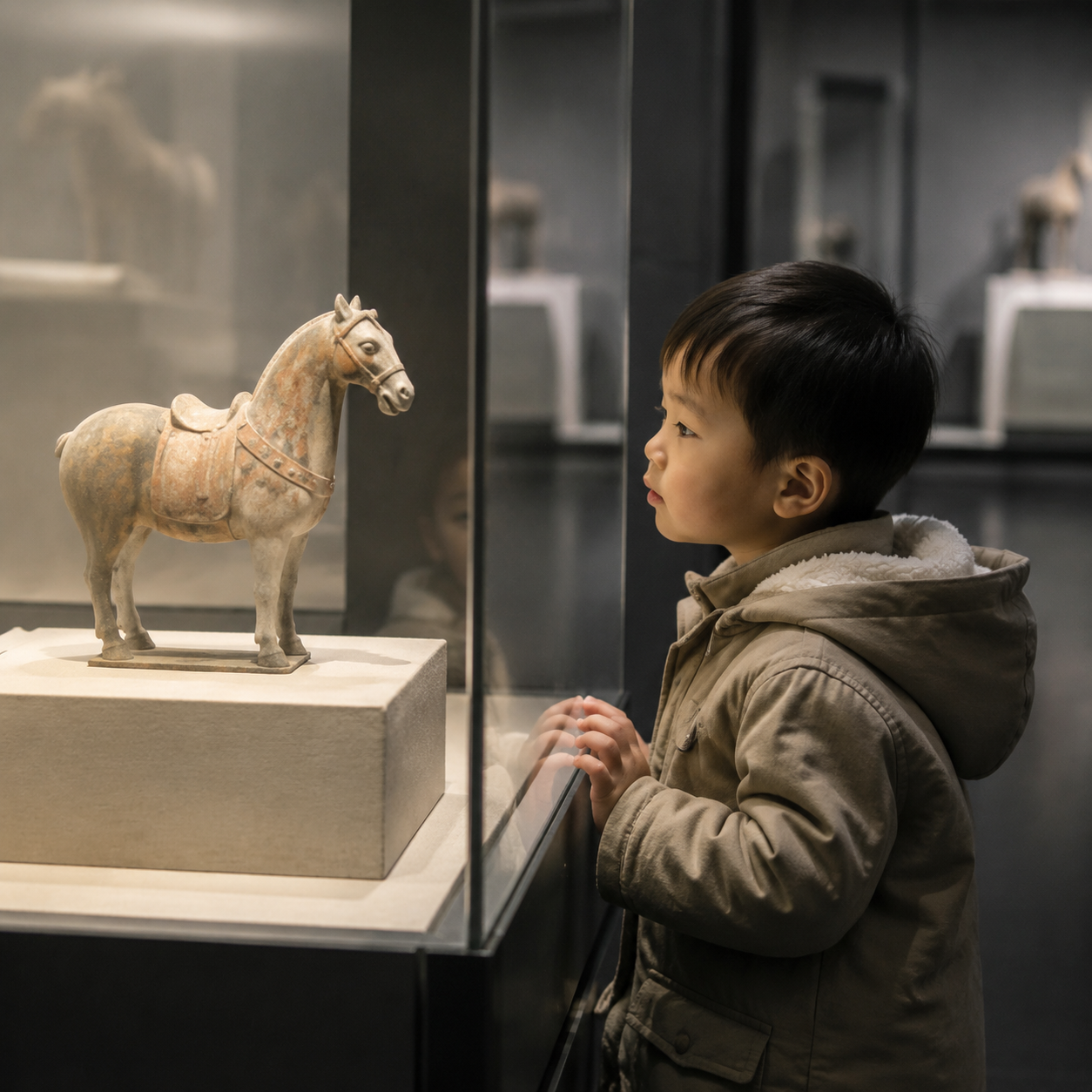
Inside, it was quiet except for the light sound of shoes on the floor and the occasional murmur of a guide. My son did seem tired at first. He held the corner of the ticket and looked around without much focus. Then he stopped in front of one display case. Inside stood a small clay horse. Its color had faded with time, but the mane had been shaped with care, as if it still carried some forward movement. He leaned toward the glass and asked, “Did someone ride this a long time ago?”
旁边正好有一位年轻讲解员路过,听见这句话便停下来,对他说:“对,以前的人会骑马。这匹马可能和出行、军队或者身份有关。”儿子的眼睛一下亮了,马上追问:“那它为什么放在这里?为什么不是活的马?”讲解员没有急着用复杂术语压他,而是耐心地说:“因为它是古代留下来的东西,能告诉我们以前的人怎么生活、怎么出门、怎么看待重要的事情。”
A young museum guide happened to be walking by. Hearing his question, she stopped and answered, “Yes, people used horses in the past. This one may have been related to travel, the army, or social status.” My son’s eyes lit up immediately. “Then why is it here? Why isn’t it a real horse?” he asked. Instead of overwhelming him with technical language, she answered patiently. “Because this is something left from ancient times. It helps us understand how people lived, how they traveled, and what they considered important.”
就这样,一个原本快要走神的小孩,突然被拉进了历史。他开始不再只看“漂不漂亮”,而是追着问“以前的人怎么用”“为什么要这样做”。后来看到铜镜,他问“没有手机的时候,他们怎么照自己”;看到瓦当,他问“屋顶为什么也要做得这么认真”;看到地图,他又自己找“长安”在哪里。我站在他身后,听他一句接一句发问,突然觉得中国很适合带孩子来的一个原因,就是很多知识不是硬塞进去的,而是在真实器物前慢慢长出来的。

That was how a child on the verge of drifting off suddenly got pulled into history. He stopped asking whether something looked pretty and started asking how people had used it and why they had made it that way. In front of a bronze mirror he asked, “How did they look at themselves before phones?” In front of decorated roof tiles he asked, “Why did they work so carefully even on the roof?” When he saw a map, he started looking for Chang’an by himself. Standing behind him and hearing question after question, I realized once again that China is a rich place to bring children precisely because knowledge does not always arrive as a lecture. Sometimes it grows in front of a real object.
从博物馆出来时,外面还是热,可儿子整个人像换了电一样,一路都在讲话。他说如果晚上再去城墙,就能想象古代的人从哪里进城;他说如果看见兵马俑,自己会先看马和人的表情;他说历史原来不是课本上的年份,而是“真的有人在生活”。这句话让我非常喜欢。很多孩子并不是对历史没兴趣,他们只是还没有遇到一个具体的入口。那个入口可能是一只陶马、一面铜镜、一块砖,甚至只是一个愿意多停下三分钟的讲解员。
When we walked out of the museum, the heat was still there, but my son seemed newly charged. He talked the whole way. He said that if we went to the city wall at night, he could imagine how people had entered the city long ago. He said that if he ever saw the Terracotta Army, he would look first at the expressions on the horses and faces. Then he said that history was not just a list of years in a textbook. It was “real people living.” I loved that sentence. Many children are not uninterested in history. They simply have not found a concrete doorway into it yet. That doorway might be a clay horse, a bronze mirror, a brick, or even a museum guide willing to stop for three extra minutes.
晚上我们去回民街吃饭,街上灯已经亮起来,空气里有孜然和烤肉的香味。儿子拿着肉夹馍,还在跟店里的叔叔说:“我今天看到古代的马了。”对方笑着回他:“那你今天学到东西了啊。”他用力点头,像是怕别人不知道自己真的学到了。中国适合亲子旅行,不只是因为景点密集,而是因为孩子在这里很容易把眼前看到的东西和脑子里的问题连起来,问题一旦连起来,兴趣就真的活了。

That night we went to the Muslim Quarter for dinner. The lights were on, and the air smelled of cumin and grilled meat. Holding a roujiamo in his hand, my son told a shopkeeper, “I saw an ancient horse today.” The man laughed and answered, “Then you learned something today.” My son nodded hard, as if he wanted to make sure everyone knew he really had. China works beautifully for family travel not only because there are many attractions close together, but because children can easily connect what they see with the questions forming in their minds. Once those questions connect, interest becomes alive.
如果想让孩子感受到中国有很好的学习氛围,博物馆真的是非常值得安排的一站。但去的时候,不必急着讲很多大道理,也别要求孩子一件件都认真看完。更有效的方法是让他先找到一件最想问问题的东西,再顺着那个兴趣往前走。对孩子来说,被允许提问,本身就是一种很好的学习体验;而在中国这样历史层次很厚的城市里,几乎每个展柜后面都藏着继续追问的机会。
If you want your child to feel China’s learning atmosphere in a real way, museums are absolutely worth visiting. But once you are there, there is no need to deliver a grand lecture or demand that your child study every object carefully. A better way is to let them find the one thing they most want to ask about and then follow that interest forward. For a child, being allowed to ask is already a powerful learning experience. In a city like Xi’an, where layers of history are so thick, almost every display case contains another invitation to keep asking.
旅行里可以这样做:进馆前先给孩子一个简单任务——找出今天最想问的一件东西;出馆后吃饭时,再让他把刚刚的发现讲给你听。只要孩子愿意复述、愿意比较、愿意继续追问,这段旅行就已经不只是观光,而是在帮他把好奇心练得更结实。
Here is one practical way to use a museum on a family trip: before entering, give your child one simple mission—find the object you most want to ask about today. Afterward, over a meal, invite them to tell you what they discovered. The moment a child starts retelling, comparing, and asking the next question, the trip stops being mere sightseeing. It becomes training for a stronger curiosity.
- 鸡鸣寺到城墙下那一段夜路,让我读懂南京为什么适合慢慢看 | The Night Stretch from Jiming Temple to the Foot of the Wall Showed Me Why Nanjing Rewards Slow Looking
- 在中国公园跟着陌生人倒着走那十分钟,我第一次不再急着解释自己 | The Ten Minutes I Walked Backward with Strangers in a Chinese Park Was the First Time I Stopped Rushing to Explain Myself
- 在大同的风里看石窟与城墙 | Reading Grottoes and City Walls in Datong's Wind
- 黄山云海与迎客松:四季皆美 | Huangshan Sea of Clouds & Welcome Pine: Beautiful in All Seasons
- 我在青岛海边学会先看风和潮的方向,再决定坐在哪一排 | In Qingdao by the Sea, I Learned to Check the Wind and Tide First Before Choosing Where to Sit
- 孔氏南宗家庙门口的豆腐脑,让我重新认识衢州的早晨 | A Bowl of Tofu Pudding Outside the Southern Confucius Temple Changed How I Saw Quzhou Mornings
- 中国景区门票预约与排队技巧 | Booking Tickets and Beating Queues at Chinese Attractions
- 秦汉唐宋明清——六个朝代串起你的中国旅行 | Six Dynasties That Frame Your China Trip
- 南京这座城最难拍准的地方,是城墙底下那些还在发生的今天 | The Hardest Thing to Capture Accurately in Nanjing Is the Living Present Beneath Its Walls
- 中国城市地铁出行技巧 | Tips for Using Metro in Chinese Cities
Comments (0)