
七月去青岛,我才真正学会用「反方向」看海边城市 | I Only Understood Qingdao in July After Learning to Use a Seaside City Backwards
七月去青岛,我才真正学会用「反方向」看海边城市 | I Only Understood Qingdao in July After Learning to Use a Seaside City Backwards
我刚到青岛的时候,也和很多第一次来海边城市的人一样,脑子里全是海。我以为行程最正确的打开方式,就是一下车就去看海,最好从早到晚都别把视线从海平面上挪开。可真正到了七月的青岛,这个想法很快就被现实纠正了。阳光一上来,海边那种亮不是温柔的亮,而是会把人整张脸都照得发紧的亮;人一多,风景也跟着变平,大家举着手机寻找同一个角度,连停顿都像被排好了顺序。我站在路边看着那些匆匆往海边赶的人,忽然有点想拐开。
When I first arrived in Qingdao, I was like many people on their first trip to a seaside city: my mind was full of the sea. I thought the most correct way to begin was to head straight for the coastline and keep my eyes on the horizon from morning to night. But July in Qingdao corrected that idea quickly. Once the sun rose higher, the brightness by the water was not gentle at all. It tightened your whole face. And once the crowds thickened, even the view started to flatten. Everyone lifted their phones toward the same angle, and even the pauses between people seemed scheduled. I stood at the roadside watching them hurry toward the sea and suddenly felt like turning away instead.
所以我做了一件自己原本没计划过的事:先往里走。不是先进海边,再顺手逛城市,而是反过来,先看树影、旧房子、坡路和居民区,再把海留到后面。这个顺序一开始有点违背直觉,可青岛偏偏适合这么打开。早晨从八大关那一带慢慢走的时候,路面还没有被晒得发白,红瓦和浅色墙面从树缝里一块一块露出来,路边偶尔有骑车的人经过,车轮压过地面会带起很轻的一阵沙沙声。那种感觉不像“到了著名景区”,更像你先被允许进入了这座城市的呼吸系统。
So I did something I had not planned at all: I walked inward first. Not sea first with the city as a side note, but the reverse—shade, old buildings, sloping roads, and residential pockets before the coast. At first the order felt almost wrong, but Qingdao is strangely well suited to it. In the morning around Badaguan, the pavement had not yet turned white under the heat. Red roofs and pale walls appeared between the trees in fragments. Cyclists passed now and then, and their wheels made a small brushing sound against the road. It did not feel like arriving at a famous attraction. It felt more like I had been quietly admitted into the city’s breathing system.
我特别记得一个拐角。那时我刚从一段有点上坡的路走下来,手臂上还沾着一点潮气,前面一个卖早点的小店正把门帘卷起来。店里有人用夹子翻油锅边上的面食,空气里有面香,也有一点海边城市常见的湿咸味。我犹豫要不要直接买点什么,一个站在门口的大叔看了我一眼,说你先坐会儿,前面那边风更大。我顺着他指的方向走过去,真的在路口感到一股更舒服的风。青岛给我的好感,很多时候不是来自宏大的景,而是来自这种很小、很具体、只有当下才成立的提醒。
I remember one corner especially well. I had just come down a slight slope, with a little humidity still clinging to my arms, when a breakfast shop ahead rolled up its hanging screen. Someone inside was turning fried dough with metal tongs. The air carried the smell of flour and oil, but also that damp salty edge that belongs to many coastal cities. I hesitated over whether to buy something, and a middle-aged man standing near the door glanced at me and said I should sit for a while first because the wind was better farther ahead. I followed the direction he pointed and really did find a stronger, kinder breeze at the next opening. A lot of my affection for Qingdao came not from grand scenery, but from these small, precise moments that only made sense right there and then.
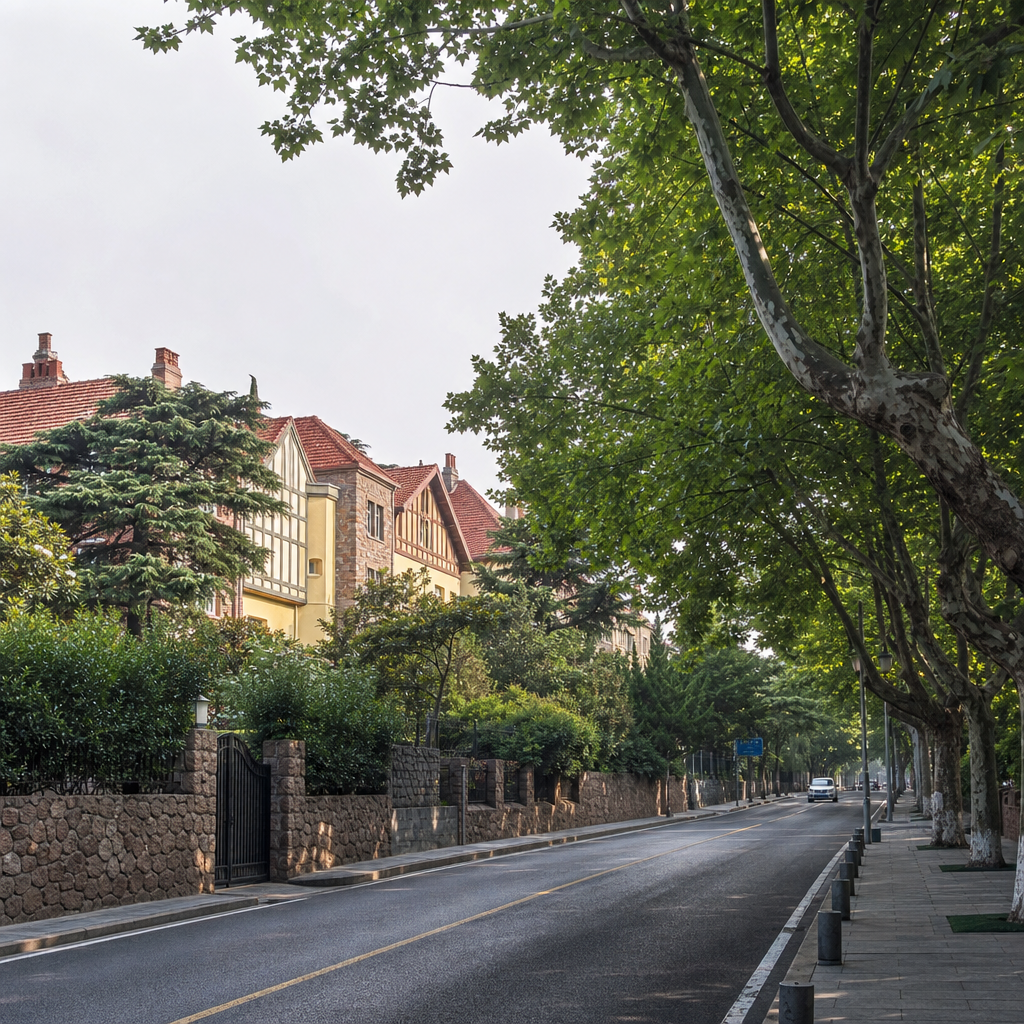
中午最亮、最晒的时候,我反而不靠海。我去找小街、找有树荫的地方,或者干脆坐进一家店里看外面的光怎么落。以前我总觉得,旅行最怕“错过黄金时段”,后来在青岛才明白,所谓黄金时段不一定属于每个地点。对海边来说,正午可能太硬了;对一条老街来说,那个时候却刚好能看见树影在墙上晃成什么样。把时间错开以后,我的情绪也跟着松了。我不用再和人潮抢,不用一直找最标准的拍照站位,甚至不用不断提醒自己“快点,不然来不及”。
At the brightest, hottest part of the day, I stayed away from the coast on purpose. I went looking for side streets, shaded stretches, or simply a place indoors where I could watch how the light fell outside. I used to think travel was always about catching the “best time” for everything. Qingdao taught me that a golden hour does not belong equally to every place. Noon can be too harsh for the sea, but perfect for seeing what shifting tree shadows do to an older wall. Once I separated time this way, my mood relaxed as well. I no longer had to compete with the crowds, chase the standard photo position, or keep telling myself to hurry before something was lost.
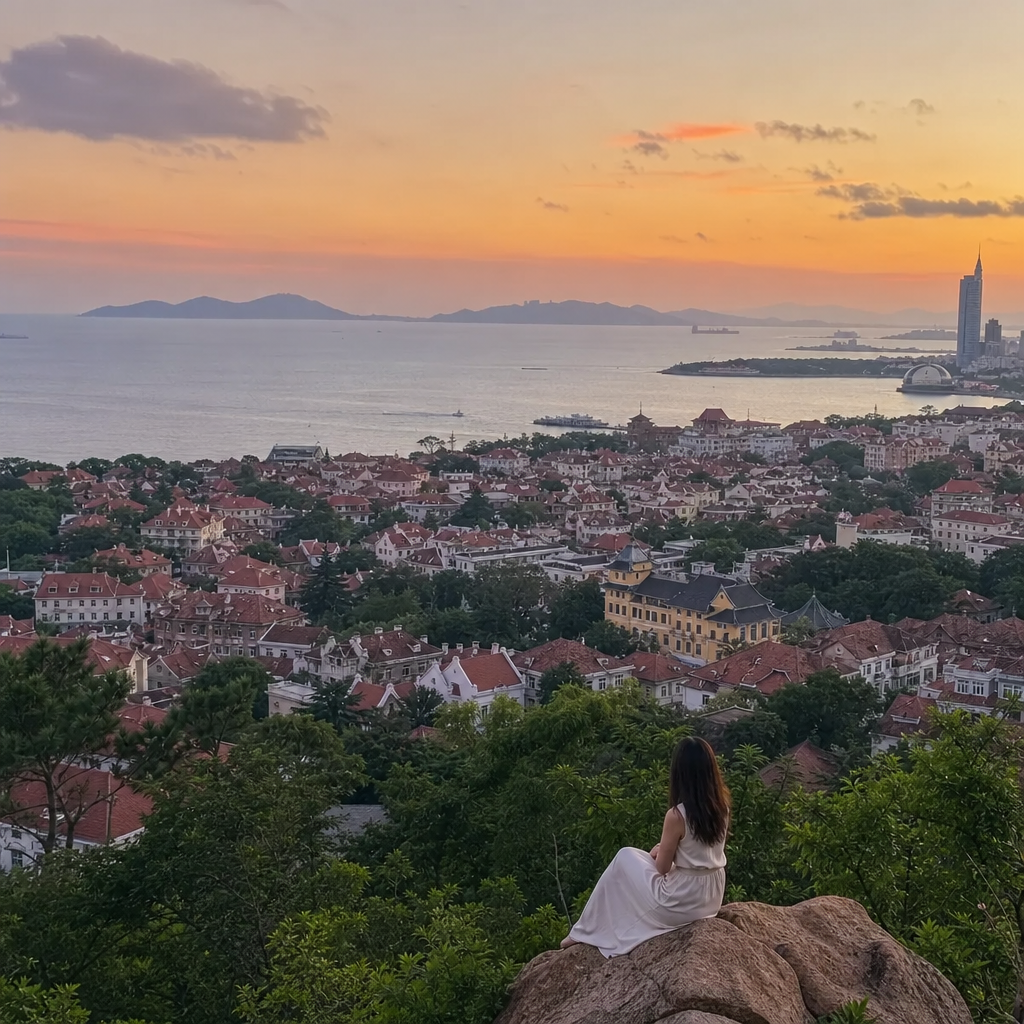
等到傍晚,我才回到海边。那时候的海终于变得有层次了。风不再只是把头发吹乱,它开始真的把白天残留在身上的热慢慢带走。有人卷起裤脚踩进浅水里,有情侣背靠栏杆说话,也有人只是安静地站着,看天从白蓝一点点转成更深的颜色。我就是在那个时间突然理解,为什么“反着走”会更对。你不是绕路,而是在给风景留一个更适合它出现的时机。青岛最动人的地方,不一定是你最先冲过去看到的那一眼,而是你把一天过到后半段,它自己慢慢递给你的那一眼。
Only in the evening did I return to the sea. By then the coastline had depth again. The wind was no longer just messing up my hair. It was steadily lifting the heat that had been left on my skin all day. Some people rolled up their pants and stepped into the shallows. Couples leaned against the railing and talked. Others simply stood still, watching the sky turn from pale blue into something deeper. That was when I understood why going “backward” had felt so right. I had not taken a detour. I had given the view a better moment to arrive. The most moving side of Qingdao is not always the first glance you rush toward. Sometimes it is the glance the city hands back to you after you have lived through the rest of the day.
晚上我去吃海鲜的时候,桌面有一点潮,啤酒杯外壁也挂着水珠,隔壁桌有人把蛤蜊壳碰得叮当响。我忽然觉得,海边城市真正完整的样子,本来就不只是“看海”。它应该包括上坡时的小喘气,街口吹来的风,树影里的旧楼,和夜里餐桌边那些非常具体的人声。那趟七月的青岛让我学会的,不是某条最省力路线,而是别太快把一座城市缩成它最响亮的标签。
When I sat down for seafood that night, the tabletop felt faintly damp, condensation was running down the side of my beer glass, and shellfish clinked on plates at the next table. It struck me then that a seaside city was never complete if all you do is “see the sea.” It should also include the slight breathlessness of walking uphill, the breeze at a street corner, old buildings under moving shade, and the precise human sounds around a dinner table at night. What Qingdao taught me that July was not a more efficient route. It was not to shrink a city too quickly into its loudest label.
回去的路上,我又从一段坡路往下走,远处还能看到一点海面反出来的光。天已经暗了,树叶的边缘只剩一圈薄薄的亮。我那时特别确定,如果再来一次,我还是会先往反方向走。因为有些城市不是靠直奔主题理解的,而是要先绕一点,先慢一点,先把自己从“非得立刻得到最漂亮画面”的着急里拿出来。等你这样做了,海反而会在更对的时候回来找你。
On the way back, I walked down another sloping road and could still catch a trace of light coming off the water in the distance. It was already dark, and the leaves were edged with only a thin outline of brightness. At that moment I felt sure that if I ever came again, I would still begin in the opposite direction. Some cities are not meant to be understood by rushing straight toward the headline view. You have to detour a little, slow down a little, and pull yourself out of the panic of needing the most beautiful image right away. Once you do that, the sea has a way of returning to you at exactly the right time.
- 中国高铁旅行攻略:如何用高铁串联你的中国行 | China by High-Speed Rail: How to Link Your Entire Trip on the Bullet Train
- 从武夷山下来,在茶桌上理解岩韵 | Understanding Rock Rhyme at a Wuyi Tea Table
- 八月海滨全攻略:中国最值得去的海滩 | August Beach Guide: China's Best Coastal Destinations
- 凌晨一点我还敢一个人走回酒店:在中国把安全感走成了日常经验 | At 1 a.m. I Still Walked Back to My Hotel Alone: How Safety in China Became Ordinary to Me
- 从成都出发的三天川西自驾路线 | A 3-Day Road Trip from Chengdu into Western Sichuan
- 中国纪念品选购指南 | Chinese Souvenirs Guide
- 天还没热起来,长安早市已经把一天的味道摆出来了 | Before the Heat Rose, Chang'an's Morning Market Had Already Laid Out the Flavor of the Day
- 北京到西安:穿越历史之旅 | Beijing to Xi'an: A Journey Through History
- 学打中国结之后,我终于理解“吉祥”为什么可以握在手里 | After Learning Chinese Knotting, I Finally Understood How Auspicious Meaning Can Be Held in the Hand
- 在中国用手机支付:支付宝和微信支付外国人能用吗? | Mobile Payments in China: Can Foreigners Use Alipay and WeChat Pay?
Comments (0)