
我在广州真正走顺的那天,是从一顿饭开始给路线排节奏的 | The Day Guangzhou Finally Became Easy for Me Was the Day I Let a Meal Set the Rhythm of the Route
我第一次把广州走顺,不是靠景点清单,而是先学会跟着饭点进城 | I Only Learned How to Move Smoothly Through Guangzhou After Letting Meal Rhythm Lead Me Into the City
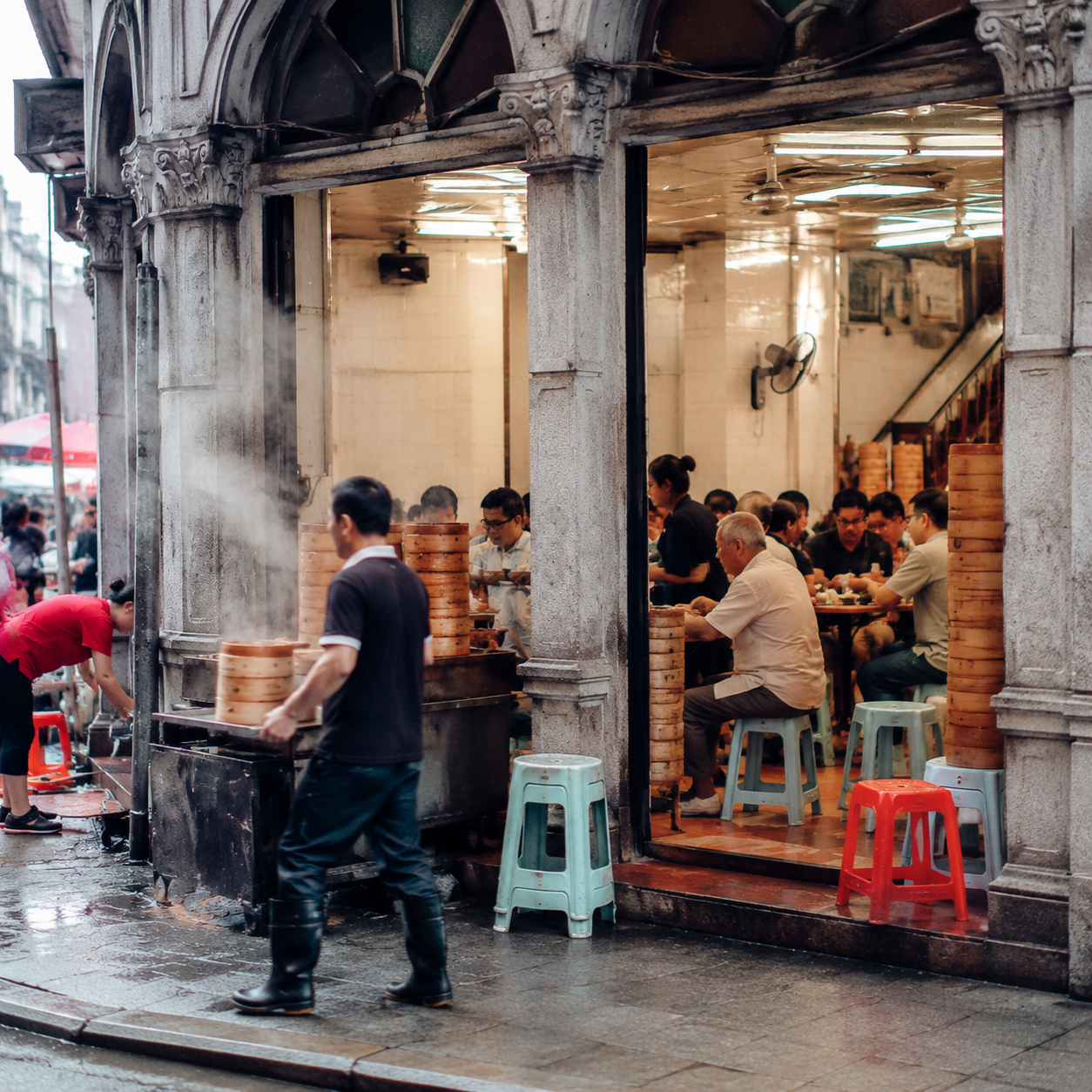
我第一次到广州的时候,真正让我有点乱的,不是找不到景点,而是这座城从一开始就不像在等游客。早上刚出地铁,骑楼下已经有人端着托盘往里走,门口的塑料凳擦着地面拖出短促的声音,蒸笼一掀开,热气直接带着面香和湿气往脸上扑。那一瞬间我突然意识到,广州不是那种先给你一个巨大的观景点,让你站稳再慢慢进去的城市。它是一上来就把你卷进日常里,然后看你会不会顺着这个节奏往前走。
The first time I arrived in Guangzhou, what unsettled me was not the lack of landmarks. It was the feeling that the city was never waiting politely for tourists. The moment I came out of the metro, people were already carrying trays under the arcade streets, plastic stools scraped quickly across the ground, and when a bamboo steamer lid opened, the heat came straight into my face with flour, moisture, and breakfast smell mixed together. In that instant I realized that Guangzhou is not the kind of city that gives you one huge viewpoint first so you can steady yourself before entering. It pulls you into daily life immediately and then tests whether you can move forward inside that rhythm.
很多攻略会把广州写成“美食很多”“适合吃吃逛逛”,这些都不算错,但对第一次来中国的人来说还不够。真正重要的是,这座城的吃不是路线之外的奖励,而是路线本身。你不是看完半天以后才找地方吃饭,而是靠一顿饭判断这一片街区怎么动、人群往哪里挤、自己接下来该继续走还是该先坐下来。我后来才明白,广州真正的进入法,常常不是从地图开始,而是从一张桌子开始。
Many guides describe Guangzhou with phrases like “great food everywhere” or “good for eating and strolling.” None of that is false, but for a first-time visitor to China it is still not enough. The real point is that eating here is not a reward waiting outside the route. It is part of the route itself. You do not finish half a day and then search for food. You use one meal to judge how the district moves, where the crowd presses, and whether you should keep walking or sit down first. I only understood later that Guangzhou often begins not from a map, but from a table.
我先学会的不是找景点,而是找“什么时候该坐下” / The First Thing I Learned Was Not How to Find Sights, but How to Know When to Sit Down
我以前在别的城市旅行时,习惯先把最重要的地标连起来,再把吃饭塞进中间空档。广州不太吃这套。它的节奏比较黏,黏到你如果一直想着“我先把这段走完再说”,最后反而会走得越来越毛躁。第一次在老城区里穿街过巷时,我本来想一口气把路走长一点,结果不到一个小时,脚步就开始被各种气味和声音打断:茶楼门口叫号,烧味店砧板声很重,糖水铺门口有人拿着塑料勺站着吃,拐角处还有人骑着电动车慢慢挪进骑楼阴影里。那时候我才发现,广州不是那种越忍越顺的城市,它更像是你越懂得什么时候坐下,它越愿意把后面的路给你铺开。
In other cities, I used to connect the most important landmarks first and push meals into whatever gaps remained. Guangzhou does not reward that habit very much. Its rhythm is sticky. If you keep telling yourself that you will sit down only after finishing the next segment, the route actually becomes rougher. The first time I moved through the older districts, I intended to stretch the walking line longer in one go. But in less than an hour, smell and sound kept interrupting my pace: numbers being called outside teahouses, heavy chopping from roast-meat shops, people standing at dessert stalls eating with plastic spoons, and electric scooters slowly sliding into the arcade shade. That was when I understood that Guangzhou is not a city that becomes smoother the longer you resist pausing. It is a city that opens the next part of the route more willingly once you know when to sit down.
所以我后来开始换一种走法。不是饿了才找地方吃,而是提前给自己留一个坐下点。不是看累了再找店,而是知道这条街本来就该在这里停一停。你一旦用这种方式走,整座城就会从“信息太多”变成“信息有顺序”。对第一次来中国的人来说,这种变化特别重要,因为它会让紧张感明显掉下来。
So I changed my method. I stopped waiting until I was hungry to look for a place to eat. I started leaving myself one sitting point in advance. I stopped treating restaurants as rescue stations that appear only after fatigue. I began to recognize that some streets are meant to pause exactly where they pause. Once I moved that way, the city changed from feeling overloaded with information into feeling ordered. For a first-time visitor to China, that shift matters enormously because it lowers nervousness almost immediately.
早茶不是餐饮项目,是广州的开场动作 / Morning Tea Is Not Just Food — It Is Guangzhou’s Opening Move

如果只把早茶理解成“当地特色早餐”,你对广州的理解会小一半。对我来说,第一次坐进茶楼时最震撼的,不是点心有多少种,而是这顿饭本身有多像一座城市在告诉你:别急。桌子并不催你,茶也不催你,连旁边那桌聊天的声音都不像在赶时间。服务员推着小车过来,蒸汽擦过眼镜片边缘,我一边看别人怎么勾单、怎么分点心、怎么给长辈夹东西,一边突然觉得,广州根本不是一座要靠“冲景点”理解的城。
If morning tea is treated only as a local breakfast specialty, then half of Guangzhou disappears from view. For me, the first shock of sitting down in a teahouse was not the number of dishes. It was how clearly the meal itself told me: do not rush. The table does not hurry you, the tea does not hurry you, and even the conversation at the next table does not sound time-starved. When a server pushed the cart over and the steam brushed the edge of my glasses, I found myself watching how people ticked orders, divided dishes, and placed food in front of older relatives. In that moment I suddenly felt that Guangzhou was not a city meant to be understood through charging at attractions.
早茶之所以重要,不只是因为它好吃,而是因为它会调整你看城市的速度。你从里面出来以后,再走进骑楼、市场和街边店,会明显更懂得看什么。原来人流不是乱,是有弹性的;原来排队不是堵,是一种默认秩序;原来吃东西的人并不只是停下来,他们也在帮这条街维持节奏。对我来说,那顿早茶几乎像一堂不讲道理、只讲手感的入门课。
Morning tea matters not only because it tastes good, but because it recalibrates the speed at which you look at the city. After coming out of a teahouse, the arcade streets, markets, and roadside shops suddenly become easier to read. The crowd is not chaotic; it bends and releases. A queue is not necessarily a blockage; it is often a default order. The people who stop to eat are not just stopping. They are helping the street maintain its rhythm. For me, that first morning tea felt almost like an introductory lesson taught without theory and entirely through bodily perception.
广州最打动人的,不是“大景”,而是普通街口一直有东西发生 / What Moved Me Most in Guangzhou Was Not a Grand View, but the Fact That Ordinary Corners Never Went Empty
我不是说广州没有值得专门去看的地方,而是说它最强的部分,经常不在“专门去看”里。你走着走着就会发现,一条看起来普通的街,前后十分钟会变出完全不一样的状态。刚开始是早餐店开火,再往前是市场边上开始忙,过一会儿又轮到糖水铺和小吃店接力。你站在原地久一点,甚至能感觉到一条街自己换挡。这个体验在很多城市里并不常见,所以才会让人越走越上头。

I do not mean that Guangzhou lacks places worth going out of one’s way to see. I mean that its strongest layer often lies outside the category of special sights altogether. You can walk through what seems like an ordinary street and watch it become three different streets within ten minutes. First the breakfast places are firing up, then the market edge becomes busy, and after that dessert shops and snack stalls take over the tempo. If you stand still for long enough, you can actually feel the street shifting gears on its own. That is not a common experience in many cities, and that is why Guangzhou keeps becoming more compelling the longer one stays inside it.
很多第一次来中国的人,会天然寻找“我现在是不是到了最值得看的地方”。广州很容易把这个问题悄悄改掉。因为走到后来,你更关心的会变成:“我现在是不是在这座城最正常、也最有生命力的一段里。”当这种问题开始取代前一种问题时,旅行就会从打卡变成阅读,而广州恰好很适合被这样读。
Many people coming to China for the first time naturally keep asking themselves whether they have reached the most worth-seeing place yet. Guangzhou quietly changes that question. After a while, what begins to matter more is whether one has entered a section of the city that feels most normal and most alive. Once that question replaces the earlier one, travel stops being a checklist and becomes a form of reading, and Guangzhou is especially suited to being read that way.
最后我记住的不是店名,而是节奏判断 / In the End, What I Remembered Was Not the Name of a Shop, but a Judgment About Rhythm
如果现在让我把第一次广州经验压成一句最短的话,我不会说哪家最好吃,也不会先报哪个街区最红。我会说:广州是那种你越懂得何时坐下、何时继续走、何时让一顿饭重新整理半天节奏,你就越会爱上的城市。它不会把最好的东西用一记重锤砸给你,它更像一层层把你往里带。等你反应过来的时候,你已经不是在“逛一个城市”,而是在跟一座城市一起吃、一起走、一起换挡。
If I had to reduce my first Guangzhou experience to one short sentence now, I would not begin by naming the best shop, nor would I first report the hottest district. I would say this: Guangzhou is the kind of city you love more as you become better at knowing when to sit down, when to continue walking, and when one meal should reorganize the rhythm of half a day. It does not deliver its best qualities with one hammer strike. It draws you inward in layers. By the time you notice what has happened, you are no longer “visiting a city.” You are eating, walking, and shifting gears with it.
- 海河风正冷的时候,一家小馆先把我的天津安顿下来了 | On a Cold Haihe Evening, a Small Eatery Settled Me into Tianjin
- 桂林米粉先拌还是先喝汤,我在一张小桌前改了吃法 | Mix First or Taste the Broth First? My Guilin Noodle Lesson
- 在中国乘坐公共交通 | Using Public Transportation in China
- 云贵川大环线15日自驾 | 15-Day Yunnan-Guizhou-Sichuan Road Trip
- 在青岛,海不会一上来就把你征服,它先让你顺着坡和街区慢慢靠近 | In Qingdao, the Sea Does Not Conquer You at Once; It First Draws You Through Slopes and Streets
- 暑期亲子游最佳目的地 | Best Family Travel Destinations for Summer
- 我在中国早餐摊前慢慢看懂,大家为什么总有自己的固定搭配 | At Chinese Breakfast Stalls, I Slowly Understood Why Everyone Seems to Have a Usual Combo
- 中国旅游必备App大全 | Essential Apps for Traveling in China
- 外国人在中国买东西被拒收现金怎么办? | What To Do When a Chinese Shop Refuses Your Cash
- 一场雨把南京重新排了次顺序:先坐下吃口热的,再决定往哪走 | One Rain Shower Reordered Nanjing for Me: Sit Down for Something Hot Before Deciding Where to Go
Comments (0)