
在青岛,海不会一上来就把你征服,它先让你顺着坡和街区慢慢靠近 | In Qingdao, the Sea Does Not Conquer You at Once; It First Draws You Through Slopes and Streets
我后来才看清,青岛真正高明的不是把海一下交给你,而是先让你学会怎么进入它 | I Realized Later That Qingdao’s Real Intelligence Lies Not in Handing You the Sea at Once, but in Teaching You How to Enter It
下午三点多,我从一处馆藏空间出来,玻璃门刚在身后合上,外面的风就一下贴到了脸上。台阶下站着一对拖着小行李箱的年轻情侣,男生在看导航,女生抬头看了看远处露出一点亮色的海,又低头看看脚下的坡,像是没弄明白为什么海明明就在前面,路却不肯直着给你。门口值班的大叔把手里的小收音机关小了一点,只说:青岛不能拿“直达”的想法进,先顺着它给你的坡走。
A little after three in the afternoon, I stepped out from a collection space, and the glass door had barely closed behind me when the wind pressed itself against my face. At the foot of the steps stood a young couple with small rolling suitcases. The man was checking a map; the woman looked up at a strip of bright sea in the distance and then down at the slope beneath her feet, as if she could not quite understand why the water seemed so close while the road refused to go straight toward it. The attendant by the entrance lowered the volume on a small radio and offered one sentence: you cannot enter Qingdao with the logic of direct arrival; follow the slope it gives you first.
这句话后来一直留在我脑子里。因为青岛最容易被误读的地方,恰恰就在“海就在前面”。很多人一见到海边城市,就默认自己已经抓住了路线核心:朝海走,靠海停,沿海收尾。表面上当然没错,可一旦真的在青岛走过,你会发现这座城根本不是靠一条笔直海线成立的。它更像一层一层把自己递出来:先给你一点坡、一点转折、一点街区,再给你一点风、一点开阔、一点海。进入法如果不对,后面再好的景也会被走得很平。
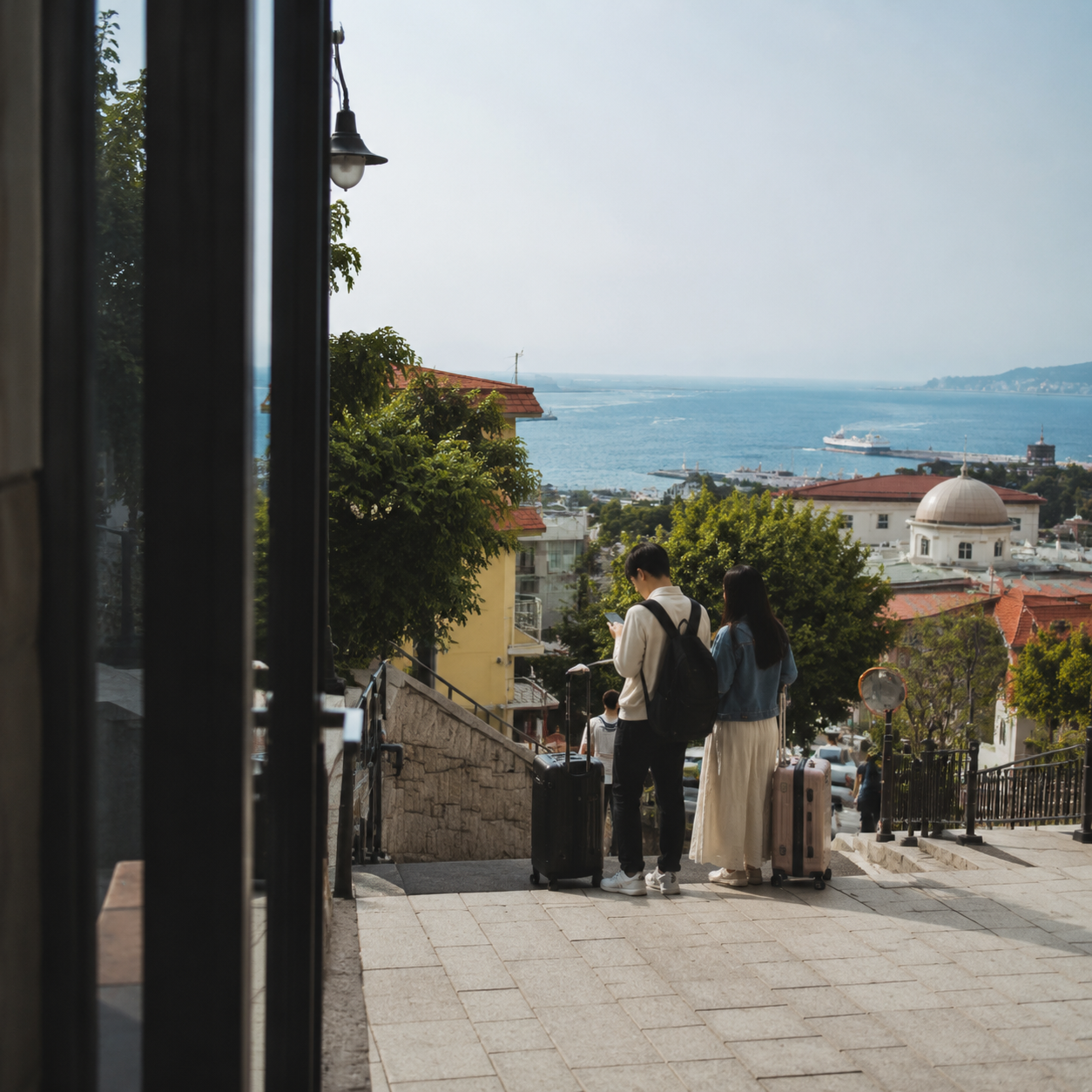
That sentence stayed with me for a long time, because the easiest thing to misread in Qingdao is precisely the idea that “the sea is already ahead.” The moment people see a coastal city, they assume they have understood the core of the route: walk toward the water, stop by the water, finish along the water. On the surface that sounds reasonable. But after actually walking Qingdao, one realizes that the city does not stand on one straight waterfront line at all. It reveals itself layer by layer: first a slope, then a turn, then a district, and only then a little wind, a little openness, a little sea. If the method of entry is wrong, even the best scenery later becomes flat.
所以我越来越觉得,青岛最值得复盘的不是单个景点,而是“奇景过渡逻辑”。所谓奇景,不只是指某个突然出现的海面、某个转角后亮起来的红瓦、某段视野一下被打开的坡顶。更重要的是,这些景为什么要在那个时刻出现、为什么不能更早、为什么一旦提前看到反而会失掉力量。一个城市如果把最好看的东西太早交出来,后面的路就会塌。青岛没有这样做,它总是留一点,让你继续往前。
This is why I have increasingly felt that what Qingdao deserves in retrospect is not any single landmark but what might be called its “logic of scenic transition.” The scenic surprise is not merely the sudden strip of water, the red roofs that light up after one turn, or the hilltop where the view opens all at once. More important is why these things arrive at that particular moment, why they should not appear earlier, and why their force would weaken if they were given too soon. If a city hands over its most beautiful material too early, the route collapses afterward. Qingdao does not do that. It always holds something back.
从城市进入法的角度看,这种保留非常高级。它迫使你先学会接受中间地带。你不能一落地就只认海,也不能因为旧街区看起来普通就急着跳过。很多真正决定青岛气质的东西,都藏在这些“还没完全到达”的段落里:坡道上风的方向、墙边树影的浓淡、街角面包店和便利店的热气怎么把人的步速压住、行人为什么会在某个转角突然变慢。这些看似不够壮观,却决定了海在后面出现时,你到底是被打动,还是只是说一句“真好看”。

From the perspective of urban entry, this restraint is highly sophisticated. It forces one to accept the in-between. You cannot land and recognize only the sea, nor can you skip the older district merely because it looks ordinary at first glance. Many of the things that truly determine Qingdao’s character are hidden in these sections of “not yet fully arrived”: the direction of wind on a slope, the density of tree shadow against a wall, the warmth leaking from a bakery or convenience store that quietly slows the body, the reason pedestrians suddenly decelerate at one particular corner. None of these are spectacular in themselves, yet they decide whether the sea later moves you or merely looks pretty.
很多外地游客第一次来中国时,会把城市路线想成任务清单,这其实很正常。可青岛特别适合拿来纠正这种习惯。因为这里最好的进入法,不是按照“地标优先级”排,而是按照身体如何逐步适应城市尺度来排。先在馆里或较静的街段里把心收一收,再让脚步去适应坡,再让眼睛习惯远处海面的亮度,最后才把自己真正交给海边。这不是绕远,而是在避免把整座城只走成一张平面明信片。
Many visitors encountering China for the first time naturally treat city routes as task lists. Qingdao is particularly good at correcting that instinct. Its best entry method is not organized by the rank of landmarks, but by the way the body gradually adapts to the scale of the city. First gather yourself in a museum or a quieter street segment. Then let your steps adapt to the slope. Then let your eyes get used to the distant brightness of the water. Only after that do you really give yourself to the waterfront. This is not a detour; it is a way to avoid reducing the entire city to a flat postcard.
我也越来越理解,为什么青岛很多真正好看的地方,明明离海不远,却不急着把海放到正中央。因为一旦你过早把一切都对准海,城市其他层次会立刻变薄。旧街、坡地、风口、建筑之间的尺度变化,本来都能构成进入海边之前的重要铺垫。它们不是海的附属,而是海之所以值得抵达的原因。也正因为如此,青岛最成熟的走法,从来不是“最快到海边”,而是“到了海边之前,你已经被这座城慢慢教会该怎么看它”。

I also understand more and more why some of Qingdao’s most beautiful places, though close to the sea, do not rush to put the sea at the center. The moment everything is aimed at the water too early, the city’s other layers thin out at once. Old streets, sloped ground, wind corridors, and the changing scale between buildings all serve as essential preparation before the waterfront. They are not accessories to the sea. They are the reason the sea becomes worth reaching. That is precisely why the most mature way to walk Qingdao is never “get to the water as fast as possible,” but “by the time you reach the water, the city has already taught you how to look.”
这种逻辑也会直接影响复盘。你回头想一天路线时,真正有价值的问题不是“我去了几个点”,而是“哪几个过渡段帮我把城市读顺了”。也许是馆出来之后那段不长的坡,也许是旧街边一段看上去没那么抓人的人行道,也许是快到海边前那一小段风突然变大的路。它们不一定会成为你第一张发出去的照片,却很可能会成为这座城市最后留在你身体里的记忆。
This logic also changes the retrospective directly. When thinking back on a day’s route, the useful question is not “how many places did I go to,” but “which transitional sections helped me read the city properly.” It may be the short slope after the museum, or a stretch of pavement along an older street that looked less impressive at first, or the part just before the sea where the wind suddenly strengthened. These may not become the first photograph anyone posts, yet they often become the memory that remains longest in the body.
傍晚时我终于走到海边,风比下午更直,也更凉。栏杆边站着几个安静看海的人,没有谁特别大声。背后街区的灯一点点亮起来,坡上的路像被柔和地接回城市内部。我那时才真的明白,青岛最厉害的不是海,而是它知道不该太早把海交给你。等我把手从栏杆上放下来,转身看见身后那段刚刚走过来的坡路时,忽然觉得真正被记住的不是“终于到海边了”,而是“原来进入这座城,本身就是答案的一部分”。
By evening I finally reached the sea. The wind was straighter and cooler than it had been in the afternoon. A few people stood quietly by the railing, none of them particularly loud. Behind them, the district lights were coming on one by one, and the sloped road looked as though it had been gently sewn back into the city. That was when I fully understood that Qingdao’s brilliance does not lie in the sea alone, but in knowing that the sea must not be given too early. When I lifted my hands from the railing and turned back to the slope I had just walked down, it felt suddenly clear that what would remain with me was not “I finally reached the water,” but “the act of entering this city had been part of the answer all along.”
- 一碗面能走多远:从兰州到潼关,西北人用面食丈量土地 | How Far Can a Bowl of Noodles Take You: Measuring the Northwest by Wheat
- 十二月的中国:北方玩雪,南方过冬 | December in China: Snow Up North, Warmth Down South
- 灯彩作坊里的一小时:我第一次发现光也可以被“做出来” | In a Lantern Workshop: The First Time I Realized Light Can Be Crafted by Hand
- 中国节假日全解:春节、黄金周与调休制度 | Chinese Holidays Explained: Spring Festival, Golden Week & the Adjusted Schedule System
- 优雅的旗袍 长衫 | The Elegant Qipao/Cheongsam
- 风沙把莫高窟的时间吹慢了 | The Sandstorm Slowed Time at the Mogao Caves
- 东北冬季路线:哈尔滨雪乡长白山 | Northeast Winter Route: Harbin, Snow Town & Changbai
- 青岛真正舒服的地方,不是海风和啤酒本身,而是白天夜里总会自己换挡 | What Makes Qingdao Truly Comfortable Is Not Sea Breeze and Beer Themselves but the Way the City Shifts Gears Between Day and Night
- 数字人民币来了,外国游客到底怎么用?| E-CNY Is Here — How Does It Actually Work for Foreign Visitors?
- 贵阳晚饭最先把人叫醒的,往往不是招牌菜,而是那口酸汤 | In Guiyang, What Wakes You at Dinner Is Often Not a Signature Dish but the Sour Broth
Comments (0)