
坡子街地面刚发亮的时候,我决定不再拿长沙和时间赛跑 | When Pozi Street Began to Shine After Rain, I Stopped Racing Changsha
雨后的长沙,我把赶路改成了慢走 | After Rain in Changsha, I Changed Rushing into Slow Walking
中文
长沙雨后适合慢走。不是那种把景点一个个打卡完的快走,也不是只为了吃一顿就赶往下一站的急走,而是让脚步随着地面水光、人群缝隙、店门口的热气和店员的提醒慢下来。雨刚停时,坡子街的招牌亮得比平时柔一点,石板和柏油路面都带着反光,行人的伞还没有完全收起,空气里有辣椒、油炸、糖水、湿木头和雨水混在一起的味道。这样的长沙,不适合只盯着导航箭头。它更像一条需要边走边听的街。
Changsha after rain is made for slow walking. Not the quick walk of checking off sights one by one, and not the hurried walk of eating one meal before rushing to the next stop, but a walk that lets your pace slow with the shine of wet pavement, the gaps in the crowd, the steam at shop doors, and the reminders from clerks. When the rain has just stopped, the signs on Pozi Street look softer than usual, stone slabs and asphalt both reflect light, umbrellas are not fully folded away, and the air carries a mixed smell of chili, fried food, sweet drinks, damp wood, and rainwater. This kind of Changsha is not meant for staring only at a navigation arrow. It is more like a street you need to listen to while walking.
从坡子街开始走,最好不要一出地铁或一到路口就急着决定吃什么。雨后的人流会有一种特殊的节奏:有人刚从店里出来,撑伞的人会占更多空间,外卖骑手绕过水坑,游客停在招牌下拍照,店员在门口喊号或提醒排队方向。你如果走得太快,很容易被人流推着走到自己并不想去的地方。先站在边上看一两分钟,判断哪边更通畅,哪家店门口只是拍照拥堵,哪家是真正在排队,哪条巷口有积水,哪边屋檐能避一阵。
Starting from Pozi Street, it is better not to decide what to eat immediately after leaving the metro or reaching the intersection. After rain, the crowd has a particular rhythm: some people have just come out of restaurants, umbrella holders take more space, delivery riders go around puddles, tourists pause under signs for photos, and clerks call numbers or remind people where to line up. If you walk too fast, the crowd may push you toward a place you did not really choose. Stand aside for a minute or two first. Notice which side moves more smoothly, which storefront is crowded only because people are taking photos, which queue is real, which alley entrance has standing water, and which eaves can shelter you for a moment.
坡子街的热闹不是单一的热闹。它有游客的热闹,也有本地人熟悉路线的热闹;有大店灯牌造成的热闹,也有小门脸里翻锅声造成的热闹。雨后走这里,要学会把声音分层。最外层是车声、人声、拍照声;中间一层是店员喊“往里走”“小心台阶”“这边排队”;最里面一层是锅里油响、剪刀剪臭豆腐、杯盖扣上的声音。如果你能听见这些层次,脚步自然会慢下来,也更容易避开无谓的拥挤。
The liveliness of Pozi Street is not one single kind of liveliness. There is the liveliness of tourists and the liveliness of locals who already know their routes; there is the liveliness created by large illuminated signs and the liveliness made by wok sounds inside small storefronts. Walking here after rain means learning to separate sounds into layers. The outer layer is traffic, voices, and camera sounds. The middle layer is clerks calling “move inside,” “watch the step,” or “line up this way.” The inner layer is oil popping in pans, scissors cutting stinky tofu, and cup lids snapping shut. If you can hear these layers, your pace naturally slows, and it becomes easier to avoid unnecessary congestion.
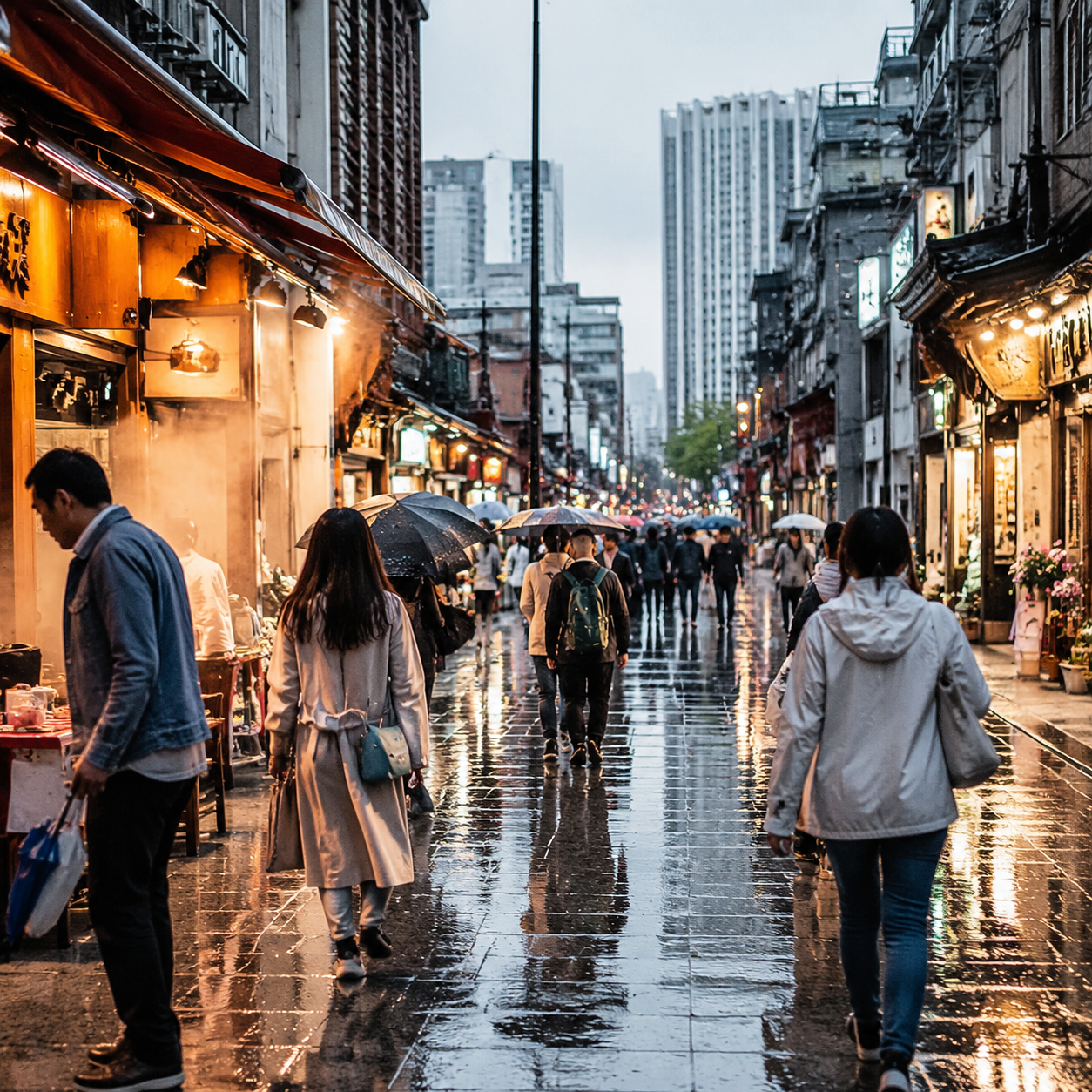
巷口是雨后长沙最值得停顿的地方。大街上的灯和人很多,巷口却常常在一两步之间换了气味。刚才还是甜饮和炸物,转进去可能就是粉面汤底、湿墙、旧居民楼、烤串炭火、洗过的塑料凳。不要因为巷子窄就匆忙穿过去。先看地面,雨水会把油渍、落叶和台阶边缘藏得更滑。再看头顶,旧空调外机、滴水的雨棚、低矮招牌,都可能让你需要绕一下。最后看人流,如果巷子里有人端着热汤出来,最好给对方让出完整通道。
Alley entrances are some of the best places to pause in Changsha after rain. The main street has many lights and people, but an alley entrance can change the smell within one or two steps. One moment there are sweet drinks and fried snacks; after turning in, you may find rice-noodle broth, damp walls, old residential buildings, charcoal from skewers, and washed plastic stools. Do not rush through just because the alley is narrow. First look at the ground, because rainwater can make oil stains, fallen leaves, and step edges more slippery. Then look above: old air-conditioning units, dripping awnings, and low signs may require a slight detour. Finally watch the flow of people. If someone is carrying hot soup out of the alley, give them a full path.
雨后的坡子街和周边巷子,手机也应该安静一点。很多人会边走边拍,镜头抬起来时就忘了脚下。其实最好的照片往往不是在人最多的正面,而是在侧边:一把伞靠在门口,店员把湿抹布拧干,锅边冒出一阵白气,地面反出半个红色招牌,穿雨衣的骑手在巷口等单。拍完就把手机收起来,继续看路。雨水让城市更好看,也让城市更容易打滑。照片可以慢慢挑,摔倒却是一瞬间的事。
After rain, Pozi Street and the surrounding alleys also call for a quieter phone. Many people film while walking, and once the lens is raised, they forget the ground underfoot. In fact, the best photos are often not at the most crowded front angle but from the side: an umbrella leaning by a doorway, a clerk wringing out a wet cloth, a burst of white steam from a pan, half a red sign reflected on the ground, or a delivery rider in a raincoat waiting for an order at an alley mouth. Take the photo, then put the phone away and keep watching the road. Rain makes the city more beautiful, but it also makes it easier to slip. Photos can be selected later; a fall happens instantly.
小吃店门口的店员提醒,要认真听。长沙小吃店节奏快,尤其雨后客流重新聚起来,店员会不断处理排队、取号、打包、堂食、外卖、避雨的人。有人会提醒“先点单再排队”,有人会说“这边取餐不是排队”,有人会提醒“地上滑”,有人会告诉你“辣椒自己加”或“这个趁热吃”。这些话看似普通,却能让你少走很多弯路。不要只盯着菜单价格,也不要因为听不懂就假装没听见。可以停一下,看别人怎么做,再跟着流程走。
The reminders from clerks at snack shops deserve attention. Changsha snack shops move quickly, especially after rain when customers gather again, and clerks constantly manage queues, number tickets, takeout, dine-in orders, delivery pickups, and people sheltering from rain. One clerk may remind you to order before lining up; another may say this side is for pickup, not queueing; someone may warn that the ground is slippery; someone may tell you to add chili yourself or eat something while it is hot. These comments sound ordinary, but they can save you many detours. Do not stare only at menu prices, and do not pretend not to hear just because you do not understand. Pause, watch what others do, and follow the process.
如果你不太能吃辣,雨后的长沙小吃店更要提前说。雨天会让人想吃热的、重口的东西,锅里、碗里、蘸料里都容易更香也更刺激。点单时可以说“少辣”“微辣”“辣椒分开放”。如果完全不能吃辣,就不要只说“不要辣”,还要确认汤底、酱料、撒粉里有没有辣。店员通常很忙,越简单明确越好。你可以把一句话写在手机上:我不能吃太辣,请帮我少放辣椒,酱料分开。递给店员看,比在嘈杂门口反复解释更有效。
If you do not handle spicy food well, say so early in Changsha snack shops after rain. Rainy weather makes people crave hot, strong flavors, and what is in the pan, bowl, or dipping sauce may become more fragrant and more intense. When ordering, say “less spicy,” “mild,” or “chili on the side.” If you cannot eat chili at all, do not only say “no spicy”; confirm whether the soup base, sauce, or seasoning powder contains chili. Clerks are usually busy, so the simpler and clearer you are, the better. You can write one sentence on your phone: I cannot eat very spicy food; please use less chili and keep the sauce separate. Showing this to the clerk is more effective than repeatedly explaining at a noisy doorway.
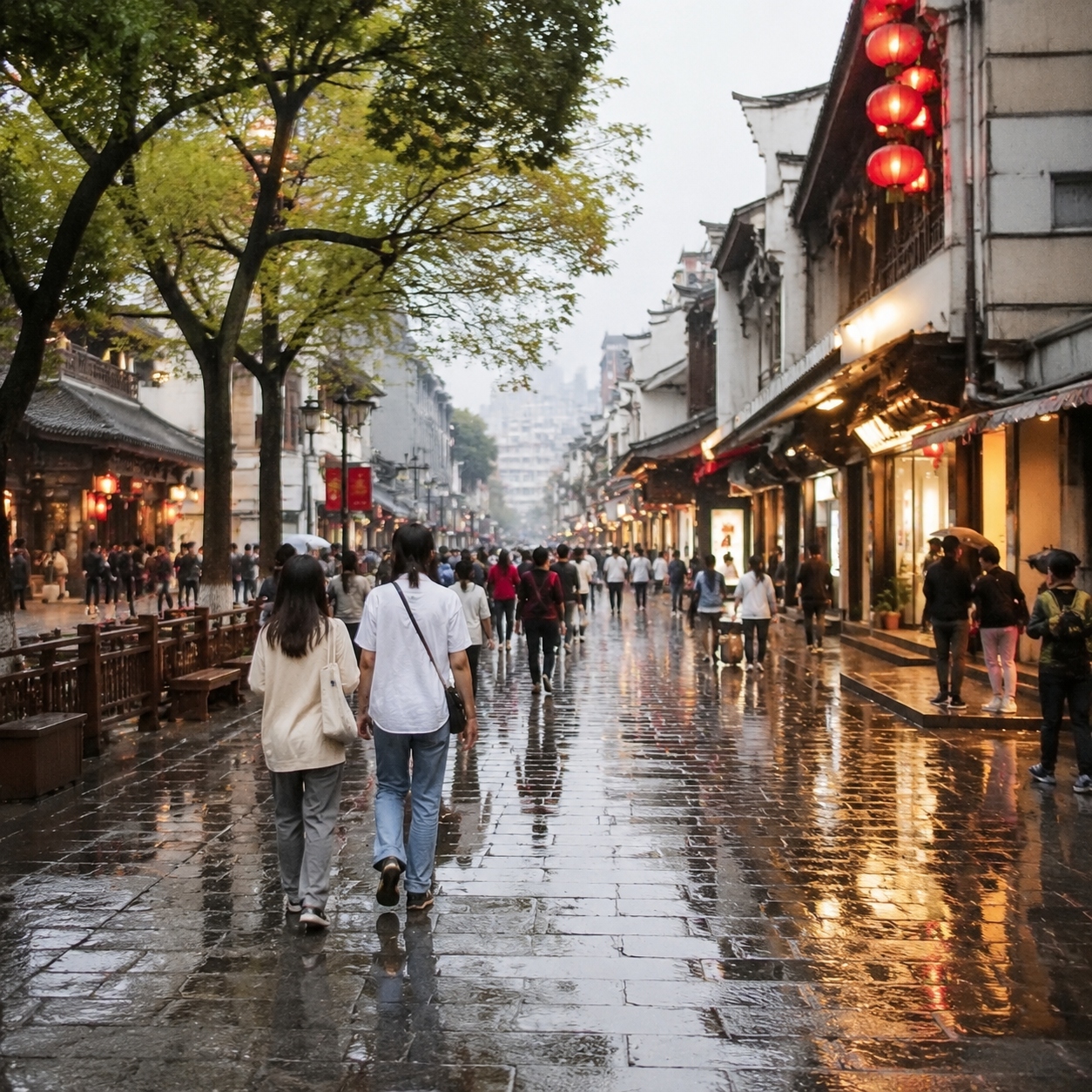
雨后坐进小吃店,第一件事不是立刻拆筷子,而是看看脚边和桌边。凳子可能刚擦过,地面可能有水,包不要放在容易被踩到或被水溅到的位置。很多小店空间紧,别人端碗经过时需要留路。把伞收好,伞尖不要朝向别人腿边。热汤、热油、热粉端上来时,先让端餐的人放稳,再伸手移动。长沙的烟火气好,正是因为店里每个人都在一个很小的空间里配合:店员快,客人也要稳。
After sitting down in a snack shop after rain, the first thing is not to open chopsticks immediately but to check the area around your feet and table. The stool may have just been wiped, the floor may still be wet, and your bag should not be placed where it can be stepped on or splashed. Many small shops are tight, and people carrying bowls need space to pass. Fold your umbrella properly, and do not point the umbrella tip toward someone else’s legs. When hot soup, hot oil, or hot noodles arrive, let the person serving them put everything down steadily before moving anything. Changsha’s everyday warmth works because everyone inside a small space cooperates: clerks move fast, and customers stay steady.
坡子街一带的小吃很容易让人买多。雨后闻到香味,看到别人手里拿着臭豆腐、糖油粑粑、炸串、茶饮、粉面,就会觉得每样都该试。慢走的好处,是给胃留判断时间。第一家不要买满,先分着吃一份,走十分钟再决定下一样。雨后空气湿,重油重辣吃多了更容易口渴,也更容易觉得累。带一瓶水,或者选择一杯不那么甜的饮品。真正好的小吃路线,不是把所有热门店塞进一个晚上,而是吃到还能舒服地继续走。
Around Pozi Street, it is easy to buy too much food. After rain, when you smell the aroma and see others holding stinky tofu, sugar-oil baba, fried skewers, tea drinks, and rice noodles, every item seems worth trying. The benefit of slow walking is that it gives your stomach time to judge. Do not buy too much at the first stop. Share one portion, walk ten minutes, then decide on the next item. Humid air after rain makes heavy oil and strong chili more likely to make you thirsty and tired. Carry water, or choose a drink that is not overly sweet. A truly good snack route does not cram every famous shop into one evening; it lets you keep walking comfortably after eating.
人流在雨后会突然变密,也会突然散开。雨刚停时,躲雨的人一起出来,街上会像被放开闸门;十几分钟后,有些人进店,有些人去地铁,有些人继续拍照,人群又出现空隙。慢走时不必和第一波人流抢。可以在屋檐下等一等,或者先进一家不那么热门的小店吃点东西。等地面反光更清楚、伞少一点、外卖骑手也恢复正常节奏,再继续往巷口走。旅行不是比赛,尤其雨后更不是。会等的人,反而看到更多细节。
Crowds after rain can suddenly thicken and then suddenly loosen. When the rain has just stopped, everyone who was sheltering comes out together, and the street feels like a gate has opened. Ten or twenty minutes later, some people enter shops, some head to the metro, some continue taking photos, and gaps appear again. While walking slowly, you do not need to compete with the first wave. Wait under an eave, or enter a less famous shop for something small. When pavement reflections become clearer, umbrellas become fewer, and delivery riders return to a normal rhythm, continue toward the alleys. Travel is not a race, especially after rain. Those who know how to wait often see more details.
长沙雨后的颜色也值得慢慢看。白天雨停后,老墙会显得更深,树叶更亮,摊位的塑料布边缘挂着水珠。晚上雨停后,红黄灯牌落在地上,被脚步踩碎,又在下一个水洼里重新拼起来。坡子街的热闹常常被写成味觉记忆,但雨后它首先是视觉记忆。不要只把镜头对准店名,也看看排队人的鞋、被雨打湿的纸袋、店员手背上的水、门口防滑垫上的泥。城市最真实的部分,常常在这些不太被宣传的角落里。
The colors of Changsha after rain are worth watching slowly too. After daytime rain, old walls look darker, leaves brighter, and water beads hang from the edges of plastic sheets at stalls. After night rain, red and yellow signs fall onto the ground, are broken by footsteps, and reassemble in the next puddle. Pozi Street’s liveliness is often described as a taste memory, but after rain it is first a visual memory. Do not point the camera only at shop names. Look at the shoes of people in line, paper bags dampened by rain, water on a clerk’s hand, and mud on the anti-slip mat by the door. The most truthful parts of a city often sit in these less advertised corners.
走进巷子深一点,声音会变得更贴近生活。大街上是游客讨论哪家更有名,巷子里可能是居民问老板今天还有没有粉,店员提醒熟客雨天路滑,孩子踩水被家长叫住,外卖员把头盔放在凳子上擦雨。这样的声音不需要刻意寻找,只要你别把耳机音量开太大。雨后的慢走,最好留一只耳朵给街道。听见身后有人端热东西,就让一下;听见电动车铃声,就靠边;听见店员说里面有位子,再决定要不要进去。
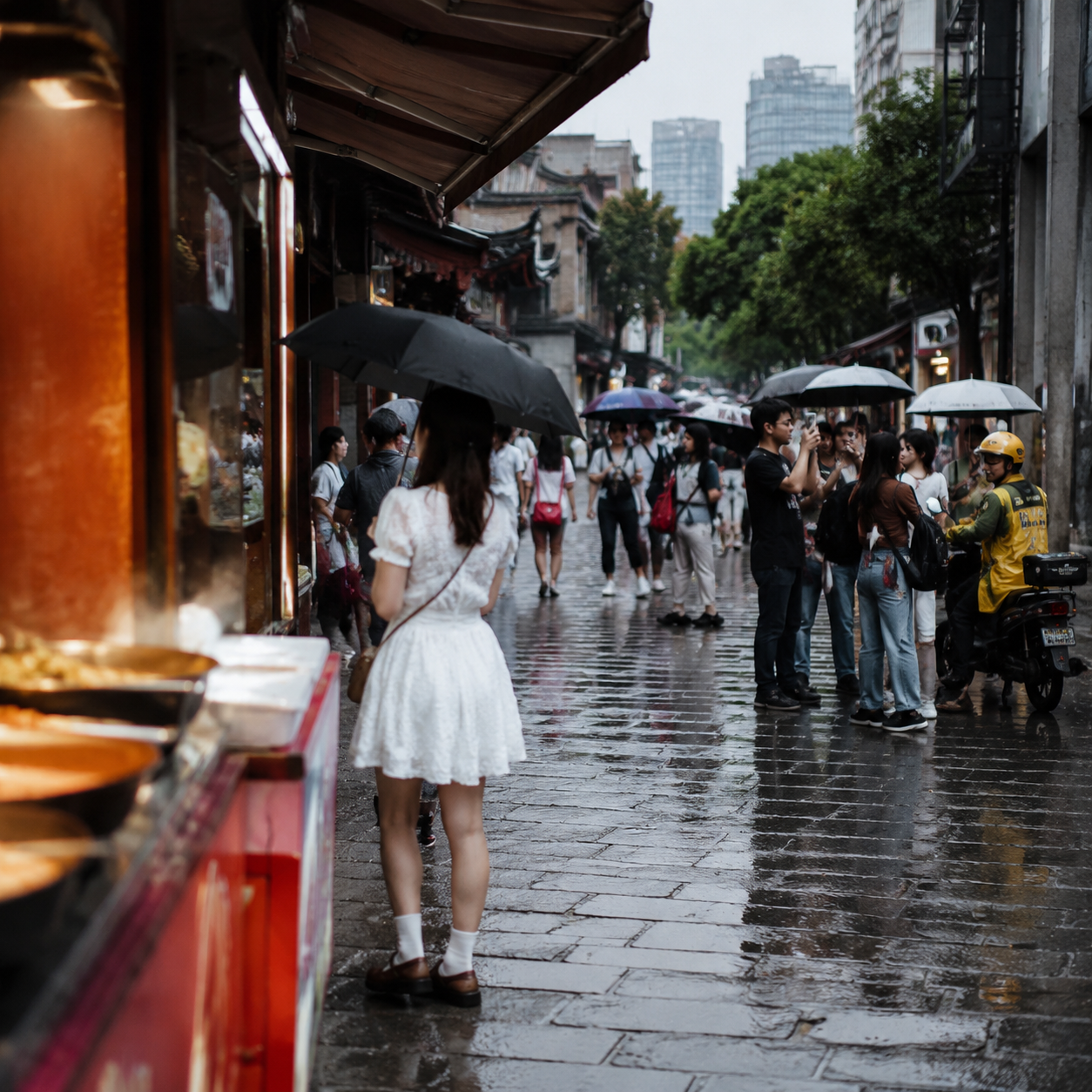
Walk a little deeper into the alleys, and the sounds become closer to daily life. On the main street, tourists discuss which shop is more famous. In the alley, a resident may ask the owner whether noodles are still available, a clerk may remind a regular that the road is slippery, a child may be called back after stepping in water, and a delivery rider may place a helmet on a stool to wipe off rain. These sounds do not require deliberate searching, as long as your earphones are not too loud. For a slow walk after rain, leave one ear for the street. If you hear someone behind you carrying something hot, make room. If you hear an electric scooter bell, move aside. If a clerk says there are seats inside, then decide whether to enter.
雨后也要对自己的体力诚实。湿热、辣味、拥挤和连续站立,会让人比想象中更快疲劳。不要因为来到了长沙就逼自己一路吃到撑、走到脚痛。坡子街附近并不缺可以短暂停下的地方,哪怕只是在不挡路的边角站五分钟,整理一下伞、纸巾、垃圾、手机和水,也会让后半段舒服很多。脚底如果已经湿了,尽早换袜子或回酒店处理。雨水泡过的脚再继续走,很容易磨破。
After rain, be honest about your energy. Humidity, spice, crowds, and long periods of standing can tire you faster than expected. Do not force yourself to eat until full and walk until your feet hurt just because you are in Changsha. Around Pozi Street, there are many places to pause briefly. Even standing for five minutes in a corner that does not block the way, organizing your umbrella, tissues, trash, phone, and water, can make the second half of the walk much more comfortable. If your feet are already wet, change socks or return to the hotel early. Feet soaked by rain can blister easily if you keep walking.
对垃圾也要有耐心。小吃街最容易出现纸碗、竹签、杯子、塑料袋拿在手里找不到地方扔的时刻。雨后垃圾桶附近可能有积水,人也多,不要远远一扔。把竹签收进纸袋,杯子喝完再丢,油汤不要随手倒进路边水沟。很多店门口会有自己的回收桶或托盘,先看店员手势和提示。你会发现,一个人处理垃圾的方式,会影响后面很多人的脚步。慢走不只是慢慢看,也包括慢慢把自己留下的痕迹处理好。
Be patient with trash too. Snack streets easily create moments when you are holding paper bowls, bamboo sticks, cups, and plastic bags while searching for a place to throw them away. After rain, the area around bins may have standing water and crowds, so do not toss things from a distance. Put bamboo sticks into a paper bag, finish drinks before discarding cups, and do not pour oily soup into roadside drains. Many storefronts have their own collection bins or trays, so first watch clerks’ gestures and signs. You will notice that how one person handles trash affects the steps of many people behind them. Slow walking is not only about looking slowly; it is also about carefully dealing with the traces you leave.
如果下过雨又准备继续下,行程要保持弹性。不要把每一家店都设成必须到达的目标。可以把路线想成几个短段:从主街走到一个巷口,从巷口走到一家小店,从小店走到下一个屋檐,从屋檐再决定去地铁还是继续逛。这样即使雨又落下来,也不会狼狈。长沙的雨有时来得快、停得也快,躲雨的十分钟并不是浪费。你可能正好听见店员和熟客聊天,或者发现菜单上一个原本没注意的小吃。
If it has rained and may rain again, keep the itinerary flexible. Do not turn every shop into a target that must be reached. Think of the route as several short sections: from the main street to an alley entrance, from the alley entrance to a small shop, from the shop to the next eave, and from that eave decide whether to head to the metro or continue wandering. Then, if rain returns, you will not feel embarrassed or rushed. Changsha rain sometimes arrives quickly and stops quickly. Ten minutes spent sheltering is not wasted. You may happen to hear a clerk chatting with a regular, or notice a snack on the menu that you had missed before.
慢走时,和店员的交流可以很简单。一个点头,一句谢谢,一句“麻烦少辣”,把用过的托盘放回指定位置,离开时把椅子推回去,这些都足够。不要期待每家店都为游客放慢节奏,也不要因为店员语速快就觉得被冷落。小吃街的工作强度很高,雨后还要处理湿地面、排队和外卖订单。他们的提醒常常是为了让动线更安全、更快。你听懂一半也没关系,只要愿意观察,就能跟上。
While walking slowly, communication with clerks can be simple. A nod, a thank you, a request for less chili, returning a used tray to the designated place, and pushing the chair back when leaving are enough. Do not expect every shop to slow its rhythm for tourists, and do not feel ignored simply because a clerk speaks quickly. Work intensity on a snack street is high, and after rain clerks must also manage wet floors, queues, and delivery orders. Their reminders are often meant to make movement safer and faster. It is fine if you understand only half; if you are willing to observe, you can keep up.
坡子街不是孤立的一条街,它和周边巷口、小广场、商场入口、老店门脸一起组成一个可以缓慢展开的区域。你可以先走热闹的一段,再转进安静一点的侧巷;可以先吃一份热的,再找一杯饮品;可以先拍灯牌,再低头看水里的灯牌。雨后最好的顺序,常常不是攻略上的顺序,而是身体告诉你的顺序:哪里不滑,哪里不挤,哪里闻起来正合适,哪里店员提醒还有位子,哪里风从巷口吹过来让人舒服。
Pozi Street is not an isolated street. Together with surrounding alley entrances, small squares, mall entrances, and old storefronts, it forms an area that can unfold slowly. You can walk one lively section first, then turn into a quieter side alley; eat something hot first, then find a drink; photograph the signs first, then look down at their reflections in water. The best order after rain is often not the order written in a guide but the order your body tells you: where it is not slippery, where it is not crowded, where the smell feels right, where a clerk says seats are available, and where wind from an alley feels comfortable.
等到准备离开时,不要只看最近的地铁口。雨后路面和人流会改变“最近”的含义。最近的入口可能排队、积水、台阶湿滑,稍远一点的入口反而更顺。打车也一样,不要在最拥堵的店门口叫车。走到宽一点、灯光好一点、能临停的位置,再确认上车点。把伞、外套、打包小吃和手机都收好,不要一边接司机电话一边端着热汤找车。离开小吃街的最后几分钟,往往比进入时更需要稳。
When it is time to leave, do not look only for the nearest metro entrance. After rain, pavement and crowd flow can change what “nearest” means. The nearest entrance may have a queue, standing water, or slippery steps, while one slightly farther away may move more smoothly. The same applies to ride-hailing: do not call a car at the most congested storefront. Walk to a wider, better-lit place where cars can stop briefly, then confirm the pickup point. Put away your umbrella, jacket, packed snacks, and phone properly; do not carry hot soup while answering the driver and searching for the car. The last few minutes of leaving a snack street often require more steadiness than arriving.
长沙雨后慢走,最后留下的记忆不一定是哪家店最好吃。可能是坡子街灯牌在水里晃了一下,可能是巷口店员提醒你“小心滑”,可能是一碗粉端上来时热气把眼镜蒙住,可能是陌生人给端汤的人让路,可能是你站在屋檐下等雨停时突然闻到一阵糖油香。这样的记忆很小,却很长。它们不会像热门清单那样整齐,却能让你真正记住一座城市的温度。
The memory left by a slow walk through Changsha after rain may not be which shop tasted best. It may be the moment a Pozi Street sign trembled in water, a clerk at an alley entrance reminding you to be careful because the ground was slippery, steam from a bowl of noodles fogging your glasses, strangers making room for someone carrying soup, or the sudden smell of sugar and oil while you waited under an eave for rain to stop. Such memories are small, but they last. They are not as tidy as a popular checklist, yet they help you truly remember the warmth of a city.
所以,雨后去坡子街,不妨把计划放松一点。带纸巾,穿不怕湿的鞋,给手机留电,给胃留空,给脚步留余地。看见巷口就慢一点,看见积水就绕一点,听见店员提醒就认真一点,排队前先确认流程,点辣前先确认程度。长沙的好,不只在热闹处,也在热闹刚被雨洗过之后。那时人群重新流动,灯光重新铺开,小吃重新冒热气,城市像刚被擦亮的桌面,等你稳稳地坐下,也等你慢慢地走过。
So when you visit Pozi Street after rain, loosen the plan a little. Bring tissues, wear shoes that can handle wet ground, keep battery in your phone, leave room in your stomach, and leave space in your pace. Slow down at alley entrances, detour around puddles, listen carefully when clerks remind you of something, confirm the process before queueing, and confirm the spice level before ordering. Changsha’s charm is not only in its liveliness, but also in the moment after that liveliness has been washed by rain. Then the crowd begins to flow again, lights spread again, snacks steam again, and the city feels like a table freshly wiped clean, waiting for you to sit down steadily and walk through slowly.
- 两周中国行,我帮你把行程想清楚了 | A 2-Week China Itinerary That Actually Makes Sense
- 我们一家在上海去朱家角的五月雨天里学会,短途旅行也能像长假一样松弛 | A Rainy Day Trip from Shanghai to Zhujiajiao Taught Our Family That Even a Short Outing Can Feel Spacious
- 成都茶馆里的一下午,比三个景点更让我记住这座城 | An Afternoon in a Chengdu Teahouse Stayed With Me More Than Three Attractions
- 我在中国学会求助,不是因为无助,而是因为这里的回应速度太真诚 | I Learned to Ask for Help in China Not Because I Was Helpless, but Because People Responded So Honestly
- 汉服:传统中国服饰 | Hanfu: Traditional Chinese Clothing
- 中国饮品文化:从功夫茶到网红奶茶 | Chinese Drink Culture: From Kung Fu Tea to Viral Milk Tea
- 杭州下雨的下午,孩子第一次主动找陌生小朋友一起玩 | On a Rainy Afternoon in Hangzhou, My Child Asked a Stranger to Play Together
- 雨后的绍兴黄酒馆里,老板一句话让我重新理解“慢” | In a Shaoxing Yellow Wine Tavern After Rain, One Sentence Changed How I Understood Slowness
- 七月避暑:中国最凉快的地方在哪里 | July Cool Escapes: Where to Beat the Heat in China
- 在中国穷游要花多少钱?每日预算全拆解 | How Much Does It Cost to Travel China on a Budget?
Comments (0)