
南京早餐摊前的队伍,让我第一次看懂城市早晨 | A Breakfast Queue in Nanjing Helped Me Read a City’s Morning
南京早餐摊前的队伍,让我第一次看懂城市早晨 | A Breakfast Queue in Nanjing Helped Me Read a City’s Morning
我到南京的第一个清晨,没有急着去城墙,也没有立刻奔向博物馆。天色还带着一点灰蓝,梧桐叶在路灯下像刚醒的手掌,街边的早餐摊已经冒出蒸汽。真正把我留住的不是招牌,而是一条队伍:有人提着公文包,有人推着电动车,有人把孩子的书包夹在膝盖旁,每个人都像知道自己该站在哪里。
On my first morning in Nanjing, I did not rush to the city wall or hurry toward a museum. The sky was still gray-blue, the plane trees looked half awake under the lamps, and steam had already risen from a breakfast stall. What stopped me was not the signboard but the line: office workers, scooter riders, grandparents, students, and parents all standing with a calm sense of placement, as if the morning had assigned each person a quiet role.
那是一家卖鸭油烧饼和热豆浆的小摊,摊主夫妻分工明确。男人负责翻烤盘,女人负责收钱、装袋、提醒后来的人别挡住旁边的店门。队伍不长到吓人,却一直没有断。最前面的人付钱时,后面的人已经把零钱或手机准备好;刚拿到烧饼的人会侧身离开,把窄窄的人行道让出来。城市的秩序不是写在牌子上的,而是在这些微小动作里被反复练习。
It was a modest stall selling duck-oil sesame pastries and hot soy milk. The couple running it had a rhythm of their own: he turned the trays and watched the heat, while she took payment, packed orders, and gently reminded newcomers not to block the neighboring doorway. The line was not intimidating, but it never disappeared. People near the front prepared coins or phones in advance, and those who received their food stepped aside quickly. Order in a city was not printed on a notice; it was rehearsed through small gestures.
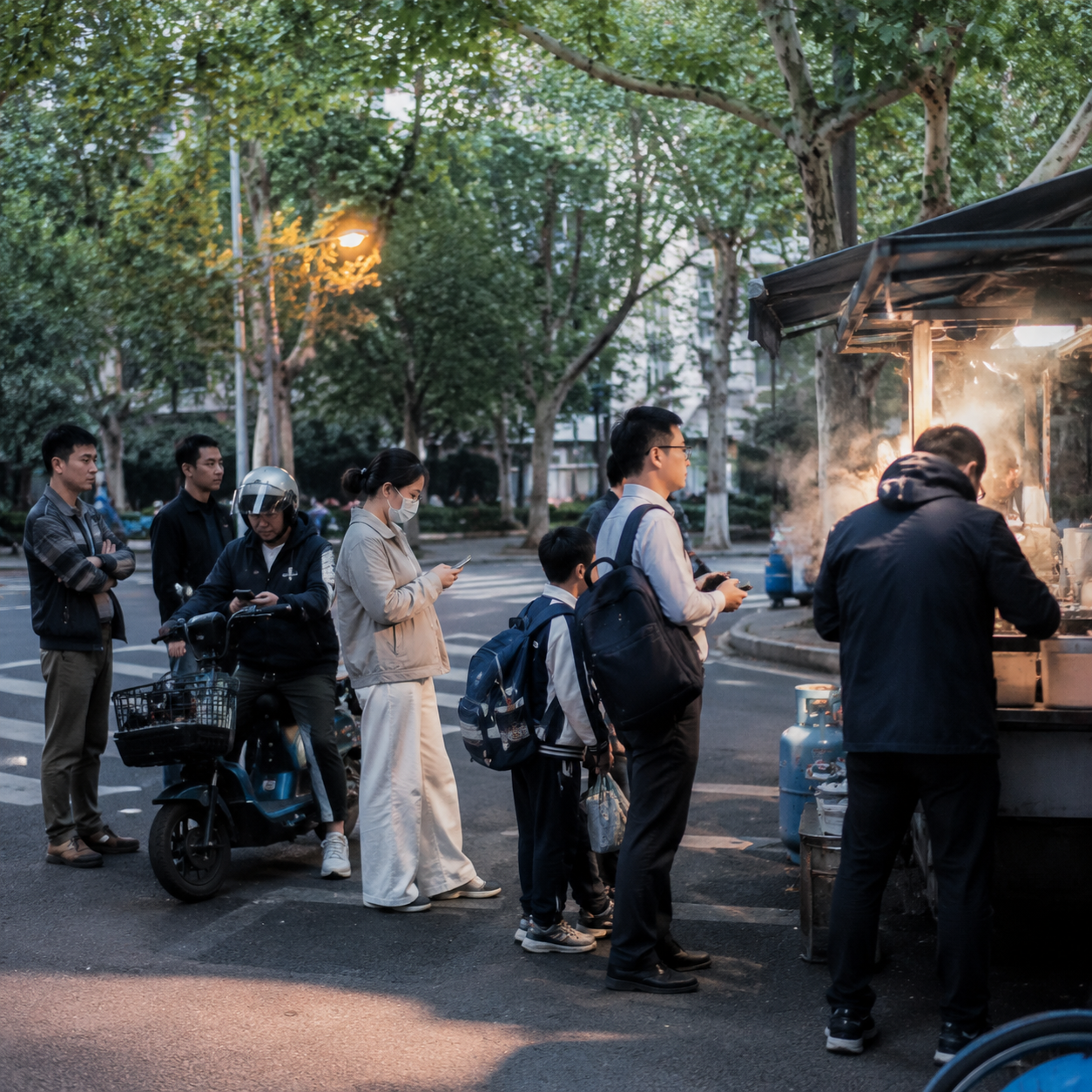
我原本以为旅行中的早餐只是补充体力,吃完就走,最好便宜、快速、离住处近。可那天我发现,早餐摊前的几分钟比很多观景台更能说明一座城。谁先急,谁会等,谁替谁让一步,谁把熟人的那份顺手带走,这些细节没有导游词,却能让外来者看见本地生活的密度。南京的早晨不是被宏大景点点亮的,而是被一口热饼、一杯豆浆和一条稳定移动的队伍慢慢推开。
I had assumed that breakfast on a trip was only fuel: eat, leave, and choose whatever was cheap, fast, and close to the hotel. That morning changed the scale of my attention. A few minutes in front of a stall explained the city better than many viewpoints. Who was impatient, who waited, who made room, who carried away an extra order for someone familiar—none of this came with commentary, yet it revealed the density of local life. Nanjing’s morning opened not through monuments, but through hot pastry, soy milk, and a line that kept moving.
队伍里最有意思的是沉默。大家并不聊天,也没有把等待变成抱怨。一个穿衬衫的年轻人看了两次表,却没有催;一位阿姨发现前面老人手慢,就把自己的位置稍微往后挪,让老人能从容拿袋子;骑手接到电话,只说“马上到”,然后压低声音。那种克制很南京,不是冷淡,而是给彼此留出空间。清晨的街面小,城市却因为这种分寸感显得宽。
The most revealing part of the queue was its silence. People did not turn waiting into complaint. A young man in a shirt checked his watch twice but did not push. A woman stepped back a little when an older customer needed more time to take the bag. A delivery rider answered a call with a soft “almost there” and lowered his voice. The restraint did not feel cold; it felt like a way of giving space. The sidewalk was narrow, yet the city seemed wider because people observed a shared margin.
我站在队尾,开始学习这条队伍的规则。先看别人点什么,再决定自己要不要加一份卤蛋;付款前把手机页面打开;拿到袋子后不要停在摊口检查,而要走到树边再整理。旅行者常常带着问题进入城市:哪里好吃,哪里好拍,哪里最值得去。可很多时候,城市先给你的答案不是地点,而是一套节奏。你只要慢半拍观察,就能少犯很多突兀的错误。
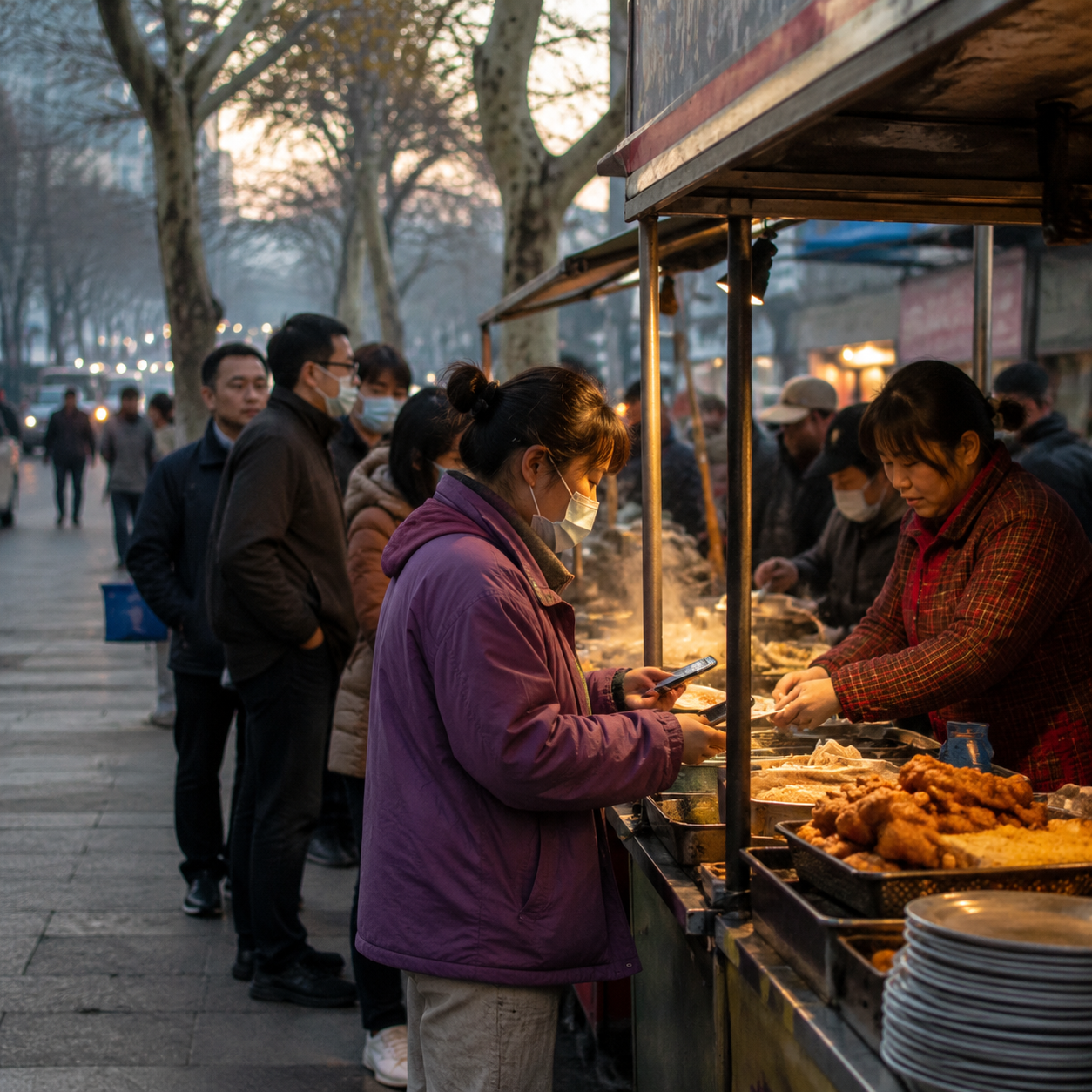
Standing at the back, I began to learn the rules of the line. Watch what others ordered before deciding whether to add a marinated egg. Open the payment page before reaching the counter. Do not inspect the bag in front of the stall; move toward the tree and organize there. Travelers often enter a city with location-based questions: where to eat, where to take photos, what is worth seeing. Yet a city often answers first with rhythm rather than address. If you observe for half a beat, you avoid many awkward intrusions.
等到轮到我时,我点了一只鸭油烧饼和一杯豆浆。摊主没有问我是哪里人,也没有因为我犹豫多说什么,只把烧饼夹进纸袋,提醒我“小心烫”。那句提醒非常普通,却让我意识到自己已经暂时被纳入这套早晨的循环:排队、点单、付款、让路、边走边吃。旅行有时不需要立刻获得特别待遇,能够顺利完成一个本地人每天重复的动作,就已经是一种进入。
When my turn came, I ordered one duck-oil pastry and a cup of soy milk. The vendor did not ask where I was from or comment on my hesitation. She slipped the pastry into a paper bag and said simply, “Careful, it’s hot.” The sentence was ordinary, but it made me feel temporarily admitted into the morning’s cycle: line up, order, pay, step aside, eat while walking. Travel does not always need special treatment. Sometimes the privilege is completing a daily local action without disrupting it.
我边走边吃,才明白为什么队伍里许多人会买两三个。烧饼外层酥得很快碎,鸭油香气不张扬,热度从纸袋里一点点透出来。豆浆没有甜到抢味,只是稳稳地把胃安放好。它们并不是为了让游客惊叹而存在的食物,而是为一天的工作、上学和奔波做准备。这样的好吃不靠戏剧性,它靠准时、可靠、每天都在。
I ate while walking and understood why many people bought two or three. The pastry shattered easily at the edges, the duck oil carried a gentle richness, and the heat seeped through the paper bag. The soy milk was not overly sweet; it simply settled the stomach. These foods did not exist to astonish visitors. They prepared people for work, school, errands, and movement. Their appeal was not dramatic. It came from being timely, reliable, and present every day.
后来我把那条街又走了一遍,发现早餐摊并不是孤立的热闹。旁边的修鞋铺刚拉开卷帘门,水果店把第一筐橘子摆到门口,公交站台上有人把烧饼掰成两半分给同伴。早晨像一张正在展开的地图,摊位是其中一个节点。它连接了家庭厨房、通勤路线、学校门口和办公楼电梯。一个人买早餐的路径,往往也是他在城市里生活半径的缩影。
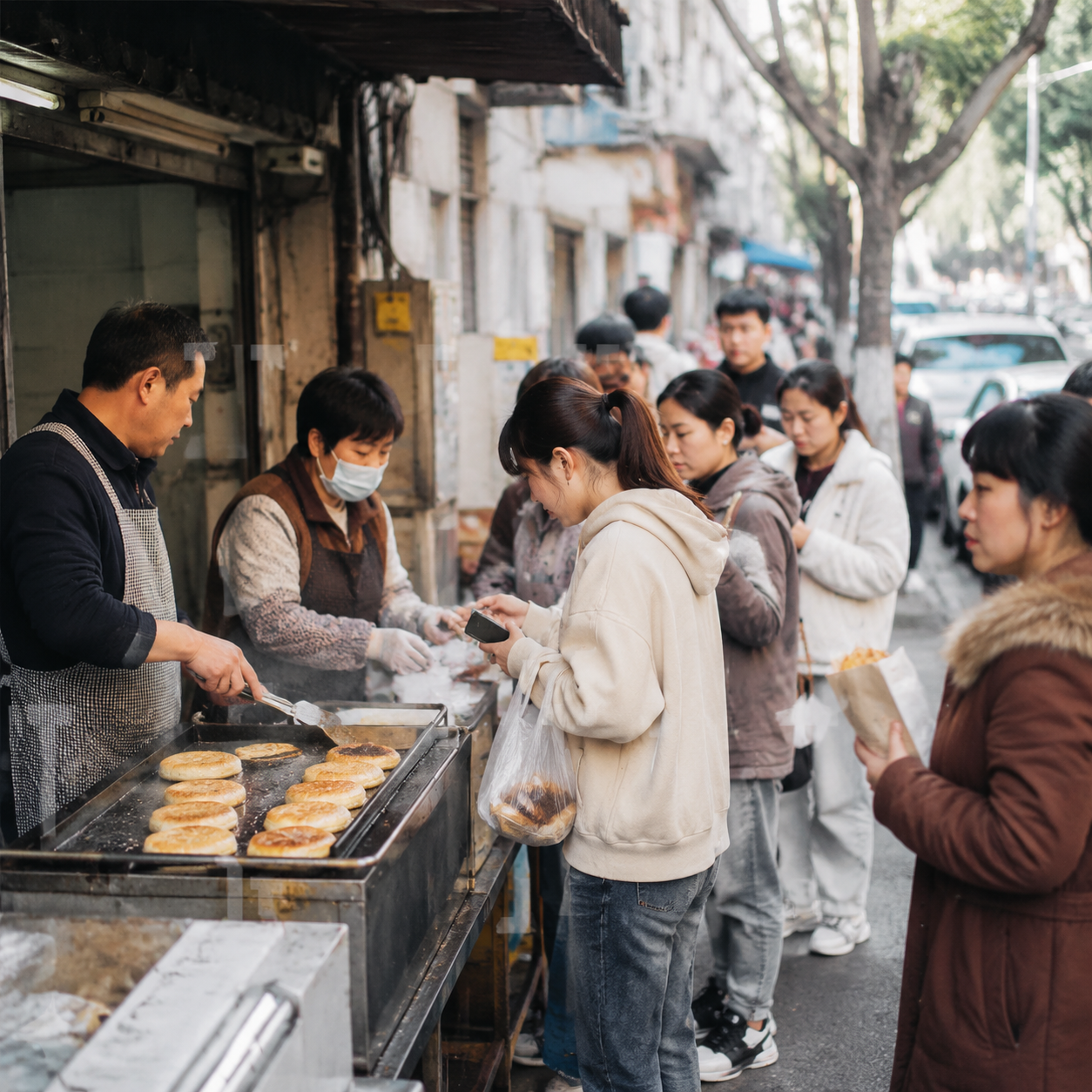
I walked the street again and realized the stall was not an isolated scene. A shoe-repair shop had just lifted its shutter, a fruit store was setting out the first basket of oranges, and someone at the bus stop split a pastry in half for a companion. Morning unfolded like a map, and the stall was one node on it. It connected home kitchens, commute routes, school gates, and office elevators. A person’s breakfast path often traced the radius of that person’s urban life.
这也改变了我安排南京行程的方式。那天之后,我不再把清晨塞满景点,而是给自己留出一段无目的的街面时间。夫子庙可以晚一点去,玄武湖可以等太阳升高,老门东也不必抢在开门前抵达。先看一条路怎样醒来,往往能帮助我更温柔地理解后面的景点。景点展示城市的记忆,早餐展示城市如何继续运转。
That experience changed how I arranged the rest of my time in Nanjing. I stopped filling every early hour with attractions and left room for purposeless street watching. Confucius Temple could wait, Xuanwu Lake could wait until the sun rose higher, and Laomendong did not need to be reached before the shops opened. Watching a street wake up often helped me understand the later landmarks with more gentleness. Sights displayed the city’s memory; breakfast showed how the city kept functioning.
如果你也想用早餐读南京,我建议不要只追最响的店名。可以先选择住处附近一条有人通勤的街,早一点出门,站在不妨碍通行的位置看十分钟。看队伍移动得快不快,看摊主怎样处理熟客和生客,看食物从锅边到纸袋需要几步。等你确认自己不会挡路,再加入队伍。这样得到的早餐,可能没有排行榜上的光环,却更接近你脚下那片街区的真实温度。
If you want to read Nanjing through breakfast, I would not begin only with the most famous shop names. Choose a commuting street near your lodging, go out a little early, and watch from a place that does not block traffic for ten minutes. Notice how fast the line moves, how the vendor handles regulars and newcomers, and how many steps food takes from pan to paper bag. Once you know you will not get in the way, join the queue. The breakfast may not carry a ranking-list glow, but it will hold the temperature of the neighborhood beneath your feet.
我也学会了把“排队”看得轻一点。旅行中遇到队伍,我们常把它当作成本,想绕开、压缩、替代。可在南京的那个早晨,队伍本身就是内容。它让我看到城市如何分配耐心,如何在有限空间里维持体面,如何让陌生人共享一套没有明文的流程。等待不一定是空白,它有时是一间露天教室,教人听懂一座城的低声部。
I also learned to treat queues differently. On trips, we often consider a line a cost to avoid, shorten, or replace. In Nanjing that morning, the line itself became the content. It showed how a city distributes patience, preserves dignity in limited space, and allows strangers to share an unwritten process. Waiting is not always empty time. Sometimes it is an open-air classroom where you begin to hear the low register of a city.
中午以后,南京会露出更熟悉的旅行面孔:景区门票、餐厅号码、地铁换乘、纪念品和拍照点。那些当然也重要,但它们常常把城市整理成可消费的片段。清晨的早餐摊则相反,它还没来得及表演,甚至不太在意你是否理解。你要主动降低姿态,才看得见它。对我来说,那条队伍像一把钥匙,打开的不是某个隐藏景点,而是观察城市的方法。
After noon, Nanjing shows a more familiar travel face: tickets, restaurant numbers, metro transfers, souvenirs, and photo spots. Those things matter, but they often organize the city into consumable fragments. A breakfast stall in the morning is different. It has not yet begun to perform, and it does not care very much whether you understand it. You have to lower your posture to see it. For me, that line was a key, not to a hidden attraction, but to a method of observing the city.
离开南京前,我又去了一次那家摊。队伍里的人换了一批,节奏却几乎相同。摊主仍旧提醒人别站太靠外,烧饼仍旧从炉边一只只出来,豆浆桶上仍旧有细小水汽。我没有拍太多照片,只记下了自己站在队尾时的感觉:一个外来者不必急着解释城市,也不必急着占有城市。先排一次队,先把自己的动作调到合适的速度,很多理解会从热气里慢慢浮出来。
Before leaving Nanjing, I returned to the stall once more. The people in line had changed, but the rhythm was almost the same. The vendor still reminded customers not to stand too far out, pastries still came one by one from the oven, and steam still clung to the soy-milk container. I did not take many photos. I kept the feeling of standing at the back: an outsider does not need to explain or possess a city immediately. Line up once, adjust your movements to the right speed, and many forms of understanding will rise slowly through the steam.
- 天津海河边的傍晚,不适合用打卡速度走完 | An Evening by Tianjin’s Haihe River Is Not for Check-In Speed
- 中国武术文化体验:太极拳少林功夫 | Chinese Martial Arts: Tai Chi & Shaolin Kung Fu
- 春季赏花地图:全国最美花海 | Spring Bloom Map: China's Most Beautiful Flower Fields
- 磁湖边跑步者递来的纸巾,让我重新安排黄石的一天 | A Runner’s Tissue Changed How I Planned a Day by Cihu Lake in Huangshi
- 乌鲁木齐老街的灯一亮,孜然和人声就把夜晚烤热了 | Once the Old-Street Lights Came On in Urumqi, Cumin and Voices Warmed the Night
- 一碗面,走遍中国 | One Bowl of Noodles, One Country
- 作者在中国一路张口学会的10句中文 | 10 Chinese Phrases the Writer Learned to Actually Use While Traveling in China
- 大理风停下来的那一刻,我才看清洱海边的节奏 | When the Wind Paused in Dali, I Finally Saw the Rhythm Beside Erhai
- 我在上海地铁早高峰里学会先站稳再看地图 | In Shanghai Morning Rush Hour, I Learned to Stand Still Before Reading the Map
- 我在中国县城汽车站学会先看人群走向,再找检票口 | I Learned at a Chinese County Bus Station to Watch Where People Flow Before Looking for the Gate
Comments (0)