
天津海河边的傍晚,不适合用打卡速度走完 | An Evening by Tianjin’s Haihe River Is Not for Check-In Speed
天津海河边的傍晚,不适合用打卡速度走完 | An Evening by Tianjin’s Haihe River Is Not for Check-In Speed
到天津的傍晚,我从地铁口出来时,天色正卡在蓝和灰之间。海河没有急着变暗,水面还留着白天最后一点亮,桥上的车流已经开灯。手机地图把我引向河边,屏幕上标着一串适合拍照的点:桥、钟楼、意式风情区、灯光游船。我原本也想照着这些名字一路走完,可刚靠近栏杆,就被风拦了一下。那阵风带着水汽和凉意,像在提醒我,海河边的傍晚不该被清单推着走。
When I reached Tianjin in the evening, I came out of the subway as the sky paused between blue and gray. The Haihe River had not hurried into darkness; the surface still held the day’s last light, while cars on the bridges had already turned on their lamps. My map guided me toward the river, listing photogenic points: bridges, a clock tower, the Italian Style Area, and illuminated cruise boats. I had intended to follow those names one by one, but as soon as I reached the railing, the wind stopped me. It carried moisture and a chill, as if reminding me that an evening by the Haihe should not be pushed forward by a checklist.
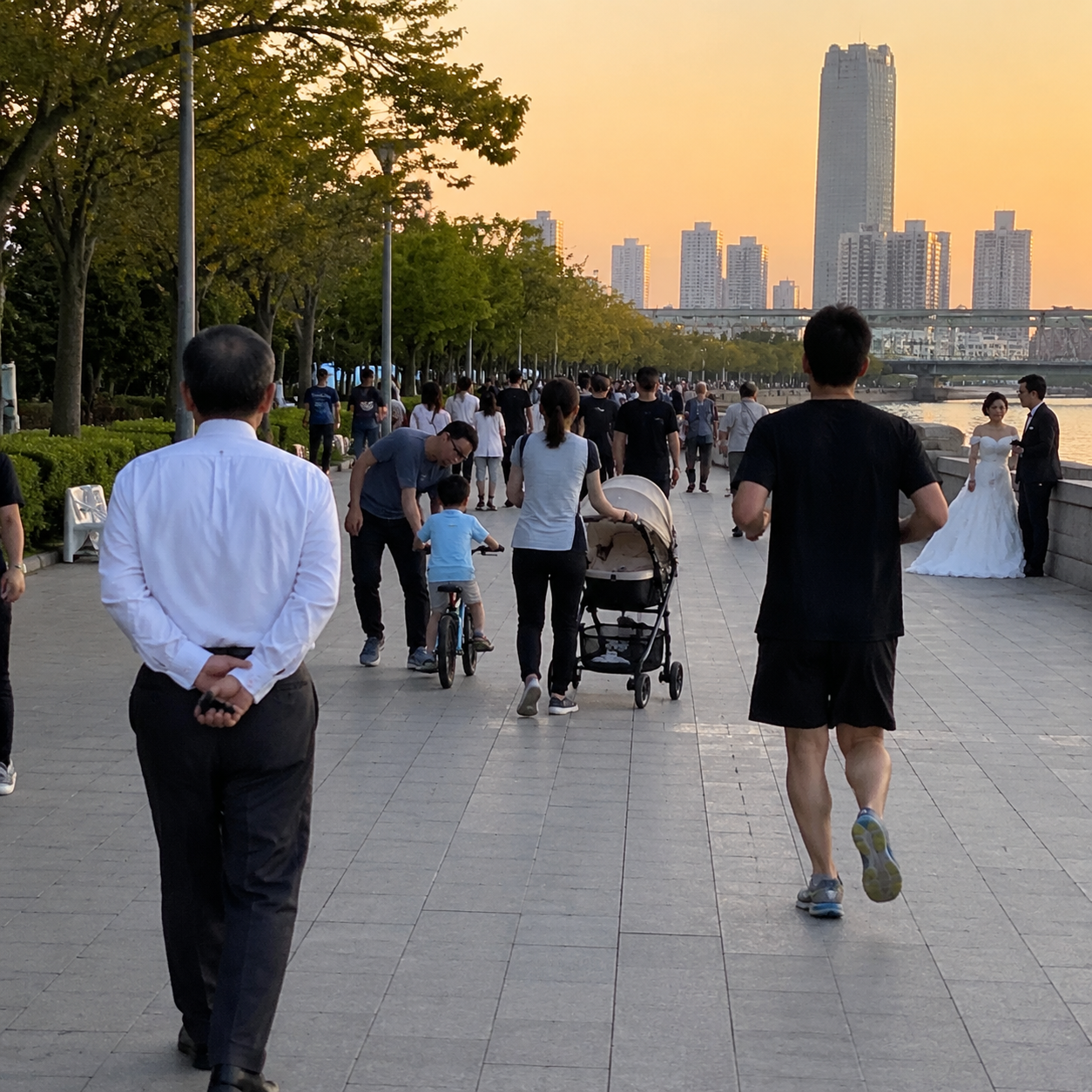
河岸的步道比我想象中宽。有人慢跑,有人推着婴儿车,有老人把手背在身后,一步一步地走。最吸引我的不是某个地标,而是这些速度彼此并不冲突:跑步的人从散步的人身边绕开,骑车的孩子被父亲轻声提醒靠边,拍婚纱照的新人站在风里等灯亮。城市在这里没有摆出统一姿势,它把不同的日常都放到同一条水边,让它们各自移动。
The riverside path was wider than I expected. Some people jogged, some pushed strollers, and older walkers kept their hands clasped behind their backs, moving step by step. What drew me most was not a single landmark, but the way these speeds did not collide. Runners curved around walkers, a child on a bicycle was softly told by his father to keep to the side, and a couple taking wedding photos waited in the wind for the lights to turn on. The city did not arrange itself into one pose here. It placed different daily rhythms along the same water and let each move on its own.
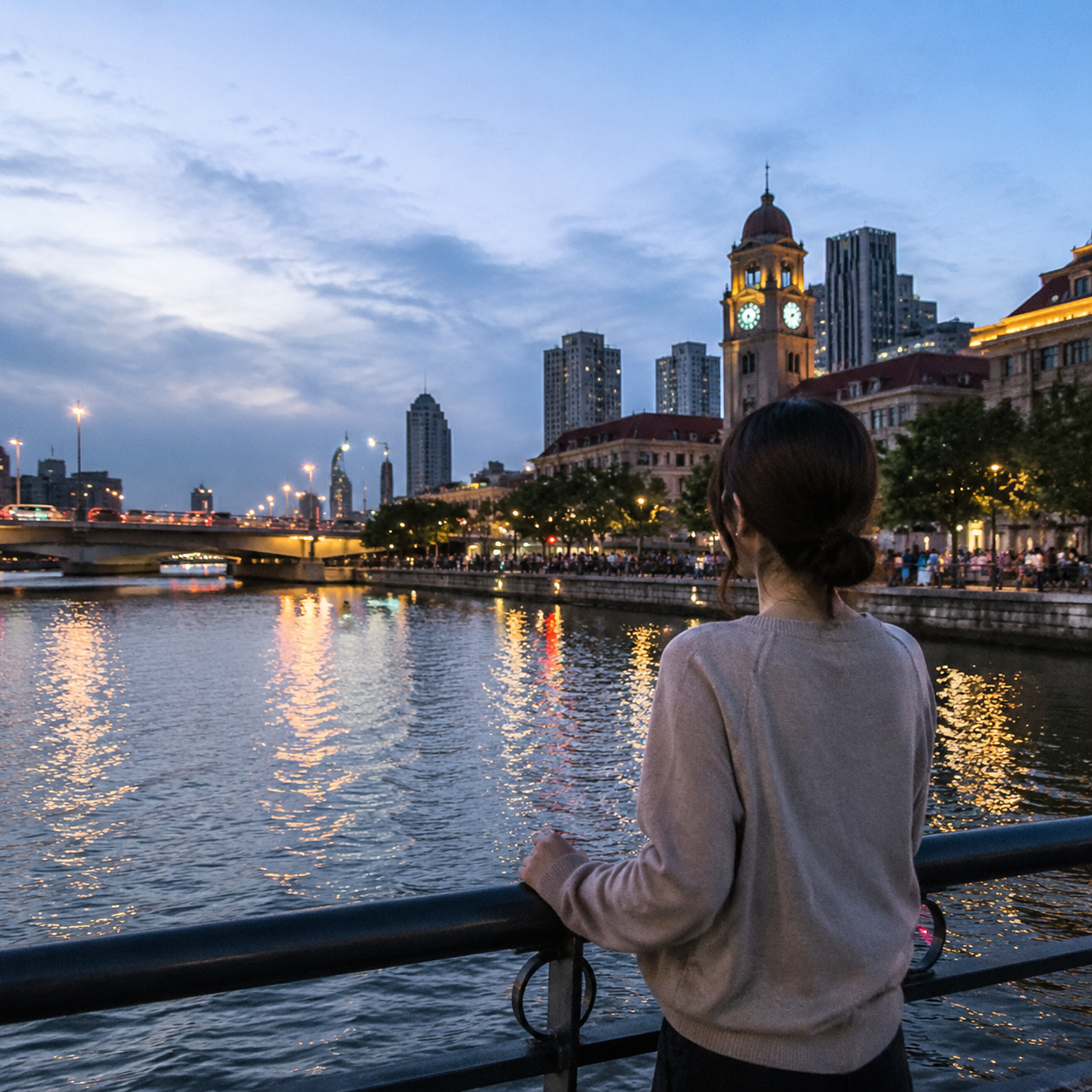
我站在一座桥下看了很久。桥身从远处看有明确线条,走近后却能看到铆钉、阴影和被风吹旧的颜色。桥上车声不断,桥下水声很轻,二者叠在一起,像天津把近代城市的硬朗和生活里的松弛同时交给你。很多人来海河会追着桥名拍照,我也拍了几张,但很快发现照片只能留下形状,留不住桥下那种声音的层次。于是我把手机收回口袋,继续沿水走。
I stood beneath a bridge for a long while. From a distance its body had clean lines, but up close I could see rivets, shadows, and colors weathered by wind. Traffic continued above, while the water below made a softer sound, and together they felt like Tianjin offering both the firmness of a modern city and the looseness of lived life. Many visitors come to the Haihe to photograph bridge names, and I took a few pictures too. But a photograph could keep the shape without keeping the layers of sound beneath it. So I returned the phone to my pocket and kept walking by the water.
傍晚的海河有一种缓慢开场的感觉。天色不是一下子黑下来,而是一层一层地退。先是建筑边缘变得柔和,再是河面把灯光拉长,最后才是游船从远处亮起来,像一段迟到的句子。岸边的人也被这变化放慢了。刚才还急着找角度的游客,开始靠在栏杆上等;本来只路过的上班族,也停下来接一个电话。这里的美不靠瞬间完成,它需要你把脚步放到和光线差不多的速度。
Evening on the Haihe feels like a slow opening. Darkness does not arrive all at once; it withdraws in layers. First the edges of buildings soften, then the river stretches the lights, and only later do the cruise boats glow in the distance like a sentence arriving late. People along the bank slow down with the change. Tourists who had been hunting for angles begin leaning on the railing to wait, and office workers who meant only to pass through stop to take a call. The beauty here does not complete itself in an instant. It asks you to match your steps to the pace of the light.
我经过一段长椅时,两个老人正在讨论晚饭吃什么。一个说回家煮面,另一个说还是买煎饼果子省事。他们的声音被风吹散一半,却留下很天津的语气:带点幽默,也带点不急不慢的笃定。再往前,有年轻人把咖啡放在栏杆上,边聊天边看船;还有孩子趴着看水里的倒影,认真得像在研究另一个城市。海河的城市观察,不是站在高处俯视,而是把自己放到这些低处的细节旁边。
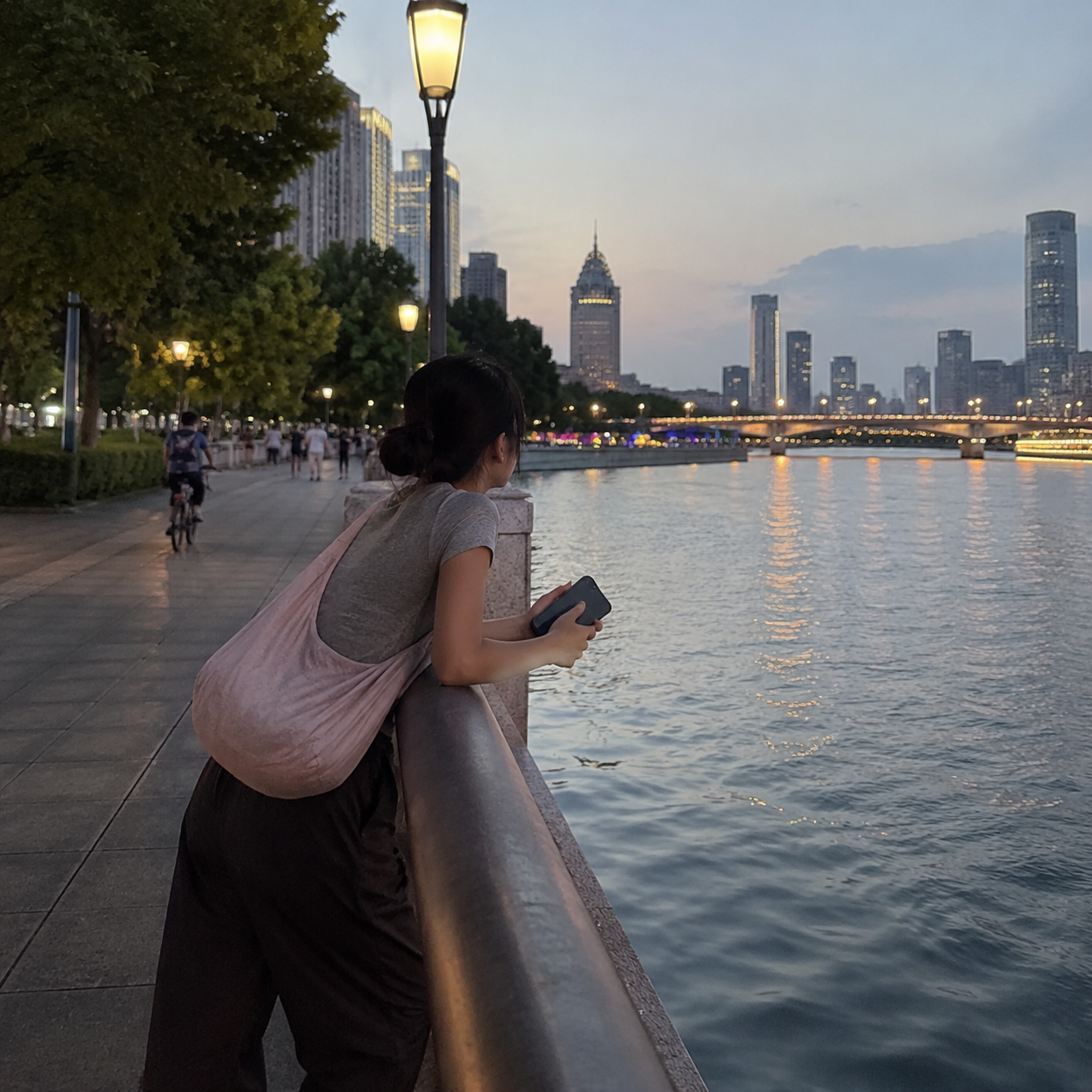
As I passed a bench, two older men were discussing what to eat for dinner. One said he would cook noodles at home, while the other said buying jianbing guozi would be easier. The wind scattered half their voices, but what remained carried a very Tianjin tone: a little humorous, a little unhurried, and firmly at ease. Farther on, young people set coffee cups on the railing and watched boats while talking; children leaned over to study reflections in the water as if researching another city. Observing the Haihe is not a matter of looking down from above. It means placing yourself beside these low, ordinary details.
走到意式风情区附近,灯光和人声明显密了起来。餐厅门口有人排队,露台上杯子碰杯子,街角传来萨克斯的旋律。这里更像游客熟悉的天津:建筑漂亮,背景完整,随手一拍都能说明自己来过。但我没有停太久,因为河边刚才给我的节奏还在。热闹当然值得看,可如果只盯着热闹,海河就会被缩成景区边界。它真正有意思的地方,是热闹旁边仍然保留着散步的余地。
Near the Italian Style Area, the lights and voices grew denser. People queued outside restaurants, glasses touched on terraces, and saxophone notes drifted from a corner. This looked more like the Tianjin visitors expect: handsome buildings, complete backdrops, and easy proof that you had been there. Yet I did not stay long, because the rhythm the river had given me was still present. Liveliness is certainly worth seeing, but if you look only at liveliness, the Haihe shrinks into a tourist boundary. What makes it interesting is that beside the bustle, there remains room simply to walk.
有一段路,河对岸的建筑轮廓映在水里,被船波揉得断断续续。我想到天津常被人用几个标签概括:码头、租界、相声、煎饼果子、海河夜景。这些标签都不算错,却像把一条河切成几张明信片。真正站在水边时,我感到它更像一条缝线,把许多不同时代缝在一起。桥梁、洋楼、高层、公园、老居民的晚步,都沿着这条线彼此相邻,却没有完全合并。
On one stretch, the silhouettes of buildings across the river appeared in the water, broken and rejoined by waves from passing boats. I thought of how Tianjin is often summarized by a few labels: port, concessions, crosstalk, jianbing guozi, Haihe night views. None of these labels is wrong, but they cut a river into postcards. Standing by the water, I felt it was more like a seam stitching together different periods. Bridges, Western-style buildings, high-rises, parks, and older residents’ evening walks all sit along the same line, neighboring one another without fully merging.
灯全部亮起以后,海河变得更像人们期待中的夜景。水面铺着金色和蓝色的碎片,游船从桥洞里穿过,岸边响起连续的快门声。我理解这种兴奋,也被它感染了一点。可我更喜欢灯刚亮未亮的那段时间,因为那时城市还没有完全进入表演状态。你能看见工作人员整理缆绳,看见清洁工把落叶扫到簸箕里,看见一盏灯坏了一半仍在闪。那些不整齐的细节,让夜景不只是漂亮,也有温度。
After all the lights came on, the Haihe looked more like the night view people expect. Gold and blue fragments spread across the water, cruise boats passed under bridge arches, and shutter sounds repeated along the bank. I understood that excitement and felt some of it myself. But I preferred the moment when the lights were not fully on yet, because the city had not entirely entered performance mode. You could see workers adjusting ropes, cleaners sweeping leaves into dustpans, and one half-broken lamp still flickering. Those uneven details gave the night view not only beauty, but warmth.
天色完全暗下去后,我没有继续追下一个拍照点,而是原路慢慢往回走。回程的景色并没有重复,因为方向变了,光也变了。刚才在左手边的桥,现在成了正前方的轮廓;刚才没注意到的长椅,坐着一对沉默的母女;刚才只听见车声的地方,现在能听见水拍岸的声音。散步的好处就在这里:它允许同一段路出现第二次,却不要求它和第一次相同。
After the sky turned fully dark, I did not chase the next photo spot. I slowly walked back the way I had come. The scenery did not repeat itself, because the direction had changed and so had the light. A bridge that had been on my left became a silhouette ahead; a bench I had not noticed now held a quiet mother and daughter; a place where I had heard only traffic now offered the sound of water touching the bank. This is the gift of walking: it allows the same stretch to appear twice without demanding that it remain the same.
回到地铁口附近,我终于明白为什么这段傍晚不能走得太快。不是因为景点很多,怕错过;恰恰相反,是因为真正值得看的东西散得很开,不会主动喊你。它们藏在风里、灯刚亮起的几分钟里、普通人的聊天里、桥下声音的层次里。若只按打卡速度前进,你当然也能得到一组不错的照片,却会错过这条河怎样把天津的日常轻轻托起来。
Near the subway entrance, I finally understood why this evening should not be walked too quickly. It was not because there were so many sights that I might miss them. On the contrary, the things most worth seeing were spread out and did not call attention to themselves. They hid in the wind, in the first minutes after the lights came on, in ordinary conversations, and in the layered sounds beneath the bridges. If you move at check-in speed, you can still get a decent set of photographs, but you will miss how this river quietly holds up Tianjin’s daily life.
海河留给我的不是一个必须推荐的最佳机位,而是一种更适合天津的观看方式。先沿着水走,不急着归纳;看见桥就停一停,看见人群就让一让,看见灯光落进水里就等它晃开。城市观察并不需要把自己变成冷静的旁观者,它更像和一座城市并肩走一段路。你不必把每个细节都解释清楚,只要让它们在心里慢慢排队,回头时自然会知道哪些留下了。
What the Haihe left me was not a must-recommend camera position, but a way of looking that suits Tianjin better. Walk along the water first, without rushing to summarize. Pause when you see a bridge, make room when you meet a crowd, and wait when light falls into the water until it begins to tremble outward. Urban observation does not require turning yourself into a detached observer. It is more like walking beside a city for a while. You do not have to explain every detail; let them line up slowly in your mind, and later you will know which ones stayed.
如果再来天津,我想我仍会把傍晚留给海河。不过我不会把它安排成一条紧凑路线,也不会急着寻找最有代表性的照片。我会从某个桥边开始,随便选一个方向,走到风变凉,走到灯亮,走到肚子开始提醒我该吃饭。那时再离开,才像真正和这条河打过招呼。海河不是不能打卡,只是它更愿意把好的部分交给愿意慢下来的人。
If I return to Tianjin, I think I will still leave the evening for the Haihe. But I will not arrange it as a tight route, nor hurry to find the most representative photograph. I will start near some bridge, choose a direction almost at random, and walk until the wind cools, until the lights come on, until hunger reminds me it is time to eat. Leaving then will feel like having truly greeted the river. The Haihe can be checked in, of course; it simply gives its better parts to those willing to slow down.
- 重庆让国外大博主上头的,从来不只是洪崖洞那一层灯火 | What Hooks Major Foreign Creators in Chongqing Is Never Only the Glow of Hongyadong
- 那些把中国拍得像特效片的博主,真正厉害的是懂得怎么给震撼留空拍 | The Creators Who Film China Like Special Effects Know How to Leave Space Between the Shocks
- 把中国拍成高铁大线以后,最值钱的内容其实藏在换乘和转场里 | Once China Becomes a High-Speed Rail Arc on Camera, the Real Value Hides in Transfers and Transitions
- 云南雨季反向玩法:人少、景美、预算可控 | Yunnan in Rainy Season: Fewer Crowds, Better Value
- 桂林和阳朔真正迷人的,不只是像画,而是那种愿意把人脚步放慢的山水节奏 | What Truly Charms Guilin and Yangshuo Is Not Only Their Painterly Beauty but the Way the Landscape Slows Your Pace
- 中国货币与支付 | Chinese Currency and Payment
- 一碗面能走多远:从兰州到潼关,西北人用面食丈量土地 | How Far Can a Bowl of Noodles Take You: Measuring the Northwest by Wheat
- 山城重庆那条上坡路,教我别低估城市地形 | My First Chongqing Hill Road Taught Me Not to Underestimate City Terrain
- 在泉州老城听见海风的回声 | Hearing the Sea Wind in Quanzhou's Old Town
- 读懂中国历史 | Understanding Chinese History
Comments (0)