
给刚开始学中文的小朋友的一封信:别急着背太多字,先把“会开口”这件事练顺 | A Letter to Kids Starting Chinese: Don’t Rush to Memorize Too Many Characters Before You Learn to Speak Naturally
给刚开始学中文的小朋友的一封信:别急着背太多字,先把“会开口”这件事练顺 | A Letter to Kids Starting Chinese: Don’t Rush to Memorize Too Many Characters Before You Learn to Speak Naturally
亲爱的小朋友, 如果你现在刚开始学中文,而且每次一张开嘴,就担心自己会把声调说歪、把词序说反、把“谢谢”说得像背台词,那我想先告诉你一件很重要的事:不用急。真的不用急。很多人学一种新语言,最先卡住的地方不是脑子不够快,而是心里太想一次就说得漂亮。
Dear little learner, If you have just started learning Chinese, and every time you open your mouth you worry that your tones will slip, your word order will turn around, or your “thank you” will sound like a memorized line, I want to tell you something first: you do not need to rush. Really. Many people get stuck in a new language not because they are slow, but because they want to sound perfect too early.
我想起一个刚来中国的小朋友。她第一次去学校体验课的时候,把写着“你好”的卡片攥得很紧,连卡纸边都压出了一道弯。老师让大家互相打招呼,她明明已经练了很多遍,轮到自己时还是一下子安静了。前面有铅笔盒轻轻碰桌子的声音,窗外篮球砸地“咚、咚、咚”地响,她的脸一点点变红,最后只挤出来很小的一声“你……好”。你猜怎么着?全班没有笑她。旁边一个扎马尾的女生反而先冲她笑了一下,说:“没关系,我们慢慢来。”
I remember a child who had just arrived in China. On her first trial class at school, she held a card that said “你好” so tightly that the edge bent under her fingers. The teacher asked everyone to greet one another. She had practiced many times, but when her turn came, she suddenly went quiet. There was the soft sound of a pencil case tapping the desk, and outside the window a basketball hit the ground again and again. Her face slowly turned red, and in the end she whispered out a tiny “ni… hao.” And do you know what happened? Nobody laughed. A girl with a ponytail smiled at her first and said, “It’s okay. We’ll take it slowly.”
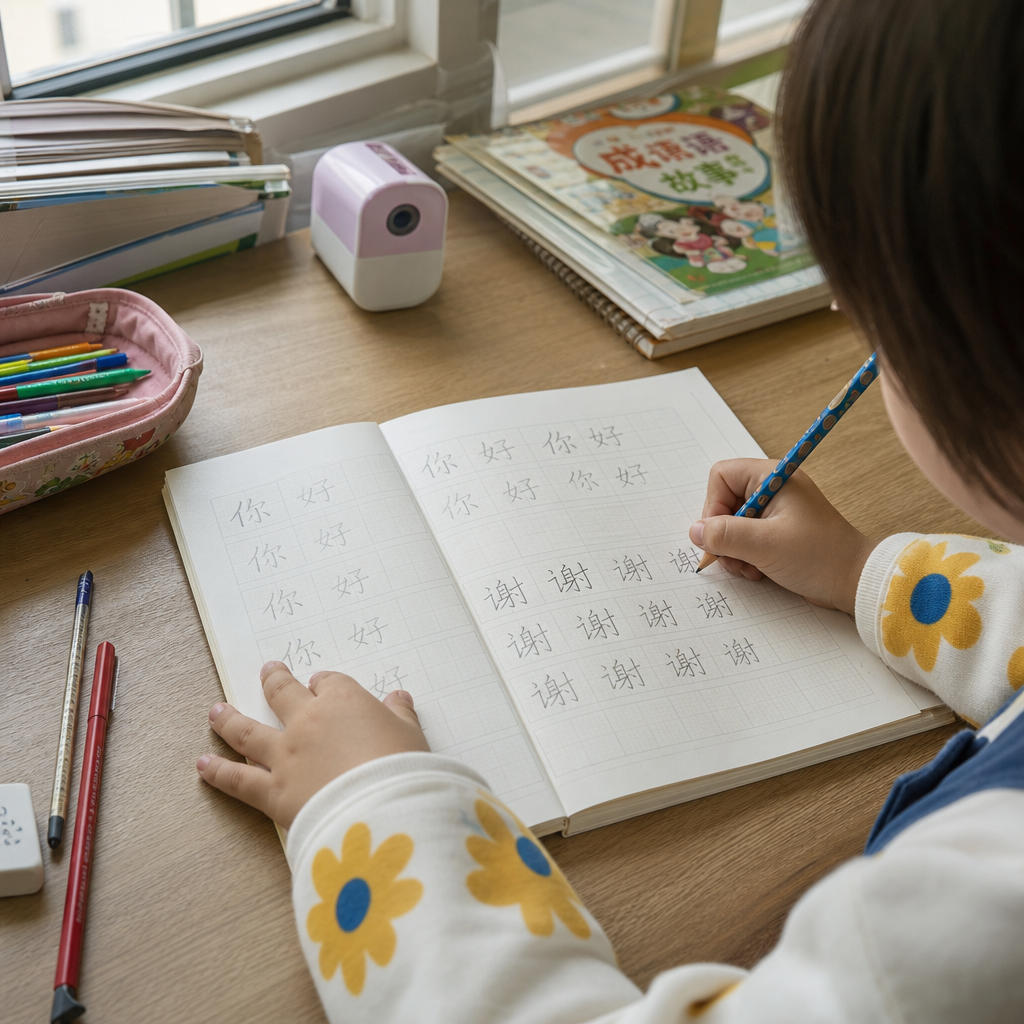
我很喜欢这个小场面,因为它提醒我,语言不是先长在词典里,语言先长在你敢不敢把它说出来。你刚开始学中文的时候,不需要一下子会很多字,也不需要把每一笔都写得像印刷体。你更需要的是让嘴巴先熟悉中文的节奏,让耳朵先认出最常见的句子,让心里先知道:就算卡住,也不会世界末日。
I love this little scene because it reminds me that language does not grow first in a dictionary. It grows first in whether you dare to speak it. When you begin learning Chinese, you do not need to know many characters at once, and you do not need to write every stroke like printed text. What you need more is to let your mouth get used to the rhythm of Chinese, let your ears recognize the most common expressions, and let your heart know that even if you freeze, the world will not end.
所以这封信不是想催你背更多,而是想陪你先把“会开口”练顺。下面这些办法,不像考试题,更像每天都能做的小动作。你可以在早餐前练一点,在放学后练一点,在洗手时、收书包时、睡前关灯前都练一点。中文不是一下子冲上去的,它更像你慢慢把一条小路走出来。
So this letter is not here to push you to memorize more. It is here to help you make speaking feel natural first. The methods below are not like test questions. They are like small actions you can do every day. Practice a little before breakfast, a little after school, a little while washing your hands, packing your schoolbag, or turning off the light before bed. Chinese does not come all at once. It is more like slowly walking a little path into shape.
先练这 5 件小事 / Start with These Five Small Things
1. 先把最短的话说顺
不要一开始就挑战长句子。你先把“你好”“谢谢”“我来了”“我不知道”“可以吗”说得自然一点。自然比复杂更有力量。
1. Make the shortest phrases smooth first
Do not challenge long sentences at the beginning. Make “hello,” “thank you,” “I’m here,” “I don’t know,” and “is it okay?” sound natural first. Natural is stronger than complicated.
2. 对着镜子练,不是为了好看,是为了不慌
你可以看着自己说一句中文,再停一下,再说第二句。镜子不会催你,也不会打断你。它只是帮你习惯“我正在用中文说话”这件事。
2. Practice in front of a mirror, not to look pretty, but to stop panicking
Look at yourself, say one sentence in Chinese, pause, then say the second. A mirror does not rush you or interrupt you. It only helps you get used to the feeling that you are speaking Chinese.
3. 用生活里的东西学词,不要只背卡片
看到水杯就说“水”,看到门就说“门”,拿起橡皮就说“橡皮”。一旦词和东西连在一起,中文就不再只是纸上的符号。
3. Learn words from real objects, not only from flashcards
See a cup and say “water.” See a door and say “door.” Pick up an eraser and say “eraser.” Once words connect to things, Chinese stops being only marks on paper.
4. 不会的时候,也要学会一句顶住场面的中文
比如“请再说一遍”“我有一点听不懂”“你可以慢一点吗”。这些句子像你的小雨伞,不会让所有难题消失,但会帮你先别被淋透。
4. When you don’t know, learn one sentence that can hold the moment
For example: “Please say it again,” “I understand only a little,” and “Can you speak more slowly?” These sentences are like a small umbrella. They do not remove every problem, but they help you not get soaked.
5. 每天只留一个小目标
今天把“谢谢”说得更自然,明天把“老师好”说响一点,后天把“我想试试”说完整。一天一个小目标,比一天想变厉害更容易做到。
5. Leave only one tiny goal for each day
Today, make “thank you” sound more natural. Tomorrow, say “hello, teacher” a little more clearly. The day after, finish saying “I want to try.” One small daily goal works better than dreaming of becoming amazing overnight.

有些大人会告诉你,学中文一定要先多认字。这当然没有错,但如果你是外国小朋友,我真心建议你先别把自己吓住。因为“先会开口”有一个很大的好处:你会更快感到这门语言在陪你生活。你去食堂可以说“这个”,下雨时可以说“我没带伞”,看到老师可以说“早上好”,做错题也可以说“我再试一次”。这些句子一旦活了起来,汉字就不会那么像一堵墙,而更像你以后会慢慢走进去的房间。
Some adults will tell you that learning Chinese means recognizing many characters first. That is not wrong. But if you are a foreign child, I honestly suggest you do not scare yourself that way. Speaking first has one big advantage: you begin to feel the language living with you. In the cafeteria you can say, “This one.” When it rains, you can say, “I didn’t bring an umbrella.” When you see your teacher, you can say, “Good morning.” When you get a question wrong, you can say, “I’ll try again.” Once sentences like these come alive, Chinese characters stop feeling like a wall and start feeling like a room you will slowly walk into later.
我还想告诉你,发音练不好、声调常常乱、句子说到一半停住,这些都很正常。真的很正常。你不会因为说错一个词,就变成一个学不好中文的人。反过来,你每多说一次,每多听懂一句,每多敢在教室里、超市里、操场边开一次口,你都在悄悄往前走。别人也许看不见,但你自己会知道,那条路已经不是昨天那样了。
I also want to tell you that messy pronunciation, mixed-up tones, and getting stuck halfway through a sentence are all normal. Truly normal. One wrong word does not turn you into someone who is bad at Chinese. In fact, each time you speak once more, understand one more sentence, or dare to open your mouth one more time in a classroom, a supermarket, or by the playground, you are moving quietly forward. Other people may not see it, but you will know that the road is already different from yesterday.
所以,如果你今天只记住这封信里一句话,我希望是这一句:别急着背太多字,先把“会开口”这件事练顺。语言不是一下子长出来的树,它更像窗台上一盆每天浇一点水的小植物。你听见它的时候,也许很轻;可等你回头看,已经绿了一大片。
So if you remember only one sentence from this letter, let it be this: do not rush to memorize too many characters before you learn to speak naturally. A language is not a tree that appears all at once. It is more like a small plant on a windowsill that gets a little water every day. When you hear it growing, it may sound very small. But when you look back, a whole patch has already turned green.
祝你下次开口时,不是更完美,而是更勇敢。
I hope the next time you speak, you are not more perfect, but more brave.
如果你还想看一个更贴近校门口真实语气的小故事,也可以读读 school-gate Chinese story。
If you want one more story about real Chinese around a school gate, you can also read school-gate Chinese story.

- 丽江的雨停在屋檐上以后,我开始跟着水渠和石板路慢慢走 | After Rain Stopped Along Lijiang’s Eaves, I Began Following the Canals and Stone Lanes Slowly
- 我在苏州学会先找一条不费力的厕所路线 | In Suzhou I Learned to Find a Low-Effort Restroom Route First
- 江南水乡不要只拍照:要学会慢看 | In Jiangnan Water Towns, Do Not Just Take Photos — Learn to Look Slowly
- 长江游轮:独特旅行体验 | Yangtze River Cruise: A Unique Experience
- 我在中国早餐摊第一次学会热包子要先撕口放气 | The First Time at a Chinese Breakfast Stall, I Learned to Tear Open a Hot Baozi First to Let the Steam Out
- 面子、关系与人情:读懂中国社会的三把钥匙 | Face, Guanxi & Renqing: Three Keys to Understanding Chinese Society
- 中国旅游网络与上网指南 | Internet & Connectivity Guide for China Travel
- 读懂中国历史 | Understanding Chinese History
- 从成都出发的三天川西自驾路线 | A 3-Day Road Trip from Chengdu into Western Sichuan
- 在中国公园跟着陌生人倒着走那十分钟,我第一次不再急着解释自己 | The Ten Minutes I Walked Backward with Strangers in a Chinese Park Was the First Time I Stopped Rushing to Explain Myself
Comments (0)