
我原以为汉代节日只是热闹,后来才发现真正难忘的是厨房里那股蒸汽 | I Used to Think Han Festivals Were Only About Excitement, Until I Realized the Kitchen Steam Was What Stayed With Me
我原以为汉代节日只是热闹,后来才发现真正难忘的是厨房里那股蒸汽 | I Used to Think Han Festivals Were Only About Excitement, Until I Realized the Kitchen Steam Was What Stayed With Me
天还没亮透,院子里的地面已经被来回走动的人踩出一层湿润的亮。我那天是被灶间的声音先叫醒的,不是鸡叫,也不是门外有人说话,而是木盖子被揭开时那一声很闷的热气响。锅里的白汽一下冲出来,把屋里低低的晨光都顶散了一点。有人在案边摁面,有人在火前添柴,还有个小孩缩着脖子站在门边,明明困得眼睛都没完全睁开,却还是忍不住往里面看,像怕错过这一天最早开始的那一口香味。
It was not yet fully light, but the ground in the courtyard already held a damp shine from the feet that had been moving back and forth over it. That morning, it was the sound from the kitchen that woke me first—not a rooster, and not voices outside the gate, but the heavy breath-like sound made when a wooden lid was lifted. White steam rushed out of the pot at once and pushed the low morning light apart inside the room. Someone was pressing dough at the worktable, someone was feeding firewood into the stove, and a child stood by the doorway with his neck tucked inward. His eyes were still half asleep, yet he kept peering in, as though he were afraid of missing the first important fragrance of the day.
我以前总把中国古代节日想得太大:仪式、队伍、灯火、乐声、热闹的人群。后来在中国待久了,我才慢慢意识到,很多真正决定节日气氛的,不是外面那一刻有多盛大,而是家里最早开始动起来的那几个动作。汉代这种讲究家族和时序的节日尤其如此。饭什么时候开始备,水什么时候烧开,谁先洗菜,谁守火,谁去叫长辈,孩子什么时候才被允许伸手偷拿一小块刚蒸好的点心——这些细节合在一起,比后来走到院外看到的任何热闹都更有温度。
I used to imagine ancient Chinese festivals only on a large scale: ritual, processions, lantern light, music, crowded excitement. But after spending more time in China, I slowly realized that what truly determines the atmosphere of a festival is often not the grandeur outside, but the first few actions that begin moving inside a household. This is especially true of Han-period festival life, with its deep attention to family order and seasonal timing. When the food begins, when the water starts to boil, who washes vegetables first, who tends the fire, who goes to call the elders, and when a child is finally allowed to sneak a piece of freshly steamed cake—all these details, taken together, carry more warmth than any excitement seen later beyond the courtyard.
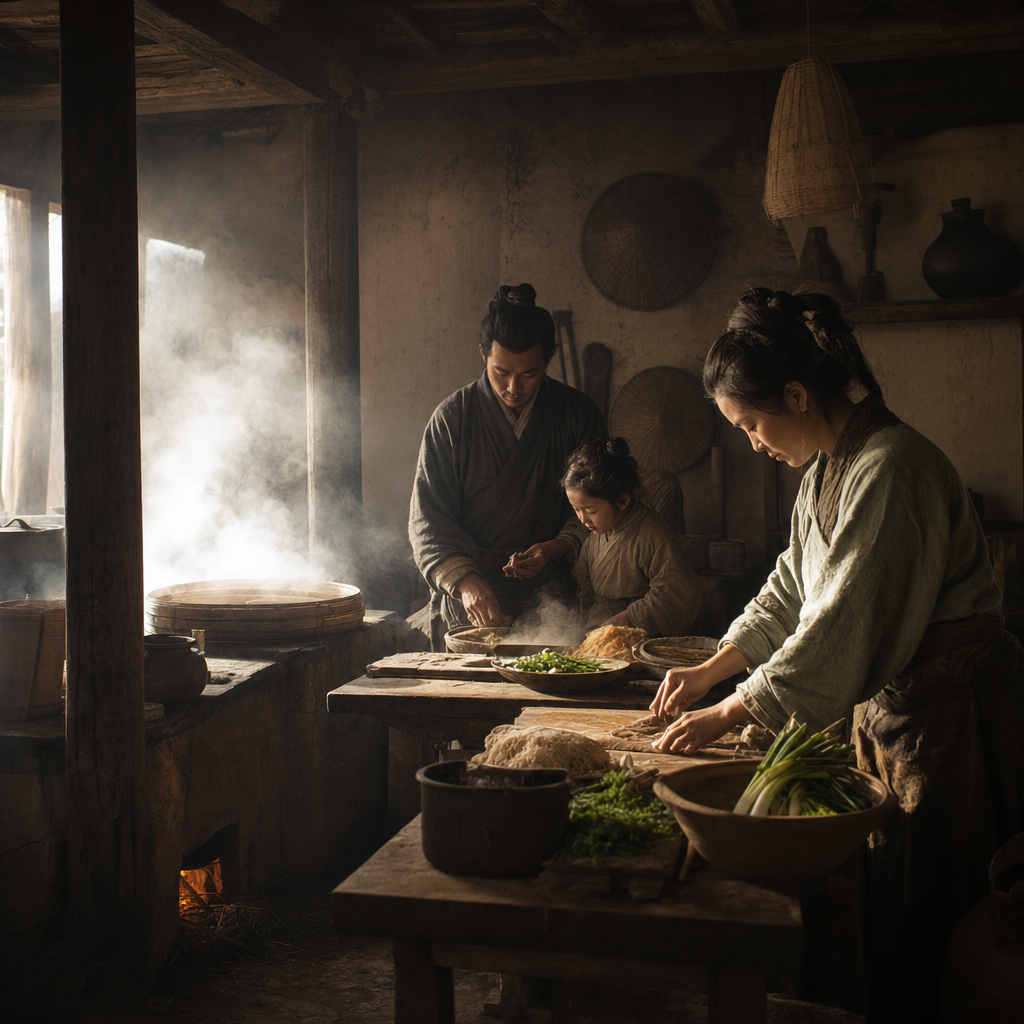
带我看这一家节日准备的,是一位总爱把袖口往上折两道的妇人。她手很快,嘴却不急,边切边跟我说,过节最先热起来的从来不是院子,是厨房。我听完就笑了,因为这句话实在太像我后来理解中国生活时反复碰到的规律:很多重要的东西,都是先在看不见的地方开始成形的。你站在屋外,也许只会觉得今天比平常吵一点;可你一旦走进灶间,看见热气怎样贴着梁下往上拱,闻见米面和湿木柴混在一起的味道,就知道节日已经提前半天到场了。
The woman who showed me the household preparations had a habit of folding her sleeves upward twice. Her hands moved quickly, but her speech never hurried. While slicing ingredients she told me that on festival days, the first place to grow warm is never the courtyard. It is always the kitchen. I laughed when I heard that, because the line felt so close to something I have repeatedly learned about life in China: many important things first take shape where they are not immediately visible. If you stay outside, you may only feel that the day is slightly louder than usual. But once you step into the cooking room, watch steam pushing upward under the roof beam, and smell the mixture of grain flour and damp firewood, you understand that the festival has arrived half a day early.
真正的节日是从火边开始的 / The Real Festival Begins at the Fire
我原本以为节日气氛是靠装饰堆出来的,后来才知道不是。至少在这类家庭节日里,火边的秩序比门口的装饰更重要。灶前要有人一直看着,蒸笼不能一下揭得太急,案板上的面团要按家里人口和长幼顺序分,调味也不能乱来。看起来全是小事,可这些小事把一大家子的节奏连在一起。没有它们,后面再热闹也容易散。
I used to think festive atmosphere was built mainly through decoration. Later I realized that it was not. At least in a household celebration like this, the order at the fire mattered more than decoration by the entrance. Someone had to keep watch at the stove. Steam baskets could not be opened too quickly. Dough on the board had to be divided according to the size and generation order of the family. Even seasoning could not be handled carelessly. These all look like small matters, yet they connect the rhythm of an entire household. Without them, even the busiest celebration later on would easily come apart.
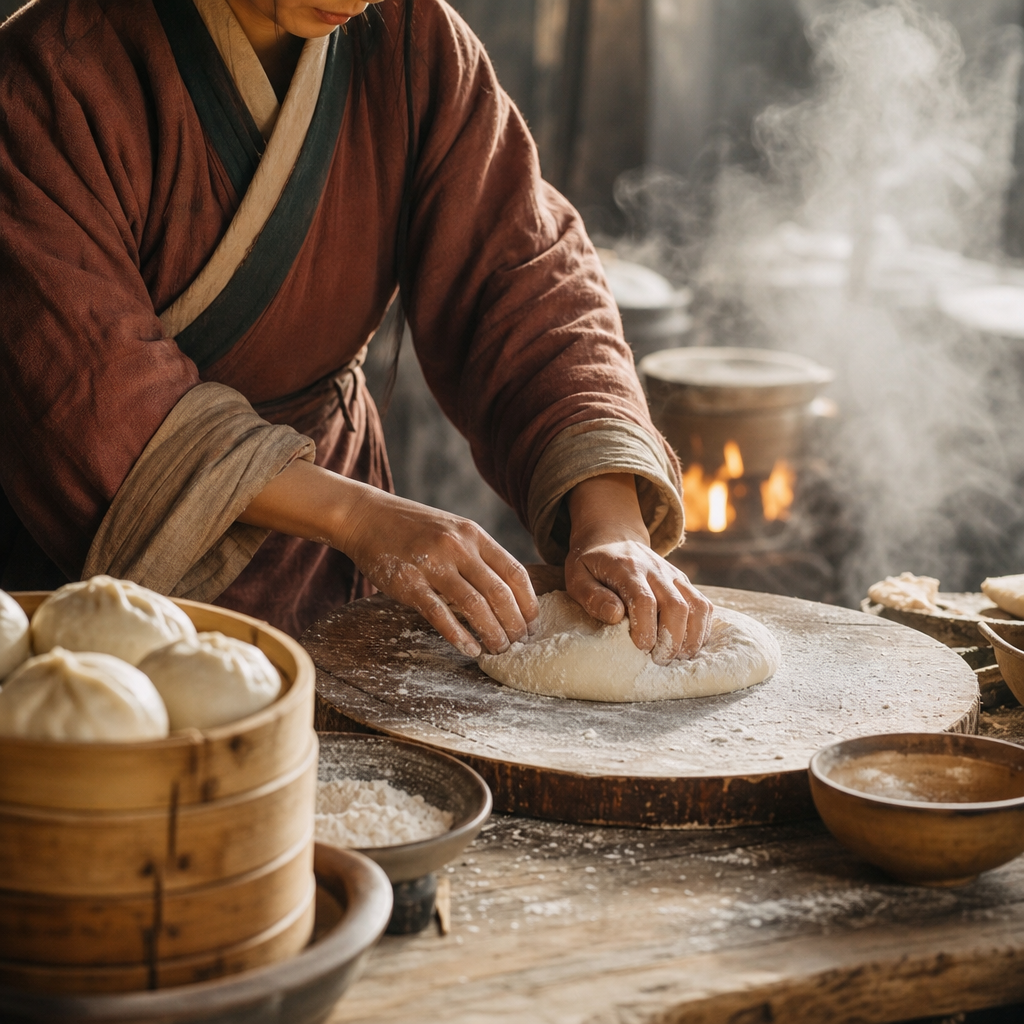
那位妇人后来把木盖抬起来给我看里面的点心,脸上没有一点“展示给外人看”的神气,倒更像在确认火候是否终于到了。蒸汽扑到她额前碎发上,立刻凝成细小的水珠。她只用手腕很短地一翻,又把盖子压回去,说现在还差一点。我站在旁边忽然就懂了,为什么汉代节日不容易被写成一句“很热闹”就算。它真正动人的地方,不是表面的满,而是每个步骤都还保留着一种耐心。火不能太急,菜不能先乱上,老人没坐稳,小孩就不能先开吃。节日不是为了打破秩序,它恰恰是把秩序做得更亮的一天。
Later the woman lifted the wooden lid to show me the cakes inside. There was no pride in her expression, no sense of putting on a display for an outsider. She looked more like someone checking whether the heat had finally reached the right point. Steam struck the loose hair on her forehead and turned at once into tiny beads of water. With a short turn of the wrist she lowered the lid again and said it still needed a little more time. Standing beside her, I suddenly understood why Han-period festival life cannot be reduced to a single sentence like it was lively. What moves people is not the outer fullness, but the patience preserved in each step. The fire cannot be pushed too hard. The dishes cannot come out in confusion. If the elders are not yet seated, the children cannot begin. A festival is not meant to break order. It is a day when order itself becomes brighter.
孩子、长辈和那种不必喊出来的次序 / Children, Elders, and an Order No One Needs to Shout
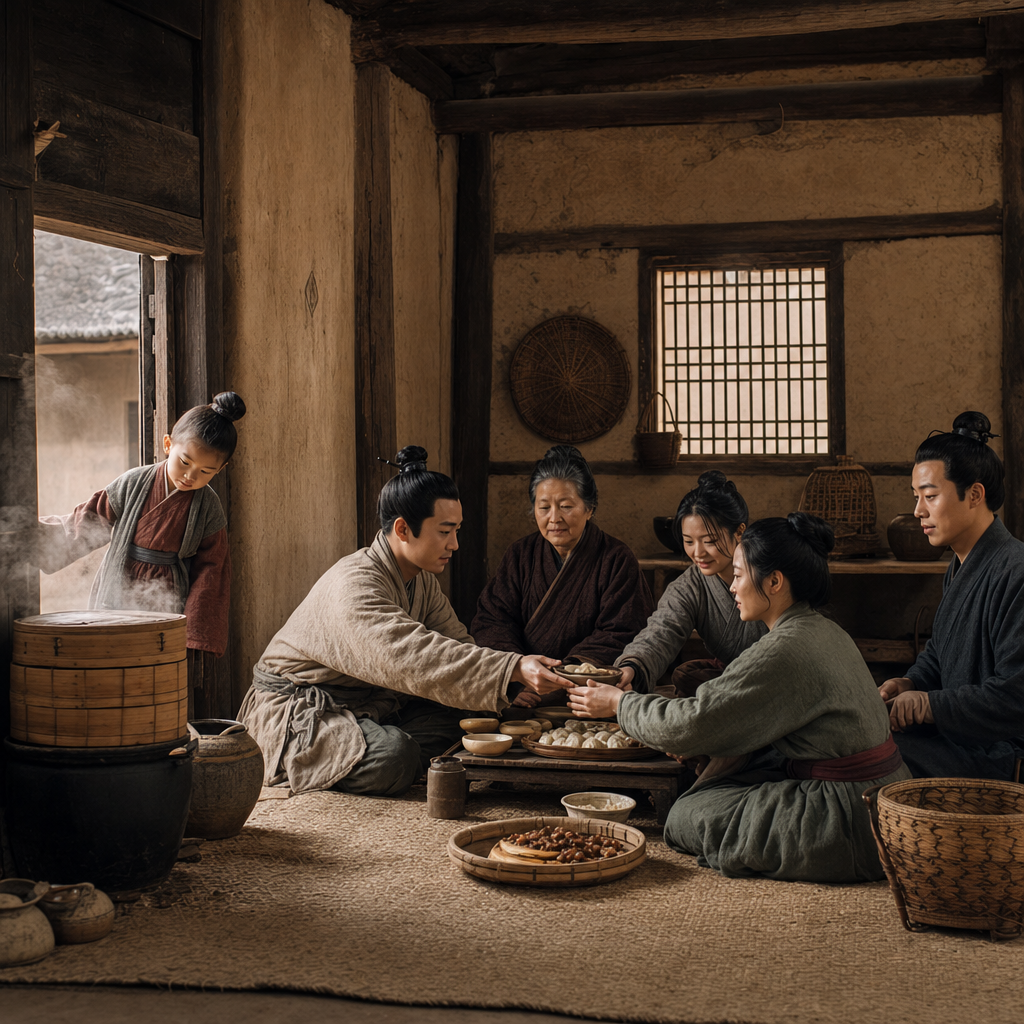
我印象最深的不是食物,而是人怎么围着食物动。一个年纪最小的孩子几次试着往前挪,想看看蒸笼里到底是什么,可每回刚往前一步,就会先回头看一眼祖母那边。祖母其实没说什么,只是坐在靠里一点的位置上,把手放在膝前,眼睛偶尔抬一下,屋里所有人就都知道现在该快还是该慢。这个画面让我很受触动。很多文化都会讲尊长,可我在这里感受到的不是僵硬的命令,而是一种已经被练成日常反应的默契。
What stayed with me most was not the food itself, but how people moved around it. The youngest child kept trying to edge forward, wanting to see what was really inside the steamer. Yet every time he took a small step, he first turned his head toward where his grandmother was sitting. The grandmother never said much. She simply sat slightly deeper inside the room, her hands resting before her knees, lifting her eyes once in a while, and somehow everyone in the room knew whether the moment called for more speed or more patience. The image moved me deeply. Many cultures speak of respecting elders, but what I felt here was not rigid command. It was a tacit order that had already been trained into everyday reflex.
如果只从现代游客的角度看过去,你可能会以为这不过是一个准备节日饭菜的普通早晨。可对我来说,这恰恰是最能看出中国古代家庭气质的地方。谁先忙,谁后坐,谁负责把热食从灶间送到屋里,谁负责照看那个老想把手伸进蒸汽里的孩子——这些安排都在无声地讲一件事:一个节日,不只是让人高兴,它还让每个人知道自己在这个家庭里的位置。
If you looked at the scene only as a modern tourist, you might think it was just an ordinary morning of preparing festival food. But for me, this is exactly where the character of an ancient Chinese household becomes most visible. Who begins working first, who sits later, who carries hot dishes from the cooking room into the main space, who keeps an eye on the child always tempted to reach into the steam—these arrangements all say one quiet thing: a festival does not only make people happy. It reminds each person of his or her place within the family.
我后来也想起自己国家里过节的样子。我们也会提前准备食物,也会因为某几道固定菜式而突然觉得“今天真的不一样”。可中国这种古代家庭节日给我的感觉更强烈一些,因为它把厨房、长辈、孩子和时间全绑在了一起。节日不是孤零零挂在日历上的一天,而像一根线,从前一晚泡好的米、清晨点着的火、祖母看人的眼神,一直拉到中午桌边第一碗热气升上来为止。
I also found myself thinking about festivals in my own country. We too prepare food early, and we too have certain dishes that make the day feel suddenly different. But ancient Chinese household festivals strike me more intensely because they bind together the kitchen, the elders, the children, and time itself. The festival is not an isolated square on a calendar. It is more like a thread stretching from rice soaked the night before, to the morning fire being lit, to the grandmother's glance across the room, all the way to the first bowl of rising steam at the midday table.
最后留在我脑子里的,是梁下那团白汽 / What Stayed in My Mind Was the White Steam Beneath the Beam
等到院子里真的开始热闹,外面的声响越来越满,灶间反而没有一开始那么忙了。最难的准备已经做完,剩下的是把那些辛苦慢慢端到桌上。那时我回头看见屋梁下面还挂着一小团没散完的白汽,像这一天最早的秘密还没完全离开。那一瞬间我突然觉得,汉代节日真正难忘的并不是后来那顿饭有多丰盛,而是你在饭之前已经先看见了一个家庭怎样把温度、秩序和期待一起蒸出来。
By the time the courtyard truly grew lively and the sounds outside filled more and more of the air, the kitchen was no longer as busy as it had been earlier. The hardest preparation was already done. What remained was to carry that labor slowly onto the table. Then I turned back and saw a small cloud of white steam still hanging beneath the beam, as though the earliest secret of the day had not fully departed yet. In that instant I felt that what made Han festival life unforgettable was not how rich the later meal became, but how, before eating even began, a family had already steamed warmth, order, and expectation into being together.
- 火锅点单避坑指南:第一次吃别踩这些雷 | Hot Pot Ordering Survival Guide: Avoid These Mistakes on Your First Visit
- 我在中国县城汽车站学会先看人群走向,再找检票口 | I Learned at a Chinese County Bus Station to Watch Where People Flow Before Looking for the Gate
- 北京故宫与胡同深度游 | Beijing: Forbidden City & Hutong Deep Dive
- 天还没热起来,长安早市已经把一天的味道摆出来了 | Before the Heat Rose, Chang'an's Morning Market Had Already Laid Out the Flavor of the Day
- 大理先让我学会的,不是看风景,而是在古城外把脚步放稳 | What Dali Taught Me First Was Not the View, but How to Steady My Steps Outside the Old Town
- 汉服入门指南:形制、场合与穿搭 | Hanfu Beginner's Guide: Styles, Occasions & Outfits
- 读懂中国历史 | Understanding Chinese History
- 福州的榕树和路口一起告诉我,这座城是怎么往前走的 | Fuzhou’s Banyan Trees and Crossroads Showed Me How the City Moves
- 一场雨把南京重新排了次顺序:先坐下吃口热的,再决定往哪走 | One Rain Shower Reordered Nanjing for Me: Sit Down for Something Hot Before Deciding Where to Go
- 我在重庆学会先看楼层关系,再看地图距离 | In Chongqing I Learned to Read Vertical Space Before Map Distance
Comments (0)