
福州的榕树和路口一起告诉我,这座城是怎么往前走的 | Fuzhou’s Banyan Trees and Crossroads Showed Me How the City Moves
第一次到福州,我先学会观察路口和人流 | On My First Day in Fuzhou, I Learned to Read Crossroads and Crowds
福州的路口,在一天里有许多种表情。清晨它带着湿润的雾气,午后它被阳光晒得明亮,傍晚它又被电动车灯、公交车门声和行人的谈话填满。站在一个普通路口看人流,像看一条没有固定河道的河。人们从四面八方涌来,又在红绿灯的节奏里停下、分开、汇合。福州的空气常常温热,榕树的叶子在路边撑开宽大的阴影,树根像城市的脉络一样沿着地面伸展。人流从这些阴影下经过,带着各自的目的,却也共同组成了这座城市最日常、最真实的流动。
A Fuzhou intersection has many expressions within a single day. In the morning it carries damp mist; in the afternoon it shines under the sun; by evening it is filled with electric bike lights, bus doors, and pedestrians’ conversations. Standing at an ordinary intersection and watching the flow of people is like watching a river without a fixed channel. People arrive from all directions, then stop, separate, and merge according to the rhythm of traffic lights. The air in Fuzhou is often warm and moist. Banyan leaves spread broad shadows by the road, and their roots stretch along the ground like the veins of the city. The crowd passes through these shadows with different purposes, yet together it forms the city’s most daily and truthful movement.
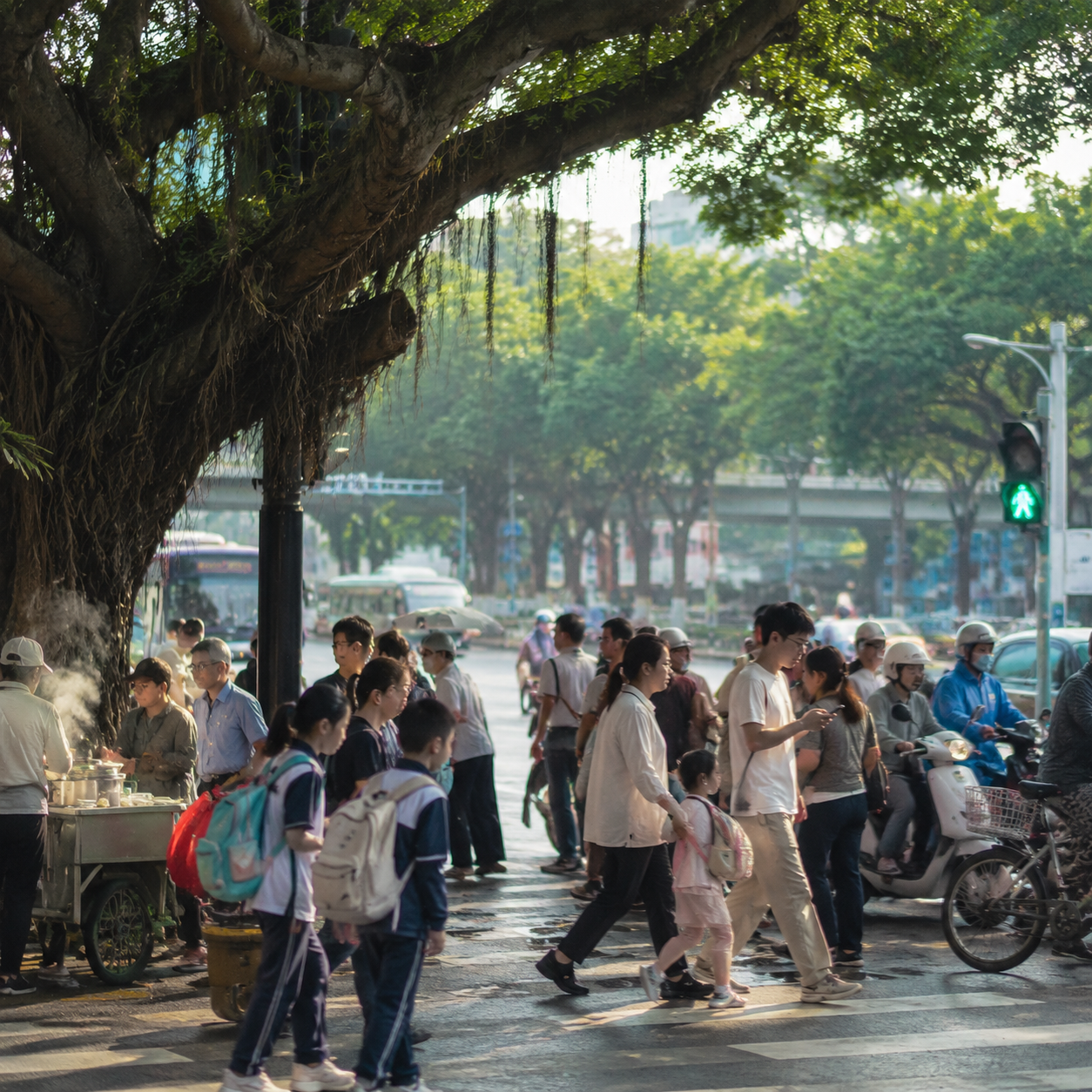
早高峰的路口最能看出生活的密度。学生背着书包,校服衣角被风轻轻带起;上班的人一边走一边看手机,耳机里可能传来新闻、音乐或会议提醒;卖早餐的小摊旁排着短短的队,锅边糊的香气混着豆浆的热气往外散。绿灯亮起的一瞬间,等待的人像被同一个信号轻轻推动,脚步同时向前。有人走得快,有人推着自行车,有人牵着孩子,电动车在白线外排成一排,骑车的人戴着防晒帽或雨披。路口因此显得拥挤,却不混乱,因为每个人都熟悉这种共同前进的方式。
The morning rush hour best reveals the density of life at the intersection. Students carry schoolbags, their uniform hems lifted slightly by the wind; office workers walk while checking phones, perhaps hearing news, music, or meeting reminders through earphones; a short line forms beside a breakfast stall, where the fragrance of guobian paste mixes with the steam of soy milk. The instant the green light appears, the waiting crowd seems gently pushed by one shared signal, and feet move forward together. Some walk quickly, some push bicycles, some hold children’s hands, and electric bikes line up beyond the white line, riders wearing sun hats or rain capes. The intersection feels crowded but not chaotic, because everyone understands this shared method of moving forward.
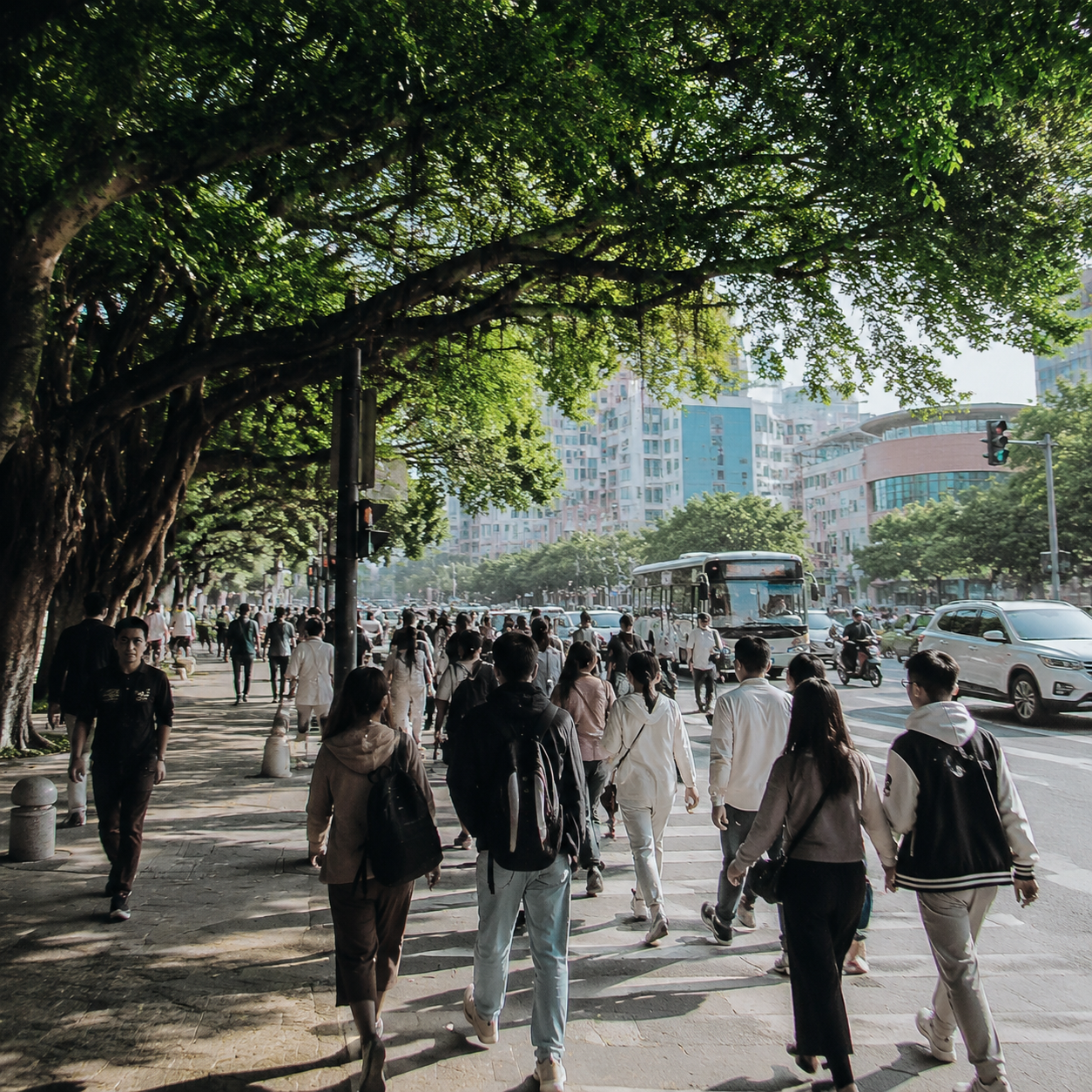
福州的路口总少不了榕树。它们站在旁边,不像装饰,更像长久的见证者。树冠遮住一部分天空,阳光穿过叶片落在斑马线上,形成摇晃的光点。等红灯的人常常会自然地往树荫里靠,哪怕只多出一点阴凉,也足以让等待变得可忍受。老人提着菜从市场方向来,塑料袋里露出青菜和鱼尾;年轻人从地铁口出来,脚步带着城市更新后的速度;外卖骑手停在路边,低头确认订单。榕树看着这些人来来去去,像看着季节重复,也像看着城市不断改写自己。
Fuzhou intersections are rarely without banyan trees. They stand nearby not like decoration, but like long-term witnesses. Their crowns cover part of the sky, and sunlight passes through leaves to form trembling spots on the zebra crossing. People waiting for the red light naturally move toward the shade, and even a little extra coolness is enough to make waiting bearable. Elderly people come from the market carrying vegetables, with greens and fish tails showing from plastic bags; young people emerge from the subway, their steps carrying the speed of a renewed city; delivery riders stop by the roadside and check orders. The banyan trees watch these people come and go, as if watching seasons repeat and the city constantly rewrite itself.
午后的路口有另一种节奏。太阳高起来,车流的声音变得发亮,柏油路面似乎也在微微蒸腾。人流不像早晨那样集中,却更分散、更细碎。有人从写字楼出来买咖啡,有人拎着药从医院方向走来,有人把遮阳伞压低,只露出匆匆的脚步。公交车靠站时,车门打开,冷气和人声一起涌出;车门关闭后,路口又恢复到热浪与等待之间。福州的热不是单纯的高温,它带着江水、树叶和老巷子的湿意,所以人在路口停下时,常常能感到汗意缓慢地从背后浮起。
The afternoon intersection has another rhythm. The sun rises high, traffic noise grows bright, and the asphalt seems to steam slightly. The flow of people is not as concentrated as in the morning, but more scattered and fragmented. Someone leaves an office building to buy coffee; someone walks from the direction of a hospital carrying medicine; someone lowers a sun umbrella so that only hurried feet are visible. When a bus stops, the doors open and cool air rushes out with human voices; when the doors close, the intersection returns to heat and waiting. Fuzhou’s heat is not merely temperature. It carries the moisture of river water, leaves, and old lanes, so when people stop at the crossing, they often feel sweat slowly rising across the back.
傍晚是路口最丰富的时候。天空还亮着,商铺的灯已经亮起,路边摊开始摆开,行人的速度也有了变化。上班的人从白天的任务里出来,脚步里带着一点疲惫;学生放学后结伴走过,说话声比早晨更高;买菜的人在路口等车,手里的袋子沉甸甸地坠着。红灯把人流暂时拦住,绿灯又让它重新铺开。每一次停顿,都像城市的一次吸气;每一次放行,又像城市的一次呼气。站在路口边上,能感觉到福州并不是静态的地图,而是一具温热的身体。
Evening is when the intersection becomes richest. The sky is still bright, shop lights have already come on, roadside stalls begin to set up, and pedestrians change their pace. Office workers step out of the day’s tasks with a little fatigue in their stride; students walk together after school, their voices louder than in the morning; shoppers wait for transport with heavy bags hanging from their hands. The red light holds the crowd briefly, and the green light lets it spread again. Each pause feels like the city inhaling; each release feels like the city exhaling. Standing beside the crossing, one senses that Fuzhou is not a static map, but a warm living body.
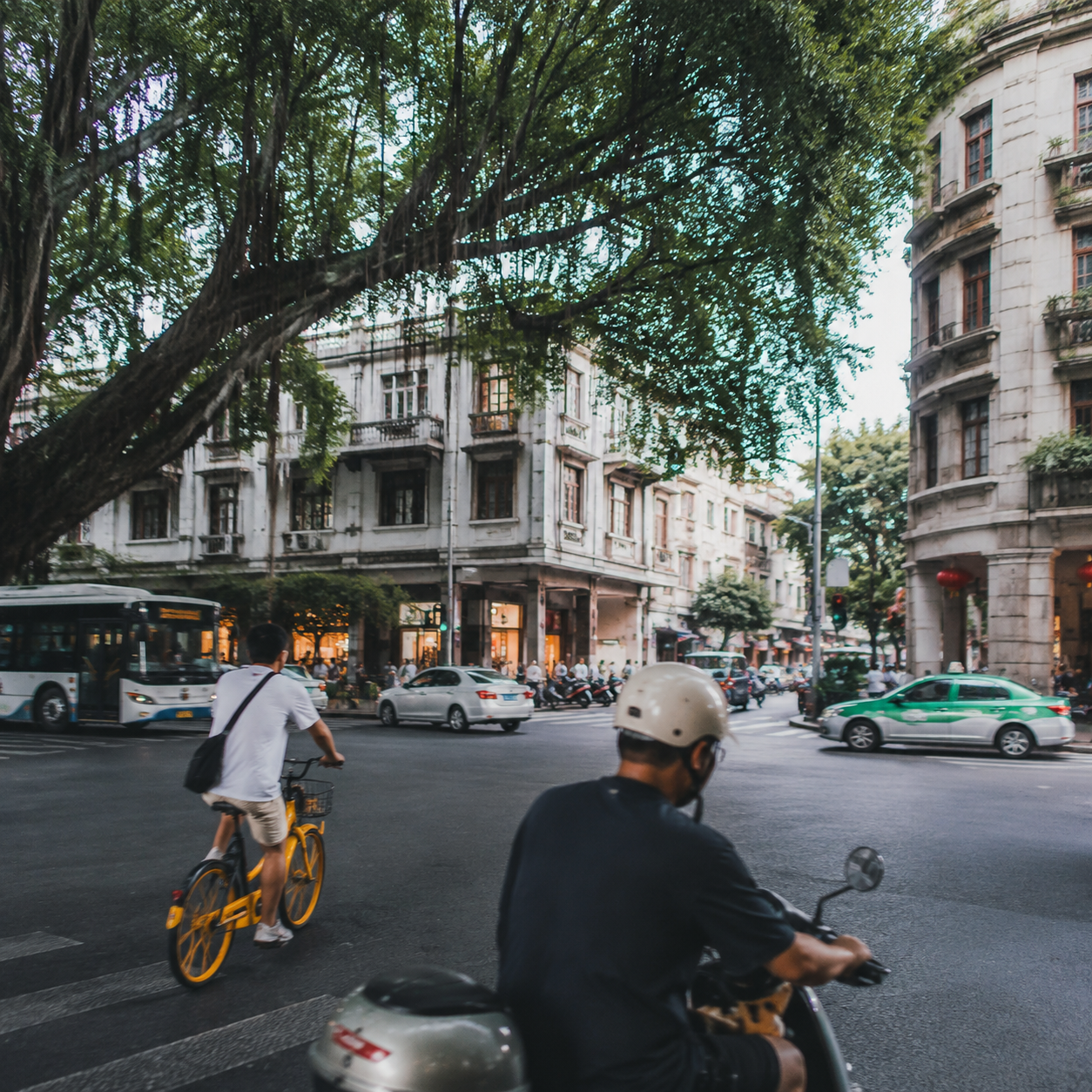
路口的人流里有很多短暂的相遇。两个人在斑马线中间错身而过,彼此不会记住,却在同一秒共享了同一块路面。一位老人走得慢,旁边的年轻人稍稍放缓脚步,没有说话,只是给他留出一点空间。一个孩子的气球被风带偏,母亲伸手拉住,后面的人也自然停了一下。电动车骑手和行人用眼神判断距离,公交司机在转弯前等待最后一个人走上人行道。这些细小的配合构成了路口的秩序。它不是写在纸上的规则,而是在无数次经过中形成的默契。
There are many brief encounters within the flow of people at an intersection. Two people pass each other in the middle of the crosswalk and will not remember one another, yet for the same second they share the same piece of road. An elderly person walks slowly, and a younger person beside him slightly slows down without speaking, simply leaving a bit of space. A child’s balloon drifts in the wind, the mother reaches out to pull it back, and the people behind pause naturally for a moment. Electric bike riders and pedestrians judge distance with their eyes, and a bus driver waits before turning until the last person reaches the sidewalk. These tiny adjustments form the order of the crossing. It is not a rule written on paper, but an understanding shaped by countless passages.
福州的老城气息也会在路口露面。某些路口的一边是新修的商业楼,另一边却通向窄巷、旧屋和小吃店。你可以看见穿着正装的人从玻璃门里出来,也可以看见卖鱼丸、拌面、肉燕的小店把热气送到街边。人流在这里并不单一,它把不同年龄、职业和生活节奏的人放在同一组红绿灯下。一个城市的复杂性,常常就藏在这样普通的等待里。大家都被同一盏红灯拦住,于是再不同的人,也会在短短几十秒里拥有一种平等的停顿。
The atmosphere of old Fuzhou also appears at intersections. On one side of some crossings stands a newly built commercial building, while the other side leads into narrow lanes, old houses, and snack shops. You can see people in formal clothes leaving glass doors, and you can see small shops selling fish balls, mixed noodles, and meat swallow dumplings sending steam toward the street. The crowd here is not uniform; it places people of different ages, occupations, and rhythms of life under the same traffic light. The complexity of a city often hides in such ordinary waiting. Everyone is stopped by the same red light, so even very different people share an equal pause for several dozen seconds.
雨天的路口又是另一番景象。福州的雨有时来得突然,刚才还闷热的空气,很快就被雨声占满。人流在雨中变得更紧凑,伞与伞之间挨得很近,雨披在电动车上鼓起,像一片片移动的颜色。斑马线被水洗得发亮,车灯倒映在地面上,红、绿、白的光一起晃动。有人在店檐下避雨,有人干脆快步穿过,有人把包抱在胸前。雨让路口的声音变大,也让人的动作更直接。等到雨稍微小一些,人流又重新展开,像被压弯的草慢慢直起。
A rainy intersection is another scene entirely. Rain in Fuzhou sometimes arrives suddenly; air that was muggy moments before is quickly filled with rain sound. The crowd becomes more compact in the rain, umbrellas close to umbrellas, rain capes swelling on electric bikes like moving patches of color. The zebra crossing is washed bright, and vehicle lights reflect on the ground, red, green, and white shaking together. Some people shelter under shop eaves, some simply hurry across, and some hold bags against their chests. Rain makes the intersection louder and human movements more direct. When the rain lightens, the flow of people opens again, like grass slowly straightening after being pressed down.
夜里的路口则带着烟火气。路边摊的灯泡亮起来,炒锅声、扫码付款声、招呼声和车流声混在一起。下班晚的人在路口买一份饭,骑手取了餐又很快离开,年轻人站在奶茶店门口讨论下一站去哪。人流不再像白天那样以工作和学校为中心,而更像城市在释放自己。福州的夜有一种亲近感,路口也因此不显得冷。哪怕车还很多,灯还很亮,人的表情却比白天松弛。有人边走边吃,有人拎着宵夜回家,有人在等朋友的间隙抬头看一眼树上的灯影。
At night, the intersection carries the warmth of street life. Bulbs at roadside stalls come on, and the sounds of woks, scanned payments, greetings, and traffic mix together. Someone working late buys a meal at the corner; a rider picks up an order and quickly leaves; young people stand outside a milk tea shop discussing where to go next. The flow of people is no longer centered on work and school as it is by day, but feels more like the city releasing itself. Fuzhou nights have an intimacy, so the intersection does not feel cold. Even with many cars and bright lights, people’s expressions are more relaxed than during the day. Someone eats while walking, someone carries late-night food home, and someone waiting for a friend looks up at lamp shadows in the trees.
如果一直站在同一个路口看,会发现人流其实有自己的语言。加快的脚步表示迟到,停在路边的犹豫表示不确定方向,几个人并排走的距离表示关系亲疏,老人提袋子的姿势表示今日菜市的重量。城市不会把这些语言翻译出来,但它们每天都在发生。福州的路口尤其适合观察这种语言,因为这里的生活层次很厚:山在远处,江在城中,老巷藏在高楼后,树影落在车流旁。人流把这些层次串起来,让抽象的城市变成可以触摸的日常。
If one stands at the same intersection for a long time, one discovers that the flow of people has its own language. Quickened steps indicate lateness; hesitation by the roadside indicates uncertainty about direction; the distance between people walking side by side reveals closeness or formality; the way an elderly person carries bags shows the weight of today’s market purchases. The city does not translate these languages, yet they occur every day. Fuzhou intersections are especially suited to observing them, because life here has many layers: mountains in the distance, rivers in the city, old lanes hidden behind high-rises, tree shadows falling beside traffic. The crowd links these layers together, turning an abstract city into touchable daily life.
我喜欢看绿灯亮起后最初的几秒。那几秒里,人流从静止变为运动,像一幅画忽然被风吹动。每个人都还保持着刚才等待时的姿势,却已经开始向前。有人把手机放进口袋,有人调整肩上的包,有人扶正伞柄,有人回头确认同伴是否跟上。短短几秒之后,人群就分散到路的另一边,刚才共同形成的形状消失了。路口的迷人正在这里:它不断生成画面,又不断取消画面。没有什么能长期停留,却也正因为如此,每一刻都显得真实。
I like watching the first few seconds after the green light appears. In those seconds, the crowd changes from stillness into motion, like a painting suddenly moved by wind. Everyone still carries the posture of waiting, yet has already begun to move forward. Someone puts a phone into a pocket, someone adjusts a shoulder bag, someone straightens an umbrella handle, and someone looks back to check whether a companion has followed. A few seconds later, the crowd has scattered to the other side of the road, and the shape they briefly formed has disappeared. The charm of the intersection lies here: it keeps creating images and then canceling them. Nothing remains for long, and precisely because of that, every moment feels real.
福州路口的人流,也让人看到城市的韧性。无论天气怎样,生活总会找到通过路口的方式。台风前的风把树叶吹得翻面,人们压低帽檐继续走;炎热的午后让等待变得漫长,大家仍在阴影里耐心站着;突来的阵雨让人群短暂混乱,但很快又恢复秩序。城市不是没有困难,而是不断在困难中调整步伐。每一次红绿灯变化,都是一次小小的重新组织。人们把自己的路让出来,也把别人的路接住,于是庞大的城市生活得以继续。
The flow of people at Fuzhou intersections also reveals the city’s resilience. Whatever the weather, life always finds a way through the crossing. Before a typhoon, wind turns leaves over, and people lower hat brims and keep walking; on a hot afternoon, waiting becomes long, yet people stand patiently in shade; a sudden shower briefly unsettles the crowd, but order soon returns. The city is not free of difficulty; it constantly adjusts its steps within difficulty. Every change of traffic lights is a small act of reorganization. People make room for their own paths and also receive the paths of others, allowing the vast life of the city to continue.
当我离开那个路口时,人流仍然没有停止。新的行人从巷子里出来,新的车辆在停止线前排队,新的声音从商铺和公交站之间升起。路口不会记住我,但我会记住它:记住榕树阴影下等待的人,记住斑马线上短暂交汇的脚步,记住热气、雨水、车灯和方言混在一起的瞬间。福州的路口人流让人明白,一座城市最动人的地方,不一定在名胜和高楼,也可能就在每天必须经过的交叉点。那里没有固定主角,每个人都只是经过者,却共同把城市走成了城市。
When I leave that intersection, the flow of people has not stopped. New pedestrians emerge from lanes, new vehicles line up before the stop line, and new sounds rise between shops and bus stops. The intersection will not remember me, but I will remember it: the people waiting under banyan shade, the briefly crossing footsteps on the zebra crossing, the moments when heat, rain, car lights, and dialect mix together. The flow of people at a Fuzhou intersection makes one understand that the most moving part of a city is not necessarily a landmark or a tower. It may be the crossing one must pass every day. There is no fixed protagonist there; everyone is only passing through, yet together they walk the city into being.
后来再经过别的城市路口,我仍会想起福州那种温热而有层次的人流。它没有刻意展示什么,却把生活本身展示得很充分。有人赶路,有人等待,有人迷路,有人回家;有人带着一天的疲惫,有人带着刚买的花,有人带着孩子的小手,有人带着手机里未读的消息。红灯亮起,他们停在同一条线后;绿灯亮起,他们又各自走向不同的方向。就是这样简单的重复,构成了城市最可靠的节拍。福州的路口人流,像一首每天都会重新开始的歌,旋律普通,却因为无数人的脚步而变得深长。
Later, when I pass intersections in other cities, I still think of Fuzhou’s warm and layered flow of people. It does not deliberately display anything, yet it displays life itself fully. Someone hurries, someone waits, someone is lost, someone goes home; someone carries the fatigue of a day, someone carries newly bought flowers, someone holds a child’s small hand, and someone carries unread messages on a phone. When the red light appears, they stop behind the same line; when the green light appears, they each move toward different directions. This simple repetition forms the city’s most reliable beat. The flow of people at a Fuzhou intersection is like a song that begins again every day, ordinary in melody yet deepened by countless footsteps.
- 宁波老街傍晚亮灯的时候,桥边的人情味比河面更深 | At Dusk on Ningbo’s Old Street, the Human Warmth Ran Deeper Than the Canal
- 八月节庆旅游:赶上最热闹的庙会 | August Festival Travel: Catch the Liveliest Temple Fairs
- 罗平没有油菜花的那天,我还是走上了田野公路 | I Took Luoping’s Country Road Even Without the Canola Blooms
- 我在中国小区楼下听懂收废品吆喝后,第一次不再把它当噪音 | After I Learned to Understand the Scrap Collector’s Call Below My Chinese Apartment, I Stopped Hearing It as Noise for the First Time
- 我在中国学会先看队伍,再决定吃什么 | In China I Learned to Read the Queue Before Choosing What to Eat
- 木版年画体验:我第一次在一张纸上看见“过年”被印出来 | Woodblock New Year Print Experience: The First Time I Saw New Year Spirit Printed onto Paper
- 工作日中午排队十分钟后,我才真正听懂中国午饭高峰的节奏 | After Ten Minutes in a Weekday Lunch Line, I Finally Understood the Rhythm of China’s Noon Rush
- 开元路那盏旧灯亮起来时,我才走进厦门的夜里 | I Entered Xiamen’s Night When That Old Lamp Lit Up on Kaiyuan Road
- 北方饺子馆的醋碟,让我学会观察别人怎么吃 | A Vinegar Dish in a Northern Dumpling Shop Taught Me to Watch How Locals Eat
- 大盘鸡:一盘端上来,整桌人都不说话了 | Dapanji: When This Plate Arrives, the Whole Table Goes Silent
Comments (0)