
我在中国学会求助,不是因为无助,而是因为这里的回应速度太真诚 | I Learned to Ask for Help in China Not Because I Was Helpless, but Because People Responded So Honestly
我在中国学会求助,不是因为无助,而是因为这里的回应速度太真诚 | I Learned to Ask for Help in China Not Because I Was Helpless, but Because People Responded So Honestly
导语 | Lead
刚到中国时,我有一种顽固的旅行自尊:能自己解决的事就别麻烦别人,能靠导航就不问路,能靠猜就不张口。后来我发现,这种“硬撑”在中国的大城市里并不高级,反而低效、有时还更不安全。真正让我放松下来的,不是我突然变得更独立,而是我渐渐相信:在很多具体场景里,只要你礼貌、清楚、快速地开口,常常会得到非常直接、非常热心、而且极有效率的回应。
When I first arrived in China, I carried a stubborn kind of travel pride: if I could solve something alone, I should; if a map app existed, I should not ask; if I could guess, I should keep quiet. Later, I realized that this habit of “toughing it out” was not impressive in Chinese cities. It was often inefficient, and sometimes even less safe. What finally helped me relax was not becoming more independent, but learning to trust that in many real situations, if I asked politely, clearly, and quickly, people often responded with honesty, speed, and practical kindness.
那次改变发生在广州。上午十点四十七分,我拖着一个二十四寸箱子,从高铁转地铁,站在长长的换乘通道中央。头顶是密密麻麻的指示牌,脚下是匀速向前的人流,空气里有冷气、鞋底摩擦地面的声音,还有行李轮子在砖缝上轻微发颤的节奏。我第三次怀疑自己是不是又走反了。以前的我会假装从容,再多走五分钟看看;那天的我停下脚步,第一次真诚地承认:我需要问人。
That turning point happened in Guangzhou. At 10:47 a.m., I was dragging a medium suitcase from high-speed rail to metro, standing in the middle of a long transfer corridor. Overhead, signs layered in every direction; around me, people moved in a steady current; the air smelled faintly of air-conditioning and transit dust, and the wheels of my suitcase kept trembling over the floor seams. For the third time, I wondered if I had gone the wrong way again. The old version of me would have pretended to stay calm and walked another five minutes. That day, I stopped and admitted something simple: I needed help.
第一幕:在广州地铁里,我第一次意识到“求助”本身也是一种安全能力 | Scene One: In the Guangzhou Metro, I Realized Asking for Help Is Also a Safety Skill
我先看了一圈,没随便抓住第一个经过的人,而是观察谁最适合问。这个判断后来成了我在中国城市里最常用的生存小技巧之一:不是所有人都一样方便,但总有一些人更适合成为你的第一求助对象。
I looked around before speaking. I did not stop the very first passerby. Instead, I watched for who seemed most appropriate to ask. This later became one of my most useful urban survival habits in China: not everyone is equally convenient to approach, but there are almost always some people who are better first options than others.
我通常优先找这几类人:
- 穿制服或带明显岗位标识的人,比如地铁志愿者、安保、站务员、服务台人员;
- 位置固定的人,比如柜台后面的店员、检票口旁的工作人员;
- 看起来不赶时间的人,比如正在等人、正站着看手机、或者刚从店里走出来的人;
- 已经和环境高度匹配的人,比如熟练刷码进出、明显知道方向的本地通勤者。
I usually prioritize four kinds of people:
- People in uniforms or with visible roles, like metro volunteers, security staff, station attendants, or service desk employees;
- People with fixed positions, like shop clerks behind a counter or staff near ticket gates;
- People who do not seem rushed, such as someone waiting, standing aside with a phone, or just stepping out of a shop;
- People who clearly fit the environment, like commuters who move through the station with confidence and obvious familiarity.
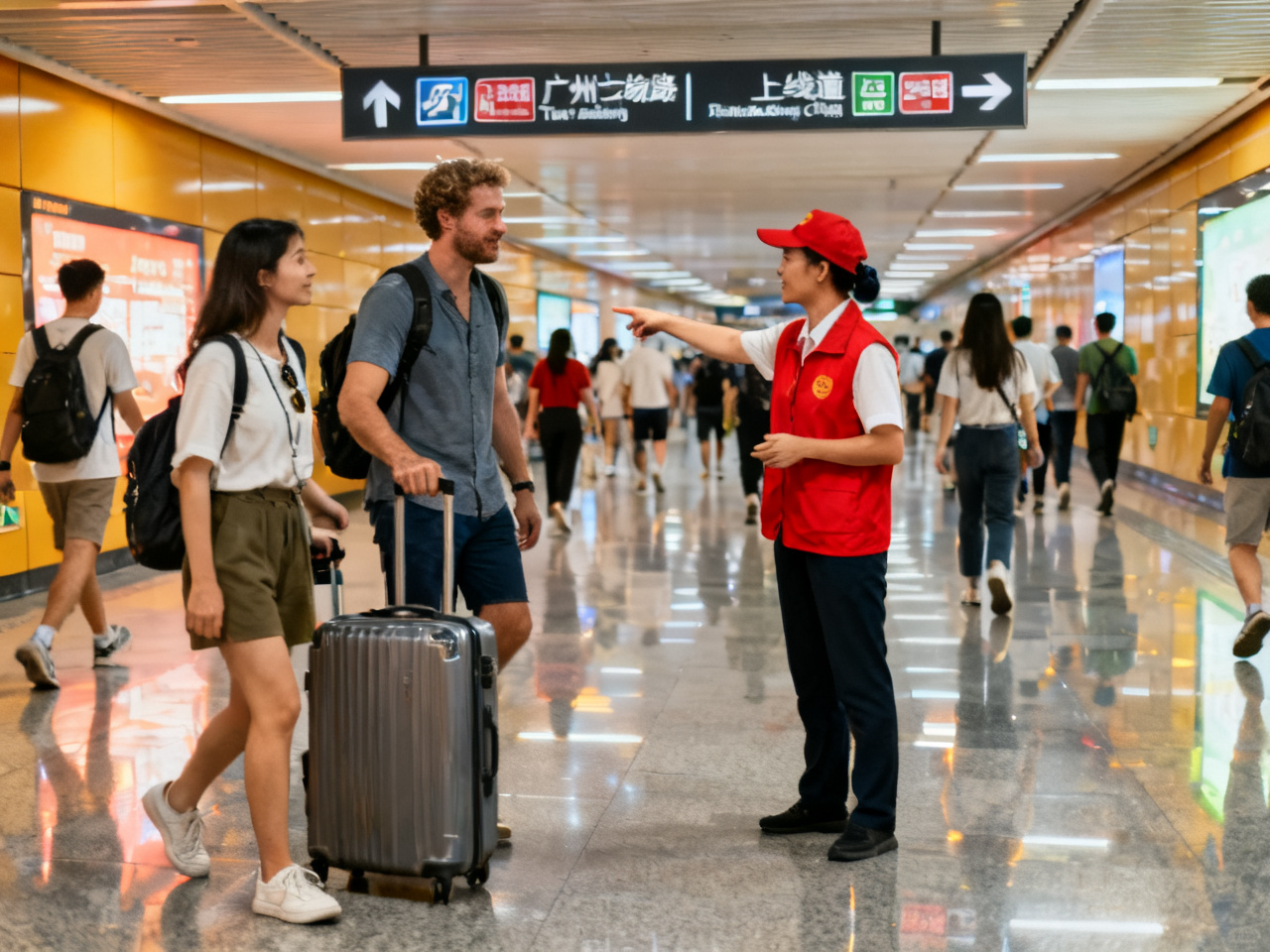
那天我看到一位地铁志愿者,穿红马甲,站在换乘分流口旁边,手里拿着小旗,脸上是那种已经回答过无数次“几号线往哪走”的平静表情。我走过去,先说:“你好,打扰一下,我想去三号线机场北方向,是这边吗?”我刻意把问题问得很具体:不是“我该怎么走”,而是“我理解的是不是对的”。这会让对方更容易快速判断,也减少对方需要花时间从头分析你的处境。
That day I spotted a metro volunteer in a red vest standing by the transfer split, holding a small flag, with the calm face of someone who had answered “which way is Line 3?” a thousand times. I walked over and said, “Hello, sorry to bother you. I’m trying to get to Line 3 toward Airport North. Is it this way?” I deliberately made the question specific. Instead of asking, “How do I go?” I asked, “Is my understanding correct?” This makes it easier for the other person to answer quickly and reduces the effort required to reconstruct your situation from zero.
她几乎没有犹豫,先看了一眼我手机上的站名,又用手指了指前面,再补了一句:“你先直走,看到蓝色牌子左转,下扶梯就是。别跟着前面那拨人,他们去二号线。”这句“别跟着前面那拨人”特别关键。导航只能给路径,现场的人会给你动态信息:哪群人流正在去别的方向,哪条路现在更快,哪个出口别走错。这也是我后来越来越愿意问人的原因——我发现中国城市里有很多帮助,不只是“理论正确”,而是“当下可用”。
She barely hesitated. She glanced at the station name on my phone, pointed ahead, and added, “Go straight first, turn left when you see the blue sign, and the escalator is right there. Don’t follow that group in front—they’re going to Line 2.” That extra sentence—“don’t follow that group”—was the key. A map can give you a route. A person on site gives you dynamic information: which flow of people is going elsewhere, which path is faster right now, which exit not to take by mistake. That is one reason I became much more willing to ask in China: help here was often not just theoretically correct, but immediately usable.
我照着她说的走,不到三分钟就到了正确站台。那一刻我有一种很具体的轻松,不是“终于找到路了”那么简单,而是我突然意识到,自己原来一直把求助理解成暴露脆弱;可在这里,求助更像一种成熟判断:在陌生环境里,迅速调用周围可靠的信息源。
I followed her directions and reached the right platform in less than three minutes. The relief I felt was very specific. It was not only “I found the way.” It was the realization that I had long treated asking for help as exposing weakness. But here, it felt more like mature judgment: in an unfamiliar environment, quickly using reliable information sources around you.
我后来把这件事讲给一个在广州生活多年的朋友听。他笑着说:“你终于像个在这里生活的人了。会问,比硬猜强。”这句话很简单,却让我想到在中国慢慢融入日常秩序的那些小动作。会看标识、会排队、会提前准备二维码、会在合适的时候开口问一句——这些都不是小事,它们共同组成了在城市里行动的流畅感。
I later told this story to a friend who had lived in Guangzhou for years. He laughed and said, “Now you finally act like someone who lives here. Asking is better than guessing.” The sentence was simple, but it reminded me of those small actions that slowly help a person fit into daily order in China. Reading signs, lining up, preparing QR codes, asking one timely question—none of these are trivial. Together, they create the feeling of moving smoothly through a city.
第二幕:街边奶茶店的一次问路,让我明白什么叫“先找锚点,再找方向” | Scene Two: A Milk Tea Shop Taught Me to Find an Anchor Before Finding a Route
第二次让我彻底改观的,是在一个并不紧张、却很容易越走越乱的下午。那天我在广州越秀区,雨刚停,路边树叶还是湿的,公交站牌下站着三四个人,外卖骑手把车停在人行道边,头盔上的水珠还没干。我原本想走去一家朋友推荐的小馆子,导航显示只要十二分钟,但中国很多老城区的“十二分钟”并不等于你眼睛看到的“就在那里”。高架、地下通道、转角小巷、围挡施工、临时封路,都会让屏幕上的蓝线和脚下的现实产生微妙偏差。
The second moment that truly changed my habits happened on an afternoon that was not dangerous, yet could easily become confusing. I was in Yuexiu District after rain. The leaves on the roadside trees were still wet. Three or four people stood beneath a bus stop sign. A delivery rider had parked on the sidewalk, droplets still clinging to his helmet. I was trying to walk to a small restaurant recommended by a friend. The map said twelve minutes, but in many older Chinese neighborhoods, “twelve minutes” on screen does not always mean “right there” in reality. Overpasses, underpasses, corners, construction barriers, and temporary closures can create subtle but frustrating differences between the blue route on your phone and the actual street beneath your shoes.
我已经在一个路口绕了两圈,还是没找到那条应该穿过去的小路。这时我没有继续死盯地图,而是进了街角一家奶茶店。店里空调很足,门一推开,甜味、茶味和烤珍珠的香气一下子把外面的潮湿感隔开。柜台后面是一个二十来岁的店员,正在封杯。我等她手头动作做完,先点了一杯最简单的茉莉奶绿,然后才把手机拿出来,说:“不好意思,我想去这家店,导航总把我带到这里,是不是要从后面绕?”
I had already circled one intersection twice and still could not find the small lane I was supposed to cut through. This time, instead of staring harder at the map, I stepped into a milk tea shop on the corner. The air-conditioning was strong. As soon as the door opened, the sweetness of tea and warm tapioca separated me from the damp air outside. Behind the counter was a clerk in her twenties sealing drinks. I waited until she finished what she was doing, ordered a basic jasmine milk tea first, and only then showed her my phone and said, “Sorry to bother you. I’m trying to get to this place, but the map keeps bringing me here. Do I need to go around from behind?”
这是我后来总结出来的第二个原则:如果你要向店员求助,先尊重对方的工作节奏。 不是一定要消费,而是要看场合、看忙闲、看队伍。如果对方正手忙脚乱地出单,你突然把手机举到面前,任何国家的人都会有点压力;但如果你等几秒、先示意、问题又简洁,对方通常会更愿意帮你。
This became my second principle: if you ask a shop clerk for help, respect the rhythm of their work first. It does not always mean you must buy something, but it does mean reading the situation—how busy they are, whether there is a line, whether your timing is reasonable. If someone is rushing to finish orders and you suddenly put a phone in their face, that would be stressful in any country. But if you wait a few seconds, signal politely, and keep the question concise, people are usually much more willing to help.
她接过手机看了一眼,马上说:“对,这里过不去。你从我们店右边那条小路进去,看到停车场不要进,沿着围墙走,走到头左拐,有个没有很明显的门。”她说完还嫌不够,直接从柜台里侧探出身子,伸手给我比划转弯的位置。最后她补了一句:“你看见一个卖肠粉的摊子,就说明快到了。”
She looked at my phone and answered immediately: “Yes, you can’t pass from here. Go into the small lane on the right side of our shop. Don’t enter the parking lot. Follow the wall, then turn left at the end. There’s an entrance that isn’t very obvious.” And as if that still was not enough, she leaned out from behind the counter and physically pointed at the turning direction. Then she added, “If you see a rice noodle roll stall, you’re almost there.”
这个回答让我印象很深,因为她给我的不是抽象方向,而是锚点式路线:小路、围墙、停车场、肠粉摊。这种描述方式非常中国城市化,也非常实用。很多地方不是靠门牌号记忆,而是靠“你走到某个摊子”“经过某家店”“看见某棵树”“到一个天桥底下再拐”。如果你愿意听这种现场语言,你会比只相信GPS更快进入本地人的空间逻辑。
That answer stayed with me because she did not give me an abstract route. She gave me an anchor-based route: the lane, the wall, the parking lot, the rice noodle stall. This style of direction is deeply urban and deeply practical in China. Many places are remembered less by exact street numbers and more by “walk until that stall,” “pass that shop,” “turn at that bridge,” or “go under that overpass.” If you are willing to listen to this on-site language, you enter the local logic of space much faster than if you trust GPS alone.
我最后果然在一个不起眼的门后找到那家馆子。玻璃门起了一层薄雾,里面两张桌子已经坐满,老板娘在不锈钢台面前飞快地下单、端碗。我回头看刚才那条路,心里突然很笃定:在中国,问路不是打断别人,而常常是把自己重新接回真实世界。
I did find the restaurant, behind an unremarkable doorway exactly as she said. The glass door was slightly fogged from kitchen steam. Inside, two tables were already full, and the owner moved quickly between the stainless-steel counter and customers. Looking back at the route I had just taken, I felt unexpectedly certain: in China, asking for directions often does not interrupt reality—it reconnects you to it.
第三幕:出租车司机教我的,不只是路线,还有城市里的风险判断 | Scene Three: A Taxi Driver Taught Me More Than a Route—He Taught Me Risk Judgment
还有一次,是晚上。不是深夜,但天已经完全黑了。我在一个不熟悉的片区吃完饭,准备回酒店。朋友原本建议我走十几分钟到地铁站,再坐两站,可那天我有点累,背着电脑,手里还拎着刚买的小东西,于是拦了一辆出租车。司机是个五十岁上下的叔叔,普通话带一点本地口音,车里挂着一个很小的平安符,收音机声音开得极低。
Another time, it was evening—not very late, but fully dark. I had finished dinner in a neighborhood I did not know well and needed to get back to my hotel. A friend had suggested walking fifteen minutes to the metro and riding two stops, but I was tired, carrying a laptop and a small shopping bag, so I took a taxi instead. The driver was a man in his fifties, with a local accent, a tiny good-luck charm hanging in the car, and the radio turned down very low.
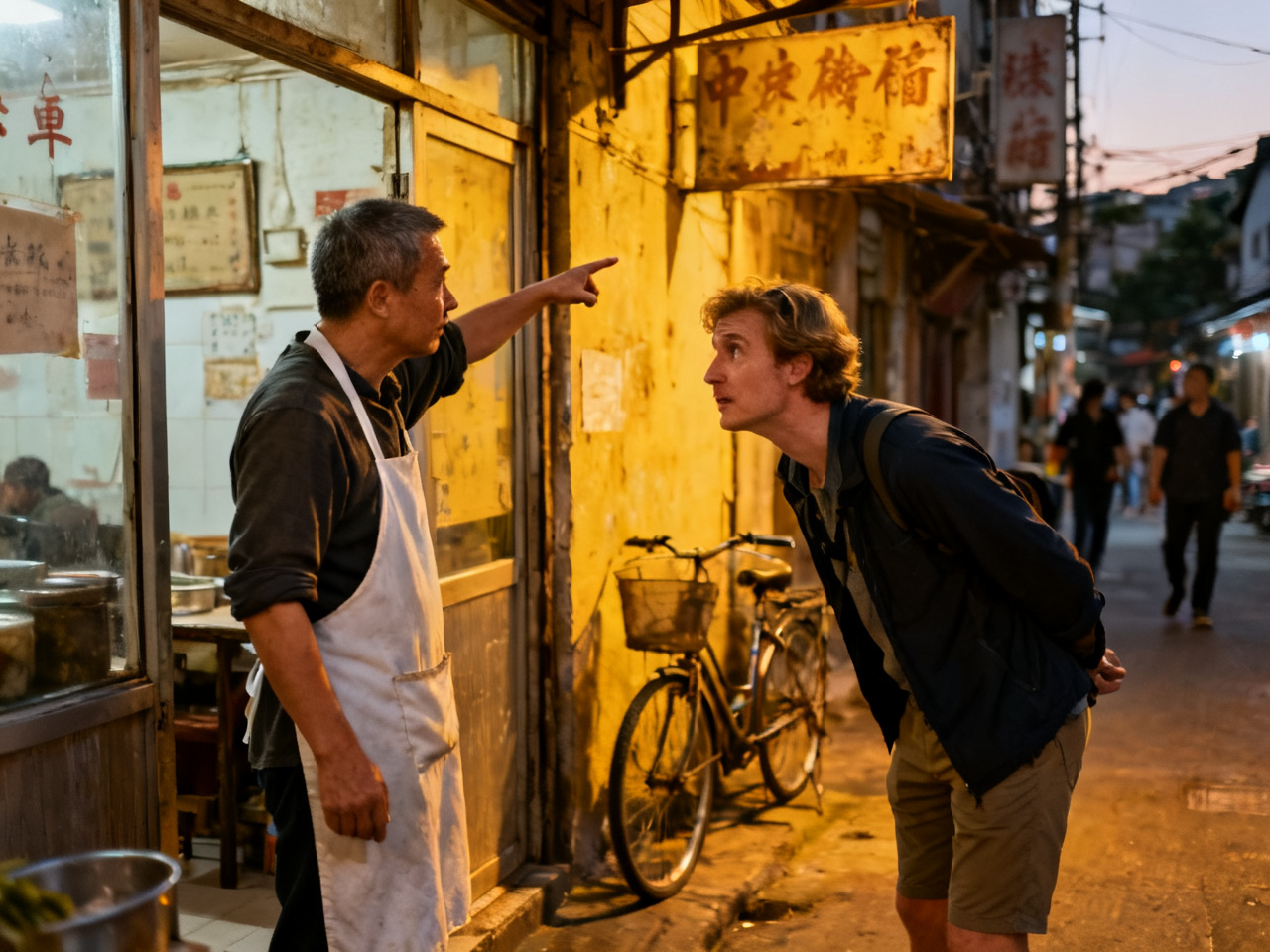
路上我随口问:“师傅,这边晚上一个人走还好吗?”我本来只是闲聊,没想到他很认真地回答:“大路上一般没问题,商场边上、便利店多的地方都还行。就是别为了省几分钟,走那种又黑又没人的施工边路。”
On the way, I casually asked, “Driver, is it generally okay to walk alone around here at night?” I meant it as small talk, but he answered seriously: “Main roads are usually fine. Areas near malls and convenience stores are generally okay too. Just don’t save a few minutes by taking one of those dark construction-side roads with nobody around.”
这句话后来变成我判断夜路的核心之一。中国给我的安全感,从来不是一种盲目的“哪里都绝对没问题”,而是一种很具体的日常秩序感:
- 有稳定照明;
- 有持续营业的小店;
- 有骑手、保安、便利店店员、路边清洁工这些“在场的人”;
- 有不断流动但不过分混乱的人流;
- 有清晰出口和明显的主路;
- 有出问题时可以立即求助的对象。
That sentence later became one of my core rules for judging night walks. The sense of safety China gave me was never a blind belief that “everywhere is automatically fine.” It was a concrete sense of everyday order:
- steady lighting;
- small businesses still open;
- visible people who belong to the environment—delivery riders, guards, convenience store staff, cleaners;
- a flow of people that continues without feeling chaotic;
- clear exits and obvious main roads;
- and nearby people you could ask for help if needed.
这让我想起我第一次在中国夜里独自走回酒店时的那种具体安心。真正的安全感,很少来自口号,而来自你在场景里能不能快速识别支持系统。出租车司机那句提醒,让我不再把“敢不敢走”当作勇敢测试,而当作环境评估。
This reminded me of the specific calm I once felt while walking back to a hotel alone at night in China. Real safety rarely comes from slogans. It comes from whether you can quickly identify support systems in the environment. The driver’s advice helped me stop treating “Should I walk?” as a courage test and start treating it as situational judgment.
更重要的是,我发现一旦你愿意开口,很多风险其实会提前被化解。比如:
- 你可以在离开餐馆前问服务员,哪条路去地铁站更亮、更方便;
- 你可以在酒店前台问,晚上从哪个出口回酒店最直接;
- 你可以在上车前和司机确认,是不是走主路更稳妥;
- 你可以在商场保安那里确认,另一个门晚上是否关闭。
More importantly, I found that once you are willing to ask, many risks get reduced before they even fully form. For example:
- before leaving a restaurant, you can ask the staff which route to the metro is brighter and simpler;
- at a hotel front desk, you can ask which entrance is most direct when returning at night;
- before a taxi starts moving, you can confirm whether the main road is the better option;
- with mall security, you can ask whether another exit is closed in the evening.
这些问题都不大,却能让一个陌生城市从“我要自己扛住的一切”变成“我知道可以借谁的经验一分钟”。
These are small questions, but together they transform a strange city from “everything I must handle alone” into “a place where I can borrow someone’s experience for one minute.”
我后来总结出的“在中国开口求助”方法论 | The Practical Method I Developed for Asking for Help in China
如果把这些年的经验压缩成一套非常实用的办法,我会给第一次来中国、或者刚开始适应中国城市节奏的外国朋友以下建议。
If I had to compress years of experience into a practical method, these are the suggestions I would give any foreign traveler visiting China for the first time, or anyone just beginning to adapt to the rhythm of Chinese cities.
1. 先观察,再开口 | Observe First, Then Ask
不要一着急就随机抓人。先看环境,找最适合的人。优先级通常是:工作人员 > 店员 > 固定岗位人员 > 不匆忙的路人。
Do not panic and grab the nearest person. Read the environment first and choose the right person. My usual order is: staff > clerks > fixed-position workers > unhurried passersby.
2. 问题越具体,回应越高效 | The More Specific the Question, the Better the Reply
与其问“我怎么去这里?”,不如问:“去这里是不是从这个出口?”“我要换三号线,是不是先下扶梯?”“这条路晚上走过去方便吗?”
Instead of asking, “How do I get there?” ask: “Is this the correct exit for this place?” “Do I go down the escalator first for Line 3?” “Is this route convenient to walk at night?”
3. 给对方一个判断支点 | Give the Other Person an Anchor
把手机上的中文地址、站名、店名直接亮出来,或者说出你刚刚经过的明显地标。中国城市很大,信息也密,视觉辅助非常重要。
Show the Chinese address, station name, or shop name on your phone. Or mention the landmark you just passed. Chinese cities are large and information-dense; visual anchors help a lot.
4. 学几句高频表达,比背长句更有用 | A Few High-Frequency Phrases Matter More Than Long Sentences
-
你好,打扰一下。
-
请问……怎么走?
-
是这边吗?
-
我想去这里。
-
麻烦你了。
-
谢谢。
-
Hello, sorry to bother you.
-
May I ask how to get to…?
-
Is it this way?
-
I want to go here.
-
Thanks for the trouble.
-
Thank you.
尤其是“打扰一下”和“麻烦你了”,它们会让你的提问听起来柔和很多,也更符合中文日常交流习惯。这个微妙的社交距离感,我觉得和一句‘麻烦了’如何让人际互动变顺是同一类经验。
Especially “sorry to bother you” and “thanks for the trouble”—they make your request sound much softer and more natural in Chinese. That subtle social distance management feels closely related to how one small phrase can smooth human interaction.
5. 不把求助浪漫化,也不把它羞耻化 | Neither Romanticize Help Nor Feel Ashamed of It
不是每个人都一定有空,也不是每次都能得到完美答案。你可能会遇到对方没听懂、指错、或者自己表达不清的时候。这都正常。关键不是“每次都成功”,而是你知道自己可以发起一次短而清楚的连接。
Not everyone is free, and not every answer will be perfect. Sometimes people may not understand you, give unclear directions, or you may explain poorly yourself. That is normal. The important thing is not perfection. It is knowing you can initiate a brief, clear connection when needed.
6. 求助不是把自己交出去,而是主动调动环境资源 | Asking Is Not Surrendering Yourself—It Is Using the Environment Wisely
这一点特别重要。有人会担心,一旦开口,会不会显得太依赖、太外来、太不会独处。我的经验恰恰相反:在中国,会求助的人往往更快建立边界,因为他知道什么时候该自己判断,什么时候该借现场经验补足盲区。
This point matters a lot. Some people worry that speaking up will make them seem dependent, too foreign, or unable to cope alone. My experience has been the opposite: in China, people who know how to ask often build better boundaries faster, because they understand when to rely on personal judgment and when to borrow on-site knowledge to cover blind spots.
结尾:我学会求助之后,反而更像一个能独自旅行的人 | Ending Reflection: After Learning to Ask for Help, I Actually Became Better at Traveling Alone
现在回头看,我在中国真正学会的,不只是几句问路中文,也不是某套“旅行技巧”。我学会的是一种更成熟的独行方式:不把独立误解成沉默,不把尊严误解成硬撑,不把安全误解成闭门自守。
Looking back, what I truly learned in China was not just a few useful Chinese phrases, and not merely a set of travel tricks. I learned a more mature way of moving through a place alone: not mistaking independence for silence, not mistaking dignity for stubbornness, and not mistaking safety for isolation.
我仍然会先自己看标识、先自己判断、先自己规划路线。但当信息开始变得模糊,当体力开始下降,当环境突然复杂,我已经不会把“问一句”当作失败。相反,我会把它当作一种及时而清醒的选择。
I still check signs first, think first, and plan routes first. But when information becomes fuzzy, when my energy drops, or when the environment suddenly gets complicated, I no longer treat “asking one question” as failure. I treat it as timely, clear-headed decision-making.
如果有人现在问我,在中国旅行或生活,什么最能带来安全感和融入感,我未必会先说高楼、地铁、支付便利,虽然那些都重要。我可能会先说另一件更有人味的事:很多时候,当你站在路口、站台、店门口,只要你愿意礼貌地开口,通常真的会有人认真接住你的问题。
If someone asked me now what most contributes to a sense of safety and belonging in China, I might not begin with skyscrapers, metros, or convenient payment systems—important as those are. I might begin with something more human: very often, when you stand at a corner, on a platform, or at a shop entrance, if you are willing to ask politely, someone will seriously receive your question.
而我在中国学会求助之后,反而第一次觉得,自己更能够一个人走很远。
And after learning to ask for help in China, I felt for the first time that I was actually more capable of going far on my own.
- 八月海滨全攻略:中国最值得去的海滩 | August Beach Guide: China's Best Coastal Destinations
- 外国人在中国买东西被拒收现金怎么办? | What To Do When a Chinese Shop Refuses Your Cash
- 我在镇江西津渡的五月雨声里,忽然不再害怕一个人吃饭 | In Zhenjiang's May Rain at Xijin Ferry, I Suddenly Stopped Fearing Eating Alone
- 把重庆说成超大城市很容易,难的是教人第一晚从哪层开始不慌 | Calling Chongqing Massive Is Easy; Showing a Visitor Where to Begin on the First Night Without Panic Is Harder
- 海河风正冷的时候,一家小馆先把我的天津安顿下来了 | On a Cold Haihe Evening, a Small Eatery Settled Me into Tianjin
- 泥塑体验:我第一次觉得泥土不是材料,而是一种很慢的语言 | Clay Figurine Experience: The First Time I Felt Earth Was Not a Material, but a Slow Language
- 沙漠变电站:中国西部的太阳能版图 | From Sand to Power: China's Solar Empire in the Western Desert
- 小区门口那段广场舞音乐,让我第一次不再把它只当成噪音 | The Square Dance Music at My Compound Gate Was the First Time I Stopped Hearing It as Just Noise
- 菜市场早餐摊前,我靠一个“这个”吃到了热豆浆 | At a Wet Market Breakfast Stall, One “This One” Got Me Hot Soy Milk
- 中国游客签证指南 | China Visa Guide for Tourists
Comments (0)