
我原以为古装秀会很“复古”,直到看见现代妆发把整场秀台点亮 | I Expected an Ancient-Costume Show to Feel Purely Historical Until Modern Hair and Makeup Lit Up the Entire Runway
我原以为古装秀会很“复古”,直到看见现代妆发把整场秀台点亮 | I Expected an Ancient-Costume Show to Feel Purely Historical Until Modern Hair and Makeup Lit Up the Entire Runway
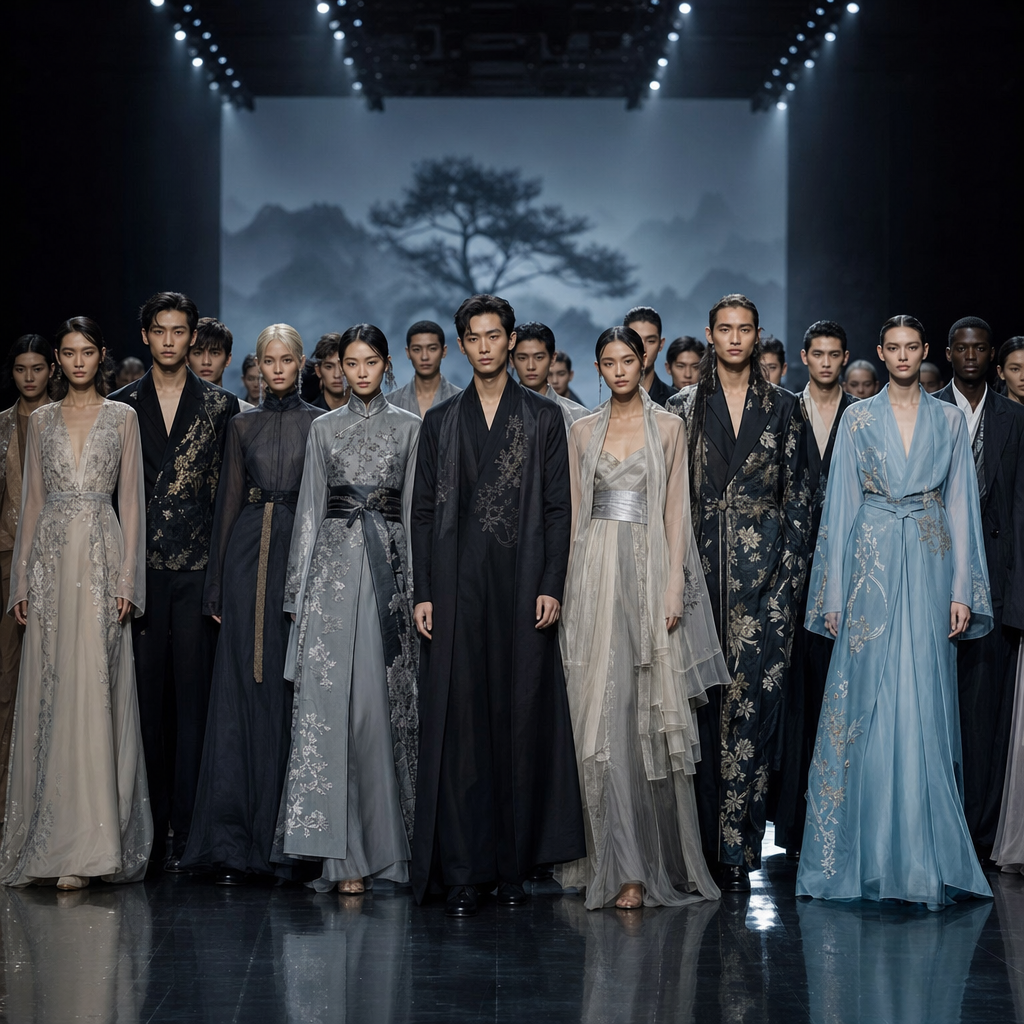
灯一暗下来的那一秒,场子里的空气先变薄了。不是安静,是所有人都把注意力往前收了一下。秀台尽头原本只看得见一条细长的冷光,等第一位模特真正走出来,现场才突然活了——衣服是古装轮廓,领线、袖摆、系带、披帛都有明显的传统影子,可脸上的妆却一点都不旧,眼线干净,底妆透,发型也不是照着古画一丝不差地复原,而是把现代秀场最擅长的利落感和中国古典服装的线条重新接在一起。那一刻我就知道,这已经不是我原来以为的那种“穿古装拍古风照”,而是一种更当下、更会发光的东西。
The instant the lights dimmed, the air in the venue seemed to thin first. Not because it became silent, but because everyone's attention drew inward toward the runway. At the far end there had only been a narrow line of cool light. Then the first model stepped out, and the whole room came alive at once. The garments clearly carried ancient Chinese silhouettes—collar lines, sleeves, tied waists, floating drapes—but the face was not old-fashioned at all. The eyeliner was sharp, the skin looked luminous, and the hairstyle did not try to reconstruct a painting strand by strand. Instead, it connected the crisp discipline of a modern runway with the flowing structure of classical Chinese clothing. In that moment I knew this was no longer the sort of thing I used to imagine when people said ancient-style dress. It was something more current, more electric, more alive under contemporary light.
我以前对这种古韵现代风一直有点误解。我总觉得它可能会很尴尬:要么古装做得太舞台化,像拍古装剧宣传照;要么现代妆发压得太狠,把衣服原本的气质全盖掉。可这一场秀让我第一次真正看明白,做得好的现代古装走秀,厉害的地方恰恰在“不过界”。衣服保留中国古代服装最动人的线条感,现代妆发则负责把人的脸、肩颈和步态从今天的审美里提出来。两边不是互相抢,而是在帮对方把轮廓推得更清楚。
I used to misunderstand this whole ancient-modern runway style. I assumed it might easily become awkward: either the costume would turn too theatrical, like a publicity image from a historical drama, or the modern makeup would come down too hard and bury the character of the clothes entirely. But this show was the first time I truly understood what strong ancient-modern styling can do. Its power lies precisely in not crossing the line. The garments preserve the most moving qualities of old Chinese dress—the lines, the drape, the rhythm of cloth—while contemporary hair and makeup bring the face, neck, shoulders, and gait into today's visual language. The two sides do not fight each other. They make each other's outlines sharper.
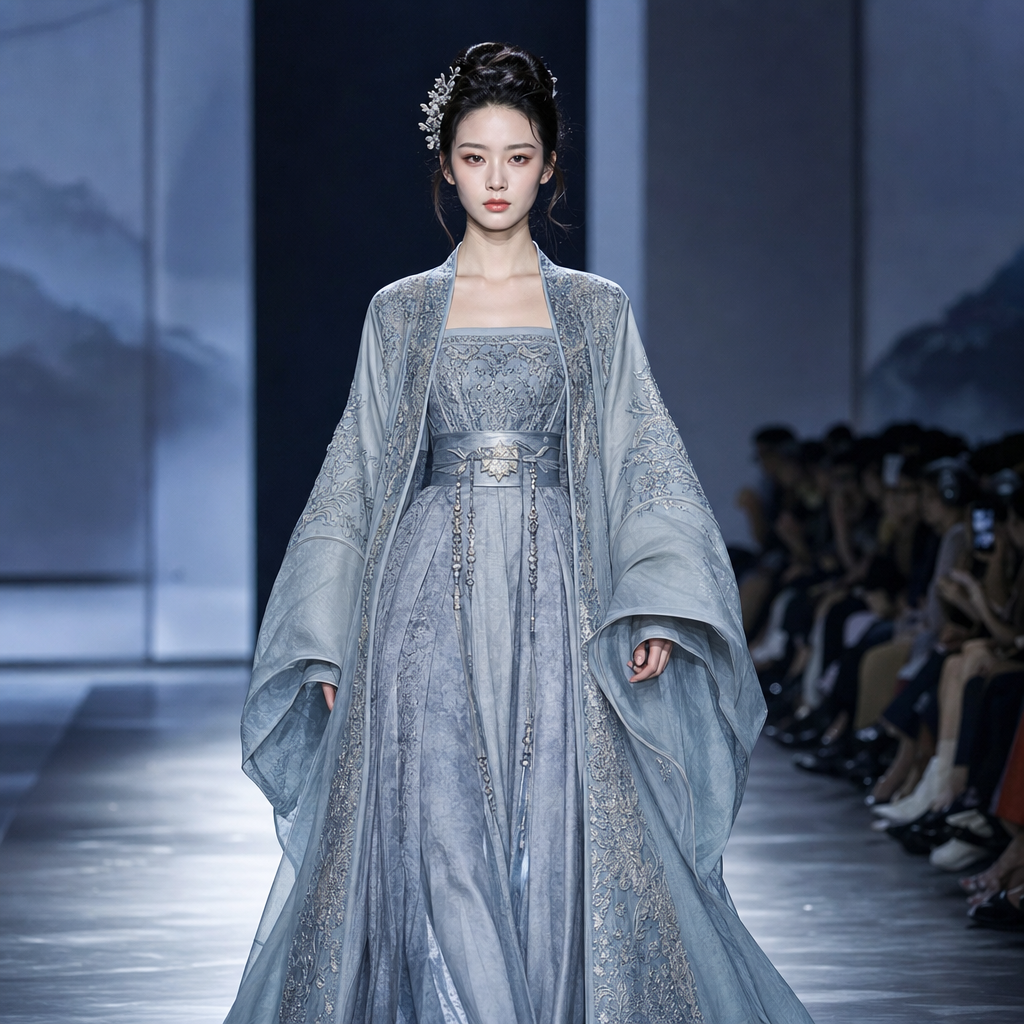
最让我意外的是模特的多样性。台上并不只是同一种东方面孔,也不只是清一色长发美女。那一晚你会看到高个子的亚洲女模,也会看到轮廓深一点的欧美男模;有人是利落短发,有人是湿感后梳,有人的眉眼被化得很锋利,有人的妆面则几乎像没化一样干净。可只要古装轮廓一上身,这些不同人种、不同脸型、不同性别气质的人,反而都被中国服装的线条带出了另一层统一感。不是被抹平成一样,而是在差异里找到一种很新鲜的共同气场。
What surprised me most was the diversity of the models. The runway did not present only one kind of East Asian face, nor was it filled only with long-haired women. That evening you could see tall Asian female models, sharply structured European male models, short hair, slicked-back wet hair, faces defined by graphic eye makeup, and others left almost bare and luminous. Yet once the ancient-style silhouettes came onto the body, these differences in race, face shape, and gendered presence were all gathered by the logic of the clothes into a different kind of unity. No one was flattened into sameness. Instead, the contrast itself began producing a new shared atmosphere.
真正流行的不是“复原”,而是会走进今天 / What Feels Current Is Not Pure Reconstruction, but the Ability to Step into Today
如果你现在还把中国古装时尚理解成小众爱好,那就有点落后了。它现在之所以越来越火,不是因为大家突然都想考据,而是因为它特别适合今天的视觉世界。秀场灯光一打下来,宽袖、长摆、披帛、立领、交领这些元素会比很多普通礼服更有镜头感。衣服一转身,布料的边缘会先说话;模特只要停半秒,整个人就像被线条重新搭了一次骨架。现代时尚最怕没轮廓,而中国古装最不缺的恰好就是轮廓。
If you still think Chinese ancient-style fashion is a niche interest, you are already a little behind the moment. It is becoming more and more popular not because everyone suddenly wants historical reconstruction, but because it fits today's visual world unusually well. Under runway lighting, wide sleeves, long hems, floating drapes, standing collars, and crossed collars often deliver more camera power than many conventional gowns. When the model turns, the edge of the fabric speaks first. When a person pauses for half a second, the whole body seems to receive a new architectural frame from the clothes. Contemporary fashion fears weak outlines, and outline is exactly what historical Chinese dress does not lack.
这也是为什么现代妆发特别关键。衣服如果已经有很多层次,脸就不能再糊成一团。好的秀场团队很懂这个道理,所以你会看到非常现代的皮肤处理、非常清楚的骨相修饰、非常利落的发根线条,甚至会有一点国际高定秀常见的冷感表情管理。这样一来,古装不再被误读成“只能柔、只能仙、只能温婉”,它也可以锋利、冷静、强势、甚至带一点未来感。
That is also why contemporary hair and makeup are so important. If the garments already have multiple layers of visual rhythm, the face cannot dissolve into softness. Strong runway teams understand this well. That is why you see highly contemporary skin finishing, precise sculpting of bone structure, sharply controlled hairlines, and even the cool facial discipline more often associated with international couture presentations. Once that happens, ancient-style clothing is no longer misread as something that can only be soft, ethereal, or gentle. It can also become sharp, composed, powerful, and at times even faintly futuristic.
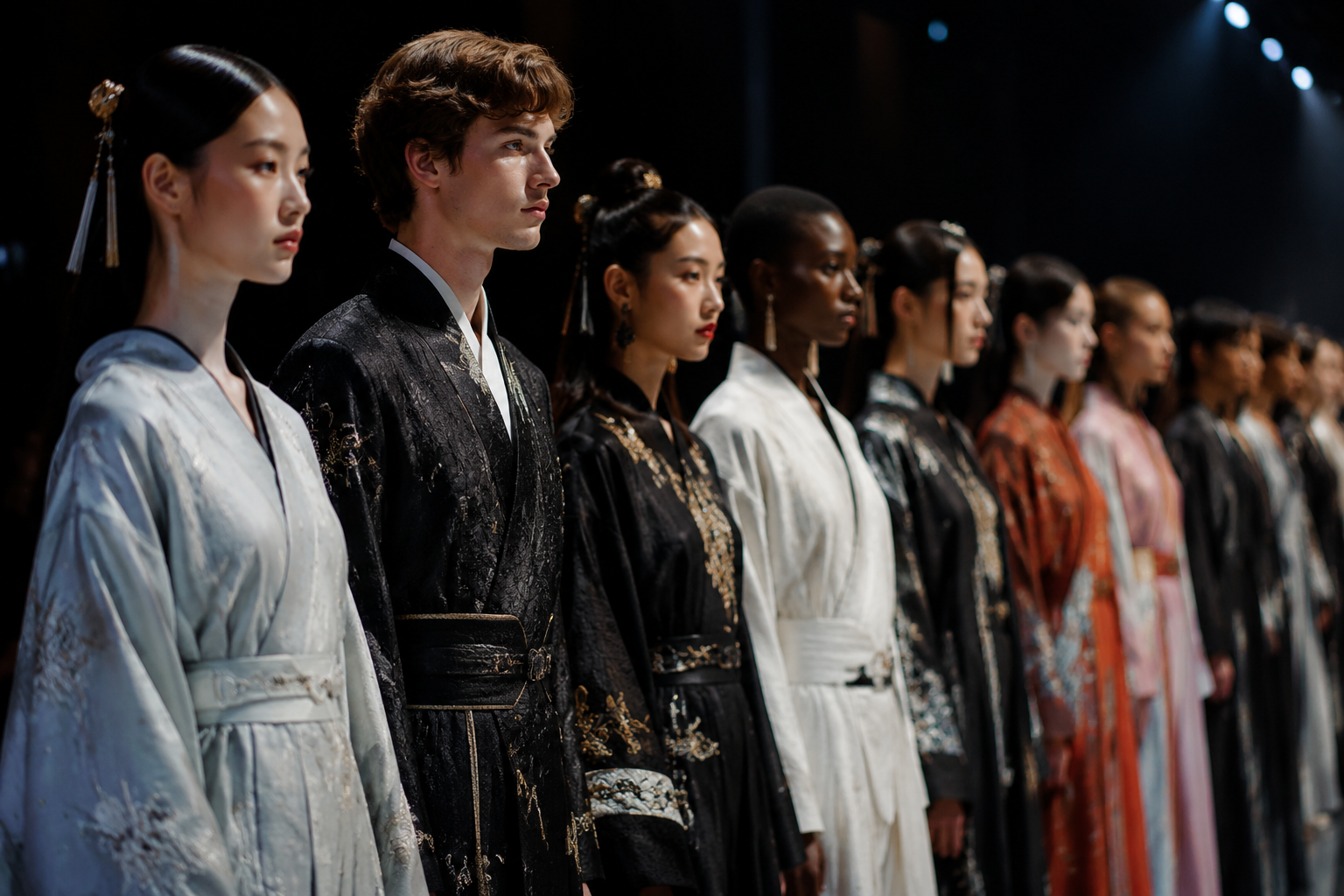
美女、美男、不同人种,都能把古装穿出新的力量 / Women, Men, and Many Races Can All Bring New Force to Ancient Dress
我以前看古装内容时,常常会被一种单一审美困住:仿佛只有一种脸、一种身材、一种发型才能穿出古装的味道。可这场秀完全把那个想法拆掉了。一个肩线很平、步子很稳的男模穿上改良长袍以后,整个人有一种极强的垂直力量,像是把传统衣装里的“立”字直接走了出来;另一个肤色更深的女模穿浅金和墨青叠搭时,布料在灯下的反差特别漂亮,反而让古装里的层次更清楚。还有几个混血面孔的模特,配上极简现代妆发以后,古装不但没被稀释,反而被拉进了更国际化的观看语境里。
When I used to look at ancient-style fashion, I often felt trapped by a single standard of beauty, as though only one face, one body shape, and one hairstyle could properly carry the mood of such clothing. This show completely broke that idea apart. One male model with level shoulders and a steady walk stepped into a modified long robe and suddenly seemed to embody the vertical force inside traditional dress itself. Another female model with deeper skin tone wore pale gold over dark ink-green, and the contrast of fabric under the lights made the layering feel even clearer. Several mixed-race faces also appeared with minimal contemporary beauty styling, and instead of weakening the ancient garments, they pulled them into a much more international way of being seen.
这其实也说明了一件很重要的事:中国古装的魅力并不是只能依赖“像古人”。它更深的一层魅力,在于那些线条、结构、留白和布料运动,本来就有很强的时装语言。只要秀场团队知道该保留什么、该更新什么,它就完全可以让不同文化背景的人都参与进来,而且不会显得冒犯,反而会让更多人第一次意识到:中国服装原来并不只是“传统文化展示品”,它也可以是一种真正活在当代的审美系统。
This also reveals something important. The charm of Chinese ancient dress does not depend solely on making a person resemble someone from the past. Its deeper power lies in the fact that its lines, structure, use of empty space, and movement of cloth already contain a strong fashion language. As long as a runway team understands what to preserve and what to update, people from different cultural backgrounds can all participate without the result feeling disrespectful. On the contrary, it helps more viewers realize for the first time that Chinese clothing is not merely a display object of traditional culture. It can be a truly living aesthetic system in the present.
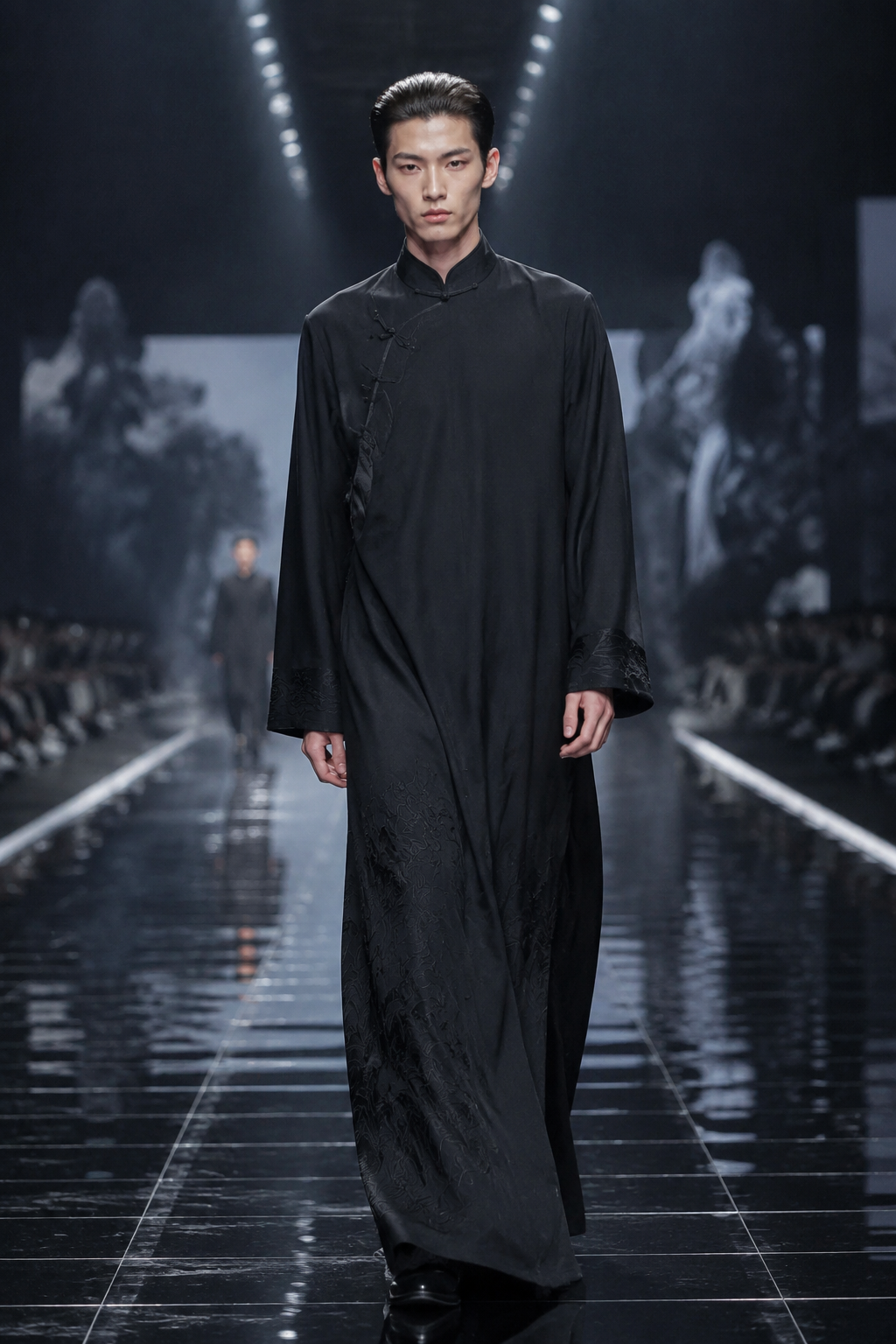
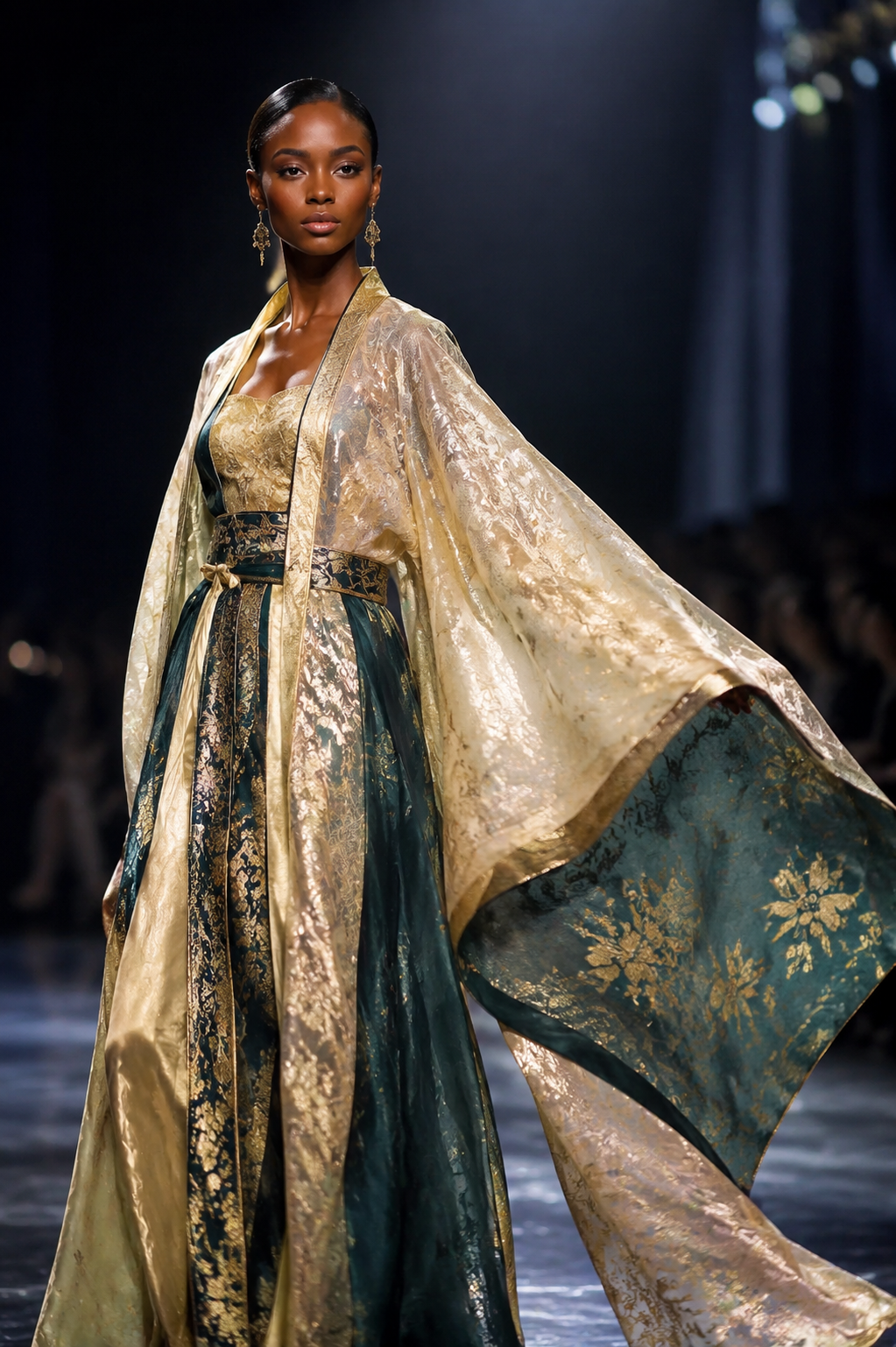
秀场里最迷人的不是古装本身,而是它被今天重新点亮的那一下 / The Most Magnetic Moment Is Not the Costume Alone, but the Instant It Is Relit by the Present
后来整场秀快结束时,音乐压得更低,灯也更冷,最后几套衣服的颜色从玉白、墨黑一路走到金属感更强的灰蓝。那时我突然意识到,这种古韵现代风为什么会让这么多人着迷。因为它不是在叫人退回过去,而是在告诉你:过去留下来的美,可以用今天的眼睛、今天的脸、今天的步态重新发一次光。你不必真的活在古代,才配穿上那些线条;你也不必把现代感全部关掉,才算尊重传统。
Near the end of the show, the music dropped lower and the lighting turned colder. The final looks moved from jade white and ink black into metallic gray-blue with a stronger futuristic edge. At that moment I realized why this ancient-modern fashion language captivates so many people. It is not asking anyone to return to the past. It is saying that beauty inherited from the past can shine again through today's eyes, today's faces, and today's gait. You do not need to live in an ancient era to deserve those lines. And you do not need to shut off everything modern in order to show respect to tradition.
如果你只在社交平台上刷过一些零散的古装大片,可能还感受不到这一点。真正到了秀台现场,你会发现古装被现代灯光、妆发和身体语言重新组织以后,整个观看方式都会变。你不再只是问“像不像古代”,而会开始问“这套衣服为什么这么适合走秀”“为什么这个人种穿出来反而更立体”“为什么这张脸一换成现代妆就突然有国际品牌广告感”。这种问题一多,说明古装已经不再停在复古兴趣,而是真的进入时装讨论了。
If you have only scrolled past scattered ancient-style editorial images on social platforms, you may not feel this yet. But once you stand at an actual runway and watch traditional silhouettes reorganized by modern light, makeup, hair, and body language, the whole way of seeing begins to change. You stop asking only whether something looks ancient enough. Instead, you begin asking why this silhouette works so well on a runway, why a certain ethnicity makes the look feel even more dimensional, and why a face suddenly starts to resemble an international campaign image once the styling turns contemporary. When those questions multiply, it means ancient dress has already moved beyond retro curiosity and entered real fashion discussion.
离场的时候,后台门边还有模特在补妆,有人把已经散开的长袖重新理顺,有人对着手机看自己刚才走台的视频。那种画面特别说明问题:古装没有被供起来,它正在被使用、被修整、被重新拍摄、被重新定义。我走出去时脑子里想的已经不是“这套衣服对应哪个朝代”,而是另一件事——中国古装如果继续这样和现代秀场合作下去,它很可能会成为这几年最有辨识度、也最容易被世界看见的一种东方时装语言。
When I left the venue, some models were still touching up their makeup by the backstage door. One was smoothing out a sleeve that had loosened, another was looking down at runway footage on a phone. That scene said everything. Ancient dress had not been placed on a pedestal. It was being used, adjusted, re-photographed, and redefined. As I walked out, I was no longer thinking first about which dynasty each look might echo. I was thinking about something else entirely. If Chinese ancient dress keeps collaborating with modern runway language like this, it may become one of the most recognizable and internationally visible forms of East Asian fashion in the next few years.
- 逛中国博物馆前,先学会这套看展方法 | A Practical Method to Visit Museums in China
- 真正让我看懂苏州的,从来不是多看了几个园林,而是顺序终于排对了一次 | What Finally Made Suzhou Click for Me Was Never Seeing More Gardens but Getting the Sequence Right Once
- 一场突来的雨,让我在中国学会把屋檐下当成一种临时公共空间 | A Sudden Rain in China Taught Me to See the Eaves as Temporary Public Space
- 青岛真正舒服的地方,不是海风和啤酒本身,而是白天夜里总会自己换挡 | What Makes Qingdao Truly Comfortable Is Not Sea Breeze and Beer Themselves but the Way the City Shifts Gears Between Day and Night
- 中国高铁网络全解:线路图与购票技巧 | China High-Speed Rail: Network Map & Booking Tips
- 我在北京胡同便利店刷不过码的那一分钟,后来成了最好用的支付预案 | The Minute My QR Code Failed in a Beijing Hutong Store Became My Best Payment Backup
- 中国书法用品 | Chinese Calligraphy Supplies
- 优雅的旗袍 长衫 | The Elegant Qipao/Cheongsam
- 孔氏南宗家庙门口的豆腐脑,让我重新认识衢州的早晨 | A Bowl of Tofu Pudding Outside the Southern Confucius Temple Changed How I Saw Quzhou Mornings
- 在中国点外卖全流程:美团饿了么实操 | Ordering Food Delivery in China: Meituan & Ele.me Guide
Comments (0)