
真正让我看懂苏州的,从来不是多看了几个园林,而是顺序终于排对了一次 | What Finally Made Suzhou Click for Me Was Never Seeing More Gardens but Getting the Sequence Right Once
苏州真正适合复盘的,不是“我看了几个园林”,而是“哪些顺序让我终于看懂它” | What Suzhou Deserves in Retrospect Is Not a Count of Gardens, but Which Sequences Finally Made the City Legible
如果一座城市特别依赖顺序,那它就非常适合被写成复盘体。苏州正是这样。你第一次进去时,常常会以为自己只是在看一些本来就很典型的中国元素:园林、水巷、桥、白墙、回廊、树影。可真的走完以后,记住你的往往不是单个元素,而是它们怎样被排在了前后。先看什么,后看什么,什么时候该从景里抽出来坐一下,什么时候该把眼睛重新放回水边——这些顺序,会比任何一个孤立景点更深地决定你最后是不是“看懂了”苏州。
Any city that depends strongly on sequence is naturally suited to retrospective writing. Suzhou is one of them. On a first entry, the traveler often assumes they are simply looking at classic Chinese elements that already carry their own meaning: gardens, canal lanes, bridges, white walls, corridors, and tree shadow. But after the route is actually finished, what remains in memory is often not the individual element, but the order in which those elements were arranged. What was seen first, what came later, when the body left the scenery to sit down, and when the eye returned to the water—these sequences shape whether Suzhou became legible far more deeply than any isolated attraction can.
这也是为什么,苏州不太适合用那种“十大必看”式的快文章去概括。你当然可以列出很多地方,可问题不在“有没有看过”,而在“是不是在对的时候看到了”。同一个园林,如果放在一天的起点和放在一天的尾端,效果会完全不同;同一段水巷,如果在最亮的时候去和在光线稍稍松下来以后去,也像两条不同的线。复盘苏州,本质上是在复盘顺序。
That is why Suzhou resists being summarized well by a simple “ten must-sees” article. One can certainly list many places, but the real question is not whether they were seen. It is whether they were seen at the right moment. The same garden produces a different effect when placed at the opening of a day or at its end. The same canal lane becomes a different route when visited under the brightest light or after that brightness has softened. To review Suzhou is, in essence, to review sequence.
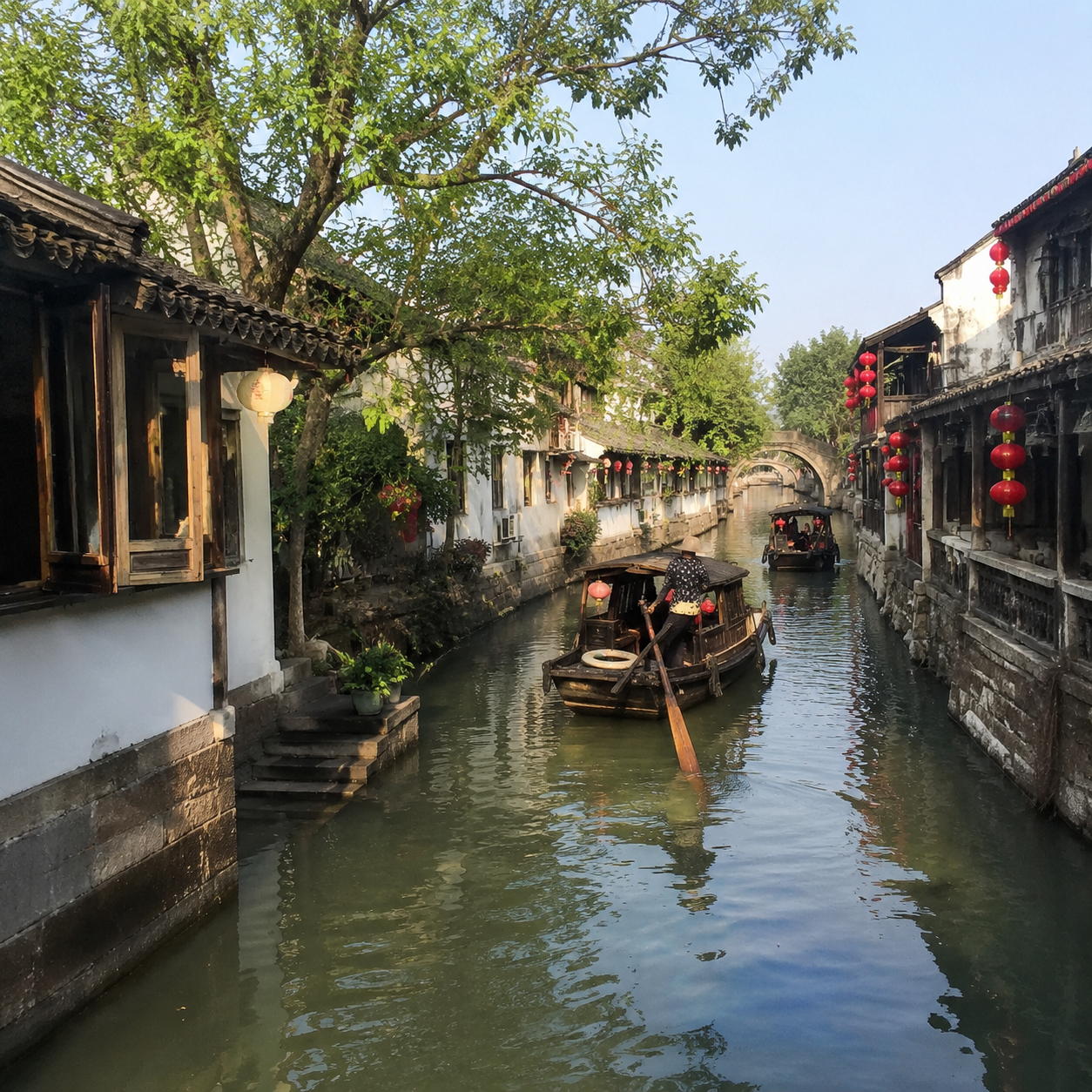
真正的收获,常常是你开始知道什么该少一点 / The Real Gain Often Begins Once You Understand What Deserves to Be Reduced
很多人第一次到苏州,会觉得这里既然不靠大景压人,那是不是就应该多排一点,把“小而密”的东西一次都收进来。可真复盘下来,往往恰恰相反。苏州最值钱的,不是你看得多,而是你终于知道哪里该少一点。少看一处园林,少拍几座桥,少追一段已经很好看的水巷,反而会让前面看到的东西更立得住。对读者来说,这种“少一点才更准”的经验,比任何标签化推荐都耐用。
Many first-time visitors to Suzhou assume that because the city does not dominate through giant spectacle, the solution must be to schedule more—to collect a denser set of smaller elements in one sweep. Yet in retrospect, the opposite is often true. What makes Suzhou valuable is not that one sees more, but that one gradually understands where to reduce. One fewer garden, a few fewer bridges, one less pursuit of a canal lane that is already beautiful enough—these omissions often make the earlier impressions stand more clearly. For the reader, this experience of less but more accurate is far more durable than any label-driven recommendation.
复盘苏州,其实是在复盘自己怎么从“找典型”变成“找节奏” / To Review Suzhou Is Also to Review One’s Shift from Hunting Typical Images to Reading Rhythm
苏州很少一下子把人打住,所以很多人会先本能地去找典型:最像苏州的桥、最像苏州的墙、最像苏州的园林角度。可等一条路线真正走完,你会慢慢发现,自己记住的并不是“最像”的那个点,而是节奏。哪一段走得刚好,哪一段停得刚好,哪一段因为坐下了所以后面看得更清楚。这种变化说明,苏州不是靠景观压倒你,而是靠节奏改造你。
Suzhou rarely stops a traveler in one abrupt motion, so many people begin by searching instinctively for typicity: the bridge that looks most like Suzhou, the wall that looks most like Suzhou, the garden angle that feels most classically correct. But once a route is actually completed, one slowly discovers that what remains in memory is not the most typical point, but the rhythm. Which stretch of walking felt exact, which pause landed at the right moment, and which later view became clearer precisely because there had been time to sit. That shift proves something important: Suzhou does not overpower the traveler through scenery. It alters the traveler through rhythm.

复盘一座小城时,真正该记的不是“做过什么”,而是“什么时候开始会看了” / When Reviewing a Smaller City, What Matters Most Is Not Only What Was Done, but When the Eye Began to Learn
很多人复盘城市时喜欢列动作:去了哪、吃了什么、拍了什么。可苏州这样的小城最值得记住的,反而是某个时刻的转变。可能是你第一次没有急着过桥,而是在桥头停了一会儿;也可能是你走出园林以后,没有立刻赶往下一处,而是让刚才那个回廊还在脑子里多留了十分钟。正是这些不起眼的时刻,让苏州从“我去过”变成“我开始会看”。对 TravelCN 来说,这种变化比路线名单更值得写深。
When people review cities, they often prefer to list actions: where they went, what they ate, and what they photographed. Yet in a smaller city like Suzhou, what deserves memory more deeply is often one subtle turning point. It may be the first time one did not rush across a bridge, but paused at its head. It may be the moment after leaving a garden when the traveler did not hurry to the next attraction, but allowed the previous corridor to remain in the mind for another ten minutes. These understated shifts are what turn “I have been there” into “I have begun to see.” For TravelCN, that transformation is worth writing more deeply than any route list.
复盘苏州时,最值得记下的是哪一段让你忽然不想赶了 / In Reviewing Suzhou, It Matters Most to Notice Which Moment First Made You Stop Rushing
很多路线复盘会回顾看过什么、吃过什么、坐过什么船。苏州更值得回头记的,常常是某一段路突然让你不想赶了。可能是从园林出来以后,脚步没有立刻提速;也可能是桥头那一小段风,让你第一次觉得今天不需要再塞太多。这样的瞬间看起来很小,但它们说明路线开始从“完成任务”变成“真正进入”。
Many route reviews focus on what was seen, eaten, or ridden. In Suzhou, what is more worth remembering is often the point at which rushing first became unnecessary. It may be the moment after leaving a garden when the traveler did not immediately speed up. It may be one small bridgehead breeze that made the whole day feel complete enough already. These moments seem minor, but they mark the shift from task completion to actual entry.

苏州最容易让人误会的,是“小”就等于“可以随便排” / What People Most Easily Misunderstand About Suzhou Is the Assumption That Small Means Easy to Arrange Casually
小城最容易让人放松警惕,因为看起来每一段都不远、每一处都不重。可苏州的问题恰恰不是远不远,而是近的东西太容易互相冲淡。你如果把园林、水巷、桥和吃饭都压得太紧,最后得到的不是丰富,而是模糊。真正好的复盘,正好能把这种模糊反着写清楚:是哪些减少,让这座城反而更完整。
Smaller cities often lower a traveler’s guard because every segment seems short and every stop seems light. But Suzhou’s issue is not distance. It is how easily nearby elements can wash one another out. If gardens, canal lanes, bridges, and meals are pressed too tightly together, the result is not richness but blur. A good retrospective can write that blur in reverse and show which reductions actually made the city feel more complete.
复盘最后真正要留下来的,不是名单,而是顺序感 / What a Retrospective Should Leave Behind in the End Is Not a List, but a Sense of Sequence
如果看完一篇苏州复盘,读者只记住几个名字,那这篇复盘其实还不够。更好的结果是,读者开始知道:原来先慢下来再看,和先看完再慢下来,根本不是同一条线。苏州最值钱的复盘,不是替人决定哪一处最美,而是替人把顺序感留下。
If a reader finishes a Suzhou retrospective and remembers only several place names, then the review still has not gone far enough. The better result is that the reader begins to understand that slowing down first and then seeing is not the same route as seeing everything first and slowing down later. A valuable retrospective on Suzhou does not merely decide which place is prettiest. It leaves behind a sense of sequence.
- 佛山醒狮:一头狮子背后的江湖 | Foshan Lion Dance: The Martial World Behind a Lion
- 中国高铁乘车全攻略(境外游客版) | Complete HSR Guide for Foreign Tourists
- 福州鱼丸店门口那张小桌,让我记住了慢慢吃 | A Small Table Outside a Fuzhou Fish Ball Shop Taught Me to Eat Slowly
- 微信支付开通全流程(境外用户) | WeChat Pay Setup for Foreign Visitors
- 那些把中国拍得像特效片的博主,真正厉害的是懂得怎么给震撼留空拍 | The Creators Who Film China Like Special Effects Know How to Leave Space Between the Shocks
- 读懂中国历史 | Understanding Chinese History
- 第一次用中国公共厕所,我学会提前看标识和纸巾 | My First Public Toilet Lesson in China Was to Check Signs and Tissue First
- 重庆火锅不需要你懂,它只需要你坐下来 | Chongqing Hotpot Doesn't Need You to Understand It — Just Sit Down
- 在贵阳换乘的三次支付,教我给旅途留一点现金 | Three Payments in Guiyang Taught Me to Keep Some Cash
- 广州早茶桌上,孩子先学会了听,再学会了说 | At a Guangzhou Dim Sum Table, My Child Learned to Listen Before Speaking
Comments (0)