
北方饺子馆的醋碟,让我学会观察别人怎么吃 | A Vinegar Dish in a Northern Dumpling Shop Taught Me to Watch How Locals Eat
北方饺子馆的醋碟,让我学会观察别人怎么吃 | A Vinegar Dish in a Northern Dumpling Shop Taught Me to Watch How Locals Eat
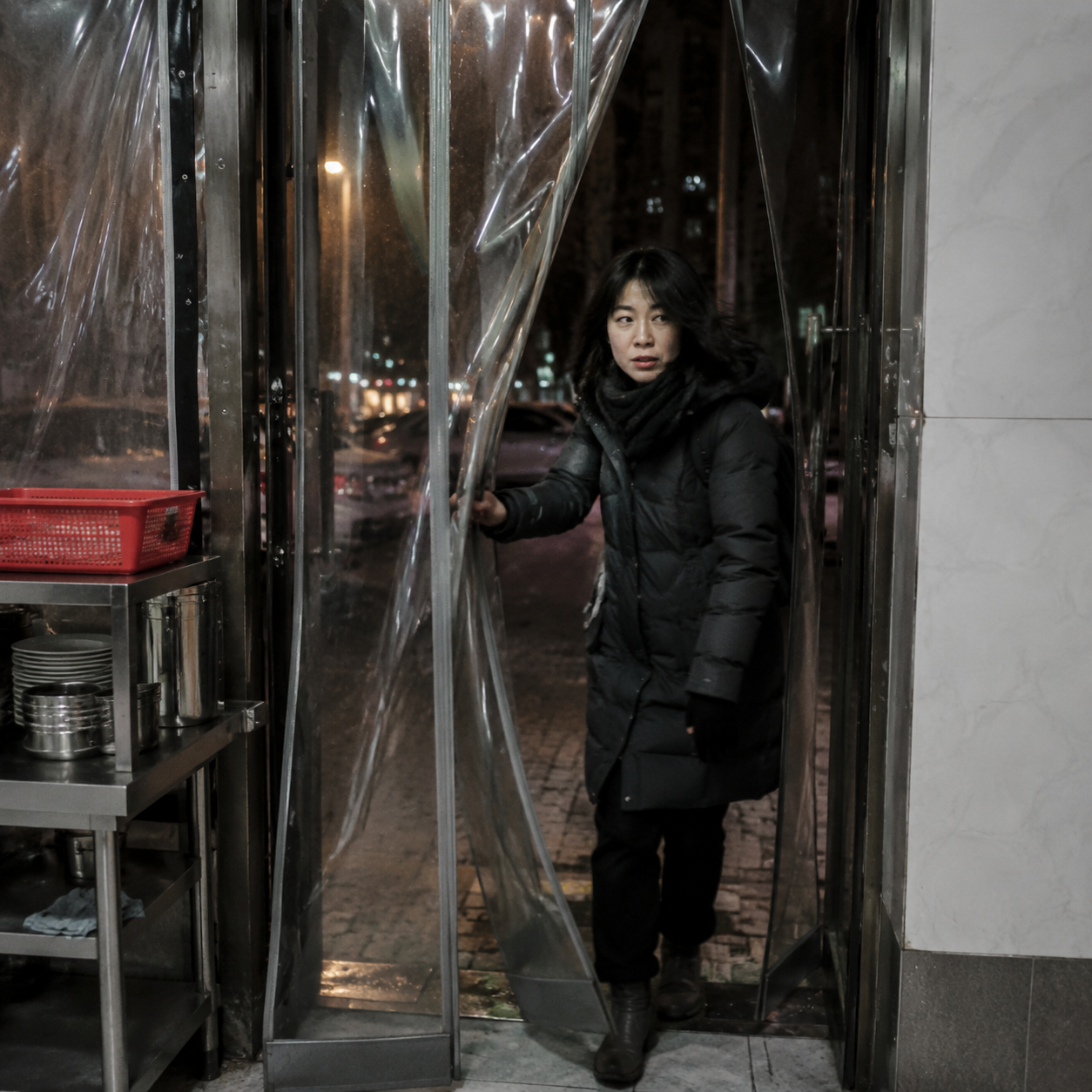
我走进那家北方饺子馆时,外面的风把街边塑料门帘吹得啪啪响。那是一个干冷的晚上,我的手指还没有从公交车站的寒意里恢复过来。店里灯光很白,墙上贴着手写菜单,蒸汽从后厨一阵阵涌出来,空气里有面粉、热水和蒜的味道。
When I walked into that northern dumpling shop, the wind outside slapped the plastic doorway curtain against the frame. It was a dry, cold evening, and my fingers had not recovered from waiting at the bus stop. The light inside was bright and white, handwritten menus were taped to the wall, steam rolled out from the kitchen, and the air smelled of flour, hot water, and garlic.
我原本以为吃饺子是一件很简单的事:点一盘,蘸点醋,吃完走人。可是坐下之后,我发现每张桌子上都有一个小世界。有人把蒜瓣拍碎,有人往醋碟里加辣油,有人只倒一点点醋,像在调药。我的桌上也有一只浅碟,白瓷边缘磨得发灰。
I had assumed eating dumplings was simple: order a plate, dip them in vinegar, finish, and leave. But after I sat down, I noticed every table had its own small world. Someone crushed garlic cloves, someone added chili oil to the vinegar dish, someone poured only a little vinegar as carefully as if mixing medicine. On my table there was also a shallow dish, its white porcelain rim worn gray.
服务员把菜单递给我时,问我要猪肉白菜还是韭菜鸡蛋。我听懂了这些词,却不知道该选哪个。隔壁桌两个穿深色棉衣的男人点了猪肉酸菜,又要了一头蒜和一勺辣油。我跟着点了猪肉酸菜,语气尽量自然。服务员看了我一眼,问:“吃蒜吗?”我迟疑了一秒,说:“吃。”
When the server handed me the menu, she asked whether I wanted pork with cabbage or chive with egg. I understood the words but did not know which to choose. At the next table, two men in dark padded coats ordered pork with pickled cabbage, plus a head of garlic and a spoonful of chili oil. I copied them and ordered pork with pickled cabbage, trying to sound natural. The server looked at me and asked, “Do you eat garlic?” I hesitated for a second and said yes.
饺子还没上来,配角们已经把这顿饭变得热闹。靠门的老人把帽子放在膝盖上,慢慢剥蒜;一位年轻母亲给孩子吹凉开水;柜台边的厨师探出头问哪桌要加醋。每个人都像知道下一步该做什么,只有我对着空醋碟,像拿到一张没有说明的考卷。
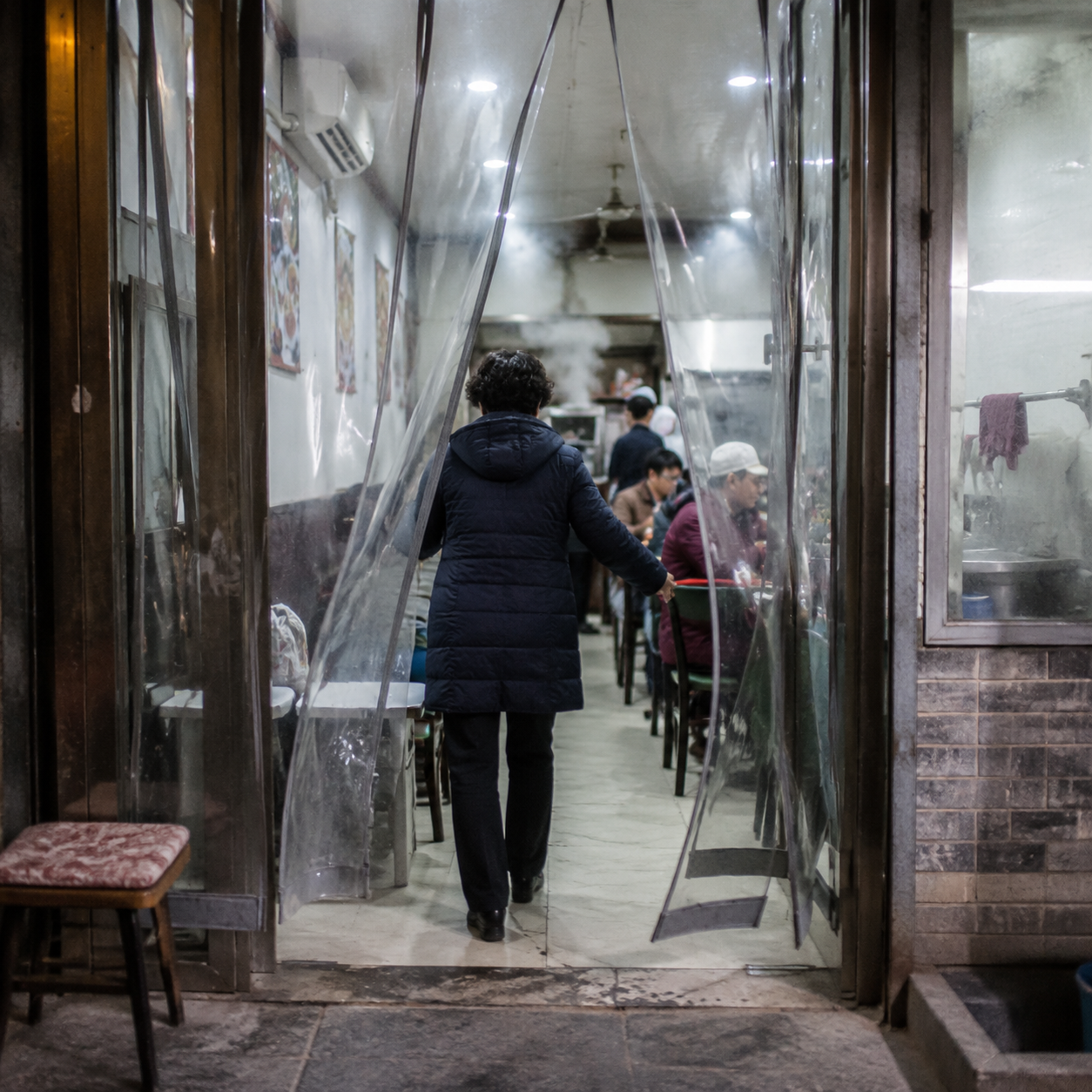
Before the dumplings arrived, the supporting characters had already made the meal lively. An old man by the door placed his hat on his knees and slowly peeled garlic. A young mother blew on warm water for her child. A cook leaned out from the counter and asked which table needed more vinegar. Everyone seemed to know the next step, while I stared at my empty vinegar dish like an exam paper without instructions.
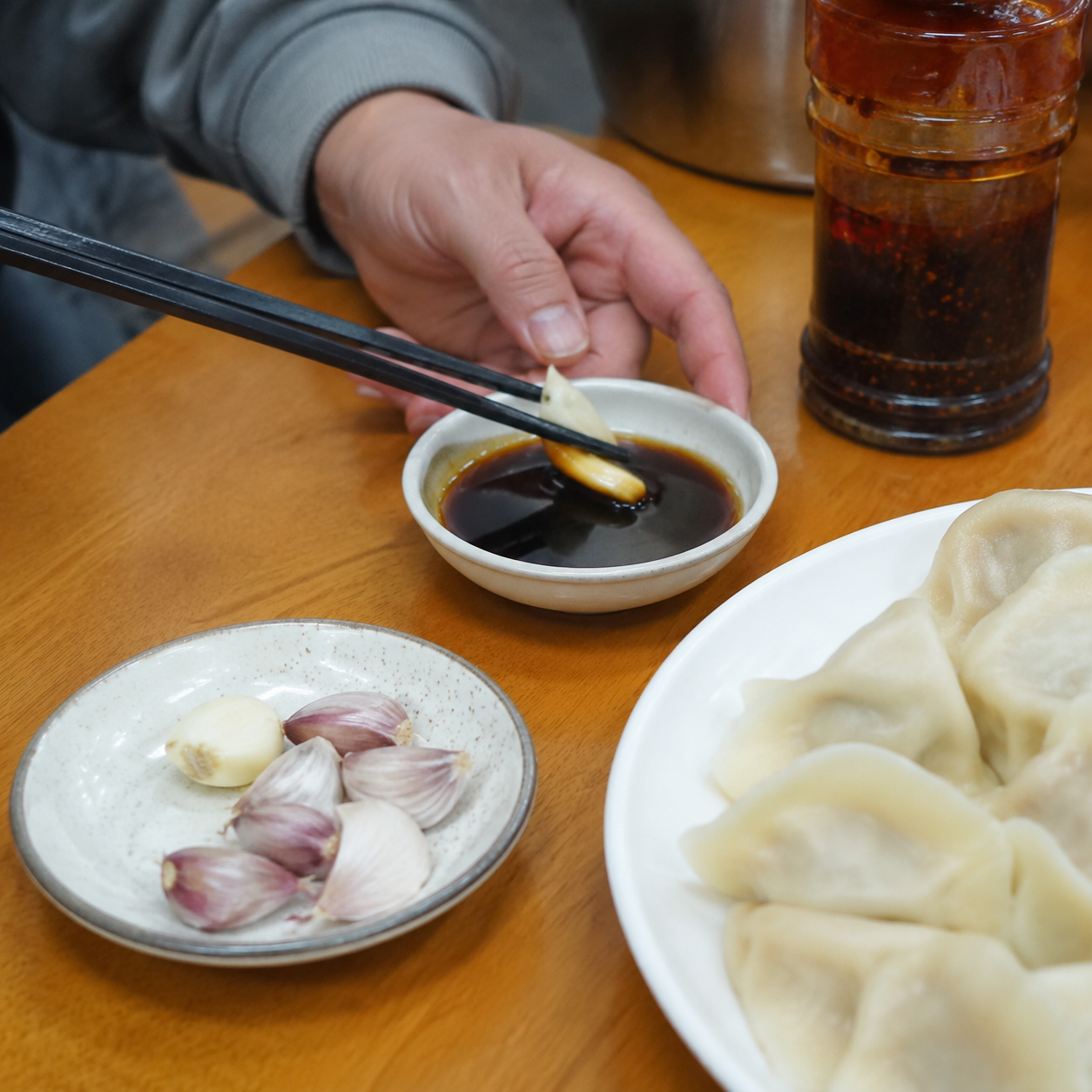
我先倒了半碟醋。颜色比我想象的深,几乎像浓茶,酸味立刻升起来,冲到鼻子里。我正准备把蒜瓣整个放进去,隔壁一位男人突然笑了,说:“你别整颗泡,得拍一下。”他说得很随意,没有嘲笑的意思,只像在提醒一个新来的亲戚。
I first poured half a dish of vinegar. The color was darker than I expected, almost like strong tea, and the sour smell immediately rose into my nose. I was about to drop a whole garlic clove into it when one of the men next to me laughed and said, “Don’t soak it whole. Smash it first.” He said it casually, not mockingly, as if reminding a newly arrived relative.
他把自己桌上的蒜拿起来,用筷子尾轻轻一压,蒜瓣裂开,香气一下子释放出来。他说:“这样味儿才出来。”我学着做,第一次没压好,蒜瓣从碟边滑出去,差点滚到桌下。年轻母亲看见后递给我一张纸巾,笑着说:“慢慢来,饺子还没熟呢。”
He picked up garlic from his own table and pressed it gently with the blunt end of his chopsticks. The clove split open and released its smell at once. “This way the flavor comes out,” he said. I copied him, failed the first time, and the clove slipped from the edge of the dish, almost rolling off the table. The young mother saw it and handed me a napkin, smiling. “Take your time. The dumplings are not cooked yet.”
这句话让我放松下来。我开始观察邻桌怎样调醋碟。两个男人一个喜欢酸味重,醋倒得满;另一个只放浅浅一层,然后加几滴辣油,红色油花浮在黑醋上。他们没有讨论标准,却各自很确定。原来同一家饺子馆里,也没有唯一正确的蘸法。
That sentence relaxed me. I began to watch how the neighboring table prepared their vinegar dishes. One of the two men liked a stronger sour taste and filled his dish high. The other poured only a shallow layer, then added a few drops of chili oil, red circles floating on black vinegar. They did not debate a standard, yet each was certain in his own way. Even in the same dumpling shop, there was no single correct dipping method.
饺子端上来时,盘子很大,热气像一小片云。皮上有细小的皱褶,边缘捏得紧,里面的酸菜和猪肉把面皮顶出圆鼓的形状。我夹起第一只,太急了,筷子戳破皮,汤汁流到盘底。我有点尴尬,隔壁男人又开口:“别夹肚子,夹边。”
When the dumplings arrived, the plate was large and the steam looked like a small cloud. The wrappers had tiny wrinkles, the edges were pressed tight, and the pork with pickled cabbage pushed the dough into a rounded shape. I picked up the first one too quickly, pierced its belly with my chopsticks, and juice ran onto the plate. I felt embarrassed, and the man next to me spoke again: “Don’t grip the belly. Hold the edge.”
我把第二只饺子夹住边缘,放进醋碟里。它没有完全沉下去,只是侧面沾上黑亮的醋。我本能地想把它泡久一点,老人却在靠门的位置摇摇头,对我说:“蘸一下就行,别把皮泡软。”他的声音不大,却带着北方冬天里那种干脆的温度。
I held the second dumpling by its edge and lowered it into the vinegar dish. It did not sink completely; only one side caught the dark shine of vinegar. I instinctively wanted to soak it longer, but the old man by the door shook his head and told me, “Just dip it. Don’t soften the wrapper.” His voice was not loud, but it carried the clean firmness of a northern winter.
我照着做,咬开一小口,热气和酸菜味冲出来。醋没有把馅料盖住,反而把猪肉的油香拉得更清楚。蒜的辛辣从后面上来,辣油只给了舌尖一点热。我突然明白,那个小小醋碟不是附属品,而是这盘饺子的第二个舞台。
I followed his advice and bit a small opening. Steam and the smell of pickled cabbage rushed out. The vinegar did not cover the filling; instead, it made the pork’s richness clearer. Garlic heat arrived afterward, and the chili oil gave only a small warmth to the tongue. I suddenly understood that the little vinegar dish was not an accessory. It was the dumplings’ second stage.
在很多旅行餐桌上,我太习惯先问“应该怎么吃”。这个问题看起来谦虚,其实也可能让我偷懒,因为只要别人给出答案,我就不必再看。那天晚上,饺子馆里的每个人都没有正式教我,却用手上的动作给我留下线索:蒜要拍开,醋别倒满,辣油看心情,饺子夹边。
At many travel tables, I was too used to asking, “How should I eat this?” The question sounds humble, but it can also make me lazy, because once someone gives an answer, I no longer need to watch. That night in the dumpling shop, no one formally taught me, yet everyone left clues through their hands: smash the garlic, do not overfill the vinegar, add chili oil according to mood, hold the dumpling by the edge.
店里的情节一直在变化。门帘又被掀开,进来三个工人,带着冷空气和泥点。他们一坐下就喊三盘饺子,两瓶啤酒,其中一个把蒜瓣剥得飞快,像在拆一件熟悉的工具。柜台后的服务员没有记笔记,却准确地把每桌的口味记住,谁要酸菜,谁不要蒜,谁多加辣油。
The scene in the shop kept changing. The door curtain lifted again, and three workers came in, bringing cold air and spots of mud. They sat down and called for three plates of dumplings and two bottles of beer. One of them peeled garlic quickly, as if taking apart a familiar tool. The server behind the counter wrote nothing down, yet remembered every table’s taste: who wanted pickled cabbage, who did not want garlic, who needed extra chili oil.
我看着他们吃,发现速度也有讲究。工人们吃得快,但不是乱;老人吃得慢,却不犹豫;年轻母亲先把饺子咬开吹凉,再递给孩子。每一种速度都和身体有关,和一天的疲惫、年龄、照顾别人或被别人照顾有关。吃法并不只是技巧,也是一种生活节奏。
Watching them eat, I noticed that speed had its own rules. The workers ate quickly, but not chaotically. The old man ate slowly, but without hesitation. The young mother bit open a dumpling to cool it before giving it to her child. Each speed had to do with the body, with a day’s fatigue, age, caring for someone, or being cared for. A way of eating was not only technique; it was a rhythm of life.
我的第三只饺子吃得比前两只好。我先在边缘夹稳,轻轻蘸一下醋,让破开的蒜贴在皮上,再从侧面咬开。酸、热、肉香、酸菜的发酵味一层层分开,又在嘴里合上。我没有得到某种华丽的启示,只是觉得自己终于没有打扰这只饺子。
My third dumpling went better than the first two. I held it steadily by the edge, dipped it lightly in vinegar, let the smashed garlic cling to the wrapper, and bit from the side. Sourness, heat, meat aroma, and the fermented taste of pickled cabbage separated in layers and then came together in my mouth. I did not receive a grand revelation; I simply felt that I had finally not disturbed the dumpling.
隔壁男人问我从哪里来,我说自己是外国人,正在中国旅行。他点点头,说他年轻时也去过南方,第一次吃甜粽子时很不习惯。他说:“吃东西别急着说怪,多看两眼。”这句话在嘈杂的饺子馆里听起来一点也不庄重,却正好适合被记住。
The man beside me asked where I was from. I said I was a foreigner traveling in China. He nodded and told me he had gone south when he was young and had found sweet zongzi strange the first time he ate it. “With food, don’t rush to call it weird. Look twice,” he said. In the noisy dumpling shop, the sentence did not sound solemn at all, which made it exactly easy to remember.
我又给醋碟加了一点点醋,这次没有倒太多。辣油的红色在碟边散开,蒜末沉在下面,像这个夜晚的地图。我忽然觉得,一只醋碟能看出人的性格:有人要直接的酸,有人要辣的提醒,有人怕蒜味留太久,有人觉得没有蒜就不像吃饺子。
I added a little more vinegar to my dish, not too much this time. The red chili oil spread at the edge, and the bits of garlic sank below like a map of the evening. I suddenly felt that a vinegar dish could reveal personality: some people wanted direct sourness, some wanted a reminder of heat, some feared the garlic smell would stay too long, and some felt dumplings without garlic were not really dumplings.
吃到最后几只时,我开始有了自己的小顺序。先夹边,轻蘸醋,碰一点蒜,如果那只饺子皮厚,就多给一点辣油;如果边缘已经软了,就直接吃。这个顺序并不是从书上学来的,而是在邻桌、老人、服务员和我自己失败的筷子之间慢慢拼出来的。
By the last few dumplings, I had developed a small order of my own. Hold the edge first, dip lightly in vinegar, touch a bit of garlic; if the wrapper was thick, add a little more chili oil; if the edge had already softened, eat it directly. This order did not come from a book. It was assembled slowly among the neighboring table, the old man, the server, and my own failed chopsticks.
结账的时候,服务员看了看我几乎空掉的醋碟,说:“会吃了。”我知道她是在开玩笑,却还是因为这三个字高兴。会吃并不代表我掌握了北方饮食,也不代表下次就不会出错。它只是说明在这个晚上,我没有把自己关在游客的透明盒子里。
When I paid, the server looked at my nearly empty vinegar dish and said, “You know how to eat now.” I knew she was joking, but those three words still pleased me. Knowing how to eat did not mean I had mastered northern food, and it did not mean I would never make a mistake again. It only meant that on this evening, I had not locked myself inside the transparent box of a tourist.
我走出店门,冷风一下子把蒜味从袖口吹起来。我原本担心这种味道会留得太久,可站在路边等车时,它反而让我觉得踏实。身后的饺子馆还亮着灯,门帘被人掀开又落下,像一只不断眨眼的白色眼睛。里面还有新的客人坐下,新的醋碟被倒满又调淡。
When I stepped out of the shop, the cold wind lifted the garlic smell from my sleeves. I had worried that the smell would linger too long, but while waiting by the road for a bus, it made me feel grounded. Behind me, the dumpling shop was still lit, its plastic curtain lifting and falling like a blinking white eye. Inside, new customers sat down, and new vinegar dishes were filled and adjusted.
那只小醋碟教我的,不是某个固定比例。它教我把眼睛从自己的盘子里抬起来,看别人怎样用手处理食物,怎样在熟悉的味道里做细微选择。旅行里的学习常常不是被正式宣布的,它藏在一只蒜瓣裂开的声音里,藏在邻桌一句“夹边”的提醒里。
What that small vinegar dish taught me was not a fixed ratio. It taught me to lift my eyes from my own plate and watch how others handled food, how they made tiny choices inside familiar flavors. Learning while traveling is often not formally announced. It hides in the sound of a garlic clove splitting, and in a neighboring table’s reminder to hold the edge.
公交车终于来了。我上车后坐在靠窗的位置,手指还带着一点醋和蒜的气味。车窗外,饺子馆的招牌慢慢往后退,蒸汽在门口散开。我看着那只已经看不见的醋碟,明白自己带走的不是一套规则,而是下次坐下吃饭时先观察一会儿的耐心。
The bus finally came. I sat by the window, my fingers still carrying a little vinegar and garlic. Outside, the dumpling shop sign slowly moved backward, and steam spread near the doorway. Looking toward the vinegar dish I could no longer see, I understood that what I carried away was not a set of rules, but the patience to watch for a while before eating the next time I sat down.

- 江南水乡不要只拍照:要学会慢看 | In Jiangnan Water Towns, Do Not Just Take Photos — Learn to Look Slowly
- 昆明蓝花楹城市漫步:把春天走成一条紫色街巷 | A Jacaranda Walk in Kunming: Turning Spring into a Purple Street
- 成都-重庆5日美食与熊猫行程 | 5-Day Chengdu-Chongqing Food & Panda Trip
- 福建土楼与海岸线7日游 | 7-Day Fujian Tulou & Coastline Tour
- 烤鸭不只是一道菜,它是北京给世界的一封信 | More Than a Dish: Peking Duck as Beijing's Letter to the World
- 我原以为宋代喝茶最讲究的是器物,后来才发现最难学的是桌边那种慢劲 | I Thought Song Tea Culture Was Mostly About Objects Until I Realized the Hardest Thing to Learn Was the Calm Pace at the Table
- 在吐鲁番的热度里寻找阴影和葡萄 | Seeking Shade and Grapes in Turpan's Heat
- 上海到苏州两天慢线:园林、评弹和夜船都不赶 | Shanghai to Suzhou in Two Slow Days: Gardens, Pingtan, and Night Boats
- 在北京一节低年级语文课后,作者终于明白小朋友为什么总先学量词 | After a Beijing Language Class, I Finally Understood Why Kids Learn Measure Words So Early
- 江南水乡7日慢行:苏州杭州乌镇 | 7-Day Jiangnan Water Towns: Suzhou, Hangzhou & Wuzhen
Comments (0)