
江南水乡不要只拍照:要学会慢看 | In Jiangnan Water Towns, Do Not Just Take Photos — Learn to Look Slowly
49# 江南水乡不要只拍照:要学会慢看 | In Jiangnan Water Towns, Do Not Just Take Photos — Learn to Look Slowly
你要是第一次来江南水乡,我劝你先别急着找最像明信片的角度。桥洞、乌篷船、白墙黑瓦、临水人家,这些当然好看,可你若只把它们装进相机,很快就会觉得每条巷子都差不多。真正有意思的地方,往往要等你把脚步放慢,才肯从水声里露出来。
If this is your first visit to a Jiangnan water town, I would advise you not to rush toward the angle that looks most like a postcard. Stone arches, black-awning boats, white walls, dark tiles, and houses leaning over the water are beautiful, of course. But if you only pack them into a camera, every lane will soon begin to look similar. The truly interesting parts often wait until your pace slows before they rise out of the sound of water.
我以前带朋友来,总有人一下车就问,哪里拍照最好。这个问题不能说错,只是问得太早。水乡不是一块布景板,它有早晨的菜香、午后的茶声、傍晚的灯影,还有老人坐在门槛上把一天看过去的耐心。你先给它一点时间,它才会把这些给你看。
When I used to bring friends here, someone would always ask the moment we arrived: where is the best place to take photos? The question is not wrong; it is simply too early. A water town is not a stage backdrop. It has the smell of vegetables in the morning, the sound of tea cups in the afternoon, lamplight at dusk, and the patience of elders sitting on thresholds watching the day pass. Give it time first, and it will show you these things.
有一年秋天,我陪一位老同学走进南栅的一条小巷。他刚换了新相机,镜头擦得比眼镜还勤。我们过第一座桥时,他拍了桥;过第二座桥时,他又拍了桥;到第三座桥,他忽然皱眉,说这里是不是都一样。我没有回答,只带他去桥下茶摊坐了半小时。
One autumn, I accompanied an old classmate into a narrow lane near the southern quarter. He had just bought a new camera and wiped the lens more carefully than his glasses. At the first bridge he photographed the bridge; at the second bridge he photographed another bridge; by the third bridge he frowned and asked whether everything here was the same. I did not answer. I simply took him to a tea stall below the bridge and sat there with him for half an hour.
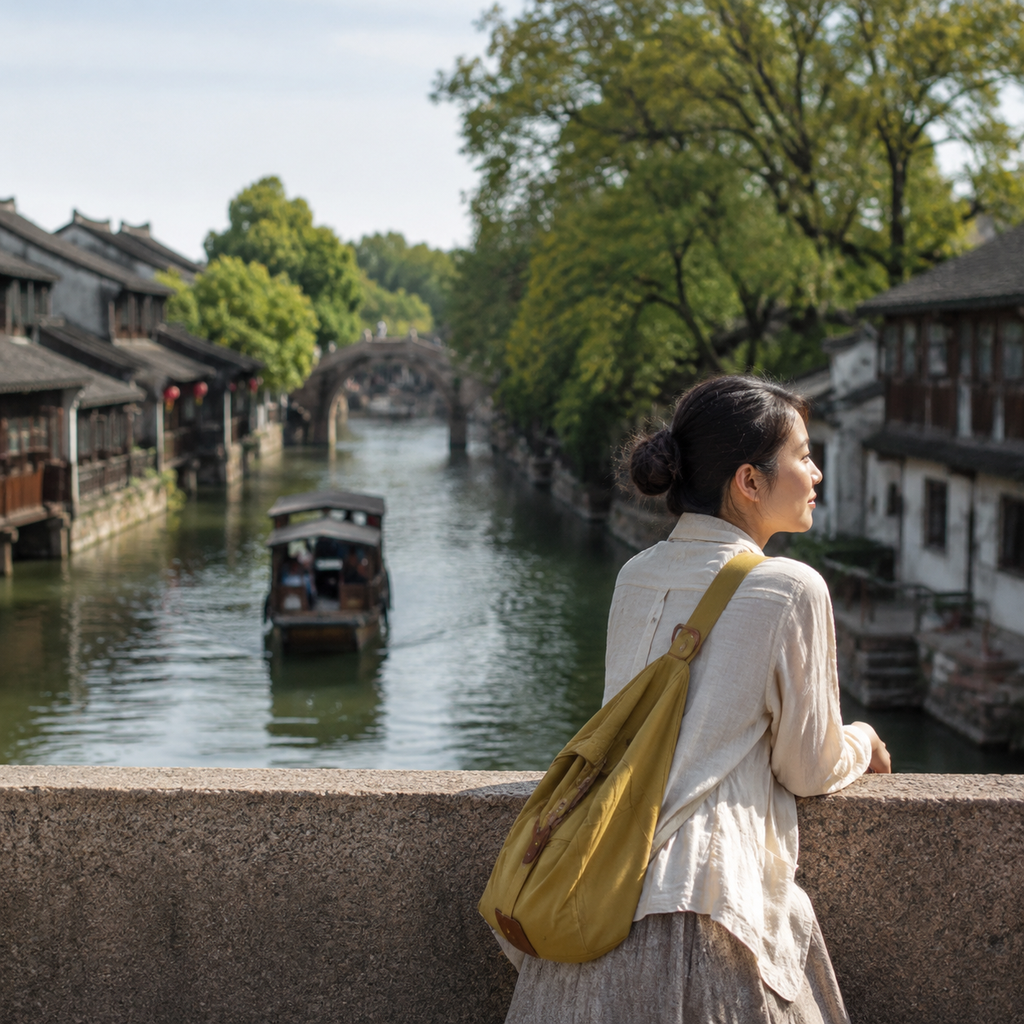
那半小时里,他先是有点坐不住,手指总想去摸相机。后来,一个卖酱菜的阿婆把小木桶一只只摆出来,隔壁裁缝铺的猫跳上窗台,船夫把缆绳从桩上解开,水面上的倒影被船尾慢慢推皱。他看着看着,突然说,原来桥不是重点,桥边发生的事才让桥活起来。
During that half hour, he was restless at first, his fingers always wanting to reach for the camera. Then an old woman selling pickled vegetables set out her small wooden tubs one by one, a cat from the tailor’s shop jumped onto the windowsill, a boatman untied a rope from its post, and the reflection on the water was slowly wrinkled by the stern. After watching for a while, he suddenly said that the bridge was not the point; what happened around it was what made it alive.
所以我常说,来水乡要学会慢看。慢看不是拖时间,也不是装深沉,而是把注意力从“我拍到了什么”挪到“这里正在发生什么”。同一面白墙,上午映着洗衣人的影子,午后晒着竹篮里的菱角,夜里接住一盏灯的暖光。你拍到的是墙,你慢看见的是日子。
That is why I often say that in a water town one must learn to look slowly. Looking slowly is not wasting time, nor is it pretending to be profound. It means moving attention from “what did I capture” to “what is happening here.” The same white wall may hold the shadow of someone washing clothes in the morning, sun on water chestnuts in a bamboo basket in the afternoon, and the warm glow of a lamp at night. A photo gets the wall; slow looking sees the days.
你可以从听开始。水乡的声音很细,不像大山大海那样一下子扑过来。橹声贴着水走,脚步在石板上有轻重,茶馆里有人把杯盖轻轻一拨,远处厨房的锅铲碰到铁锅。若你一边走一边忙着切换滤镜,这些声音就会从身边滑过去,像没有停靠的船。
You can begin by listening. The sounds of a water town are fine and subtle; they do not rush at you like mountains or the sea. Oars move close to the water, footsteps carry different weights on stone slabs, someone in a teahouse nudges a cup lid, and a spatula strikes an iron wok in a distant kitchen. If you walk while busily changing filters, these sounds will slide past you like a boat that never moors.
再看门。江南水乡的门最会说话。有的门新漆未干,说明这家人刚修过屋;有的门环被摸得发亮,说明每天来往的人多;有的门槛磨出浅浅弧度,是许多年进出留下的痕迹。门口若放着一盆葱、一双雨鞋、一把竹椅,你就知道这里不是景区外壳,而是有人认真生活的地方。
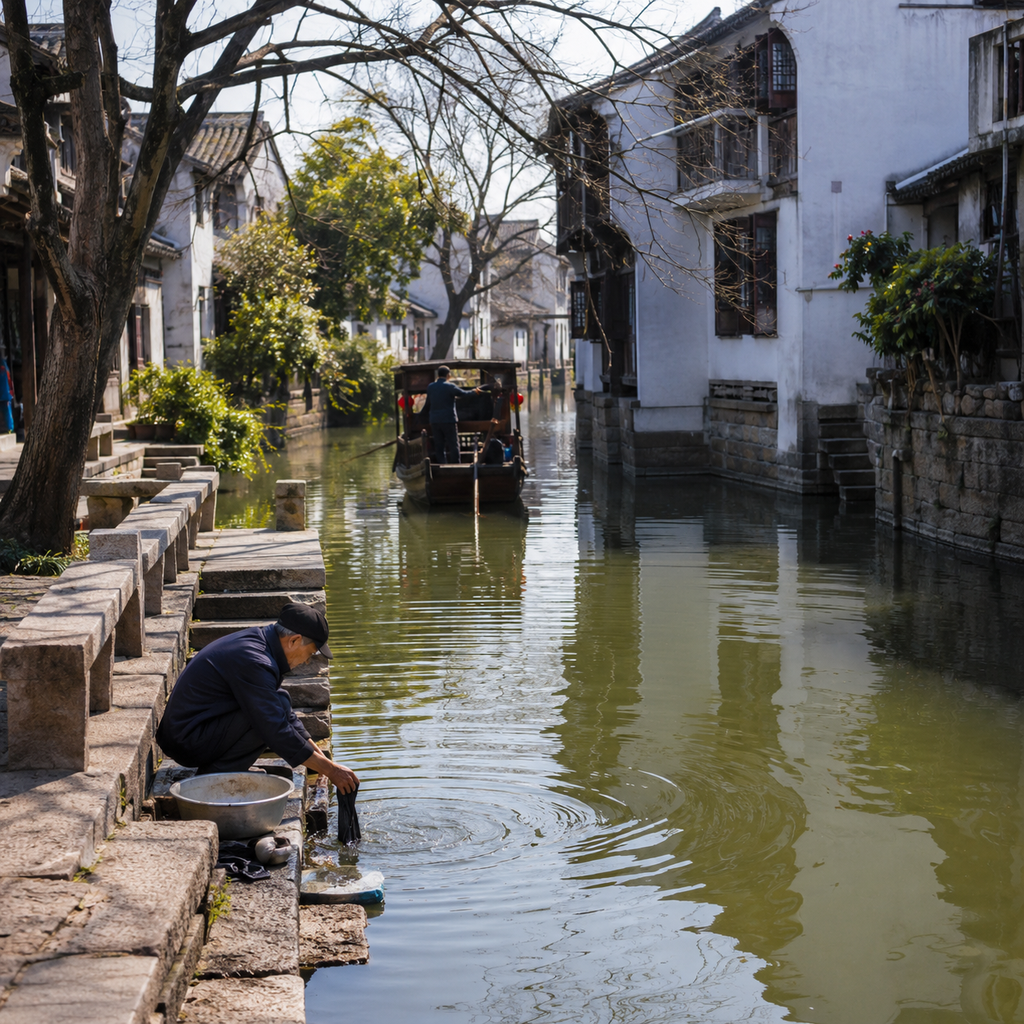
Then look at the doors. Doors in Jiangnan water towns are especially talkative. Some are freshly painted, meaning the house has recently been repaired. Some door rings shine from constant touch, meaning many people come and go each day. Some thresholds have been worn into shallow curves by years of crossing. If there is a pot of scallions, a pair of rain boots, or a bamboo chair by the door, you know this is not merely a scenic shell but a place where people live carefully.
我插一句旧事。小时候跟外婆去水边买豆腐,她总要绕远路,走一条游客不去的小巷。我嫌慢,她说水乡的近路不一定短,远路不一定亏。那时我不懂,只记得巷子里有蒸汽,有刚出锅的豆香,有人把湿被单晾得像一面白帆。多年后我带人走那里,才明白她是在教我怎样看一个地方。
Let me add an old memory. When I was a child, I went with my grandmother to buy tofu by the water, and she always took a longer route through a lane visitors rarely entered. I complained that it was slow. She said the shortcut in a water town was not always short, and the longer way was not always a loss. I did not understand then. I only remembered steam in the lane, the smell of fresh tofu, and someone hanging a wet sheet like a white sail. Years later, when I brought others through that lane, I realized she had been teaching me how to see a place.
慢看还要给人留余地。别把镜头贴到别人窗前,别为了一个角度堵住窄桥,也别把安静的小巷当成自己的摄影棚。水乡之所以动人,是因为它还在被使用:有人赶早市,有人送孩子,有人修船,有人洗碗。我们路过,最好像路过邻居家门口那样,放轻一点。
Looking slowly also means leaving room for people. Do not press your lens against someone’s window, block a narrow bridge for an angle, or turn a quiet lane into your private studio. The water town moves us because it is still being used: people go to the morning market, take children to school, repair boats, and wash bowls. As visitors passing through, we do best to be a little lighter, as if passing a neighbor’s doorway.
如果你只有半天,我建议这样走:先沿主河看整体,再拐进一条支巷,找一家临水茶馆坐下。不要急着点最复杂的东西,一杯清茶就够。看船怎样靠岸,看店主怎样招呼熟客,看雨棚上的水滴怎样落进河里。等你坐到不再觉得自己在浪费时间,水乡的层次就出来了。
If you only have half a day, I suggest this route: first walk along the main canal for the overall view, then turn into a side lane and find a teahouse by the water. Do not rush to order something elaborate; a cup of plain tea is enough. Watch how boats come alongside, how the owner greets familiar customers, how drops from the awning fall into the river. When you can sit without feeling that you are wasting time, the town’s layers begin to appear.
要是遇上下雨,也别失望。雨天的江南会把颜色收一收,白墙不再刺眼,石板路变得温润,屋檐下的人声更近。你站在廊下,看一把伞从桥上走过,看雨线把河面织密,看远处灯笼在水里晃。这样的画面未必最明亮,却最容易让人记很久。
If it rains, do not be disappointed. Rain draws in the colors of Jiangnan: white walls no longer glare, stone paths grow gentle and glossy, and voices under the eaves come closer. Stand beneath a covered walkway and watch an umbrella cross the bridge, rain threads weave the river surface tighter, and a distant lantern sway in the water. Such scenes may not be the brightest, but they are often the easiest to remember.
当然,你也可以拍照。好照片不是罪过,问题只在于不要让拍照替你完成旅行。拍完一张,放下机器,再用眼睛确认一次:刚才那只船从哪里来,桥边那株树为什么向水里歪,老人为什么总坐在同一个位置。多问几个这样的小问题,照片才会有回声。
Of course, you may take photographs. A good photo is no sin. The point is not to let photography complete the journey for you. After taking a picture, lower the device and confirm with your eyes: where did that boat come from, why does the tree beside the bridge lean toward the water, why does the old man always sit in the same spot? Ask a few small questions like these, and your photos will have echoes.
离开前,我通常会带朋友再回到第一座桥。刚来时,他们看见的是桥形、河道和人群;走了一圈回来,他们会认出卖糕点的摊位,认出午后晒太阳的猫,也认出某扇门里传出的评弹声。地方没有变,变的是他们终于把自己从匆忙里放了出来。
Before leaving, I usually take friends back to the first bridge. When they first arrived, they saw the bridge shape, the canal, and the crowd. After walking around, they recognize the pastry stall, the cat sunning itself in the afternoon, and the sound of pingtan singing from a certain doorway. The place has not changed. What has changed is that they have finally released themselves from hurry.
所以来江南水乡,别只问哪里出片。也问问哪里适合坐一会儿,哪条巷子有饭香,哪座桥下能听见船声。你会发现,慢看不是少看,而是把看见的东西留得更深。等到回程路上翻照片,那些没有拍下来的片刻,反而会和照片一起回来。
So when you come to a Jiangnan water town, do not only ask where the best shots are. Ask where it is good to sit for a while, which lane carries the smell of cooking, and under which bridge you can hear boats. You will find that slow looking does not mean seeing less; it means keeping what you see more deeply. Later, when you review your photos on the way home, the moments you did not photograph may return together with the pictures.
- 孔氏南宗家庙门口的豆腐脑,让我重新认识衢州的早晨 | A Bowl of Tofu Pudding Outside the Southern Confucius Temple Changed How I Saw Quzhou Mornings
- 带爸妈游中国七日:一份不累不赶的行程单 | 7 Days in China with Aging Parents: A No-Rush Itinerary
- 面塑摊前的半个下午:我第一次看见面团也能有表情 | At a Dough Figurine Stall: The First Time I Saw Flour and Dough Grow a Face
- 茶国度如何爱上咖啡 | How a Tea Nation Fell for Coffee
- 在西安回民街吃一天,胃和钱包都很满足 | A Full Day of Eating on Xi'an Muslim Quarter
- 昆明蓝花楹城市漫步:把春天走成一条紫色街巷 | A Jacaranda Walk in Kunming: Turning Spring into a Purple Street
- 来华旅行必备配件 | Best Travel Accessories for China
- 南甜北咸是个谎言,但也不全是 | "Sweet South, Salty North" Is a Lie — But Not Entirely
- 从桂林北站到阳朔西街,我选了一条不最省钱但最顺手的慢路线 | From Guilin North Station to Yangshuo West Street, I Chose the Route That Felt Easiest, Not Cheapest
- Long Time No See——那些偷偷混进英语的中式表达 | Chinese Expressions That Snuck Into English When Nobody Was Looking
Comments (0)