
第一晚住进朋友家前,我先把住宿登记这件事弄明白了 | Before Staying at a Friend’s Place in China, I Learned How Accommodation Registration Really Works
第一晚住进朋友家前,我先把住宿登记这件事弄明白了 | Before Staying at a Friend’s Place in China, I Learned How Accommodation Registration Really Works
傍晚七点多,我拖着箱子从地铁口出来,鞋底还带着机场快线站台那种细细的灰。那天北京的空气有一点热,路边刚浇过水,树下有股潮湿的土味。我朋友站在小区门口等我,手里晃着门禁卡,先没问我饿不饿,反而低头看了眼我的护照封套,说了一句很实在的话:今晚先别急着洗澡,先把住宿登记弄明白,睡觉才会踏实。
It was a little after seven in the evening when I came out of the metro station with my suitcase still carrying the fine dust of the airport express platform. Beijing felt warm that day, and the roadside had just been watered, leaving a damp earthy smell under the trees. My friend was waiting at the gate of his residential compound, waving an access card in one hand. He did not ask whether I was hungry first. He looked down at my passport cover and said something much more useful: don’t rush to shower tonight—figure out the accommodation registration first, and you will sleep much better.
很多第一次来中国的人,会把注意力全放在机票、酒店、手机卡、支付和高铁票上。等真的住进朋友家、短租公寓或者民宿,才突然发现:酒店前台会帮你做的那一步,换成非酒店住宿以后,往往要自己确认。真正让人慌的不是手续本身,而是你一路做了很多准备,最后却在“我今晚到底算不算登记好了”这个问题上心里发虚。
Many first-time visitors to China put all their attention on flights, hotels, SIM cards, payments, and train tickets. Only when they actually move into a friend’s home, a short-term apartment, or a homestay do they realize that the step a hotel front desk normally handles often becomes their own responsibility in non-hotel lodging. What makes people nervous is not the process itself. It is the feeling that after planning so much, you are still unsure about one basic question: am I actually properly registered for tonight or not?
这篇我最想让读者记住的一句话很简单:住酒店时,把证件递给前台就行;住别人家或非酒店住宿时,别靠猜,第一晚就把登记路径确认掉。你只要把这件事提到足够靠前的位置,后面的行程、睡眠和心情都会顺很多。
The one sentence I want readers to remember is simple: if you stay in a hotel, hand your documents to the front desk; if you stay in someone’s home or other non-hotel lodging, do not guess—confirm the registration path on the very first night. Once you move this issue to the front of your checklist, the rest of your trip, your sleep, and your mood all become much steadier.
我为什么会在第一晚特别紧张 / Why I Became So Careful on the First Night
我以前在别的国家旅行时,常常默认“只要有住址就行”。可在中国,很多事情讲究的是流程清楚、信息对得上。那天我朋友带我往楼里走,电梯门一开,里面已经站了两个刚买完菜回家的阿姨,塑料袋碰着裤脚,带出一点青菜和葱叶的味道。我突然意识到,自己不是在旅游宣传片里,而是要真正住进一个正常居民小区。越是这种真实生活场景,越不能把手续想得模模糊糊。
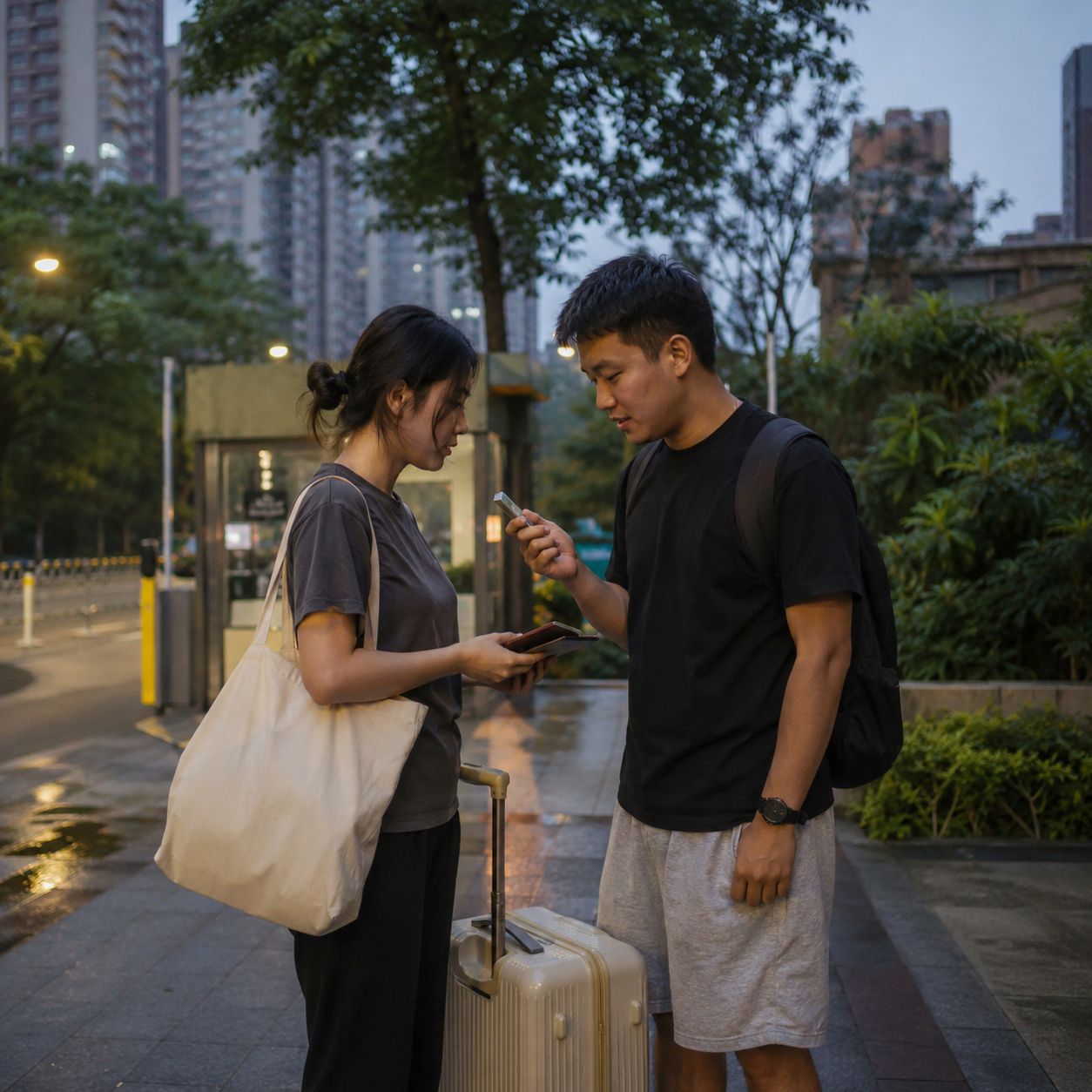
When I traveled in other countries before, I often assumed that simply having an address was enough. But in China, many things depend on whether the process is clear and whether the information matches properly. That evening, my friend led me into the building. When the elevator opened, two older women were already inside, carrying grocery bags that brushed against their trousers and released the smell of green vegetables and scallions. At that moment, I realized I was not stepping into a tourist brochure. I was moving into an ordinary residential building where people were living real, routine lives. In a setting like that, it felt even more important not to leave the paperwork vague.
我紧张还有另一个原因:很多攻略会提醒你“要做住宿登记”,但写法常常只到这里,像在路边竖了一块牌子,却没有告诉你这条路晚上会不会绕远、手机上能不能办、需要谁配合。我最不喜欢的就是这种半截信息。它看起来正确,却不够落地。真正有用的攻略,应该告诉你什么时候问、问谁、带什么、如果当场办不成该怎么退一步。
I also felt uneasy for another reason: many travel guides do remind you to “register your accommodation,” but they stop there. It is like putting up a road sign without telling you whether the route becomes longer at night, whether it can be handled on a phone, or who needs to cooperate. I dislike that kind of half-information. It sounds correct, but it is not grounded enough to help. A useful guide should tell you when to ask, whom to ask, what to carry, and what your fallback is if the first attempt does not work immediately.
先别背规则,先分清你住的是哪一种地方 / Don’t Memorize the Rule First—Figure Out What Kind of Place You Are Staying In
我后来给自己分得很笨,但特别好用。第一种是酒店、正规旅馆、很多前台流程成熟的住宿,这种通常会在你办理入住时同步处理证件信息。第二种是朋友家、亲戚家、自己租的公寓、短租房、民宿这类非酒店住宿,这时就不能想当然。你要主动确认:这次登记是线上做、线下做,还是房东和住客要一起配合。
I eventually divided the problem in a very simple way, and it helped a lot. The first category is hotels, regular inns, and places with a mature front-desk process. In those cases, document handling is usually processed together with check-in. The second category is a friend’s home, a relative’s home, your own rented apartment, a short-term rental, or a homestay. In those cases, you should not make assumptions. You need to confirm proactively whether registration will be handled online, offline, or through a process that requires both the host and the guest to cooperate.
这个判断越早做越好,最好别等到半夜。因为半夜人的耐心本来就薄,手机电量也低,箱子开了一半,洗漱用品摊在床边,你会更容易把正常的小步骤体会成一种压力。我的经验是,只要落地后第一段交通还没把人折腾散,脑子还清楚,就把这件事先问掉。五分钟确认,能换来后面一整晚的安稳。
The earlier you make this distinction, the better—ideally not after midnight. At night, patience is already thinner, phone batteries are lower, luggage is half unpacked, and toiletries are spread beside the bed. Under those conditions, even a normal step starts to feel more stressful than it really is. My experience is that as long as your mind is still clear after the trip from the airport or station, ask about it early. Five minutes of confirmation can buy you a much calmer entire night.
我第一晚真正做的,不是上网乱搜,而是先问这三个问题 / What I Actually Did on the First Night Was Not Random Searching, but Asking Three Questions

我把朋友拉到餐桌边,先没坐下吃外卖,而是把护照、签证页和入境信息放在桌上,直接问了三个问题:第一,这里以前接待过外国朋友吗;第二,这类住宿登记通常怎么做;第三,如果手机上今天做不完,最近能处理的线下点在哪里。桌上的灯有点偏黄,照在护照封皮上,连自己都会觉得这一步看着太正式了。但正是这种正式,让后面的动作突然变得简单。
I pulled my friend to the dining table before we even sat down with the takeout. I placed my passport, visa page, and entry information on the table and asked three direct questions. First: has this place hosted foreign guests before? Second: how is registration usually handled for this type of stay? Third: if the process cannot be completed on the phone tonight, where is the nearest in-person office that can handle it? The light above the table was slightly yellow, and on the passport cover it made the whole moment look more formal than a casual evening arrival. But that formality was exactly what made the next steps simpler.
这三个问题的好处在于,它不会把对方问懵。你不是空泛地说“这个怎么办”,而是直接把对方拉进协作状态。很多中国朋友、房东或民宿接待人不一定会主动长篇解释,但只要你把问题问得清楚,他们通常会很快告诉你哪一步最关键。旅行里最怕的是双方都觉得“应该差不多吧”。这种“差不多”在风景上无伤大雅,在手续上却会让人整晚心里不稳。
The strength of these three questions is that they do not confuse the other person. You are not vaguely saying, “So what do I do?” You are inviting them into a clear problem-solving mode. Many Chinese friends, hosts, or homestay managers may not launch into a long explanation on their own, but once your question is precise, they often tell you quickly which step matters most. What worries me most in travel is when both sides assume, “It should probably be fine.” That kind of “probably” is harmless for scenery, but for formalities it can leave you unsettled for the whole night.
真正实用的准备,不多,但要放在手边 / The Truly Useful Preparation Is Small, but It Needs to Be Within Reach
我现在会把几样东西提前放在一个文件夹里,而不是散在聊天记录和相册里翻。护照首页照片、签证或入境相关页面、当天住址的中文写法、房东或朋友的联系电话、以及我自己入境当天的到达时间,这几项越早整理,后面越不慌。别小看“中文地址”这一项,很多时候你脑子里知道自己住哪儿,但真要准确说、准确填,手边没有文字版本就会慢半拍。
Now I keep a few key items together in one folder instead of hunting through chat logs and photo albums. I prepare a photo of the passport information page, the visa or entry-related pages, the address written in Chinese, the host’s or friend’s phone number, and my arrival date and time. The earlier I organize these, the less rushed I feel later. Do not underestimate the value of the Chinese address. You may know perfectly well where you are staying, but when the moment comes to state it or fill it in accurately, not having the written version in front of you slows everything down.
我还会做一个看起来很小、其实特别救命的动作:手机先充到比较安心的电量,再连上稳定网络。很多人觉得手续问题主要考验语言,其实更常见的是考验电量、信号和耐心。你在陌生城市里,最怕的不是不会说,而是话刚说到一半,页面转圈,验证码晚到,手机只剩百分之六。那种心跳会一下快起来,连判断力都会变差。
I also do something that looks minor but helps a great deal: I charge my phone to a comfortable level and connect it to stable internet first. Many people think these formalities mainly test their language ability, but more often they test battery life, signal strength, and patience. In a new city, what scares you is not always the lack of words. It is the moment when a page keeps spinning, a verification code arrives late, and your battery drops to six percent. Your pulse rises immediately, and even your judgment gets worse.
如果你住的是朋友家,这些细节最好提前说开 / If You Are Staying at a Friend’s Place, These Details Are Better Discussed Early

朋友帮忙这件事,本身已经很温暖了,所以更要把边界讲清楚。我后来发现,最舒服的方式不是临时把问题甩给对方,而是提前把自己的需要说完整:我需要完成住宿登记;如果线上需要你配合,我们现在就一起看;如果线下需要去某个点,我明早愿意早点出门。这样说,对方不会觉得自己突然多了一件说不清的麻烦,你也不会因为“怕打扰人”而把问题拖着不问。
When a friend is helping you, that help is already generous, which is exactly why it is better to keep the boundaries clear. I found that the most comfortable approach is not to drop the problem on someone at the last second, but to state your needs plainly: I need to complete accommodation registration; if the online process requires your cooperation, let’s look at it together now; if it requires going somewhere in person, I am willing to head out early tomorrow. Put that way, the other person does not feel ambushed by a vague problem, and you do not end up delaying the issue just because you are afraid of bothering them.
这种沟通还有一个好处:它会让你立刻知道这套安排到底熟不熟。如果朋友一听就知道流程,事情通常会很快顺下来;如果对方也不确定,那也不是坏事,至少你们是清醒地“不确定”,可以一起查、一起问,而不是在模糊里硬撑。很多旅行上的安全感,其实都来自把“不知道”尽早说出口。
This kind of conversation brings another advantage: it tells you immediately how familiar the arrangement really is. If your friend already understands the process, things usually move quickly. If they are unsure as well, that is not bad either. At least you are both consciously unsure, which means you can check and ask together instead of pushing forward in a haze. A surprising amount of travel confidence comes from naming uncertainty early instead of hiding it.
我会把“补救方案”也一起准备好 / I Always Prepare a Fallback Plan as Well
我现在做攻略,不再只写最理想的那条线。我会同时准备一个补救方案:如果今晚线上没走完,那明天一早去哪里;如果朋友临时忙,谁还能协助确认地址信息;如果住处附近不熟,我是否先把地图、打车点、门口照片保存好。旅行里最让人松一口气的,不是事情一定一次成功,而是你知道万一第一步没走通,第二步往哪儿踩。
When I plan travel now, I no longer write down only the ideal path. I prepare a fallback as well. If the online process is not finished tonight, where do I go first thing tomorrow morning? If my friend becomes busy, who else can help confirm the address details? If I am unfamiliar with the neighborhood, have I already saved the map pin, the ride-hailing pickup point, and a photo of the building entrance? What truly calms me in travel is not the guarantee that everything works perfectly on the first try. It is knowing where my foot goes next if the first step does not hold.
这也是为什么我不建议把住宿登记当成一种“等有空再处理”的边角任务。它和行李还没拆、澡还没洗、肚子还饿这些小事叠在一起时,很容易把人压烦。相反,你若先把它处理成一个有主线、有备选的清单任务,脑子里那种散乱感会迅速消失。你会重新感觉,自己不是被城市推着走,而是在慢慢接住这个城市。
That is also why I do not recommend treating accommodation registration as a side task to be handled “when there is time.” Once it overlaps with unpacked luggage, an unwashed body, and an empty stomach, it becomes irritating far too quickly. But if you turn it into a checklist task with a main path and a backup path, that feeling of mental clutter fades fast. You begin to feel again that the city is not pushing you around; you are slowly learning how to catch it properly.

这件事背后,其实是旅行节奏的问题 / Beneath This Issue, It Is Really About Travel Rhythm
我后来越来越觉得,很多人第一次来中国会累,不是因为事情太多,而是因为所有事情都想在同一小时内搞定:落地、付款、换乘、吃饭、报平安、洗澡、回消息、研究第二天路线。住宿登记让人紧张,往往也不是因为它最难,而是因为它刚好挤在这团最乱的时候出现。所以我现在会主动把第一晚的期待压低一点:先住稳,再睡稳,第二天才有余裕去看风景。
Over time, I have felt more and more strongly that many people get exhausted on their first trip to China not because there are too many tasks in total, but because they try to finish all of them within the same hour: arrival, payment, transfers, dinner, reassuring family, showering, replying to messages, and planning the next day. Accommodation registration often feels stressful not because it is the hardest thing, but because it appears right in the messiest window. That is why I now deliberately lower my expectations for the first night. First settle the stay, then settle the sleep; only after that do I fully have the energy to enjoy the city.
那天晚上,我们最后在厨房把电热水壶烧上,窗外还能听见楼下电动车刹车时轻轻一响。我朋友把地址发给我保存,我把证件照片单独归档,顺手把第二天可能要去的位置也截了图。事情并没有戏剧化,反而因为没有戏剧化,我心里特别安稳。真实旅行里,很多好体验都不是来自“哇,好精彩”,而是来自“好,今晚这一步我已经放下了”。
That night, we finally put the electric kettle on in the kitchen, and from the window I could still hear the soft brake sound of e-bikes downstairs. My friend sent me the address again so I could save it properly. I organized my document photos into one folder and took screenshots of the places we might need to visit the next morning. Nothing about it was dramatic, and that lack of drama was exactly what made me feel so calm. In real travel, many good experiences do not begin with “wow, how exciting.” They begin with something quieter: good, this one step is no longer hanging over me tonight.
我给第一次这样住的人一个很实在的顺序 / The Practical Order I Recommend for Anyone Doing This for the First Time
如果你第一次住进朋友家、短租房或非酒店住宿,我建议顺序就按这个来:先确认住址的中文文本;再确认谁来配合处理登记;然后把证件照片、联系方式和到达时间放到一起;接着检查手机电量和网络;最后再去洗澡、拆箱、点夜宵。这个顺序听上去不浪漫,但它很管用。旅行真正舒服的时候,不是你把每件事都做得漂亮,而是你先把最容易让人不安的那一件做稳。
If this is your first time staying in a friend’s home, a short-term apartment, or other non-hotel lodging, I recommend following this order: first confirm the address in Chinese text; then confirm who will help with the registration; next put your document photos, contact details, and arrival time together; after that, check your phone battery and internet connection; only then move on to showering, unpacking, or ordering a late-night snack. It may not sound romantic, but it works. Travel feels good not when every task is done beautifully, but when the one most likely to make you uneasy is handled first and handled steadily.
如果一定要我把这一晚的经验压成一句最短的话,那就是:别把住宿登记想得太可怕,也别把它想得太模糊。你需要的不是紧张,而是顺序;不是硬撑,而是确认;不是等别人替你想起,而是自己先把问题提出来。这样一来,第二天你走出小区时,看到的就不只是陌生城市,而是一座已经开始对你变得有秩序的城市。
If I had to compress the lesson of that night into one final line, it would be this: do not imagine accommodation registration as something terrifying, but do not leave it blurry either. What you need is not anxiety, but order; not stubborn guessing, but confirmation; not waiting for someone else to remember it for you, but raising the issue yourself early. Once you do that, when you walk out of the compound the next morning, you do not just see an unfamiliar city. You see a city that has already begun to arrange itself into something readable for you.

- 重阳登高:全国最美山岳推荐 | Chongyang Hiking: China's Most Beautiful Mountains
- 南京早餐摊前的队伍,让我第一次看懂城市早晨 | A Breakfast Queue in Nanjing Helped Me Read a City’s Morning
- 最值得购买的中国纪念品 | Best Chinese Souvenirs to Buy
- 元旦跨年旅游目的地盘点 | New Year's Eve Travel Destinations Roundup
- 扬州早茶的一场耐心训练 | A Lesson in Patience at Yangzhou Morning Tea
- 西安和洛阳最打动人的,不是朝代名词多,而是今天还走得到那些旧年代边上 | What Makes Xi’an and Luoyang Compelling Is Not Their Dynastic Vocabulary but the Way You Can Still Walk Up to the Past Today
- 在地铁口停好共享单车那一刻,我才明白锁车并不等于结束 | The Moment I Properly Parked a Shared Bike Outside the Metro, I Understood That Locking It Is Not the End
- 五月第一次去北京,我是怎么把暴走行程改成舒适慢线的 | My First Beijing Trip in May: How I Turned an Exhausting Route into a Gentle Slow-Paced Plan
- 大盘鸡:一盘端上来,整桌人都不说话了 | Dapanji: When This Plate Arrives, the Whole Table Goes Silent
- 在成都点微辣,我才知道辣度不是翻译能完全解决的 | Ordering Mild Spice in Chengdu Taught Me Translation Cannot Fully Explain Heat
Comments (0)