
西安和洛阳最打动人的,不是朝代名词多,而是今天还走得到那些旧年代边上 | What Makes Xi’an and Luoyang Compelling Is Not Their Dynastic Vocabulary but the Way You Can Still Walk Up to the Past Today
他们写西安和洛阳时,真正让人动心的不是古代名词,而是“今天还能怎么走进去” | What Makes Xi’an and Luoyang Compelling Is Not the Ancient Vocabulary, but the Sense That You Can Still Walk Into Them Today
国外博主写中国历史城市时,最常见的问题有两个方向:要么写得太像教科书,把城市变成了一堆朝代名词;要么写得太像打卡日记,最后只剩“城墙很大、寺庙很古、夜景很美”这种泛化描述。可一旦内容做得更成熟一点,真正能打动读者的,往往不是历史本身有多厚,而是这些历史城市今天仍然怎么被走进去。西安和洛阳最值得报道的地方,也恰恰在这里。
When foreign creators write about China’s historic cities, two problems appear repeatedly. The first is that the content becomes too textbook-like, reducing the city to dynasties and terminology. The second is that it becomes too checklist-based, collapsing into broad descriptions like the walls are large, the temples are ancient, and the night is beautiful. But once the content becomes a little more mature, what truly moves readers is not the mere thickness of history. It is the question of how these cities can still be entered on foot today. That is exactly where Xi’an and Luoyang become most worthy of reporting.
TravelCN 若要把国外博主的这类公开内容转写成站内文章,重点就不该是“古都很有文化”这种空话,而应该是:为什么西安和洛阳会让今天的旅行者觉得历史不是挂在玻璃柜里,而是仍然能通过馆藏、城墙、夜路、寺庙空间和步行路线一点点接触到。对海外读者来说,这种“还能走进去”的感觉,比任何宏大的朝代叙述都更容易转化成实际兴趣。
If TravelCN wants to transform this kind of public foreign-creator material into useful site articles, then the focus should not fall on empty statements such as ancient capitals are rich in culture. It should ask instead why Xi’an and Luoyang allow modern travelers to feel that history is not trapped in museum glass, but can still be touched bit by bit through collections, walls, night routes, temple space, and walkable lines. For overseas readers, that sense of still being able to walk inside history converts to interest far more easily than grand dynastic narration does.
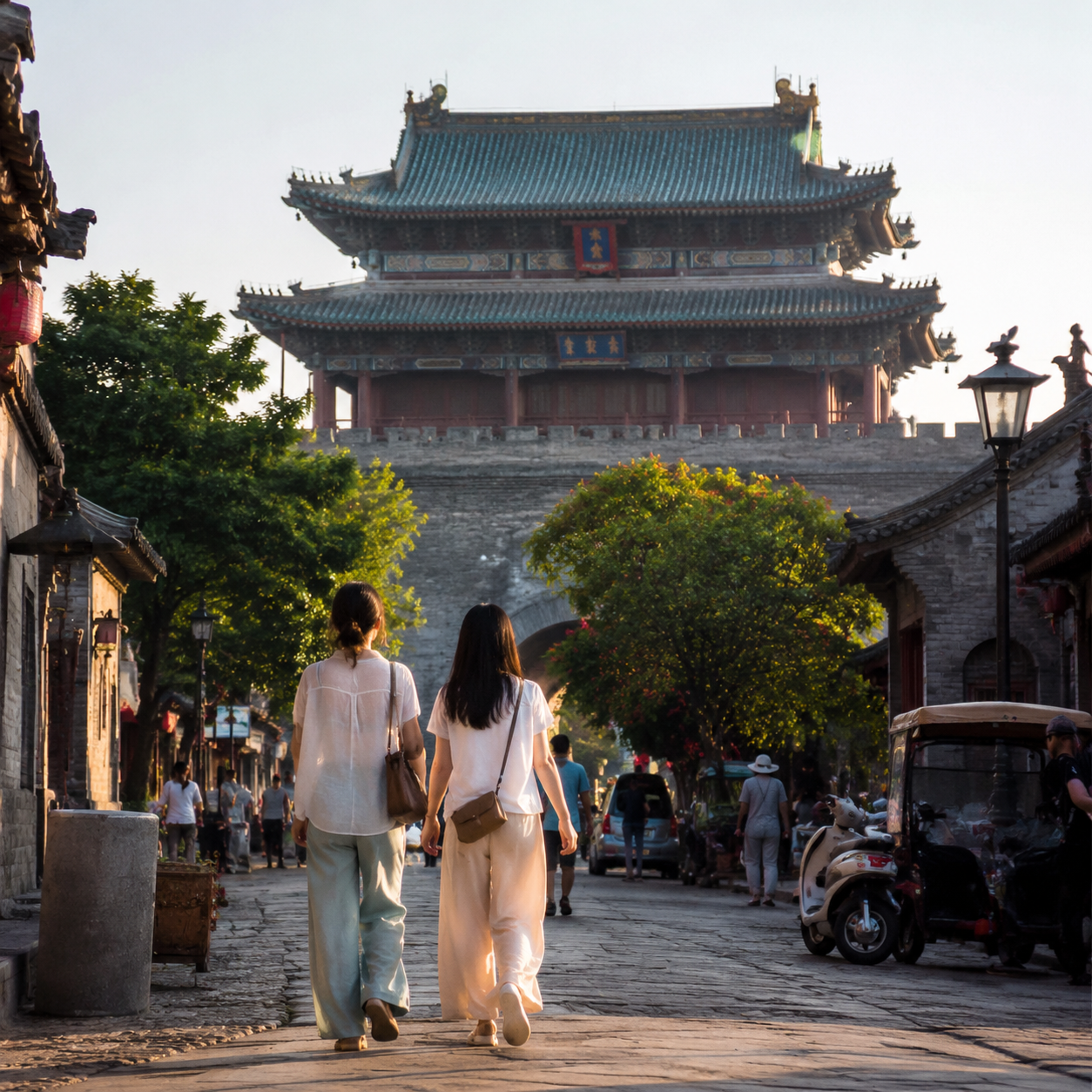
西安和洛阳真正适合被写成“路线中的历史”,而不是“名词中的历史” / Xi’an and Luoyang Are Best Written as History Inside a Route, Not History Inside Vocabulary
很多第一次来中国的人,对历史城市会天然有一种敬而远之的感觉。他们不是不感兴趣,而是担心自己不懂那么多背景,会不会最后只能看热闹。西安和洛阳如果只被讲成“你必须知道多少朝代、多少人物、多少典故”的地方,确实容易让人退开。但如果把它们写成路线中的历史,情况就会完全不同:白天先让馆藏把时间线铺开,傍晚再让街区和城墙把时间感从柜子里带到身体边上,历史就会从知识负担变成空间经验。
Many first-time visitors to China feel a natural hesitation toward historic cities. It is not a lack of interest. It is the fear that without enough background knowledge, they will only be watching from outside. If Xi’an and Luoyang are presented as places where one must already understand dynasties, figures, and references, that hesitation is understandable. But once they are written as history inside a route, everything changes. Let collections open the time line during the day, then let streets and walls pull that sense of time back out of the glass and closer to the body in the evening, and history stops being a burden of knowledge and becomes a spatial experience.
这类写法也更适合国外博主内容的转写。因为很多公开视频并不会真的长篇讲史,它们更常拍到的是:一个人如何在馆里先安静下来,如何在傍晚重新走到城墙边,如何在老街、寺庙或夜市边缘,突然意识到“这里不是一个被封存的古代场景,而是一座今天还在继续生活的城”。第三方报道体最大的任务,就是把这些瞬间组织成一套读者能跟得上的理解路径。
This method also suits the transformation of foreign creator content more naturally. Public videos rarely spend long stretches lecturing history. What they more often capture is how a person first quiets down in a museum, then returns toward the wall at dusk, and then suddenly realizes on the edge of an old street, temple space, or evening market that this is not a sealed ancient stage set, but a living city still continuing in the present. The task of a third-person reported article is to organize those moments into a path the reader can follow.
西安适合讲“怎么从馆藏走到夜路”,洛阳适合讲“怎么从石头走回日常” / Xi’an Works Best as a Story of Moving from Collections to Night Streets, and Luoyang as a Story of Moving from Stone Back into Daily Life

西安的强项,在于它非常容易建立一个清楚的节奏:白天进馆,先让文物把时间轴安静地推开;晚上再让城墙、街区和灯光把历史感慢慢转成步行感。对于第一次来中国的旅行者,这种节奏特别友好。因为他不需要一上来就理解一切,他可以先看、再走、再在走路中慢慢长出理解。
Xi’an’s strength lies in how clearly it can establish a rhythm. During the day, collections open the time line in a quiet way; at night, walls, neighborhoods, and light gradually convert historical feeling into walkable feeling. For first-time visitors to China, this rhythm is especially generous. They do not need to understand everything immediately. They can first look, then walk, and then let understanding grow slowly while moving.
洛阳的吸引力则常常更像另一种结构。它不会总是先用大城市气场把人压住,而是更容易通过石窟、寺院、历史遗迹和周边日常,把“很远的古代”和“眼前的普通生活”贴得更近。你在这种城市里会更清楚地感觉到,中国历史城市并不是只有纪念意义,它们同时也是现实生活的容器。外部创作者如果抓到了这一点,文章就不该只写“有名的石窟很壮观”,而要写“为什么壮观之后,这座城还会让人愿意继续留下来走一晚”。
Luoyang often works through a different structure. It does not always dominate first through big-city force. Instead, it brings the distant past closer to ordinary present life through grottoes, temple spaces, historical remains, and the neighborhoods around them. In such a city, one senses more clearly that Chinese historic capitals are not only commemorative spaces. They are also containers for ongoing daily life. If an outside creator captures that, the article should not stop at saying a famous grotto is magnificent. It should ask why, after the magnificence, the city still makes a person want to stay and walk for another evening.
对 TravelCN 来说,这类古都内容最该补的是“现代读者怎样不被历史吓退” / For TravelCN, the Key Addition Is Showing Modern Readers How Not to Be Frightened Away by History
很多国外读者并不是不喜欢历史,而是害怕自己面对历史会显得太无知。站内如果能把这层心理门槛降下来,古都内容的转化率反而会更高。办法不是拼命灌背景知识,而是把路线安排得更容易进入:先用博物馆和馆藏做安静入口,再用傍晚步行和夜色做身体入口,最后再把更重的历史说明放到读者已经愿意留下来的时候。

Many foreign readers are not hostile to history. They are afraid of looking too ignorant in front of it. If the site can lower that psychological threshold, historic-city content may convert better rather than worse. The way to do that is not to flood the reader with background knowledge. It is to arrange the route so that entry becomes easier. Collections create a quiet entrance, evening walks create a bodily entrance, and denser historical explanation can wait until the reader is already willing to stay.
这也是为什么,国外博主写西安、洛阳这类城市时,TravelCN 不该只盯着他们用了哪些形容词,而要看他们究竟把哪些场景留在镜头里:馆里的停顿、城墙上的风、街边的灯、寺院外的空间感、以及走出景区后城市如何继续接住人。真正的报道体文章,应当把这些场景连成一条理解古都的方法,而不是一串用来背诵的文化名词。
That is why, when foreign creators film cities such as Xi’an and Luoyang, TravelCN should not focus only on the adjectives they use. It should watch which scenes they keep in the frame: the pause inside a museum, the wind on the wall, the lights by the street, the sense of space outside a temple, and the way the city continues to receive the traveler after the heritage zone ends. A genuinely useful reported article should turn those scenes into a method for understanding a historic capital, not into a row of cultural terms to memorize.
公开素材来源 / Public Source Notes
- 基于国外博主公开可见的中国古都/历史城市内容切口重写,偏“西安—洛阳如何被今天的旅行者走进去”的报道体分析。
- 不做整段搬运,重点转写路线与进入逻辑。
Public source note:
- Rewritten from publicly visible foreign-creator angles on China’s historic capitals, focusing on how Xi’an and Luoyang remain enterable for modern travelers.
- No wholesale reproduction is used; the emphasis is on route and entry logic.
- 我在镇江西津渡的五月雨声里,忽然不再害怕一个人吃饭 | In Zhenjiang's May Rain at Xijin Ferry, I Suddenly Stopped Fearing Eating Alone
- 7天经典华东行程:上海-杭州-苏州 | 7-Day East China Itinerary: Shanghai-Hangzhou-Suzhou
- 景德镇陶瓷伴手礼选购指南 | Jingdezhen Ceramics Souvenir Buying Guide
- 来华旅行必备配件 | Best Travel Accessories for China
- 我在中国高铁上学会安静地分享空间,不是靠规则,而是靠先读懂别人的节奏 | On a Chinese High-Speed Rail Trip, I Learned to Share Space Quietly Not Through Rules, but by Reading Other People’s Rhythm First
- 大理风停下来的那一刻,我才看清洱海边的节奏 | When the Wind Paused in Dali, I Finally Saw the Rhythm Beside Erhai
- 在写字楼大厅等外卖时,我第一次明白站得近不一定拿得更快 | Waiting for Takeout in an Office Lobby Was the First Time I Learned That Standing Closer Does Not Mean Getting Food Faster
- 最值得购买的中国纪念品 | Best Chinese Souvenirs to Buy
- 我原以为汉代节日只是热闹,后来才发现真正难忘的是厨房里那股蒸汽 | I Used to Think Han Festivals Were Only About Excitement, Until I Realized the Kitchen Steam Was What Stayed With Me
- 共享单车不是难用,难的是先看停车区 | Shared Bikes Are Not Hard; the Hard Part Is Checking Parking Zones First
Comments (0)