
杭州下雨的下午,孩子第一次主动找陌生小朋友一起玩 | On a Rainy Afternoon in Hangzhou, My Child Asked a Stranger to Play Together
杭州下雨的下午,孩子第一次主动找陌生小朋友一起玩 | On a Rainy Afternoon in Hangzhou, My Child Asked a Stranger to Play Together
杭州那天的雨下得不大,却一直没停,细细密密地把西湖边的石板路打得发亮。我们原本计划好的游船和长时间散步都得往后挪,只好先躲进湖边一家带阅读区的小咖啡馆。说是咖啡馆,其实更像一个安静的社区空间,靠窗摆着几排绘本,木头桌面有温热的光泽,玻璃窗上全是被雨水拖长的痕迹。儿子一进去时还有点失望,一直念叨“今天是不是玩不成了”。
The rain in Hangzhou was light but persistent, turning the stone paths by West Lake glossy and dark. Our boat ride and long walk had to be pushed back, so we ducked into a lakeside café with a small reading corner. It was called a café, but it felt more like a quiet neighborhood space. There were rows of picture books by the window, warm light on the wooden tables, and rain trails stretching down the glass. My son entered looking disappointed and kept asking, “Does this mean we can’t really play today?”
没过多久,他就看见角落里有个差不多年纪的小男孩,正趴在地毯上拼一套中国地图拼图。地图边上散着几块零碎的小板块,颜色鲜亮,小男孩嘴里还在小声念地名。我本以为儿子会自己坐着看书,没想到他站了一会儿,竟然主动走过去问:“我可以一起吗?”这句话一出来,我甚至比他还惊讶。因为平时在陌生环境里,他并不是最先开口的那一个。
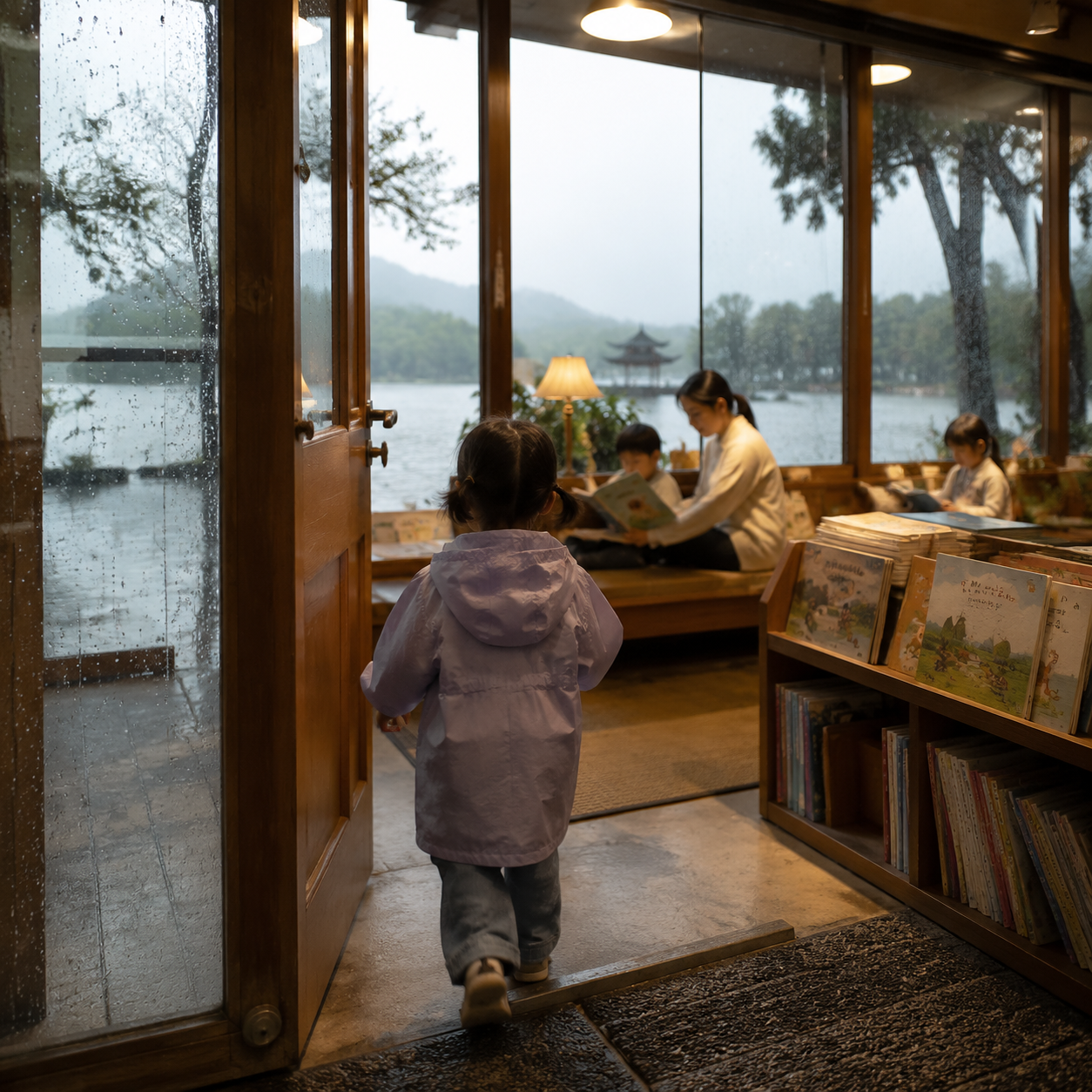
Before long, he noticed another boy of about the same age in the corner, lying on the carpet and working on a puzzle map of China. Brightly colored pieces were scattered around him, and he was quietly reading place names to himself. I expected my son to sit down with a book on his own. Instead, after standing there for a moment, he walked over and asked, “Can I play too?” The question surprised me almost more than it surprised him. In unfamiliar places, he is not usually the first child to speak.
对方抬头看了他一眼,很自然地挪了点位置,说:“可以啊,你会不会找浙江?”这句话像一个很轻的门把手,一下把两个孩子拉到了一起。儿子蹲下来,一开始还慢慢找,后来两个人越拼越投入:一个找省份,一个看形状,一个负责把拼图翻正,一个负责对照边框。不到十分钟,他们已经开始讨论“你去过哪里”“你喜欢海还是山”“高铁快不快”。
The other boy looked up, shifted a little to make room, and said, “Sure. Can you find Zhejiang?” That sentence worked like a gentle door handle. It pulled the two children together immediately. My son crouched down and began cautiously, but soon they were fully absorbed. One searched for provinces, one compared shapes, one turned the pieces the right way, and the other checked the edges. In less than ten minutes they were already discussing where they had traveled, whether they liked mountains or the sea more, and whether high-speed trains felt fast.
我坐在旁边,看着窗外的雨,也看着里面这两个孩子。旅行时我们总以为要去很多地方,孩子才会收获很多;但有时候,一场小雨把计划打乱,反而会把真正重要的东西推到眼前——孩子在陌生环境里,愿不愿意走向别人,愿不愿意开始一段新的交流。中国很多城市现在都有这种对亲子友好的慢空间:阅读区、小型展览角、社区书店、儿童活动桌。它们不喧闹,却非常适合孩子练习分享、合作和开口。
I sat nearby, watching the rain outside and the two children inside. We often imagine that children gain the most only when we take them to many places. But sometimes a stretch of rain disrupts the plan and pushes something more important to the surface: whether a child is willing to move toward another person in a new environment and begin a new conversation. Many Chinese cities now have these gentle, child-friendly slow spaces—reading corners, tiny exhibition areas, community bookstores, and shared activity tables. They are not loud, but they are ideal for practicing sharing, cooperation, and speech.

后来那位小男孩的妈妈也坐过来,笑着跟我聊天。她说每逢下雨,她就喜欢带孩子来这里,因为比起一直刷手机,孩子更容易在这样的空间里跟别人说上话。我特别认同。很多父母带孩子旅行,一遇到天气变化就觉得行程被毁了,可中国这种公共空间的好处就在这里:它不是“备胎景点”,而是一种真正能让孩子参与生活的场景。孩子在这里学到的,不是课本知识,而是怎样进入一段关系。
Later the other boy’s mother came over and started chatting with me. She said that whenever it rains, she likes bringing her son there because children are more likely to talk to others in a place like this than if they are left staring at screens. I agreed immediately. Many parents feel a schedule is ruined when the weather changes, but this is exactly the strength of Chinese public spaces like this one. They are not backup attractions. They are real places where children can participate in life. What a child learns there is not textbook knowledge, but how to enter a relationship.
拼到最后,儿子负责把“浙江”那一块放回去,小男孩立刻说:“这就是杭州。”儿子低头看了好几秒,像第一次觉得“杭州”不是一个旅游景点的名字,而是真正跟人、跟空间、跟相遇有关的地方。分别前,小男孩从书架上拿下一本讲西湖传说的小绘本,说:“这个挺好看,你可以看看。”儿子接过书,认真说了句“谢谢”。等对方走远了,他还站在门口看了一会儿。
At the end, my son was the one who placed the Zhejiang piece into the map, and the other boy immediately said, “That’s Hangzhou.” My son stared at it for a few seconds, as if he was realizing for the first time that Hangzhou was not merely the name of a tourist destination. It was a place connected to people, rooms, and encounters. Before leaving, the other boy took a picture book about West Lake legends from the shelf and said, “This one is good. You can read it.” My son accepted it and said thank you with real seriousness. Even after the boy walked away, my son stood at the door watching for a moment.
后来雨慢慢小了,我们终于走出去。西湖边的柳树被洗得很干净,空气里有一点潮湿的草木味。儿子一边走,一边跟我讲刚才那个小朋友说过的话,还主动问:“妈妈,下次我是不是也可以先问别人能不能一起玩?”我听到这句,心里一下就软下来。亲子旅行最打动人的时刻,常常不是站在著名风景前,而是孩子忽然学会了一个他以后能一直带着走的动作。

Later the rain softened and we finally stepped back outside. The willow trees along West Lake looked freshly washed, and the air smelled of damp leaves and grass. As we walked, my son kept repeating things the other child had said, and then he asked, “Mom, next time can I ask first if someone wants to play together?” That sentence softened me instantly. The most moving moments in family travel are often not the moments in front of a famous view, but the moment a child learns one action they can carry into the future.
如果带孩子来杭州,别只安排景点。也给他们留一点被天气打断的空白时间吧。正是在这些看似计划外的小段落里,孩子会突然学会更重要的事:如何接近别人,如何一起做一件事,如何在陌生城市里不只是参观者,而是参与者。中国有很好的学习氛围,不一定总表现在课堂和培训班里,很多时候,它就藏在这样一张地毯、一套拼图、一句“我可以一起吗”里面。
If you travel in Hangzhou with a child, do not arrange only attractions. Leave a little blank space that can be interrupted by weather. In these unplanned stretches, children often learn something more important: how to approach another person, how to do something together, and how to become not only a visitor in a new city but a participant. China’s learning atmosphere does not always show itself in classrooms and formal programs. Very often it is hidden inside a carpet, a puzzle map, and one sentence: “Can I join too?”
旅行里可以这样做:下雨时不要急着觉得行程被毁,先找一个亲子友好的慢空间;如果孩子有点怕生,就先教他一句最简单的话——“我可以一起吗?”只要这句话第一次顺利说出口,孩子对陌生环境的感受,往往就会发生很大的变化。
Here is one practical strategy for this kind of trip: when rain interrupts your plan, do not assume the day is ruined. Find a child-friendly slow space first. If your child feels shy, teach one simple sentence in advance: “Can I join too?” Once that sentence is spoken successfully for the first time, a child’s whole feeling about unfamiliar environments often begins to change.
- 我在中国学会先看队伍,再决定吃什么 | In China I Learned to Read the Queue Before Choosing What to Eat
- 从汉服到旗袍,我在中国各朝代的衣柜里翻了个遍 | I Raided the Wardrobe of Every Chinese Dynasty and Here's What I Found
- 秦汉唐宋明清——六个朝代串起你的中国旅行 | Six Dynasties That Frame Your China Trip
- 第一次去中国,你可能准备错了 | First Trip to China: You're Probably Preparing for the Wrong Things
- 把重庆说成超大城市很容易,难的是教人第一晚从哪层开始不慌 | Calling Chongqing Massive Is Easy; Showing a Visitor Where to Begin on the First Night Without Panic Is Harder
- 打车前多看一眼上车点,能少走很多冤枉路 | Checking the Pickup Point Before Hailing a Ride Saves Many Steps
- 我们班来了一个新同学,他把“可以”说成“可乐”之后,大家反而更快熟起来了 | When the New Kid in Class Said “Cola” Instead of “Okay,” Everyone Somehow Became Friends Faster
- 我在苏州学会先找一条不费力的厕所路线 | In Suzhou I Learned to Find a Low-Effort Restroom Route First
- 在重庆住满一个月以后,镜头终于开始拍到景点以外的日常骨架 | After a Full Month in Chongqing, the Camera Finally Catches the Everyday Framework Beyond the Sights
- 雨季旅游攻略:雨中别有风味 | Rainy Season Travel: Beauty in the Rain
Comments (0)