
第一次进广州,最先扑到脸上的往往不是景点感,而是早餐摊那股热气 | When You First Enter Guangzhou, What Hits Your Face Is Often Not Landmark Energy but the Heat from Breakfast Stalls
广州不是先给你景点,而是先给你一口城市热气 | Guangzhou Does Not Hand You Landmarks First — It Hands You a Breath of City Heat
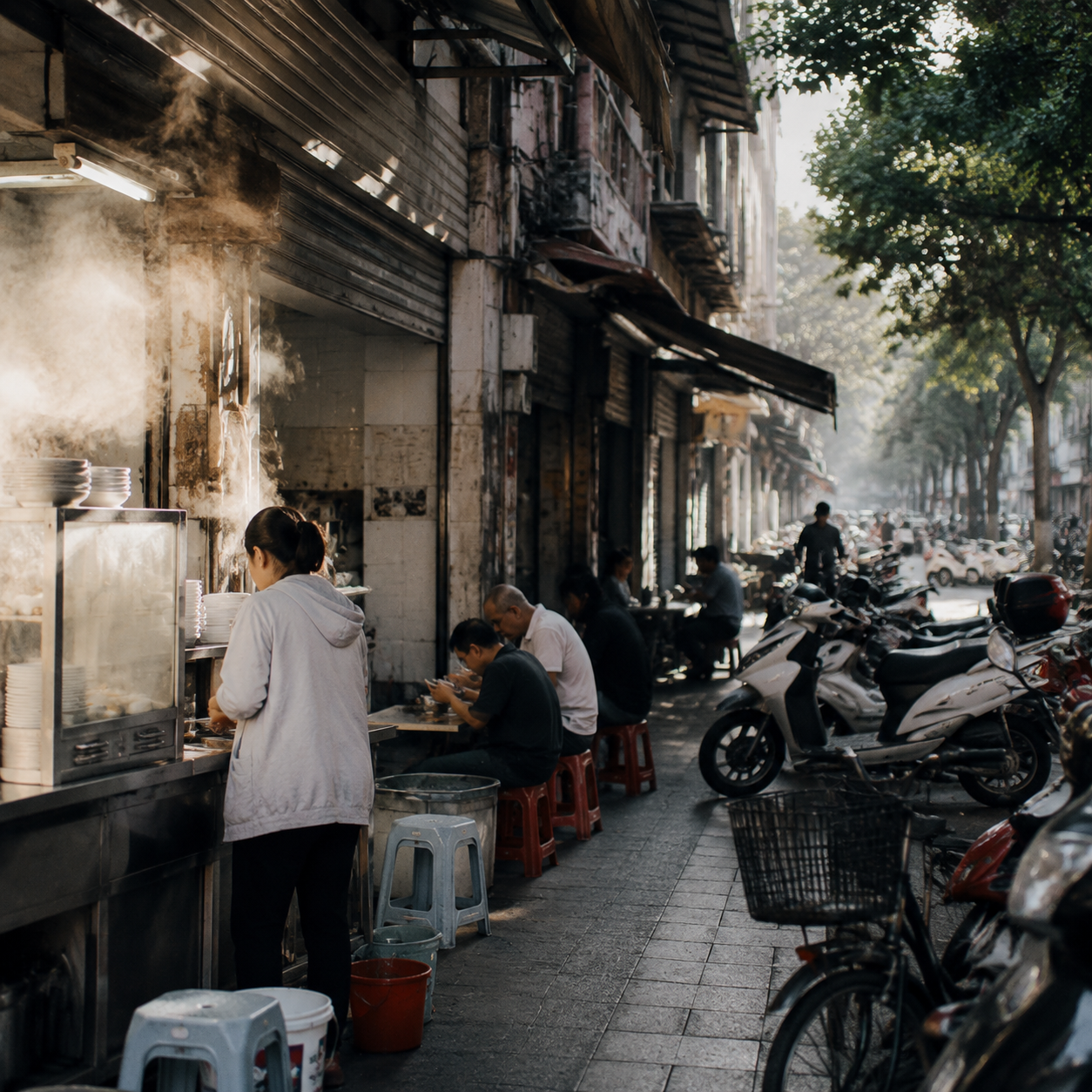
早上七点半,广州的街已经不是刚醒,而是已经往前走了一小截。骑楼下卷闸门半开,塑料凳被人从店里拖出来,路边有电动车停得很紧,豆浆热气往上冲的时候,会把玻璃柜蒙出一层薄白。对第一次来中国的外国游客来说,这种城市不是靠“一个著名景点”先把人抓住,而是靠最普通的街口先把你卷进去。你站在那里,先听见勺子碰碗、店员催单、雨后轮胎压过地面的声音,然后才意识到,广州最强的地方也许根本不是哪一个单点,而是整座城从一大早就开始有秩序地冒热气。
By seven-thirty in the morning, Guangzhou is not just waking up. It has already moved a little way into the day. Under the arcade streets, half-open shutters rise one by one, plastic stools are dragged outside, electric scooters are packed close to the curb, and the steam from soy milk leaves a pale layer across the glass. For a foreign traveler coming to China for the first time, this is not the kind of city that grabs attention through a single famous attraction. It pulls people in through ordinary corners first. One hears spoons hit bowls, shop staff calling out orders, tires crossing damp ground after rain, and only then realizes that Guangzhou’s real strength may not lie in one point at all, but in the ordered heat with which the whole city begins to move.
很多外部内容写广州,第一反应总是吃。这个反应当然没错,因为广州确实很会用吃把人留下来。可如果只停在“东西很好吃”这一层,文章就会变薄。真正值得写清楚的,是为什么在广州,吃从来不是一个独立环节。你不是先看完城市,再找地方坐下;你是通过吃这件事去读这座城的节奏、方向、密度和停顿点。也正因为如此,广州特别适合被写成第三人称报道体,而不是单纯的美食榜单。
In much outside content, the first reaction to Guangzhou is always food. That reaction is understandable, because Guangzhou really does know how to keep people through eating. But if the writing stops at “the food is very good,” the article becomes thin. What deserves real explanation is why, in Guangzhou, eating is never an isolated activity. One does not finish seeing the city and then sit down somewhere. One reads the city through eating: through its rhythm, direction, density, and pause points. That is exactly why Guangzhou suits a third-person reported format far better than a simple food ranking.
在广州,路线和饭点本来就是同一件事 / In Guangzhou, Route and Meal Time Are Already the Same Thing
广州不像一些景区型城市,路线和吃饭是分开的。你到了某个地标,拍完照,再去找一家“值得打卡”的店,这是一种逻辑;可广州更像另一种完全不同的结构:一条路之所以成立,很大程度上就是因为你知道什么时候该坐下、什么时候只该边走边吃、什么时候最好借一顿饭把身体和情绪压回稳定。早茶不是“顺便安排的早餐”,它往往是整天路线的起手势。你从茶楼里出来,对这座城的密度、声音和人流判断会完全不一样。
Guangzhou does not behave like a scenic city where route and food live in separate compartments. In some places, one reaches a landmark, takes the photographs, and only then searches for a restaurant worth checking in at. Guangzhou follows a very different structure. A route works here largely because one knows when to sit down, when to eat while moving, and when a meal should be used to bring body and mood back into balance. Morning tea is not just breakfast slipped into the schedule. It is often the opening gesture of the whole day. After leaving the teahouse, one’s reading of density, sound, and pedestrian flow changes completely.
这也是很多国外博主写广州时最容易忽略、但又最值得 TravelCN 接住的一点:食物不是旅程的装饰,它是组织旅程的方法。哪怕是最普通的一碗面、一份肠粉、一杯糖水,只要它出现的位置对了,它就不只是“吃得不错”,而是在重新安排后面半天的脚力和耐心。对普通读者来说,这种方法比“本地十家必吃店”更有用,因为它直接决定城市会不会被你走顺。
That is also one of the most easily overlooked yet most valuable things for TravelCN to catch when foreign creators write about Guangzhou: food is not decoration added to the journey. It is one of the methods by which the journey is organized. Even a plain bowl of noodles, a plate of rice rolls, or one dessert soup can become more than a pleasant meal if it appears in the right position. It can reset the legs and the patience needed for the rest of the day. For ordinary readers, that method is far more useful than a list of ten famous places to eat, because it directly determines whether the city will eventually be walked smoothly or not.
骑楼、市场、茶楼,三种空间把广州读法拆开了 / Arcade Streets, Markets, and Teahouses Divide Guangzhou into Three Ways of Reading It

广州最有意思的地方之一,是它不会只用一种空间说话。骑楼是广州的步行语法。你走在下面,不需要一直暴露在太阳里,也不会完全和街边生意隔开。市场则是广州的密度语法:气味、湿气、塑料袋摩擦声、砧板声和人流会把你很快拖进一种“城市正在工作”的现实感。茶楼又完全不一样,它像一块能把整个上午节奏慢慢按住的缓冲区。把这三种空间接起来,才是广州真正耐走的原因。
One of the most interesting things about Guangzhou is that it does not speak through only one kind of space. The arcade streets form its walking grammar. Under them, the traveler is neither fully exposed to the sun nor separated from the businesses along the edge. Markets form Guangzhou’s grammar of density: smell, humidity, plastic bags brushing against one another, chopping boards, and crowd movement quickly drag a person into the reality that the city is actively working. Teahouses are something else again. They function like a buffer zone capable of gently slowing the whole morning down. It is the connection between these three spaces that makes Guangzhou so walkable over time.
如果一篇外部内容只把市场拍成“有烟火气”,只把骑楼拍成“复古”,只把茶楼拍成“当地特色体验”,那其实还没写到广州的核心。广州真正的强处在于,这些空间不是分散的景点,它们共同构成了一种会自己换挡的路线。你先被密度推快,然后被茶楼按慢,再被骑楼下的步行线重新拉回街上。读者只要懂了这一点,就会明白为什么广州不该被写成一个只会“吃”的城市。
If outside content treats the market only as atmosphere, the arcade streets only as nostalgia, and the teahouse only as a local experience, then it still has not reached Guangzhou’s core. Guangzhou’s real strength lies in the fact that these are not isolated attractions. Together they form a route that shifts its own gears. First the density speeds the traveler up, then the teahouse slows everything back down, and finally the walking line beneath the arcades draws the traveler back into the street. Once a reader understands that pattern, it becomes clear why Guangzhou should never be reduced to a city that merely knows how to feed people.
这座城最留人的时刻,往往发生在你不再急着找“亮点”的时候 / The Moments That Keep People in Guangzhou Often Begin Once They Stop Hunting for Highlights
很多第一次来中国的人,到一座陌生城市都会有同一种本能:赶紧找出这里最值得看、最值得吃、最值得发出去的东西。广州偏偏不太奖励这种急切。你如果一直用“亮点搜寻模式”看它,会觉得这里缺少一下子压住你的单点;可你只要把心态稍微往后放一点,这座城会开始以另一种方式回报你。不是突然出现的巨型景观,而是普通街口持续不断的小满足:一扇门、一桌人、一碗热的东西、一段雨后反光的路。

Many first-time visitors to China carry the same instinct into every unfamiliar city: quickly identify what is most worth seeing, eating, and posting. Guangzhou does not strongly reward that impatience. If one keeps using highlight-hunting mode, the city may even appear to lack a single overwhelming point. But if the mind steps back slightly, Guangzhou begins to return value in a different way. Not through a gigantic surprise, but through a continuous sequence of smaller satisfactions: one doorway, one crowded table, one hot dish, one stretch of road reflecting after rain.
这也解释了为什么很多国外博主明明是来拍“城市内容”,最后却会留下一种更生活化的叙事余味。广州不是不适合大声写,它只是更适合慢慢被写厚。它让读者最后记住的,不是“我今天完成了哪些打卡点”,而是“原来一座中国大城可以这样把人稳稳接住”。从 TravelCN 的角度看,这是一种特别值钱的路线属性,因为它能真正降低第一次来华读者的进入压力。
That also explains why many foreign creators, even when they arrive intending to film “city content,” often leave behind a more lived-aftertaste in their storytelling. Guangzhou is not unsuitable for dramatic writing. It is simply a city that grows thicker when written slowly. What readers remember in the end is not “I checked off these places today,” but “so this is how a major Chinese city can receive a traveler without panic.” From the perspective of TravelCN, that is an unusually valuable route quality, because it truly lowers the pressure felt by first-time visitors entering China.
最后真正该记住的,不是店名,而是节奏判断 / What Should Finally Be Remembered Is Not the Shop Name, but the Rhythm Judgment
店名当然重要,吃什么当然也重要,但对第一次来中国的人来说,更稀缺的能力其实是判断:什么时候该坐下,什么时候该继续走,什么时候该让一条街自己说话,什么时候该让一顿饭把前面半天重新整理好。广州最强的地方,不是它永远会把“最好吃的那一口”递到你面前,而是它会不断教你一件事——城市和饮食从来不是两条线,它们本来就是一条。
The names of restaurants matter, and what to eat certainly matters too. But for a first-time visitor to China, the scarcer skill is judgment: when to sit down, when to continue walking, when to let a street speak for itself, and when to let one meal reorganize the previous half-day. Guangzhou’s greatest strength is not that it constantly places the single best bite in front of the traveler. It is that it keeps teaching the same lesson: city and food are not two separate lines. They have always been one.
- 中国购物砍价技巧:市场景区与网购 | Bargaining in China: Markets, Scenic Spots & Online Shopping
- 清晨到达北京,我才知道第一天行程不能排太满 | Arriving in Beijing at Dawn Taught Me Not to Overpack the First Day
- 夏季避暑胜地:高原与海岛 | Summer Escapes: Plateaus & Islands
- 我在苏州园林里学会先找一把椅子坐下,再开始拍照 | In Suzhou Gardens, I Learned to Find a Place to Sit Before Starting to Take Photos
- 天还没热起来,长安早市已经把一天的味道摆出来了 | Before the Heat Rose, Chang'an's Morning Market Had Already Laid Out the Flavor of the Day
- 我在大理的风里,重新听见自己说话 | In Dali’s wind, I heard myself speak clearly again
- 在吐鲁番的热度里寻找阴影和葡萄 | Seeking Shade and Grapes in Turpan's Heat
- 中国社交礼仪速成:称呼、送礼与餐桌文化 | Chinese Social Etiquette: Greetings, Gifts & Dining
- 从灰色水泥到绿荫长廊:中国城市道路绿化的二十年蜕变 | From Grey Concrete to Green Canopies: Two Decades of Urban Road Greening in China
- 我们一家在上海去朱家角的五月雨天里学会,短途旅行也能像长假一样松弛 | A Rainy Day Trip from Shanghai to Zhujiajiao Taught Our Family That Even a Short Outing Can Feel Spacious
Comments (0)