
杭州西湖边那阵风,提醒我热门景区也要会躲人流 | A Breeze by West Lake Reminded Me How to Dodge Crowds at Famous Attractions
杭州西湖边那阵风,提醒我热门景区也要会躲人流 | A Breeze by West Lake Reminded Me How to Dodge Crowds at Famous Attractions
到杭州的第一天下午,我差点把西湖看成一条缓慢移动的队伍。断桥上有人举着手机,有人推着婴儿车,有人把伞斜在肩头,伞尖在潮湿的空气里轻轻碰撞。我站在湖边,原本想拍一张“终于到了”的照片,却先被人潮推着往前走了十几步。那一刻我明白,热门景区最先给人的不是风景,而是节奏;如果你不学会调整自己的步伐,再美的湖也会变成一段拥挤的通道。
On my first afternoon in Hangzhou, West Lake almost looked less like a lake than a slow-moving line. People lifted phones on the Broken Bridge, parents pushed strollers, umbrellas leaned against shoulders and tapped softly in the damp air. I stood by the water, hoping for a simple “I am finally here” photograph, but the crowd carried me more than ten steps before I even raised my camera. In that moment I understood that a famous attraction first offers not scenery, but rhythm; if you do not adjust your own pace, even a beautiful lake becomes a crowded passage.
那阵风是从白堤方向吹来的。它没有多凉,却把湖面吹出一层细小的皱纹,也把我从“必须马上看完”的焦虑里吹醒。我退到一棵树下,先不急着找最佳机位,只看人从哪里涌来,又往哪里散去。很快我发现,湖边的拥挤并不是均匀的,它像潮水,有涨落,有旋涡,也有几乎被忽略的缝隙。会玩热门景区的人,并不是体力更好,而是愿意先观察几分钟。
The breeze came from the direction of Bai Causeway. It was not especially cool, yet it wrinkled the lake surface and woke me from the anxiety of “I must see everything immediately.” I stepped back under a tree, stopped chasing the best photo spot, and simply watched where people poured in and where they thinned out. Soon I noticed that crowding along the lake was not evenly spread. It behaved like tidewater, with rises, drops, whirlpools, and narrow gaps almost nobody noticed. Travelers who handle famous places well are not necessarily stronger; they are willing to observe for a few minutes first.
我那天给自己做的第一个调整,是把“打卡顺序”改成“人流顺序”。地图上写着断桥、白堤、平湖秋月、孤山、苏堤,很多人会照着名气从高到低走,于是最响亮的名字最容易堵住。我没有立刻挤回断桥,而是顺着湖边往稍远处走,走到树影更密、长椅更多的地方。那里仍然是西湖,却少了被催促的感觉。风从柳枝之间穿过,船在远处慢慢转弯,我才真正开始看见湖。
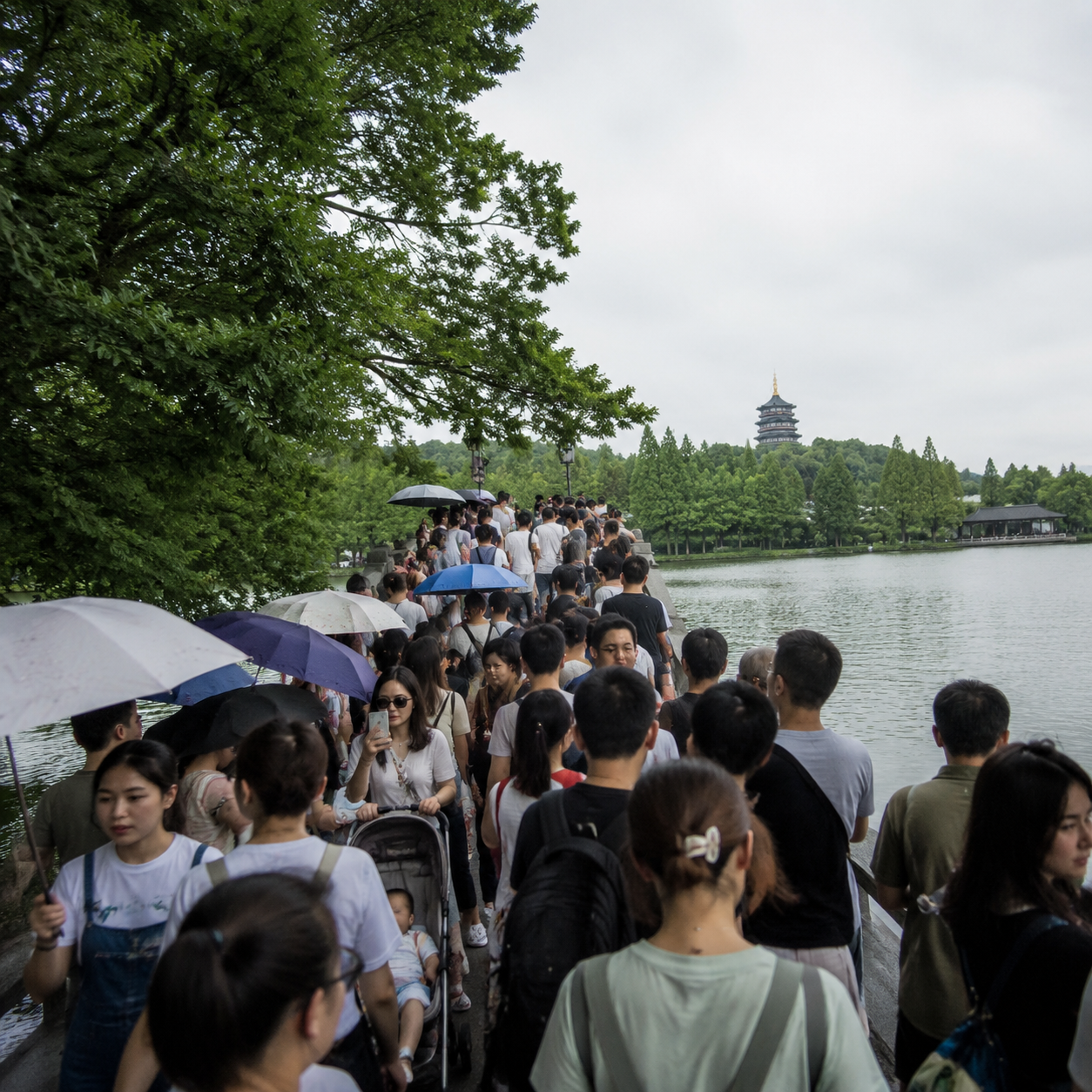
My first adjustment that day was to replace a checklist route with a crowd-flow route. The map displayed Broken Bridge, Bai Causeway, Autumn Moon over the Calm Lake, Gushan, and Su Causeway, and many visitors followed the names from most famous to less famous, which made the loudest names the most congested. Instead of squeezing back onto Broken Bridge, I walked farther along the water to a place with denser shade and more benches. It was still West Lake, but it no longer felt hurried. Wind slipped through willow branches, boats turned slowly in the distance, and only then did I begin to see the lake.
热门景区的拥堵常常不是因为地方太小,而是因为大家在同一时刻想做同一件事:在牌子前合影,在桥头停下,在入口附近确认路线,在最短的路线上追赶所谓精华。只要你把目标从“站到最中间”改成“找到能停留的边缘”,体验就会立刻不同。边缘不是次要位置,它有时更能保留风景的呼吸。西湖的水面不只属于断桥正中,也属于那些被树影切成碎片的小角度。
Crowding at famous attractions is often not caused simply by limited space, but by everyone trying to do the same thing at the same moment: pose before the sign, pause at the bridgehead, check routes near the entrance, and chase the so-called highlights along the shortest line. Once you change the goal from “stand in the very center” to “find an edge where I can stay,” the experience changes immediately. The edge is not an inferior position; sometimes it preserves the breathing room of the scene. West Lake does not belong only to the middle of the Broken Bridge, but also to small angles cut into pieces by tree shade.
第二个调整,是把时间看得比景点更重要。下午三四点是许多人抵达后的第一轮兴奋,也是团队游、散客、临时来散步的人重叠的时候。我没有硬扛那段高峰,而是找了家离湖不远的小店喝茶,顺便把手机电量补满。等太阳斜下来,人群的方向开始变化:赶行程的人往出口走,等夜景的人还没完全聚拢,湖边出现短暂的松动。那半小时比我原计划多出来的三个景点都值得。
My second adjustment was to treat timing as more important than the attraction itself. Around three or four in the afternoon, many visitors arrive in their first wave of excitement, and tour groups, independent travelers, and local walkers overlap. I did not try to endure that peak. I found a small tea shop near the lake, rested, and charged my phone. When the sun began to lean westward, the direction of the crowd changed: those chasing itineraries moved toward exits, while people waiting for night views had not fully gathered. A brief looseness appeared by the water. That half hour was worth more than three extra sights on my original plan.
休息并不是浪费旅行时间,尤其在热门景区。人在疲惫时会失去判断力,只会跟着最近的人走,哪里排队就以为哪里最重要,哪里喧闹就以为哪里最热闹。坐下来喝一杯水,重新看一眼地图,甚至把手机收起来听几分钟环境声,都是在恢复自己的选择能力。旅行里最珍贵的自由,常常不是想去哪就去哪,而是不被人潮替你决定去哪。
Rest is not wasted travel time, especially in famous places. When tired, people lose judgment and simply follow the nearest bodies; wherever there is a line seems important, and wherever there is noise seems lively. Sitting down for a drink, checking the map again, or even putting the phone away to listen to the surroundings for a few minutes can restore the ability to choose. The most precious freedom in travel is often not the ability to go anywhere, but the ability not to let the crowd decide for you.
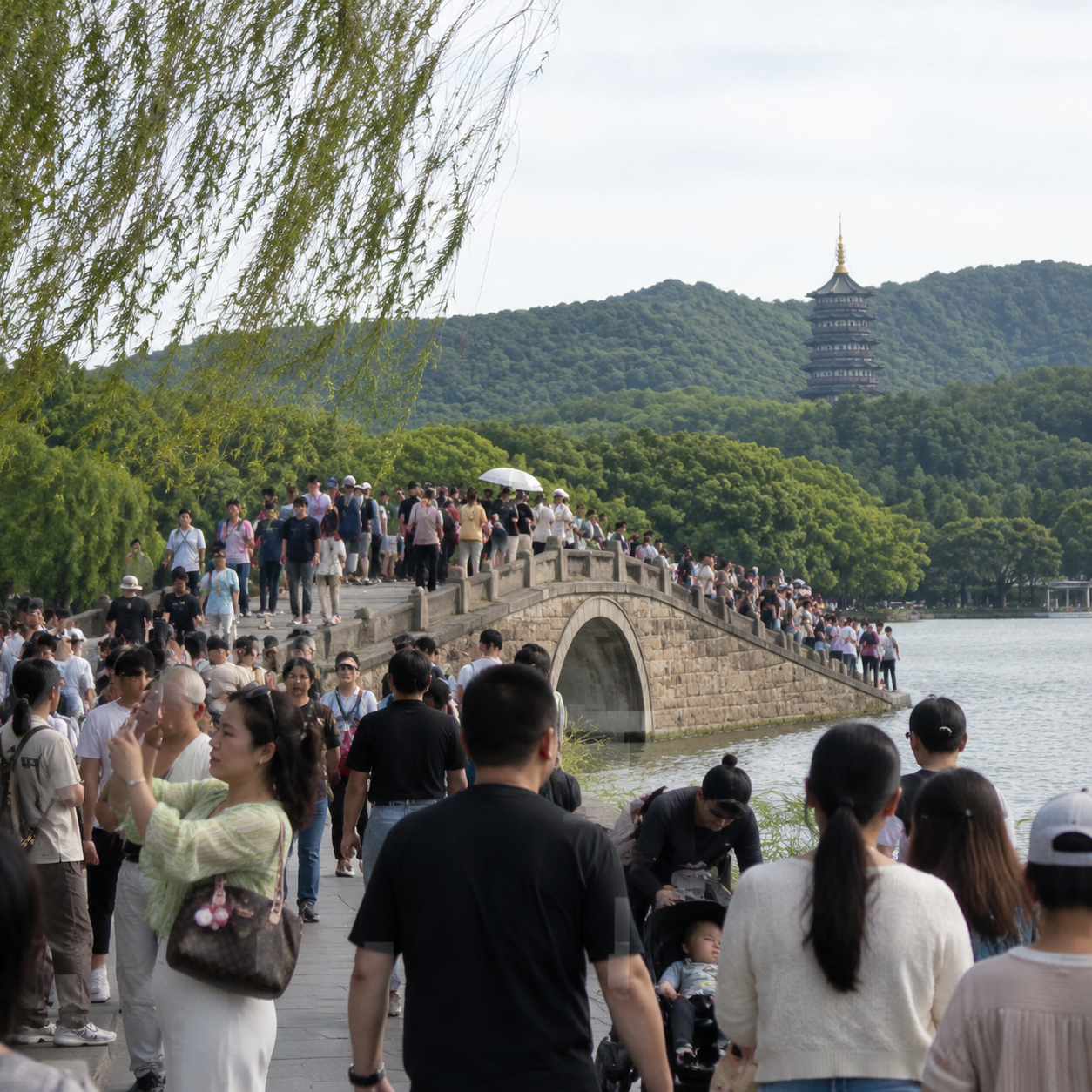
第三个调整,是给路线留一个“反向时刻”。大多数人从入口向核心走,从核心向下一个热门点走,路线像一条被反复描粗的线。我在白堤上走到一半,故意回头看。回头之后,湖面忽然开阔,刚才拥挤的桥变成了远处的一段弧线,拍照的人也成了画面的一部分。很多景区的美,不在你迎面追逐它的时候出现,而在你走过以后转身的那一秒安静下来。
My third adjustment was to leave a “reverse moment” in the route. Most people move from the entrance toward the core, and from the core toward the next famous point, making the route look like a line traced over again and again. Halfway along Bai Causeway, I deliberately turned around. After turning back, the lake suddenly opened up, the crowded bridge became a distant curve, and the people taking photos became part of the image. Much of a scenic area’s beauty does not appear while you chase it head-on, but in the quiet second after you have walked past and looked back.
我也开始避开那些会制造停顿的细节:狭窄转角、台阶起点、售卖窗口、路口指示牌、热门题字旁边的空地。它们看起来只是小点,实际上会让流动的人群突然打结。如果必须经过,我会提前把水杯、手机、票据都收好,不在结点处停下来整理。不要小看这个动作,它能让你少被后面的人催,也少挡住别人。景区里的从容,有一部分来自对公共空间的体谅。
I also began avoiding details that create sudden stops: narrow corners, the foot of steps, sales windows, signboards at intersections, and open patches beside famous inscriptions. They look like small spots, but they can tie moving crowds into knots. If I had to pass through one, I put away my bottle, phone, and tickets in advance instead of stopping there to organize things. This small habit matters. It keeps you from being pushed by people behind you and from blocking others. Calmness in a scenic area partly comes from consideration for shared space.
那天傍晚,我在曲院风荷附近遇到一位带母亲旅行的年轻人。他推着轮椅,原本想赶到苏堤看夕阳,可前方的路被拍婚纱照和等车的人堵得很慢。他有些急,母亲却笑着说:“湖又不会跑。”他们最后停在一处不算有名的水边平台,夕阳没有正对着他们,却把荷叶边缘照得发亮。年轻人给母亲拍照时,表情终于松了下来。那一幕让我记了很久。
That evening near Quyuan Fenghe, I met a young man traveling with his mother. He was pushing her wheelchair and had planned to hurry to Su Causeway for sunset, but the road ahead slowed under wedding shoots and people waiting for rides. He looked anxious, while his mother smiled and said, “The lake will not run away.” They finally stopped at a waterside platform that was not especially famous. The sunset did not face them directly, yet it lit the edges of the lotus leaves. When the young man photographed his mother, his expression finally softened. I remembered that scene for a long time.
热门景区最容易让人误会的一点,是把“来过”当成“抵达”。其实抵达需要时间,它包括你从交通站出来后的迷茫,包括你第一次被人群冲散后的停顿,也包括你发现某个小角落足够安静时的决定。西湖那么出名,反而更需要你放慢一点,因为名气会替风景制造噪声。你要把那些噪声拨开,才知道自己到底被什么打动。
One misunderstanding famous attractions easily create is confusing “I have been here” with “I have arrived.” Arrival actually takes time. It includes the confusion after leaving the transport stop, the pause after the crowd first scatters your attention, and the decision you make when a small corner proves quiet enough. Because West Lake is so famous, it requires you to slow down even more, since fame creates noise around scenery. You have to brush that noise aside to know what truly moves you.
如果只能给第一次去西湖的人一个策略,我会说:不要从照片开始,要从判断开始。先判断当天的天气、体力、同行者状态和人流方向,再决定从哪里进入、在哪里停留、什么时候离开。晴天要留意遮阴,雨天要避开湿滑石阶,节假日要把厕所和出口位置提前记住,带老人孩子则宁愿少走一段,也要保留随时撤退的余地。好的路线不是最长的路线,而是能让每个人都还愿意抬头看风景的路线。
If I could offer one strategy to first-time visitors to West Lake, I would say: do not begin with photographs; begin with judgment. First judge the weather, your energy, your companions’ condition, and the direction of crowd flow, then decide where to enter, where to pause, and when to leave. On sunny days, note shade. On rainy days, avoid slippery stone steps. On holidays, remember restrooms and exits in advance. With older people or children, it is better to walk less while preserving the option to retreat at any time. A good route is not the longest route, but one that leaves everyone still willing to look up at the scenery.
交通也要反着想。很多人只关心怎么到达最近的入口,却忽略离开时的压力。热门景区的崩溃感常常发生在最后十分钟:天黑了,脚酸了,车叫不到,导航显示步行距离比想象中长。我的办法是进景区前就选好两个离开点,一个是理想出口,一个是提前撤退出口。这样当人群突然变密、天气改变或同行者累了,你不用临时在路边做困难决定。提前给自己留后门,旅行就不会被最后一段路毁掉。
Transport also deserves reverse thinking. Many people focus only on reaching the nearest entrance and ignore the pressure of leaving. The sense of collapse at a famous site often arrives in the final ten minutes: it is dark, feet ache, cars are hard to call, and navigation shows a longer walk than expected. My method is to choose two exit points before entering: an ideal exit and an early-retreat exit. Then, if the crowd thickens, the weather changes, or a companion gets tired, you do not have to make a difficult roadside decision. Leave yourself a back door in advance, and the last stretch will not ruin the trip.
拍照这件事,也可以帮助你避开人流,而不是把你困在人流里。不要只找最满的背景,试着找更干净的层次:一段栏杆、一枝垂柳、一块被夕光擦亮的水面。把人物放在画面边上,给湖留出空间,照片反而更像旅行,而不是证明。最拥挤的地方通常会让每个人拍出相似的照片,稍微侧开一点,你拍到的才可能是自己的西湖。
Photography can also help you avoid crowds instead of trapping you in them. Do not search only for the fullest background; look for cleaner layers: a stretch of railing, a hanging willow branch, a piece of water polished by evening light. Place the person near the edge of the frame and leave room for the lake, and the photo will feel more like travel than evidence. The most crowded spots usually make everyone take similar pictures. Step slightly aside, and the West Lake you capture may become your own.
我在湖边待到灯色慢慢亮起。远处楼影落进水里,游船的声音变低,白天急着赶路的人少了,散步的人多了。可我没有因此觉得夜晚一定比白天好。真正改变体验的,不是某个神奇时段,而是我终于不再把自己交给默认路线。风还在吹,吹过我的袖口,也吹过那些刚抵达的人。他们站在入口处张望,脸上带着我下午也有过的急切。我很想告诉他们,先别急,湖在旁边等着。
I stayed by the lake until the lights slowly came on. Reflections of buildings fell into the water, the sound of boats softened, people rushing through daytime routes decreased, and walkers increased. Yet I did not conclude that night was automatically better than day. What truly changed the experience was not a magical hour, but the fact that I stopped handing myself over to the default route. The wind was still blowing, across my sleeve and across the faces of people who had just arrived. They stood near the entrance looking around with the same urgency I had felt that afternoon. I wanted to tell them: do not hurry yet; the lake is waiting beside you.
后来我把这次经验整理成几个简单原则。先看人流,再看地图;先保体力,再赶景点;先找出口,再走深入;先观察边缘,再冲向核心。它们听起来不浪漫,却能把旅行从混乱里救出来。热门景区不是不能去,也不是去了就只能忍受拥挤。你需要的不是躲开所有人,而是在许多人同时到来时,仍然保留一点自己的节奏。
Afterward I shaped the experience into a few simple principles. Read the crowd before the map; protect energy before chasing sights; locate exits before going deep; observe the edges before rushing toward the core. They may not sound romantic, but they can rescue travel from confusion. Famous attractions are not places to avoid, and visiting them does not mean merely enduring crowds. What you need is not to escape everyone, but to keep a little of your own rhythm when many people arrive at once.
西湖给我的提醒,正是这阵风带来的:风景不会因为你慢下来就减少,反而会因为你不再被推着走而变多。你可能少站一个热门点,少拍一张标准照,少发一条即时动态,却多听见水声,多看见树影,多记住一个陌生人的笑。旅行不是在拥挤中证明自己没有错过,而是在有限的时间里,找到一种不辜负自己的抵达方式。
The reminder West Lake gave me came with that breeze: scenery does not decrease because you slow down; it often increases because you are no longer being pushed along. You may stand at one fewer famous spot, take one fewer standard photo, and post one fewer instant update, but you may hear more water, see more tree shadows, and remember a stranger’s smile. Travel is not about proving in a crowd that you missed nothing. It is about finding, within limited time, a way of arriving that does not betray yourself.
- 第一晚住进朋友家前,我先把住宿登记这件事弄明白了 | Before Staying at a Friend’s Place in China, I Learned How Accommodation Registration Really Works
- 云南大理到丽江:慢游洱海边的五天四夜 | Dali to Lijiang, Yunnan: A Slow 5-Day Journey Along Erhai Lake
- 我在广州真正走顺的那天,是从一顿饭开始给路线排节奏的 | The Day Guangzhou Finally Became Easy for Me Was the Day I Let a Meal Set the Rhythm of the Route
- 一根提线停在掌心时,我在泉州听见了海风 | When a Puppet String Rested in a Palm, I Heard the Sea Wind in Quanzhou
- 天黑了才是正片开始 | When the Sun Sets, the Real Show Begins — China's Night Economy
- 把天气留在行程里:秋天去喀纳斯的公路节奏 | Leave Weather in the Itinerary: An Autumn Road Rhythm for Kanas
- 南京最动人的地方,常常不是讲出来的历史,而是人今天还在怎么顺手用它 | What Moves Me Most in Nanjing Is Not History as Told but the Way People Still Use It Today
- 中国民间艺术:剪纸、皮影与年画 | Chinese Folk Art: Paper-Cutting, Shadow Puppets & New Year Prints
- 很多人第一次敢把中国行程定下来,往往是因为先在上海找到了顺手感 | Many People Finally Commit to a China Trip Because Shanghai Gives Them a First Sense of Ease
- 剪纸日记|在红纸与窗光之间学习耐心 | Paper-Cutting Diary | Learning Patience Between Red Paper and Window Light
Comments (0)