
我怎么把自己练成一个“半个中国人”:从排队、问路到饭桌节奏的融入笔记 | How I Trained Myself into a Half-Local in China: Notes on Queues, Directions, and Table Rhythm
我怎么把自己练成一个“半个中国人”:从排队、问路到饭桌节奏的融入笔记 | How I Trained Myself into a Half-Local in China: Notes on Queues, Directions, and Table Rhythm
导语 | Lead
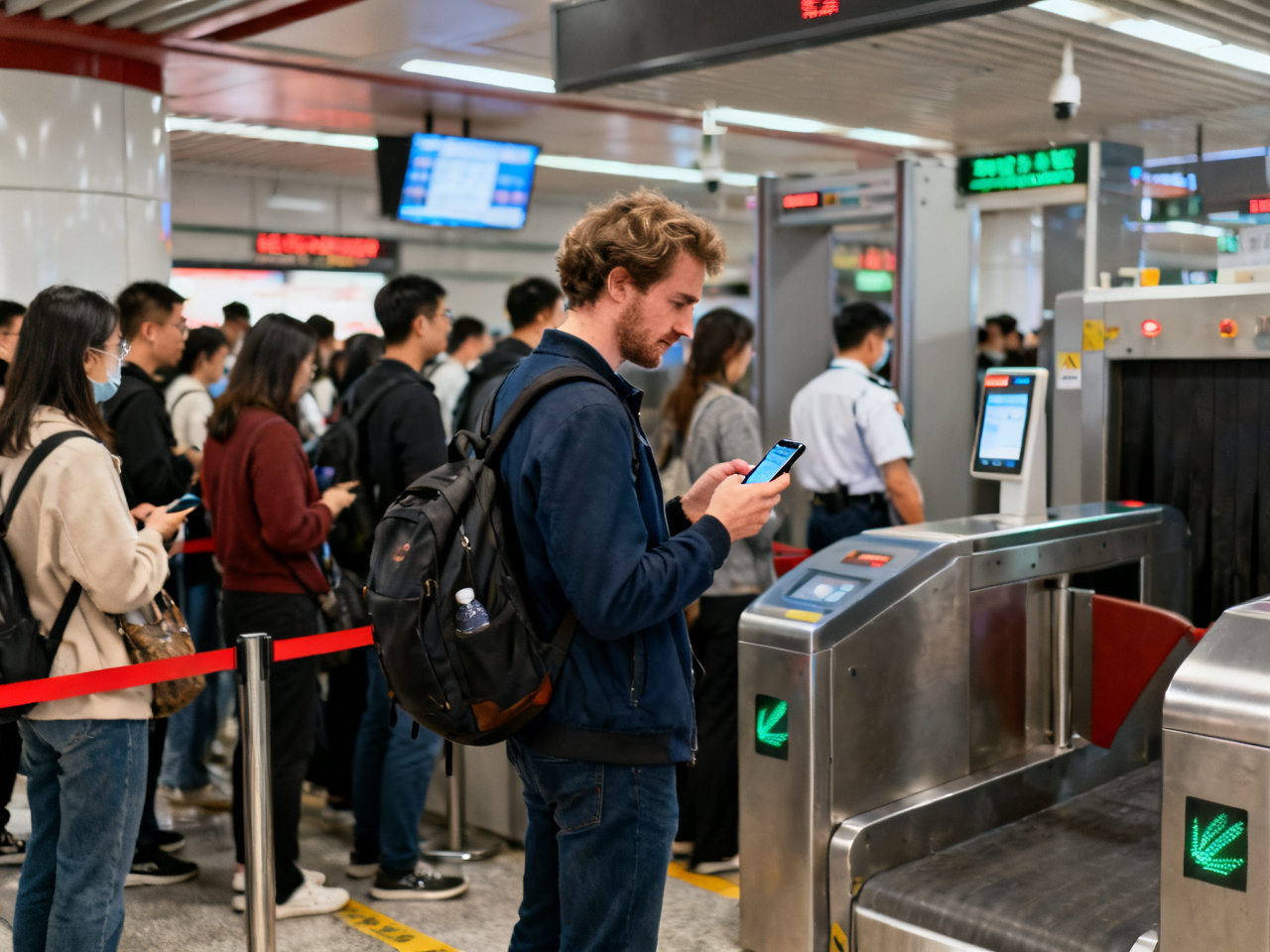
那天是周二早上七点四十,我站在上海一座地铁站的安检口前,左手拿着手机,右肩背着包,水杯卡在侧袋里,身后的人已经自然地往前挪了半步。我刚来中国时,总以为“融入”主要靠语言:能说几句你好、谢谢、多少钱,就算迈进门槛了。后来我发现,真正让我慢慢不再像游客的,不是词汇量,而是身体学会了节奏——什么时候靠边,什么时候往前,什么时候先让别人说完,什么时候不急着拒绝一份好意。
It was 7:40 on a Tuesday morning, and I was standing in front of the security check at a Shanghai metro station, phone in my left hand, backpack on one shoulder, water bottle stuck in the side pocket. The people behind me had already shifted forward by half a step in that smooth, wordless way city commuters do. When I first arrived in China, I thought “blending in” was mainly about language. If I could say hello, thank you, and how much, I thought I had crossed the threshold. Later I realized what made me look less like a visitor was not vocabulary. It was rhythm. My body had to learn when to step aside, when to move forward, when to let others finish, and when not to refuse kindness too quickly.
我现在当然还是外国人,脸一转过去,口音一开口,别人还是听得出来。但有一段时间,我突然意识到:我已经不会在早餐店门口愣很久,不会在站台上堵住别人,也不会在饭桌上总是抢着说“没事没事你们先来”。这种变化不显眼,却很真实。它让我在中国获得的安全感,也不是一种抽象口号,而是来自秩序、边界、互相配合这些日常细节。
Of course I am still visibly foreign. People can tell the moment I turn my face or open my mouth. But at some point I noticed something had changed: I no longer froze at the entrance of breakfast shops, no longer blocked people on platforms, and no longer rushed to say “no, no, you first” at every table. The change was subtle but real. And the safety I began to feel in China did not come from slogans or grand narratives. It came from order, boundaries, and the tiny daily acts of mutual coordination.
如果你也以为“融入中国”只要会几句中文就够了,我想用我自己的学习日志告诉你:很多时候,先学会观察,比先学会表达更重要。关于高频交通场景,我以前也受过外国人在中国用高铁这篇文章的启发;而在城市里理解通勤节奏,我后来也反复想到中国城市通勤怎么选里讲的“别和人流对着干”。这篇文章,是我把这些原则真正练进生活里的版本。
If you also think that “fitting into China” mainly means speaking a bit of Chinese, I want to offer my own learning log as a counterexample: often, learning to observe matters more than learning to perform. For high-frequency transport scenes, I had already learned from 外国人在中国用高铁. And when it came to understanding commuter rhythm, I kept thinking about the idea in 中国城市通勤怎么选: do not move against the flow unless you have to. This article is the version of those principles that finally entered my muscles.
第一课:先学会看队伍,而不是先证明自己会排队 | Lesson One: Learn to Read a Queue Before Trying to Perform Good Queueing
我第一次在中国早高峰进地铁站时,最大的错误不是插队,而是“停顿”。我在入口前停了一秒,想确认安检口、扫码口、进站方向,结果后面的人流像水一样从我两边绕开。没有人凶我,也没有人训我,但我立刻感觉自己像一块放错位置的石头。
The first mistake I made during morning rush hour in China was not cutting in line. It was hesitating. I stopped for one second at the entrance to confirm where security was, where the scan gate was, and which direction I should go. The crowd behind me simply flowed around me like water. Nobody yelled. Nobody scolded me. But I instantly felt like a stone placed in the wrong part of a stream.
后来在一个连续三周都要去同一片办公区办事的阶段,我开始故意每天提早十分钟出门,只为了观察。保安通常站在哪个角度看包?大家拿出手机是在安检前还是安检后?背包是背着过还是提前拎下来?我慢慢发现,中国很多城市的队伍看似快,其实不是因为大家“着急”,而是因为大家默认知道下一步要做什么。
Later, during a three-week period when I had to go to the same office district every day, I began leaving ten minutes early on purpose just to observe. Where did the guard usually stand? Did people take out their phones before security or after it? Did they keep backpacks on or take them down in advance? I slowly realized that queues in many Chinese cities look fast not because people are frantic, but because most people already know the next move.
我给自己定了第一个练习动作:排到我前面还有三个人时,就把下一步要用的东西准备好。 这听起来非常小,但效果惊人。手机提前亮码,包拉链别在临到机器前才找,水杯提前拿稳,过闸机后立刻往前走两步。你不是为了表现“专业”,而是为了不占用别人的节奏。
So I gave myself my first practice action: when there are still three people in front of me, prepare the item I’ll need next. It sounds tiny, but the effect was dramatic. Brighten the code on my phone before I reach the scanner. Don’t fumble with a zipper only when I am at the machine. Hold the bottle securely. After passing the gate, take two extra steps forward instead of stopping there. The goal is not to look professional. The goal is not to borrow time from other people’s rhythm.
第二课:公共空间的边界,往往写在脚步和停顿里 | Lesson Two: Boundaries in Public Space Are Often Written in Footsteps and Pauses
我以前在欧洲城市生活时,习惯在路边边走边想事情,忽快忽慢也没人太在意。但在中国的大城市,尤其是换乘通道、扶梯口、商场门口这种高流量区域,边界感是一种集体默契。你可以慢,但最好慢在边上;你可以停,但最好停在不挡人的地方。
In the European cities where I used to live, I was used to walking while daydreaming, speeding up and slowing down without much consequence. But in Chinese megacities—especially in transfer corridors, escalator exits, and shopping mall entrances—boundary awareness is a form of collective tacit agreement. You can be slow, but be slow at the side. You can stop, but stop where you do not interrupt the current.
有一次在杭州东站,我刚下扶梯就站住了,因为我没听清朋友发来的语音。后面一个阿姨没碰我,只是很轻地说了一句:“往前一点哦。”那一刻我忽然明白,中国很多秩序感不是靠激烈提醒建立的,而是靠大家默认出口要腾空、入口要顺畅、转角要让视线先过去。
Once at Hangzhou East Railway Station, I stopped the moment I stepped off an escalator because I hadn’t fully heard a voice message from a friend. A middle-aged woman behind me did not bump into me. She simply said softly, “A little forward, please.” In that moment I understood something: a lot of order in China is not maintained by dramatic confrontation, but by shared expectations—that exits should clear quickly, entrances should flow smoothly, and corners should remain visible.
于是我给自己定了第二个练习动作:任何需要停下来的时刻,先侧身,再低头。 也就是先把身体移到边缘,再看地图、回消息、找耳机。这个动作后来救了我很多次,不只是避免挡路,更让我减少了慌乱。因为当你站在边上,你的脑子也会一起从“被人流追着走”切换成“我有余地判断”。
That led to my second practice action: whenever I need to stop, I first move my body aside, and only then look down. In other words, step to the edge before checking the map, answering messages, or untangling earphones. This tiny habit saved me many times. It did more than prevent obstruction. It reduced panic. Once you are at the edge, your mind also shifts from “the crowd is pushing me” to “I have room to assess.”
第三课:问路不是只问“怎么走”,而是问“我现在该站哪儿” | Lesson Three: Asking Directions Is Not Only About the Route, but About Where to Place Yourself
我刚来中国时,问路经常问得很完整,也很失败。我会走到别人面前,说一长串:“你好,请问这个地址应该怎么走,我是不是要坐几号线然后在哪一站换乘?”对方要么愣一下,要么开始比划半天,而我通常越听越乱。
When I first came to China, my way of asking for directions was thorough and ineffective. I would step in front of someone and say a whole paragraph: “Hello, excuse me, how should I get to this address, should I take which metro line and transfer at which station?” The other person would either freeze for a second or start gesturing so much that I became more confused with every sentence.
后来我学会把问路拆成两层。第一层只问一个最小问题:“请问地铁入口在哪边?”“请问我是往左还是往右?”“请问这个站台是去人民广场的吗?”先确认身体方向,再确认完整路径。中国城市的信息量太大,地图、标牌、人流、楼层都在同时给你输入,如果你在一开始就想要全部答案,往往只会更慌。
Eventually I learned to split the question into two layers. The first layer asks only the smallest possible thing: “Which side is the metro entrance?” “Should I go left or right?” “Is this platform for People’s Square?” First orient the body, then complete the route. Chinese cities carry too much information at once—maps, signs, crowds, levels, exits. If you demand the entire answer at the beginning, you often end up more overwhelmed.
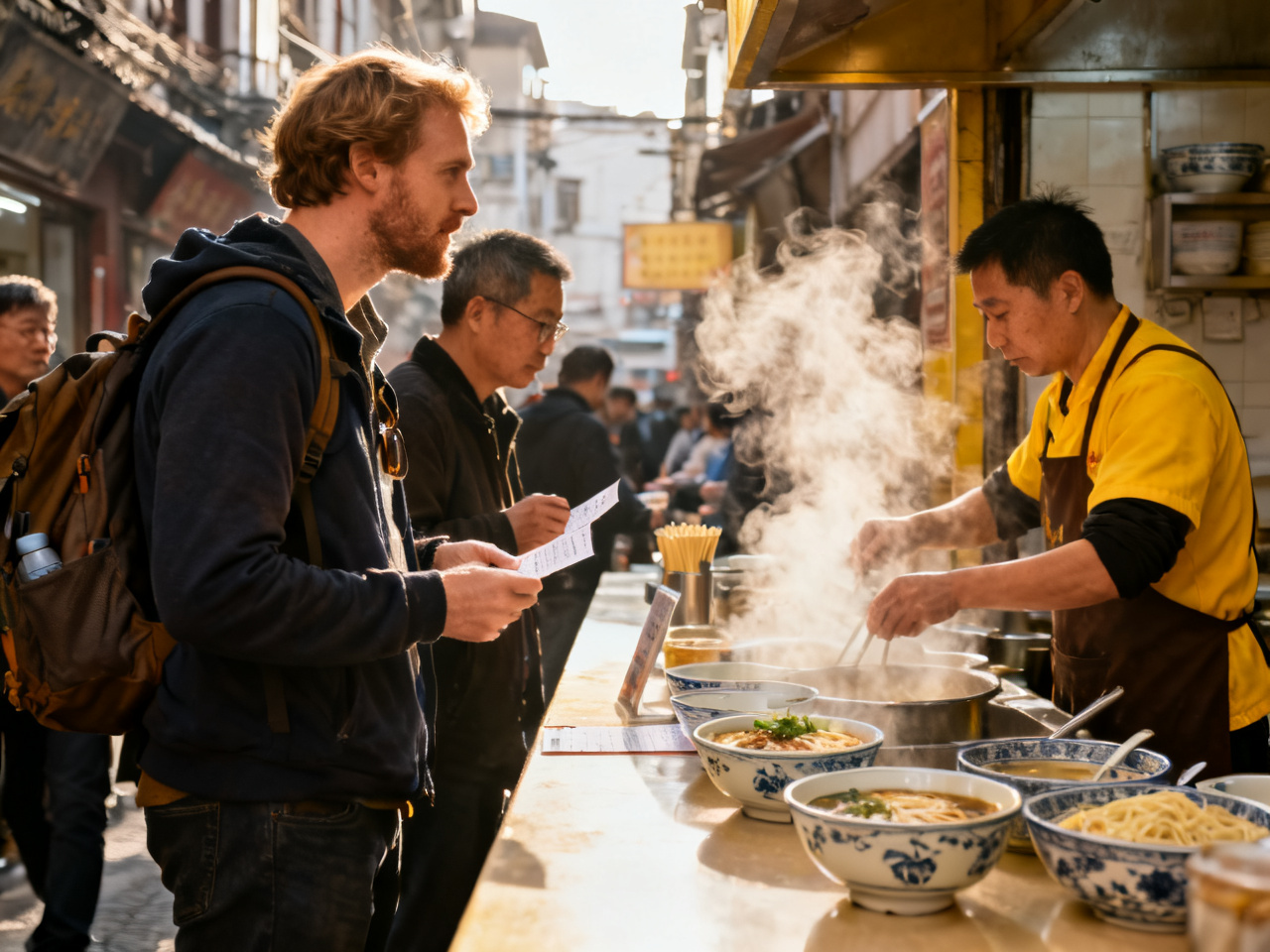
在南京路附近的一家小面馆,我第一次把这种方法用得很顺。门口排了五六个人,我不知道先点单还是先找位子。以前我会站在门口观察太久,这次我只问阿姨一句:“阿姨,我先扫码还是先坐?”她头也不抬地说:“先点,拿号,再坐。”我照做,三分钟后已经端着一碗葱油拌面坐下。那一刻我很有成就感,不是因为语言复杂,而是因为问题问得短、准、不给别人添负担。
I used this method smoothly for the first time at a noodle shop near Nanjing Road. Five or six people were lining up at the entrance, and I didn’t know whether to order first or find a seat first. In the past I would have stood there too long, trying to decode the whole system. This time I asked only one sentence: “Auntie, should I scan first or sit first?” Without even looking up, she answered, “Order first, get a number, then sit.” I followed the steps, and three minutes later I was holding a bowl of scallion oil noodles. The victory came not from speaking sophisticated Chinese, but from asking a short, precise question that did not burden anyone.
第四课:饭桌上的节奏,不是输赢,而是配合 | Lesson Four: At the Table, Rhythm Is Not About Winning or Losing, but Coordination
如果说地铁和街道教会我公共秩序,那么饭桌教会我的就是私人空间里的分寸。最开始我去中国朋友家吃饭,总担心自己“被照顾太多”。有人给我夹菜,我第一反应是摆手;有人说“再来一点”,我马上说“不要不要”;有人给我倒茶,我会急着自己抢过壶来,仿佛这样才显得独立。
If the metro and the streets taught me public order, the dinner table taught me nuance in personal space. At first, whenever I ate at a Chinese friend’s home, I worried about being “taken care of too much.” If someone put food in my bowl, I waved my hands. If someone said, “Have a little more,” I immediately said no. If someone poured tea for me, I rushed to grab the pot, as if that would prove I was independent.
后来一位朋友饭后对我说:“你可以不吃,但别拒绝得太快。很多时候那不是逼你,是先表示欢迎。”这句话点醒了我。中国饭桌上的一些动作,未必意味着你必须接受全部内容;它更多是一种关系的开场白。你可以吃一口,也可以说“谢谢,我先尝一点”;你可以稍后再解释“我真的饱了”。但如果每次都本能弹回去,别人会觉得你还没坐进这个氛围里。
Later, after one meal, a friend told me, “You can decline, but don’t decline too fast. A lot of the time it’s not pressure. It’s the first gesture of welcome.” That sentence changed everything. Certain actions at a Chinese table do not necessarily mean you must accept everything. Often they are the opening grammar of the relationship itself. You can take one bite. You can say, “Thank you, I’ll try a little first.” You can explain later that you are actually full. But if every gesture bounces back immediately, people feel you still haven’t sat down emotionally.
这件事也让我重新理解了中国人为什么这么在意面子里提到的很多细节:面子不只是夸张的社交规则,也常常是“我先把体面和好意递给你,你别让我太难堪”。学会这一点以后,我在餐桌上轻松了很多。
This also made me rethink many details mentioned in 中国人为什么这么在意面子. “Face” is not only about dramatic social rules. Often it simply means, “Let me offer dignity and goodwill first; please don’t make that difficult to land.” Once I understood that, I relaxed a lot more at the table.
第五课:安全感,常常来自可预测的小动作 | Lesson Five: Safety Often Comes from Predictable Small Moves
很多人问我,为什么我后来会觉得在中国生活越来越“顺”。我的答案并不是“中国什么都方便”这么简单。真正让我心安的,是很多场景都存在一种可预测性:进站前大家知道先准备,点餐时知道先看前面的人怎么做,电梯里知道先下后上,饭桌上知道先接住对方的好意再表达自己的边界。
People often ask me why life in China started to feel increasingly smooth. My answer is not just that “things are convenient.” What truly gave me peace was predictability. In many scenes, people already shared a common sequence: prepare before entering the station, watch how the person in front orders, let people exit the elevator first, receive goodwill at the table before stating your boundary.
这种可预测性会给外国人带来很强的安全感。不是因为你被要求完全一致,而是因为你一旦看懂规则,就能减少大量不必要的猜测。就像我第一次真正会用移动支付时的感觉一样——在那之前,任何付款场景都让我紧张;看懂流程以后,整个人轻松很多。那种变化也和来华支付第一课里讲的“先掌握基本场景,再谈效率”非常一致。
This predictability gives foreigners a powerful sense of safety. Not because you are required to become identical to everyone else, but because once you understand the rules, you eliminate huge amounts of unnecessary guessing. It felt similar to the first time I truly became comfortable with mobile payment. Before that, every payment scene made me tense. Once I understood the sequence, my whole body relaxed. That change matches the principle in 来华支付第一课: master the basic scenarios before chasing efficiency.
我给自己练的5个“融入动作” | The Five Small Integration Moves I Practiced
1. 提前三个人准备下一步 | Prepare the Next Step When Three People Remain
这适用于安检、闸机、点餐、付款、取餐。只要前面还剩三个人,我就开始拿手机、看菜单、确认我要的口味或支付方式。
This works for security checks, ticket gates, ordering, paying, and collecting food. If there are three people ahead of me, I start preparing the code, checking the menu, and deciding my order or payment method.
2. 需要停就先靠边 | If I Need to Stop, I Step Aside First
站在通道中间研究导航,是我最早戒掉的坏习惯之一。边上不是“退缩”,而是给自己和别人都留空间。
Studying navigation in the middle of a corridor was one of the first bad habits I had to break. The side is not retreat. It is space—for others and for myself.
3. 问最小问题 | Ask the Smallest Useful Question
不是一口气把全部疑问都抛给别人,而是先确认方向、入口、顺序,再往下走。
Instead of unloading the entire confusion at once, I first confirm direction, entrance, or sequence, and only then move forward.
4. 别太快拒绝好意 | Don’t Reject Kindness Too Fast
在饭桌上、在别人帮你扶门时、在店员耐心解释时,先接住一句“谢谢”,再决定需不需要更多。
At the table, when someone holds a door, or when a shop clerk explains patiently, I first receive the gesture with a thank you before deciding whether I need more.
5. 先看一轮再行动 | Watch One Full Round Before Acting
如果场景不熟——食堂、医院窗口、自助机、茶饮店——先看前面一个人怎么做,通常比自己硬猜更快。
If the scene is unfamiliar—a canteen, a hospital counter, a self-service machine, or a tea shop—I watch one full cycle of the person ahead of me. That is usually faster than guessing alone.
结尾:我没有变成中国人,但我学会了和中国的日常合作 | Ending: I Did Not Become Chinese, but I Learned to Cooperate with Daily Life in China
我后来反复验证的几个细节场景 | A Few Recurring Situations That Confirmed the Lesson for Me
还有几个很小的场景,也不断提醒我:所谓融入,并不是大声宣布“我懂中国了”,而是很多次在细节里不再卡壳。比如中午在写字楼楼下买咖啡,我会先看取餐口和点单口是不是分开的;在商场洗手间外,我会先判断排队队尾在哪里,而不是直接站到门口;在便利店结账时,我会提前把要不要袋子、需不需要加热这些小问题想一下。它们微不足道,却能把一个人的状态从慌张变成平稳。
There are also several tiny recurring situations that kept confirming the same lesson for me: integration is not loudly declaring “I understand China now,” but no longer getting stuck in details again and again. For example, when buying coffee under an office building at noon, I first check whether the ordering counter and pickup counter are separate. Outside a shopping mall restroom, I first identify where the actual end of the queue is instead of standing vaguely near the door. At a convenience store checkout, I think ahead about whether I need a bag or whether I want the food heated. These are tiny things, but they can shift a person from flustered to steady.
我甚至发现,当我把这些动作练熟以后,我和别人的互动也柔和了。保安不需要额外提醒我把包放好,店员不需要重复解释流程,后面排队的人也不用因为我停顿而绕开。某种意义上,融入不是“让别人喜欢我”,而是“我减少了让公共空间额外为我付出的成本”。这听起来很朴素,却是我最珍惜的一种成熟。
I even noticed that once these movements became familiar, my interactions with other people became gentler too. Security guards no longer needed to remind me where to place my bag. Shop clerks did not need to repeat the process. The people behind me in line no longer had to flow around my hesitation. In a way, integration is not about “making people like me.” It is about reducing the extra cost that public space has to pay for my confusion. That sounds humble, but it is one of the forms of maturity I value most.
我现在偶尔还是会犯错。地铁出口太多时我也会走反,饭桌上也会有听不懂的暗示,赶时间时也会把二维码找得手忙脚乱。但和刚来时不一样的是,我不再把这些瞬间理解成“我不属于这里”。我更愿意把它们看成:我还在学习一套成熟城市生活里的协作方式。
I still make mistakes now. I still take the wrong exit in complicated metro stations. I still miss subtle table cues. I still fumble for a QR code when I am in a hurry. But unlike my first months here, I no longer interpret those moments as proof that I do not belong. I see them instead as part of learning a sophisticated form of urban cooperation.
所谓“半个中国人”,当然只是玩笑。我的护照没变,成长背景没变,口音也没变。真正变的是,我开始知道什么时候快一点,什么时候让一步,什么时候先观察,什么时候先接住别人的善意。很多人以为融入是一次性跨过去的门槛,我现在觉得,它更像是每天重复练习的一组小动作。你练得越久,陌生感就越轻,安全感就越自然。
Calling myself “half-local” is of course a joke. My passport has not changed. My upbringing has not changed. My accent certainly has not changed. What changed is that I began to understand when to move faster, when to yield, when to observe first, and when to receive kindness before analyzing it. Many people think integration is a threshold you cross once. I now believe it is a set of small actions you repeat every day. The longer you practice them, the lighter strangeness becomes—and the more naturally safety arrives.
如果你刚来中国,不妨从明天早上开始试一试:进站前提前准备,停下前先靠边,问路时先问最小问题,吃饭时别急着拒绝。你不需要立刻像本地人;你只需要先学会读懂这里的节奏。读懂之后,很多门会自己打开。
If you have just arrived in China, try starting tomorrow morning: prepare before entering, step aside before stopping, ask the smallest useful question, and do not reject hospitality too quickly at the table. You do not need to look local overnight. You only need to learn to read the rhythm here. Once you can read it, many doors begin to open on their own.

- 我们班来了一个新同学,他把“可以”说成“可乐”之后,大家反而更快熟起来了 | When the New Kid in Class Said “Cola” Instead of “Okay,” Everyone Somehow Became Friends Faster
- 中国书法艺术 | The Art of Chinese Calligraphy
- 海南环岛自驾7天:三亚万宁博鳌 | 7-Day Hainan Island Drive: Sanya, Wanning & Boao
- 五月在西安城墙下看夜城,我第一次觉得历史不是课本里的东西 | Walking Xi'an's City Wall at Night in May Was the First Time History Stopped Feeling Like a Textbook
- 真正让我看懂苏州的,从来不是多看了几个园林,而是顺序终于排对了一次 | What Finally Made Suzhou Click for Me Was Never Seeing More Gardens but Getting the Sequence Right Once
- 风筝制作与放飞:我第一次看懂中国人为什么把春天送上天空 | Kite Making and Flying: My First Real Understanding of How China Sends Spring into the Sky
- 我第一次坐中国夜间高铁,发现安静也是一种旅行服务 | On My First Evening High-Speed Train in China, Quiet Became Part of the Service
- 中国茶道体验指南:从功夫茶到茶山 | Chinese Tea Culture: From Gongfu Tea to Tea Plantations
- 如何在中国使用网约车应用 | How to Use Ride-Hailing Apps in China
- 银川那家红招牌小馆没有摆盘,却把西北夜风后的饥饿接得很稳 | A Small Red-Sign Eatery in Yinchuan Offered No Fancy Presentation, Yet It Caught My Hunger After the Desert Wind
Comments (0)