
苏州运河边的一碗早面 | A Morning Bowl Beside a Suzhou Canal
苏州运河边的一碗早面 | A Morning Bowl Beside a Suzhou Canal
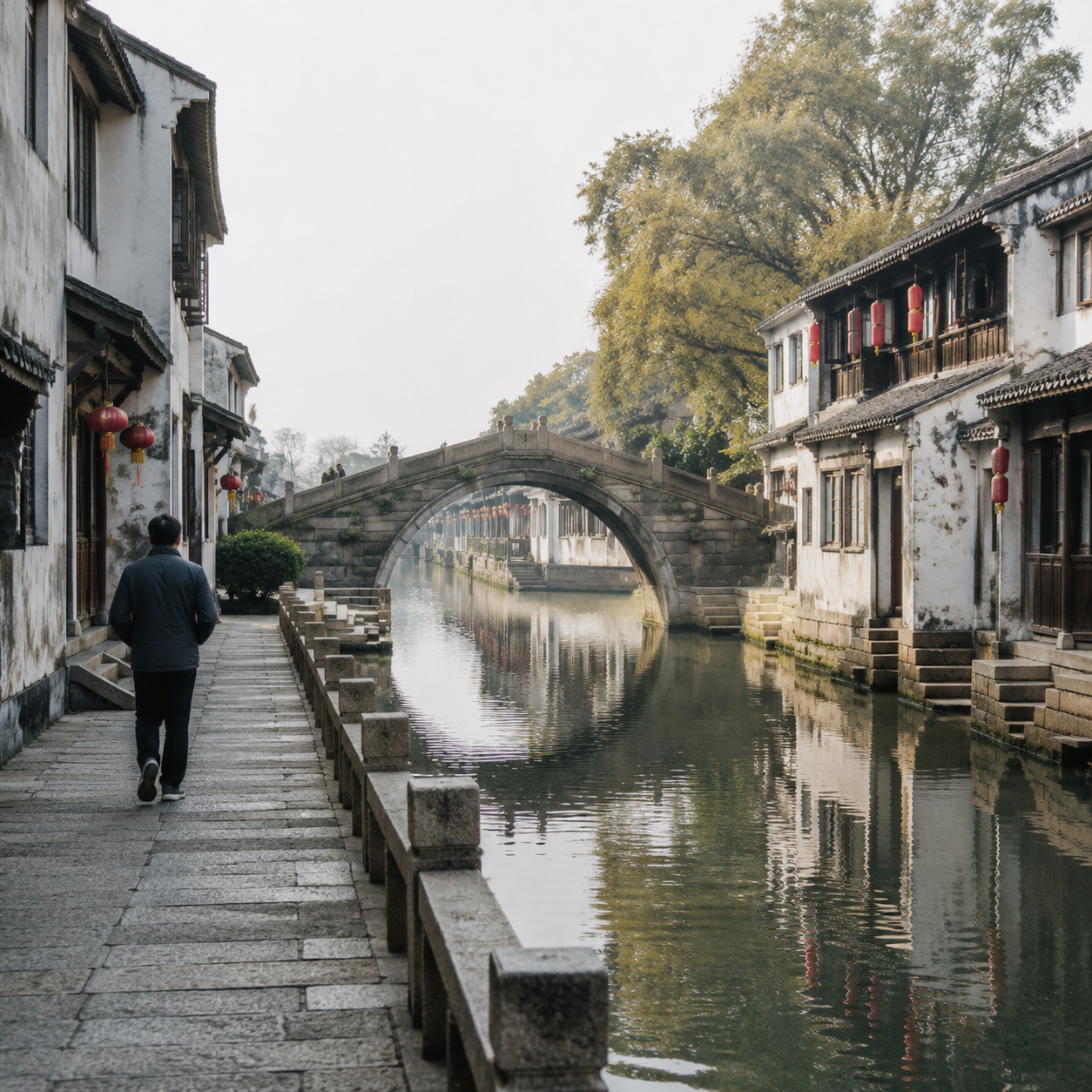
清晨六点半,我沿着苏州一条窄窄的河走,石桥还带着夜里的潮气,水面像被慢慢擦亮的锡纸。河岸边的柳枝垂得很低,偶尔扫过停在水边的小船。那天我没有安排园林,也没有急着去拍白墙黑瓦,只想找一家本地人真正会坐下来的小店,吃一碗早面,或者喝一盏茶配一点小点心。作为一个在中国旅行的外国人,我以为早饭就是走进去、点餐、吃完、离开,可那天在运河边的小面馆里,我才发现苏州人的早晨有自己的秩序,轻得像水上的光,却一点也不随便。
At half past six in the morning, I walked along a narrow canal in Suzhou, where the stone bridge still held the dampness of the night and the water looked like tin foil slowly being polished by the first light. Willow branches hung low over the bank, sometimes brushing against a small boat tied near the steps. I had not planned a garden visit that morning, nor was I in a hurry to photograph white walls and black tiles. I only wanted to find a place where local people actually sat down, a place for a bowl of morning noodles or a cup of tea with a small snack. As a foreign traveler in China, I thought breakfast meant walking in, ordering, eating, and leaving. In that canal-side noodle shop, I learned that a Suzhou morning has its own order: light as the reflection on water, but not casual at all.
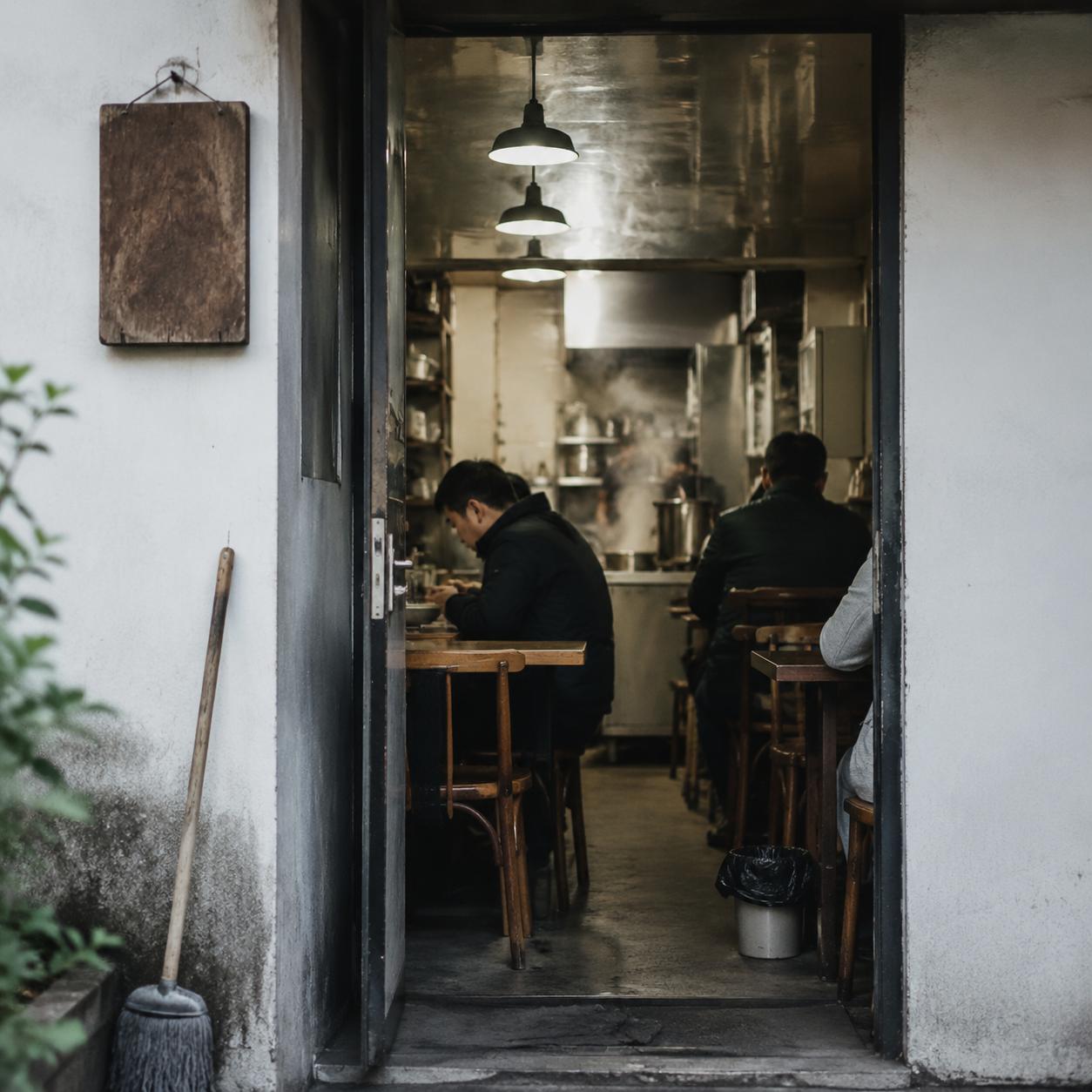
店面很小,门口没有夸张的招牌,只挂着一块有些旧的木牌,字被油烟和岁月磨得柔和。里面摆着几张木椅,椅面被坐得发亮,桌边有细小的划痕,像很多人的早晨留下的笔记。灶台在后面,汤锅的热气一阵一阵往外冒,闻起来不是猛烈的香,而是慢慢靠近你的鲜味:骨汤、葱油、酱油、还有一点点河边潮湿空气混在一起的味道。我站在门口犹豫,因为店里几乎没有人说话,只有筷子碰碗、手机扫码的短音、老板娘用苏州话报菜名的声音。
The shop was small, with no dramatic sign at the entrance, only an old wooden board whose characters had been softened by smoke and years. Inside were several wooden chairs, their seats polished by use, and the table edges carried tiny scratches, like notes left by many people’s mornings. The stove was at the back. Steam rose from the soup pot in waves. The smell was not loud or aggressive; it was a gentle savoriness that came closer slowly: bone broth, scallion oil, soy sauce, and a little damp canal air mixed together. I hesitated at the doorway because almost nobody inside was speaking. I heard only chopsticks touching bowls, the short sound of phones scanning payment codes, and the owner calling out dish names in Suzhou dialect.
老板娘看见我站着,笑了一下,没有马上催我。她大概五十多岁,围裙上有面粉和汤点,动作很快,却不像我在大城市快餐店里见过的那种急。她指了指墙上的菜单板,又指了指门边的小二维码。我抬头看,那块菜单板写满了字,除了价格,还有一些我看不懂的季节词:枫镇、焖肉、爆鱼、虾仁、鳝糊、青团、双酿团。旁边一位穿深蓝外套的老先生正坐在靠窗的位置,面前是一碗细面,他听见我用很慢的中文问“现在什么好吃”,抬头看了我一眼,像是觉得这个问题既简单又不简单。
The owner saw me standing there and smiled, but she did not rush me. She was probably in her fifties, with flour and soup marks on her apron. Her movements were quick, but not in the anxious way I had seen in big-city fast-food places. She pointed at the menu board on the wall and then at the small QR code near the door. I looked up. The board was full of characters. Besides prices, it listed seasonal words I did not fully understand: Fengzhen, braised pork, fried fish, shrimp, eel paste, qingtuan, double-stuffed rice balls. An elderly man in a dark blue jacket sat by the window with a bowl of thin noodles in front of him. When he heard me ask in slow Chinese, “What is good now?” he looked up as if the question were both simple and not simple at all.

老先生用普通话夹着一点本地口音告诉我:“看时令,不看最贵。”他说苏州吃面,菜单不是从上到下读的,也不是只看照片,因为真正的小店常常没有照片。要先看今天写在最旁边的小黑板,那里才是当天新鲜的浇头;再看有没有用粉笔圈起来的字,表示已经快卖完;最后听老板娘报,因为她知道哪锅汤刚开,哪种浇头还热。他说完又低头吃面,筷子挑得很轻,像怕惊动汤里的香气。我站在菜单板前,忽然觉得自己以前读菜单像读考试题,只想找到正确答案,而这里的人读菜单像读天气、读水位、读一天的心情。
The old customer answered in Mandarin with a little local accent: “Look at the season, not at the most expensive item.” He told me that in Suzhou, a noodle menu is not read from top to bottom, and it is not read only through pictures, because many real small shops have no pictures at all. First, you look at the small blackboard on the side, where the fresh toppings of the day are written. Then you notice whether any words are circled in chalk, which means they are almost sold out. Finally, you listen to the owner, because she knows which pot of broth has just opened and which topping is still hot. After saying this, he lowered his head and continued eating. His chopsticks lifted the noodles so lightly that he seemed afraid of disturbing the aroma in the soup. Standing before the menu board, I suddenly realized that I had always read menus like exam papers, searching for the correct answer, while people here read them like weather, water level, and the mood of the day.
我第一次小错就发生在点单时。我以为“浇头”就是浇在面上的一种酱,于是指着“焖肉”和“虾仁”说两个都要,老板娘问我要不要“过桥”。我听成了要不要去桥那边坐,马上往门外看了一眼。店里几个人轻轻笑了,不是嘲笑,更像看见外地人碰到一块门槛。老板娘解释说,过桥就是面和浇头分开放,自己夹着吃,汤更清,肉也不容易把面压软。我脸有点热,赶紧点头。那位老先生补了一句:“第一次来,过桥好,慢慢吃。”这句“慢慢吃”让我放松下来,因为我一直担心自己挡住了别人早晨的节奏。
My first small mistake happened while ordering. I thought “topping” meant a kind of sauce poured over the noodles, so I pointed at braised pork and shrimp and asked for both. The owner asked whether I wanted it “guoqiao,” literally “crossing the bridge.” I misunderstood and thought she was asking whether I wanted to sit across the bridge outside, so I immediately looked toward the door. A few people in the shop laughed softly. It was not mockery, more like seeing an outsider bump gently into a threshold. The owner explained that “crossing the bridge” meant the noodles and toppings would be served separately, so I could add them myself; the broth would stay clearer, and the meat would not soften the noodles too quickly. My face warmed, and I nodded quickly. The old man added, “For a first visit, guoqiao is good. Eat slowly.” That phrase, “eat slowly,” relaxed me, because I had been afraid of blocking the rhythm of everyone else’s morning.
点单还没有结束,我又在无现金付款上出了一个小问题。门边贴着二维码,我打开手机,网络却慢得像还没睡醒。我站在那里等页面转圈,后面来了一位骑电动车的阿姨,手里提着保温桶。我本能地往旁边退,想让她先点,可老板娘摆摆手,说“不急,先看清楚。”阿姨也没有露出不耐烦,只把保温桶放在脚边,顺手把菜单板最旁边的粉笔字念给我听。她说今天虾仁新鲜,但早晨吃太重也不舒服;如果我想喝茶,可以配一只青团或者一小碟豆干。那一刻,我才明白无现金并不等于必须匆忙,扫码只是工具,早晨的礼貌仍然是让人把选择做明白。
The ordering was not finished when I made another small mistake with cashless payment. A QR code was posted near the door, so I opened my phone, but the connection moved as if it had not woken up yet. I stood there waiting for the page to spin. Behind me came an auntie on an electric scooter, carrying a thermal container. Instinctively, I stepped aside to let her order first, but the owner waved her hand and said, “No hurry, look carefully first.” The auntie did not look impatient either. She set the container by her foot and casually read the chalk words at the edge of the menu board for me. She said the shrimp was fresh that day, but something too heavy in the morning might not feel comfortable; if I wanted tea, I could pair it with a qingtuan or a small plate of dried tofu. At that moment I understood that cashless ordering does not have to mean rushing. Scanning is only a tool; morning etiquette is still about allowing a person to make a clear choice.
最后我点了一碗细面,汤清,焖肉过桥,另加一小碟虾仁和一杯热茶。老板娘没有问我要不要辣,也没有用夸张的推荐把我推向最贵的东西,只说:“先尝汤,再放肉。”我找了一张靠近窗边的木椅坐下,椅子有一点低,坐上去会轻轻吱呀一声。窗外就是运河,船影慢慢移动,水光反到墙上,像有人把一层淡金色的纱挂在店里。早晨的太阳还不强,照在碗沿上,汤面微微亮着。我忽然觉得这家店不是在河边,而是被河轻轻托着。

In the end I ordered a bowl of thin noodles with clear broth, braised pork served separately, a small plate of shrimp, and a cup of hot tea. The owner did not ask whether I wanted chili, and she did not push me toward the most expensive choice with exaggerated recommendations. She only said, “Taste the broth first, then add the meat.” I sat on a wooden chair near the window. The chair was a little low and gave a soft creak when I settled onto it. Outside was the canal. Boat shadows moved slowly, and light reflected from the water onto the wall, as if someone had hung a thin layer of pale gold inside the shop. The morning sun was not strong yet. It touched the rim of the bowl, and the surface of the broth shone faintly. I suddenly felt that the shop was not beside the canal; it was being gently held up by it.
面端上来时,我又差点犯错。我看见焖肉油亮厚实,忍不住想马上把整块肉倒进汤里。老先生在旁边咳了一声,不重,却像一个提醒。他用筷子示范给我看:先喝一口清汤,知道底味;再夹一小块肉放进碗边,让油慢慢散开;虾仁不要一下全倒,吃几口面再放一点,这样每一段味道都不同。我照着做。第一口汤比我想象中更清,带着微甜,不像北方有些面汤那样直接冲上来,而是绕在舌头后面。面很细,却有筋骨,筷子一挑就像一束白线从碗里升起来。
When the noodles arrived, I almost made another mistake. The braised pork looked glossy and thick, and I wanted to pour the whole piece into the soup immediately. The old man beside me coughed once, not loudly, but enough to serve as a reminder. With his chopsticks, he demonstrated: first drink a mouthful of clear broth to understand the base flavor; then place a small piece of pork near the edge of the bowl and let the oil spread slowly; do not add all the shrimp at once, but put in a little after several bites of noodles so that each stage tastes different. I followed his method. The first sip of broth was clearer than I expected, with a slight sweetness. It did not rush forward like some noodle soups I had known in northern China; it circled behind the tongue. The noodles were thin but had strength. When I lifted them with chopsticks, they rose from the bowl like a bundle of white threads.
我喝茶的时候,老板娘端来一只青团,说是刚蒸好的,问我要不要尝半只。青团外皮是深绿色,带着青草和糯米的香气,里面的豆沙不太甜。我本来以为茶点只是饭后的补充,可在这里,它像早晨节奏里的另一个停顿。老先生说,苏州人早上有时吃面,有时喝茶,有时两样都来一点,不是为了撑饱,而是为了把一天慢慢打开。我把青团切开,手指沾了一点糯米,差点用纸巾很用力地擦掉。阿姨看见了,说“黏是正常的”,笑着递给我一小杯热水。她的语气让我觉得,在这里小小的不熟练也可以被接住。
While I drank tea, the owner brought over a qingtuan and said it had just been steamed, asking whether I wanted to try half of it. The outside was deep green, smelling of grass and glutinous rice, and the red bean paste inside was not too sweet. I had assumed tea snacks were only an addition after a meal, but here the snack felt like another pause in the rhythm of the morning. The old man said that in Suzhou, people might eat noodles in the morning, drink tea, or have a little of both, not simply to become full but to open the day slowly. I cut the qingtuan and got a little sticky rice on my fingers. I nearly rubbed it off too hard with a napkin. The auntie noticed and said, “Sticky is normal,” then handed me a small cup of hot water with a smile. Her tone made me feel that in this place, small unfamiliarities could be received gently.
店里的安静并不是冷淡。相反,每个人都在用很小的动作照顾空间:有人把椅子往里收一点,方便后来的人通过;有人吃完后把碗推到桌角,不让汤滴到地上;有人扫码成功后不大声说话,只把手机给老板娘看一眼。老板娘记得每个常客的习惯,有人要硬面,有人要宽汤,有人要少葱。她也记得我这个外地人的迟疑,所以每次经过都用眼神问我是否还好,而不是站在桌边让我紧张。作为外国人,我常常以为“热情”一定要很明显,要有很多话,可这家小店让我看见另一种热情:它不把你推到中心,却让你知道你没有被放在外面。
The quiet in the shop was not coldness. On the contrary, everyone cared for the space through very small movements: someone tucked a chair inward so later arrivals could pass; someone pushed an empty bowl to the corner of the table so soup would not drip onto the floor; someone who had paid by QR code did not announce it loudly, but simply showed the phone screen to the owner. The owner remembered each regular customer’s habits: one wanted firmer noodles, one wanted more broth, one wanted less scallion. She also remembered my hesitation as an outsider, so each time she passed she asked with her eyes whether I was all right, instead of standing beside the table and making me nervous. As a foreigner, I often imagined that warmth had to be obvious, filled with many words. This little shop showed me another kind of warmth: it does not push you into the center, but it lets you know you have not been left outside.
我开始重新看那块菜单板。原来它不是简单的商品列表,而像一张早晨的地图。固定的面底在中间,像河道;季节浇头写在旁边,像今天的水色;茶点和小菜在角落里,提醒人不要只盯着主角。老先生告诉我,春天看青团和虾仁,夏天有人惦记三虾面,秋天说蟹粉,冬天会想更厚的焖肉和热汤。可他又说,不是每个季节都非要追最有名的东西,重要的是看店里今天真正做得顺不顺。他指着菜单板上一个刚被擦掉的粉笔圈说:“卖完也好,说明新鲜,不必遗憾。”这句话听起来像在说面,也像在说旅行。
I began to look at the menu board again. It was not just a list of products; it was a map of the morning. The regular noodle bases stood in the center like waterways. Seasonal toppings were written at the side like the color of today’s water. Tea snacks and small dishes sat in the corners, reminding people not to stare only at the main character. The old man told me that in spring people notice qingtuan and shrimp; in summer some wait for three-shrimp noodles; in autumn they talk about crab roe; in winter they want heavier braised pork and hot broth. But he also said that not every season requires chasing the most famous thing. What matters is whether the shop is cooking smoothly that day. He pointed to a chalk circle that had just been wiped from the board and said, “Sold out is also good. It means fresh. No need to regret it.” The sentence sounded as if it were about noodles, and also about travel.
吃到一半,我犯了第三个小错:我把筷子横放在碗上,想停下来拍一张照片。老板娘没有阻止,只是轻轻说:“面会涨。”我马上放下手机继续吃。那一刻我有点不好意思,因为我又把体验变成了收藏,把热汤变成了证据。窗外运河的光一直在变,拍不完,也留不住;碗里的面也是一样,最好的时间很短,错过了就软了。于是我只拍了一张很普通的照片,甚至有点歪,然后把手机扣在桌上。剩下的几口面,我吃得比前面认真,好像终于明白这家店最重要的不是好看,而是刚刚好。
Halfway through the meal, I made a third small mistake: I placed my chopsticks across the bowl and paused to take a photo. The owner did not stop me. She only said gently, “The noodles will swell.” I put down my phone at once and continued eating. At that moment I felt embarrassed because I had again turned experience into collection and hot soup into evidence. The canal light outside kept changing; it could not all be photographed or kept. The noodles in the bowl were the same. Their best moment was brief, and if I missed it, they would soften. So I took only one ordinary photo, slightly crooked, and placed my phone face down on the table. I ate the remaining mouthfuls more seriously than before, as if I had finally understood that the most important thing in the shop was not looking beautiful, but being exactly right.
后来店里人慢慢多起来,但没有变吵。有人站在门边等位,眼睛先看菜单板,再看灶台,再看空椅子,动作熟练得像读一封每天都会变化的信。一个年轻人进来只说“老样子”,老板娘却问他今天要不要换成虾仁,因为“今天河货好”。他犹豫两秒,点头。另一个老人只要茶和豆干,坐下后先看河,不急着动筷。每个人都像知道自己在这个早晨的位置,不抢,也不拖。我坐在中间,夹在游客和常客之间,突然不再觉得尴尬。我的不熟练没有消失,但它变小了,变成可以被一碗汤、一句提醒、一张木椅慢慢安放的东西。
Later, more people entered the shop, but it did not become noisy. Some waited near the door, first looking at the menu board, then the stove, then the empty chairs, moving with the skill of reading a letter that changes every day. A young man came in and said only, “The usual,” but the owner asked whether he wanted to switch to shrimp that day because “today’s river goods are good.” He hesitated for two seconds and nodded. Another elderly customer ordered only tea and dried tofu, then sat down and looked at the canal before touching his chopsticks. Everyone seemed to know their place in the morning, neither grabbing nor delaying. Sitting in the middle, between tourist and regular, I suddenly no longer felt awkward. My unfamiliarity had not disappeared, but it had become smaller, something that could be settled slowly by a bowl of soup, a reminder, and a wooden chair.
我问老板娘这家店开了多久。她想了想,说她接手有十几年,店本身更久,以前现金多,现在手机多,以前人慢,现在也有人急,但早面不能太急。她说面下锅要时间,汤吊出来要时间,浇头要看火候,客人也要给自己一点时间。我问她外国人常来吗,她笑着说不多,来了也常点错,不过错了没关系,肯问就好。她这句话让我松了一口气。旅行中最怕的不是不知道,而是假装自己已经知道;最好的店也许不是把所有东西翻译成你的语言,而是给你机会学会一点点当地的读法。
I asked the owner how long the shop had been open. She thought for a moment and said she had taken it over more than ten years ago, while the shop itself was older. In the past there was more cash, now there were more phones; in the past people were slower, now some were rushed too, but morning noodles could not be too rushed. She said noodles need time in the pot, broth needs time to be drawn out, toppings depend on heat, and customers also need to give themselves a little time. I asked whether foreigners often came. She smiled and said not many, and those who did often ordered incorrectly, but mistakes did not matter as long as they were willing to ask. Her sentence relieved me. In travel, the most frightening thing is not ignorance, but pretending that one already knows. Perhaps the best shop is not the one that translates everything into your language, but the one that gives you a chance to learn a little of the local way of reading.

快吃完时,我终于听懂了一点店里的节奏。扫码声不是催促,而是确认;老板娘报菜名不是广告,而是提醒;常客的安静不是排斥,而是给汤和早晨留位置。窗外一只船经过,船夫用竹篙轻轻点水,光被推成碎片,又慢慢合起来。我把最后一点汤喝完,没有把碗端得太高,也没有发出太大的声音。老先生看了看我的空碗,点点头,说:“可以了,像本地人一点点。”我知道这只是善意的玩笑,却还是很高兴。一个早晨能学会“一点点”,已经比我预想的多。
Near the end of the meal, I finally began to understand part of the shop’s rhythm. The sound of scanning was not a command to hurry, but a confirmation. The owner calling out dish names was not advertising, but reminding. The regulars’ quiet was not rejection, but a way of leaving room for broth and morning. Outside, a boat passed, and the boatman touched the water lightly with a bamboo pole. The light broke into pieces and then slowly joined again. I finished the last of the soup without lifting the bowl too high and without making too much noise. The old man looked at my empty bowl, nodded, and said, “Good enough, a little like a local.” I knew it was only a kind joke, but I was happy anyway. To learn “a little” in one morning was already more than I had expected.
离开前,我把椅子推回桌下,确认手机付款已经成功,又向老板娘说谢谢。她正在给下一位客人盛汤,只抬头笑了一下,说下次来试试别的时令。我走出门,河边的空气比刚来时亮了许多,石桥上开始有游客停下来拍照,而我没有马上拿出手机。我的嘴里还留着一点汤的甜味和青团的糯香,手指仿佛还记得木椅边缘的温度。我回头看那块旧木牌,它仍然不显眼,甚至可能被很多匆忙的人错过。可是对我来说,那家店已经变成苏州早晨的一扇小门。
Before leaving, I pushed the chair back under the table, checked that my mobile payment had gone through, and thanked the owner. She was ladling soup for the next customer, so she only looked up and smiled, saying I should try another seasonal topping next time. I stepped outside. The air by the canal was much brighter than when I had arrived. Tourists had begun stopping on the stone bridge to take photos, but I did not immediately take out my phone. A little sweetness from the broth and the glutinous fragrance of qingtuan remained in my mouth, and my fingers seemed to remember the warmth of the wooden chair’s edge. I looked back at the old wooden sign. It was still modest, and many hurried people might pass it without noticing. But for me, that shop had become a small doorway into a Suzhou morning.
那天以后,我在别的城市也开始用不同的方式看早餐店。我不再只问“最有名的是什么”,而是先看今天写了什么,谁在吃什么,老板如何回答常客,菜单上哪些字被擦掉又重写。我也不再把无现金点单理解成一种必须快速完成的流程。手机可以很快,但人不一定要快;二维码可以统一,但每家店的节奏并不一样。在苏州运河边,我学到的不是一套复杂规则,而是一种更谦虚的进入方式:先站稳,先看,先闻汤,先听别人怎么点,然后再把自己的小问题问出来。
After that day, I began to look at breakfast shops differently in other cities too. I no longer asked only, “What is the most famous thing?” Instead, I first looked at what was written that day, what people were eating, how the owner answered regular customers, and which words on the menu had been erased and rewritten. I also stopped understanding cashless ordering as a process that must be completed as quickly as possible. A phone can be fast, but a person does not always have to be. QR codes can be standardized, but each shop has its own rhythm. Beside a Suzhou canal, what I learned was not a complicated set of rules, but a humbler way to enter: stand still first, look first, smell the broth first, listen to how others order, and then ask your own small questions.
如果有人问我那碗面到底有多特别,我可能不会用很大的词来形容。它不是我吃过最昂贵的一餐,也没有被摆成适合杂志封面的样子。特别的是清晨的河光落在汤面上,特别的是木椅轻轻一响,特别的是老板娘没有催我,老先生愿意教我读菜单,阿姨在我网络卡住时替我念粉笔字。特别的是我在几个小错误里没有被推出去,反而被慢慢带进来。旅行有时不是去占有一个地方的知识,而是在一碗热面前承认自己还不会,然后让一座城市用它自己的方式教你。
If someone asks me exactly how special that bowl of noodles was, I may not use grand words to describe it. It was not the most expensive meal I have ever eaten, and it was not arranged in a way that belonged on a magazine cover. What was special was the morning canal light falling on the surface of the broth. What was special was the soft creak of a wooden chair. What was special was that the owner did not rush me, the old customer was willing to teach me how to read the menu, and the auntie read the chalk words for me when my internet connection froze. What was special was that my small mistakes did not push me out; instead, they slowly brought me in. Sometimes travel is not about possessing knowledge of a place, but about admitting, in front of a hot bowl of noodles, that you do not yet know, and then allowing a city to teach you in its own way.

- 汉服入门指南:形制、场合与穿搭 | Hanfu Beginner's Guide: Styles, Occasions & Outfits
- 桂林米粉先拌还是先喝汤,我在一张小桌前改了吃法 | Mix First or Taste the Broth First? My Guilin Noodle Lesson
- 八月节庆旅游:赶上最热闹的庙会 | August Festival Travel: Catch the Liveliest Temple Fairs
- 秦皇岛那晚我没去找海鲜名店,只想找一张能坐下来吃热饭的桌子 | In Qinhuangdao, I Skipped the Famous Seafood Spots and Looked for a Table Where I Could Eat Something Hot
- 中国气候分区与最佳旅行季节 | China Climate Zones & Best Travel Seasons
- 在南宁,真正安抚一天疲惫的常常只是一桌家常晚饭 | In Nanning, What Often Soothes the Day Is Simply a Home-Style Dinner Table
- 江南水乡不要只拍照:要学会慢看 | In Jiangnan Water Towns, Do Not Just Take Photos — Learn to Look Slowly
- 南京梧桐树下的阴影,让我懂得城市记忆不是口号 | Under Nanjing’s Plane Trees, I Learned City Memory Is Not a Slogan
- 走到一半就下城墙,是我在南京学会的第一个正确决定 | Getting Off the Wall Midway Was the First Right Decision I Learned in Nanjing
- 中国麻将文化:规则、礼仪与社交密码 | Chinese Mahjong Culture: Rules, Etiquette & the Social Code
Comments (0)