
青岛夜里最重要的准备,不在背包里,而在你肯不肯及时收住脚步 | The Most Important Preparation for a Qingdao Night Is Not in the Bag but in Knowing When to Slow Down
青岛夜里最重要的准备,不在背包里,而在你肯不肯及时收住脚步 | The Most Important Preparation for a Qingdao Night Is Not in the Bag but in Knowing When to Slow Down
晚上七点半,海边的风已经不再只是凉,而是开始有了点硬度。一个外地来的男生站在栏杆边,一手压着帽檐,一手去摸背包侧袋,像是在找什么。旁边跟他一起走来的朋友把手机手电短暂地打开,照了照地上那段有点潮的石面,又把屏幕收回去,说先别急着继续往前,水和外套都确认一下。那一刻我突然觉得,青岛夜线最应该写清楚的,不是哪一段最好看,而是为什么到了晚上,准备动作会比白天更有分量。
By half past seven at night, the wind by the sea was no longer merely cool. It had begun to carry a firmer edge. A young visitor from out of town stood by the railing, one hand pressing down the brim of his cap while the other searched the side pocket of his backpack. His friend briefly switched on a phone flashlight, checked the slightly damp stone underfoot, then put the screen away and said there was no need to keep moving yet—they should make sure they had water and outer layers first. In that moment it struck me that what a Qingdao night route really deserves in writing is not simply which stretch is most beautiful, but why small acts of preparation gain more weight at night than they had in the day.
很多海边城市一到夜里,就会被写成“随便走都浪漫”。青岛不是不能浪漫,但如果真这么写,它会被写得太轻。因为这座城到了晚上,海风、坡度、光线和体力感会同时开始说话。你白天可能觉得一件薄外套可有可无,晚上却会突然意识到风会把肩颈吹得发紧;你白天可能随手拿着一瓶水就够,到了夜线中段才发现风大以后口会更干、步子会更碎;你白天觉得一段坡只是好看,晚上却会发现它和体力储备直接相关。
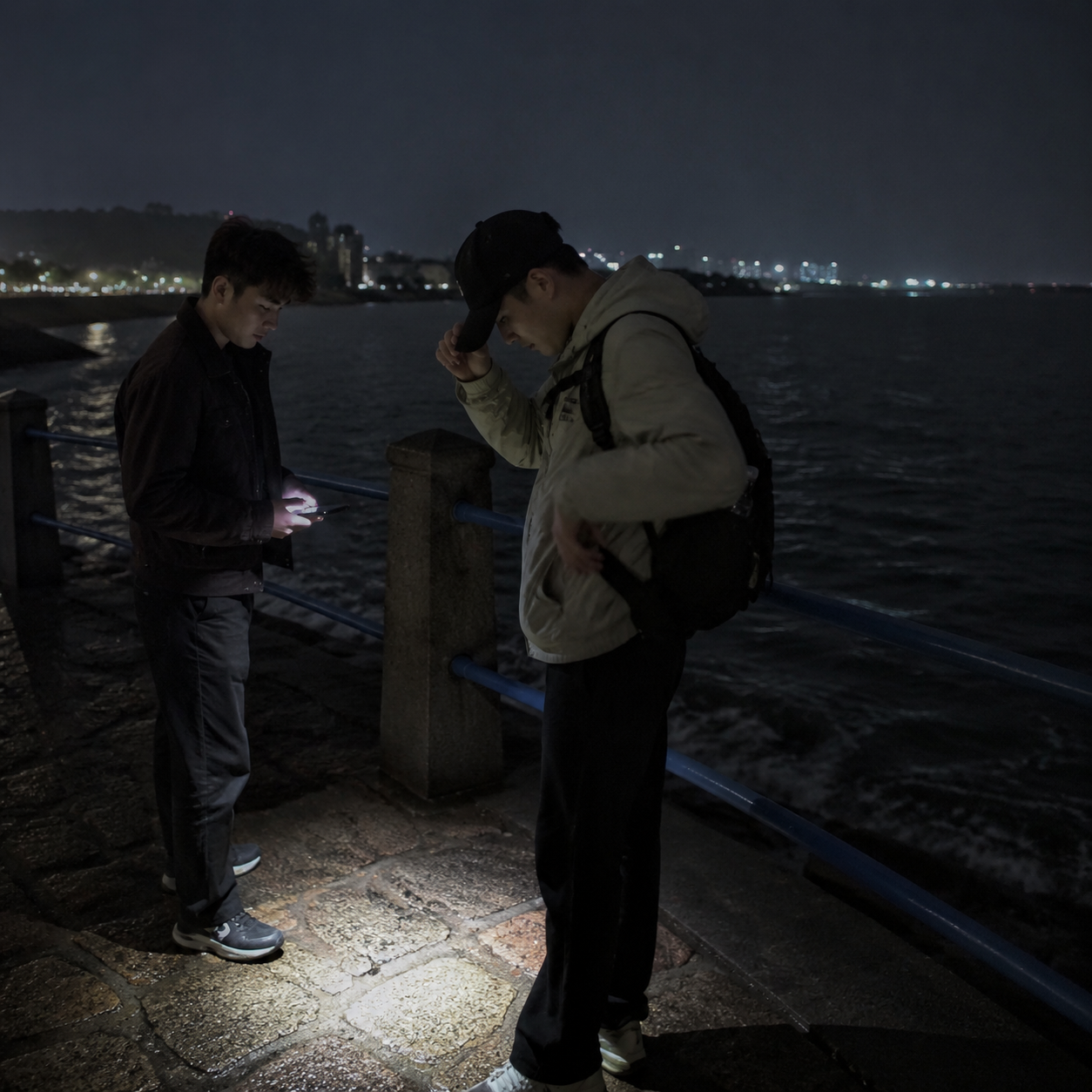
Many coastal cities are written at night as if romance emerges automatically the moment one starts walking. Qingdao can certainly be romantic, but if that is all one says, the city becomes too light on the page. After dark, sea wind, gradient, lighting, and bodily energy all begin speaking at once. A thin outer layer that felt optional in daylight suddenly proves necessary when the wind tightens the neck and shoulders. A single bottle of water that seemed enough in the afternoon becomes insufficient once stronger wind dries the mouth and breaks the stride. A slope that looked merely scenic by day suddenly reveals its direct relationship to stamina at night.
所以“准备清单故事体”放在青岛夜线里,不应该被理解成那种机械列点式攻略。真正有用的,不是告诉人“带什么就对了”,而是写清楚这些小准备为什么会在具体时刻救你。帽子不是为了拍照更像游客,而是为了在风正顶过来的时候,不让你一路用手护额头;水不是例行公事,而是在你站了太久、说了太多、被海风抽掉一点体温以后,把身体拉回稳定的东西;外套不是谨慎过头,而是让你不至于在最好的夜色刚出现时,就开始只想着快点回去。
That is why a “preparedness checklist in story form” should not be mistaken for a mechanical listicle in Qingdao’s night route. The useful thing is not telling people that certain items are simply “correct.” It is showing why those small preparations save you at specific moments. A cap is not there to make the traveler look more appropriate in photographs, but to keep one from walking half the route with a hand over the forehead against the wind. Water is not routine administration, but what steadies the body after too much standing, too much talking, and a little heat pulled away by sea air. An outer layer is not over-caution, but what prevents the mind from spending the best stretch of evening thinking only about getting back indoors.
青岛的夜线还特别讲究尺度感。白天你对距离的判断往往会被海面欺骗:看起来不远,真正走起来却比想象里更慢。晚上这种错觉会更明显。灯光会把远处拉近,海风又会把脚步拉碎,于是很多人会在最该收稳的时候,误以为“前面那一点再过去就行”。如果没有一点准备动作在前面托着,夜线很容易从舒服变成消耗。

Qingdao’s night route is also unusually dependent on scale judgment. By day, the sea already distorts one’s sense of distance: what looks near often takes longer than expected to reach. At night the distortion grows stronger. Lighting draws distant points closer while the wind breaks the stride apart, and many people end up thinking that one more little section is easy to add at precisely the moment when they should begin stabilizing the route. Without some preparation holding the evening up from underneath, the route can shift from pleasant to draining very quickly.
我越来越觉得,青岛夜里真正成熟的走法,不是让自己像电影角色一样一直往前,而是在几个节点上愿意承认“我需要做点准备,才配得上接下来的夜色”。有的人会在店里多坐五分钟,把水喝完;有的人会在出门前把外套真正穿上,而不是继续搭在手臂上;也有人会在进入最开阔的海边段之前,先把包里的纸巾、充电宝、口罩和路线截图重新整理好。听起来都很小,但就是这些小动作,把一条夜线从随缘散步变成了有控制的舒服。
I increasingly feel that the most mature way to walk Qingdao at night is not to keep moving forward like a film character, but to admit at certain points that one must prepare in order to deserve the next stretch of darkness and light. Some people sit inside a shop for five extra minutes and finish their water. Others put the jacket on properly instead of carrying it over an arm. Still others reorganize tissues, power bank, mask, and route screenshots before entering the broadest waterfront section. These are tiny actions, yet they are exactly what turns an evening route from accidental wandering into controlled comfort.
而且这种准备并不会破坏海边城市该有的松弛,反而会让松弛真正成立。很多人误会了“放松”的意思,以为放松就是不计划、不检查、不停顿,想到哪走到哪。青岛到了晚上不是这样工作的。它的松弛更像一种被照顾过后的从容:因为你已经把冷、渴、风、坡和回程考虑进去,所以你站在栏杆边时才能真的把注意力交给海,而不是一边看海,一边在心里偷偷担心身体什么时候开始发硬。

And this kind of preparation does not destroy the looseness a coastal city should have. It is what allows looseness to become real. Many people misunderstand relaxation and imagine it means no planning, no checking, no pausing—simply walking wherever the mood leads. Qingdao does not work like that at night. Its looseness is closer to composure after care has already been taken. Because cold, thirst, wind, slope, and the return leg have already been considered, one can stand by the railing and give attention fully to the sea instead of secretly worrying about when the body will begin to stiffen.
对第一次来中国的人来说,这一点尤其重要。因为很多中国城市白天就已经够丰富,晚上如果再进入海边这种看似开阔、其实很考验节奏的空间,没有一点准备,情绪很容易比体力先散掉。青岛最好的夜线不是“胆子大就行”的路线,而是“准备动作做得刚刚好以后,一切会顺很多”的路线。海风会继续吹,灯也会继续亮,可你跟这座城之间的关系会更稳。
For first-time visitors to China, this matters even more. Many Chinese cities are already dense enough in the daytime, and if one then enters a waterfront at night—a place that appears open but actually demands rhythm—emotion can scatter before stamina does. The best night route in Qingdao is not one that rewards boldness for its own sake. It rewards preparation made just well enough that everything begins to flow. The sea wind continues, the lights continue, but the relation between traveler and city becomes steadier.
晚上再往前走的时候,我看见前面那个压着帽檐的男生终于把背包拉链重新合好,和朋友一起继续往海边慢慢挪。他们没有走快,反而比刚才更稳。远处的灯被浪轻轻打碎,路边潮湿的石面反出一层很薄的亮。我那时忽然明白,青岛夜线真正考验人的,从来不是你能不能走很远,而是你有没有把白天那些看起来不起眼的准备动作,一直带到晚上。等这些小事都站稳了,夜色才会真的站到你面前。
As they moved on again, I saw the young man who had been holding his cap finally zip his backpack shut and continue slowly with his friend toward the sea. They were not walking faster now, but they were more stable. Farther out, the lights were gently broken by the waves, and the damp stone by the roadside reflected only the thinnest layer of brightness. In that moment it became clear to me that what Qingdao’s night route truly tests is not whether you can walk very far, but whether you carried those seemingly minor daytime preparations with you into the evening. Once those small things stand firmly in place, the night itself finally has somewhere to stand before you.
- 中国园林美学:苏州拙政园到北京颐和园 | Chinese Garden Art: Suzhou to Beijing's Summer Palace
- 跨境支付的隐藏成本:汇率、限额与手续费,外国游客怎么少花冤枉钱 | The Hidden Costs of Cross-Border Payment in China: Exchange Rates, Limits & Fees That Catch Tourists Off Guard
- 兜里留一点现金,让我在小镇车站不慌 | Keeping a Little Cash Helped Me Stay Calm at a Small-Town Station
- 苏州夜里最会骗人的,不是方向,而是那种“看着很轻松”的安静 | What Misleads Most at Night in Suzhou Is Not Direction but the Quiet Ease It Seems to Promise
- 五月在西安城墙下看夜城,我第一次觉得历史不是课本里的东西 | Walking Xi'an's City Wall at Night in May Was the First Time History Stopped Feeling Like a Textbook
- 张家界的山还没出现以前,我先学会把手机变成一把可靠的小工具 | Before Zhangjiajie’s Peaks Even Appeared, I Learned to Turn My Phone into a Reliable Tool
- 南京这座城最难拍准的地方,是城墙底下那些还在发生的今天 | The Hardest Thing to Capture Accurately in Nanjing Is the Living Present Beneath Its Walls
- 四月江南烟雨游 | April in Jiangnan: Misty Rain and Ancient Water Towns
- 中国人为什么这么在意"面子"? | Why Do Chinese People Care So Much About "Face"?
- 在洛阳看牡丹之外:一座古都的日常层次 | Beyond Peonies in Luoyang: The Everyday Layers of an Ancient Capital
Comments (0)