
中国红:一种颜色如何定义一个文明 | Chinese Red: How One Color Defines a Civilization
中国红:一种颜色如何定义一个文明 | Chinese Red: How One Color Defines a Civilization
从一个古老传说开始 | It Begins with an Ancient Legend
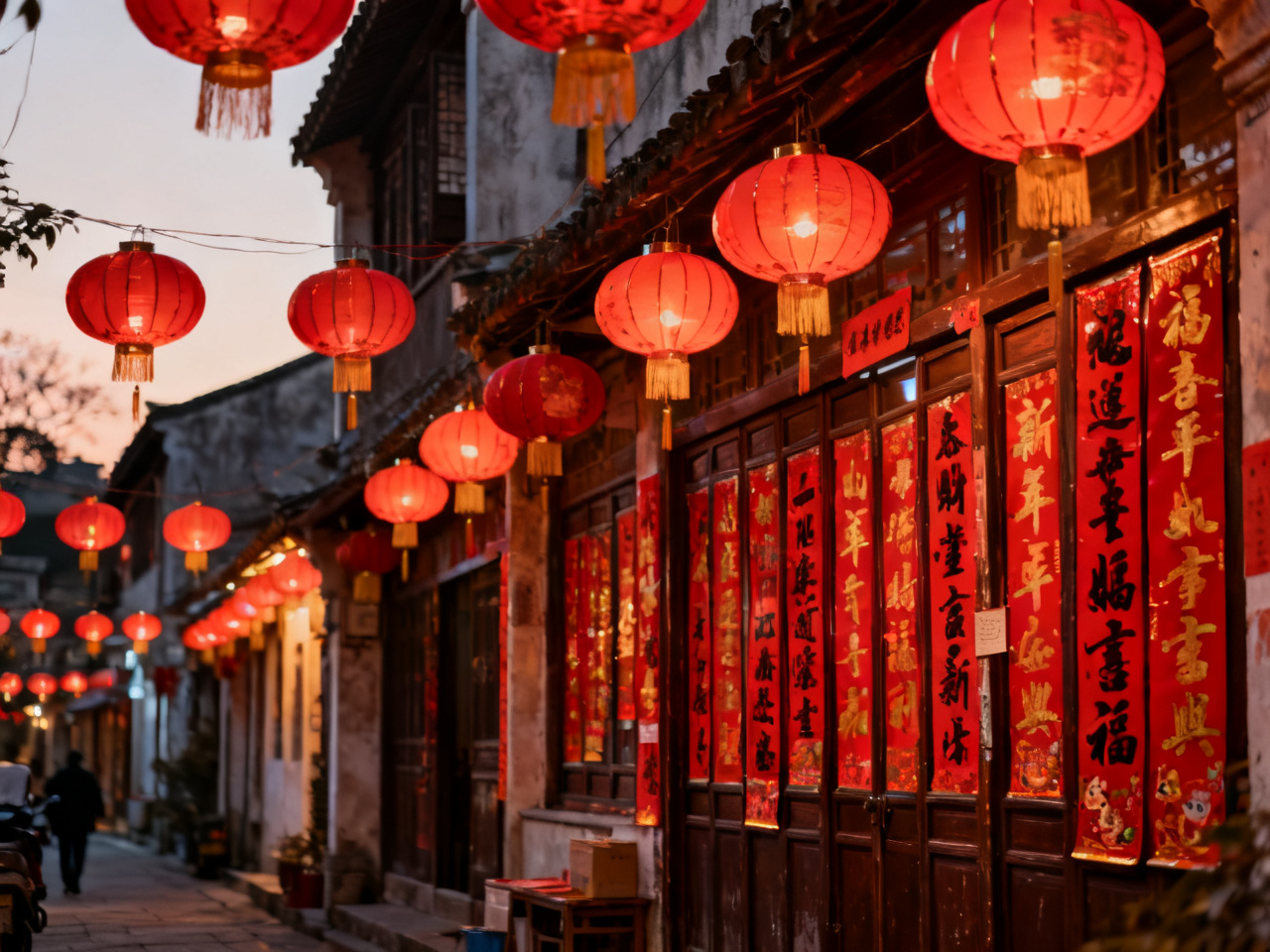
每年除夕夜,当十四亿中国人同时点亮红灯笼、贴上红春联、穿上红色新衣时,他们正在重复一个延续了数千年的古老仪式。传说在远古时代,有一头名叫"年"的凶猛怪兽,每逢岁末便从深海中爬出,吞噬牲畜、伤害百姓。村民们惶恐不安,直到一位白发老人揭示了年兽的秘密——它惧怕红色、火光和巨响。从此,家家户户在门框上贴红纸、燃放红色爆竹,用这抹炽烈的颜色驱邪避凶。这个关于年兽的传说,不仅塑造了春节的面貌,更将红色深深植入了中华文明的基因之中。
Every Lunar New Year's Eve, as 1.4 billion Chinese people simultaneously light red lanterns, paste red spring couplets, and don red garments, they are reenacting a ritual thousands of years old. Legend tells of a ferocious beast called "Nian" that emerged from the deep sea at year's end to devour livestock and harm villagers. The terrified people lived in dread until a white-haired elder revealed the creature's secret — it feared the color red, firelight, and loud noises. From then on, every household pasted red paper on doorframes and set off red firecrackers, wielding this blazing hue to ward off evil. The Nian legend not only shaped the Spring Festival but encoded red into the very DNA of Chinese civilization.
IMAGE_PLACEHOLDER_1
五行之火,殷商之血 | Fire of Five Elements, Blood of the Shang
红色在中国的崇高地位并非仅仅源于民间传说,它有着深厚的哲学与历史根基。在五行学说中,火对应红色,象征热情、光明与蓬勃的生命力。火德被认为是天命的一种体现——历史上,周朝自称"火德王",汉朝更以火德立国,刘邦自号"赤帝之子"。这种将红色与政权正统性联系起来的传统,贯穿了整个中国帝制时代。
而红色崇拜的源头可以追溯到更早的殷商时期。考古学家在安阳殷墟出土的大量祭祀器物上发现了朱砂的痕迹。商代人用朱砂涂抹甲骨、装饰青铜器,甚至在墓葬中大量使用朱砂覆盖逝者遗体,认为这种矿物质具有沟通天地、庇佑灵魂的神秘力量。朱砂——这种天然的硫化汞矿物,成为了中国最早的"红色颜料",其使用历史已超过三千年。在商代贵族看来,红色不仅仅是一种颜色,更是王权与神权交汇的象征,正如中国龙图腾一样承载着至高无上的权力意象。
The exalted status of red in China is not rooted in folklore alone — it rests on deep philosophical and historical foundations. In Five Elements theory, fire corresponds to red, symbolizing passion, radiance, and vigorous vitality. Fire Virtue was considered a manifestation of the Mandate of Heaven: the Zhou Dynasty proclaimed itself ruler by Fire Virtue, and the Han Dynasty founded its legitimacy upon the same principle, with Liu Bang styling himself "Son of the Red Emperor." This tradition linking red to political orthodoxy persisted throughout China's imperial era.
The origins of red worship trace back even further to the Shang Dynasty. Archaeologists excavating the Yinxu ruins at Anyang discovered cinnabar traces on vast quantities of ritual objects. Shang people applied cinnabar to oracle bones, decorated bronze vessels with it, and lavishly covered the deceased in burial chambers, believing this mineral possessed mystical power to bridge heaven and earth and protect souls. Cinnabar — a natural mercury sulfide mineral — became China's earliest "red pigment," with a history of use exceeding three millennia. To Shang aristocrats, red was far more than a color; it was a symbol where royal and divine authority converged, carrying supreme power imagery much like the Chinese dragon totem.
紫禁城里的红色密码 | The Red Code of the Forbidden City
如果要在世界建筑史上寻找一座被红色彻底定义的建筑群,答案毫无疑问是北京紫禁城。这座始建于明永乐四年(公元一四零六年)的皇家宫殿,以其标志性的红墙黄瓦闻名于世。紫禁城的宫墙使用的并非普通红漆,而是以铁红粉混合桐油调制而成的特殊涂料,历经六百余年风雨依然鲜艳如初。
走进午门,目之所及皆是红色:红色的廊柱、红色的门窗、红色的宫墙。这些红色并非装饰那么简单——在中国传统建筑等级制度中,红色是最高等级的用色,只有皇家建筑才被允许大面积使用。太和殿前的红色廊柱,每一根都由整棵金丝楠木制成,表面涂以大漆后再髹红色,工艺极其复杂。据故宫博物院的研究人员介绍,紫禁城内共有九千九百九十九间半房屋,其中绝大多数建筑的主色调均为红色。这种规模化的红色运用,在全世界范围内都是独一无二的。值得一提的是,宫殿中最珍贵的玉器藏品多为和田玉所制,白玉与红墙交相辉映,构成了中国皇家美学中最经典的色彩对比。
If one were to search world architectural history for a complex utterly defined by red, the answer is unquestionably Beijing's Forbidden City. This imperial palace, first constructed in the fourth year of the Yongle reign of the Ming Dynasty (1406 CE), is renowned for its iconic red walls and yellow glazed tiles. The palace walls use no ordinary red paint but a special coating of iron oxide powder blended with tung oil — a formula that has kept the walls vivid through more than six centuries of weathering.
Passing through the Meridian Gate, red saturates every sight: red colonnades, red doors and windows, red palace walls. This red is far from mere decoration — in traditional Chinese architectural hierarchy, red was the highest-rank color, permitted for large-scale use only in imperial buildings. Each red column before the Hall of Supreme Harmony was carved from a single phoebe zhennan tree trunk, lacquered and then painted red through an extraordinarily complex process. According to researchers at the Palace Museum, the Forbidden City contains 9,999 and a half rooms, the vast majority dominated by red. This systematic deployment of red is unique in the world. Notably, the palace's most precious jade artifacts are largely carved from Hetian jade, their white luminescence contrasting against red walls to create the most classic color pairing in Chinese imperial aesthetics.
嫁衣如火:婚礼中的红色叙事 | Bridal Gowns Like Fire: Red's Wedding Narrative
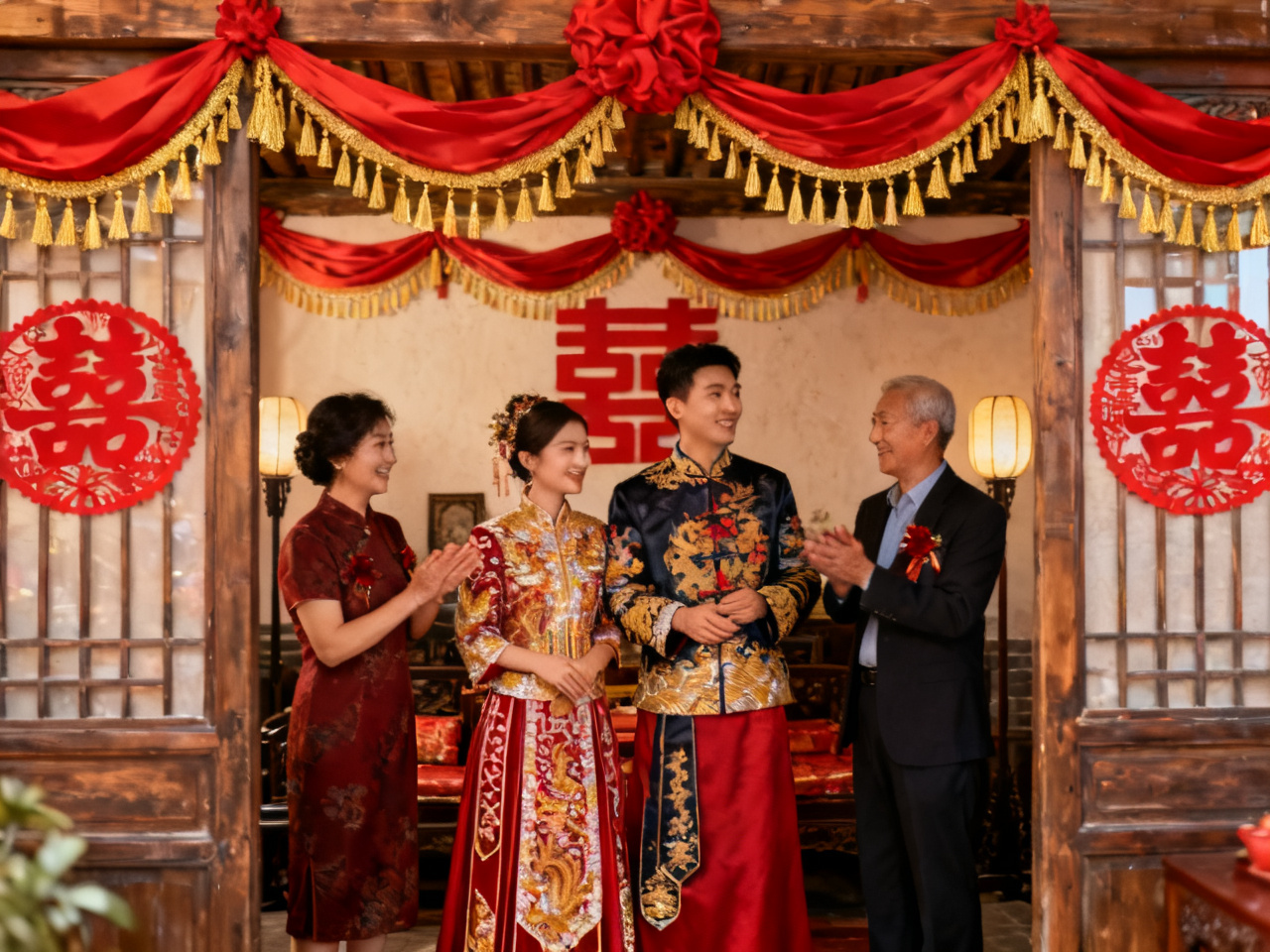
"红妆"——这个词语本身就揭示了红色与中国婚礼之间不可分割的关系。在中国传统婚礼中,新娘身着红色嫁衣、头戴红色盖头、乘坐红色花轿;新郎胸前佩戴红色绸花;婚房内贴满红色双喜字;宾客们收到红色请柬,送上红色礼金封。整个婚礼从头到尾被红色所包裹,因为红色代表喜庆、热闹和对新人未来生活红红火火的美好祝愿。
在福建闽南地区,传统婚礼习俗尤为讲究红色的运用。新娘出嫁前,母亲会亲手为女儿梳妆,用红色丝线为新娘"开脸"(绞去面部汗毛),这一仪式象征少女向妇人的身份转变。泉州一带的婚礼还保留着"踏红毡"的古礼——新娘从花轿下来后,脚不能直接踏地,必须踩在红色毛毡上一路走进新房。而在潮汕地区,婚礼庆典中常常可以看到热烈的英歌舞表演,舞者们手持红色木棒,和着鼓点翻飞起舞,将婚礼气氛推向高潮。
如今,虽然西式白色婚纱在城市中颇为流行,但越来越多的年轻人开始回归中式婚礼。社交媒体上,"中式婚礼"话题在小红书上的浏览量已突破五十亿次,大量新人选择秀禾服、龙凤褂等传统红色礼服。北京设计师郭培的高定红色嫁衣,每件耗时数千工时、价格高达数百万元人民币,依然供不应求。
"Red trousseau" — the very term reveals the inseparable bond between red and Chinese weddings. In a traditional Chinese ceremony, the bride wears a red gown and red veil, rides in a red palanquin; the groom sports a red silk rosette; the bridal chamber is covered in red double-happiness characters; guests receive red invitations and present red cash envelopes. The entire wedding is swathed in red, for red signifies celebration, liveliness, and blessings for a prosperous future.
In the Minnan region of Fujian Province, traditional wedding customs are especially particular about red. Before the bride's departure, her mother personally grooms her daughter, using red silk thread to perform "face-opening" (removing facial hair) — a ritual symbolizing the transition from maiden to married woman. Weddings around Quanzhou preserve the ancient custom of "treading the red felt": after alighting from the palanquin, the bride's feet must not touch bare ground but walk upon red felt all the way into the bridal chamber. In the Chaoshan region, wedding celebrations frequently feature spirited Yingge dance performances, with dancers wielding red wooden batons, leaping and spinning to drumbeats, driving the festive atmosphere to its peak.
Today, although Western white wedding gowns remain popular in cities, a growing number of young people are returning to Chinese-style ceremonies. On social media, the "Chinese wedding" topic has surpassed five billion views on Xiaohongshu, with many couples choosing traditional red garments such as xiuhe suits and dragon-phoenix jackets. Beijing designer Guo Pei's haute couture red bridal gowns, each requiring thousands of labor hours and costing millions of yuan, remain perpetually in demand.
IMAGE_PLACEHOLDER_2
日常生活中无处不在的红 | Red in the Fabric of Daily Life
红色不仅存在于人生的重大仪式中,更渗透到了中国人日常生活的方方面面。每逢农历本命年——即一个人出生时对应的十二生肖年份再次轮回——中国人便会穿戴红色内衣、红色袜子、系上红色腰带,以求趋吉避凶、平安度过这一年。这个习俗的背后是一种古老的信仰:本命年被认为是"犯太岁"之年,运势波动较大,而红色则拥有镇邪护身的力量。
红包文化更是中国人生活中最具烟火气的红色传统。春节期间,长辈向晚辈分发红色纸包(内装压岁钱),寓意压住邪祟、保佑平安。婚礼上,宾客送红包表达祝福;开业典礼上,合作伙伴以红包致贺。而在移动互联网时代,微信红包的出现更是将这一传统推向了新的高度。二零一五年除夕夜,微信红包的收发总量达到了十点一亿次,此后这一数字连年攀升。如今,微信红包已经不仅仅是节日礼物,更成为了朋友间表达感谢、传递心意的日常社交方式。春节期间,企业在微信群中发放"拼手气红包",同事们拼抢抢红包的场景已经成为新时代的年俗。
在中国的商业世界中,红色同样占据主导地位。中国银行、工商银行等国有大行的标识以红色为主色调;可口可乐进入中国市场时,其红色包装与中国消费者的审美产生了天然共鸣;国产品牌如李宁、安踏的旗舰产品线,也频繁使用"中国红"配色来强化民族认同。二零零八年北京奥运会的主色调"中国红"更是让这一颜色走向了世界舞台,开幕式上巨型红色画卷缓缓展开的那一刻,全球数十亿观众共同见证了红色在中国文化中无与伦比的分量。
Red does not merely attend life's grand ceremonies; it permeates every facet of daily Chinese existence. In one's benmingnian — the year when one's birth zodiac animal returns in the twelve-year cycle — Chinese people don red underwear, red socks, and red belts to invite good fortune and navigate the year safely. Behind this custom lies an ancient belief: the benmingnian is considered a year of "offending Tai Sui," with volatile fortunes, and red possesses the power to suppress evil and protect the body.
Hongbao (red envelope) culture is the most vibrant red tradition in Chinese life. During Spring Festival, elders distribute red paper packets containing "lucky money" to younger generations, symbolizing the suppression of evil spirits and blessings for safety. At weddings, guests offer red envelopes to express good wishes; at grand openings, partners present them as congratulations. In the mobile internet age, WeChat's digital red envelopes have elevated this tradition to new heights. On New Year's Eve 2015, WeChat red envelope transactions totaled 1.01 billion; the figure has climbed every year since. Today, WeChat red envelopes are not just holiday gifts but an everyday social currency for expressing gratitude between friends. During Spring Festival, companies distribute "lucky draw" red envelopes in WeChat groups, and the scramble to grab them has become a new-era festive custom.
In China's commercial world, red dominates with equal force. Major state-owned banks like Bank of China and ICBC feature red logos; when Coca-Cola entered the Chinese market, its red packaging resonated naturally with Chinese aesthetic sensibilities; domestic brands like Li-Ning and Anta frequently deploy "Chinese Red" colorways in flagship lines to reinforce national identity. The "Chinese Red" chosen as the primary color of the 2008 Beijing Olympics brought this hue onto the world stage — as the colossal red scroll unfurled during the opening ceremony, billions of viewers worldwide witnessed the unparalleled weight of red in Chinese culture.
禁忌与阴影:红色的另一面 | Taboo and Shadow: The Other Side of Red
然而,红色在中国文化中并非只有吉祥的一面。在中国社会中存在一个广为人知的禁忌:绝不能用红色墨水书写他人的名字。这一禁忌源于古代的死刑制度——在封建社会,朝廷在处决犯人时,会用红色朱笔在罪犯的名字上画圈或打勾,标记为已执行死刑。因此,用红笔写人名被视为一种诅咒,暗示此人已被判处死刑或即将死亡。即便在今天的中国,教师批改作业虽然使用红笔,但绝不会用红笔写学生的姓名;签署正式文件时,红色签字笔也是绝对的禁忌。
在丧葬礼仪中,红色同样需要回避。参加葬礼时穿着红色衣物被视为对逝者的极大不敬。不过也有例外——当逝者为高寿老人(通常指八十岁以上)且属于自然去世时,葬礼有时会使用红色元素,因为这种情况被称为"喜丧",意味着老人功德圆满、寿终正寝,是一件值得庆贺的事情。这种对红色使用的精细区分,恰恰体现了中国人对色彩象征意义的深刻理解和对生命的复杂态度。
Yet red is not solely auspicious in Chinese culture. A widely known taboo exists in Chinese society: one must never write another person's name in red ink. This prohibition originates in ancient capital punishment — in feudal society, when the court executed criminals, officials used a red vermillion brush to circle or check off the convict's name, marking the sentence as carried out. Thus, writing a person's name in red is seen as a curse, implying the person has been condemned to death or is about to die. Even in modern China, teachers use red pens to grade homework but would never write a student's name in red; when signing formal documents, a red pen is an absolute taboo.
In funerary rites, red must likewise be avoided. Wearing red clothing to a funeral is considered profoundly disrespectful to the deceased. There is, however, an exception — when the departed was an elderly person of advanced age (typically over eighty) who died of natural causes, the funeral may incorporate red elements, as this is termed a "joyful funeral," signifying that the elder lived a full, meritorious life and passed peacefully, an occasion worthy of celebration. This nuanced discrimination in the use of red reveals the Chinese people's profound understanding of color symbolism and their complex attitudes toward life and death.
时尚与国潮:红色的当代复兴 | Fashion and Guochao: Red's Contemporary Renaissance
在二十一世纪的时尚舞台上,"中国红"正以一种全新的姿态回归。国际奢侈品牌每逢中国农历新年,都会推出限定的"中国红"系列产品——从路易威登的红色手袋到迪奥的红色口红,全球时尚产业已将"中国红"视为打开中国市场的金钥匙。与此同时,中国本土设计师更在积极重新定义这一颜色的当代意义。除了前文提到的郭培,上海设计师陈序之在巴黎时装周上展示的红色系列作品,将传统旗袍的剪裁与现代极简主义相结合,获得了国际时尚媒体的高度评价。
"国潮"运动更是将红色推向了年轻消费者的日常生活。故宫文创推出的红色系列文具、手机壳和化妆品,在天猫旗舰店上屡屡创造销售纪录。完美日记、花西子等国产美妆品牌,以中国红为核心色彩设计产品包装,成功吸引了大批追求民族文化认同的年轻消费者。在球鞋文化中,李宁"悟道"系列的中国红配色鞋款在二手市场上被炒至数倍原价,成为潮流文化中的收藏级单品。在街头巷尾,穿着红色卫衣、戴着红色棒球帽的年轻人随处可见,红色不再只是祖辈口中的吉祥色,更是新一代中国青年表达文化自信与民族骄傲的视觉语言。
On the twenty-first-century fashion stage, "Chinese Red" is making a triumphant return in entirely new forms. Every Lunar New Year, international luxury brands release limited "Chinese Red" collections — from Louis Vuitton's red handbags to Dior's red lipsticks — the global fashion industry has come to regard "Chinese Red" as the golden key to the Chinese market. Meanwhile, Chinese designers are actively redefining the color's contemporary significance. Beyond the aforementioned Guo Pei, Shanghai designer Chen Xuzhir presented red-themed collections at Paris Fashion Week, blending traditional qipao tailoring with modern minimalism to widespread acclaim from international fashion media.
The "Guochao" (national trend) movement has further propelled red into young consumers' daily lives. The Palace Museum's creative product line — red stationery, phone cases, and cosmetics — has repeatedly broken sales records on its Tmall flagship store. Domestic beauty brands like Perfect Diary and Florasis use Chinese Red as their core color for packaging design, successfully attracting hordes of young consumers seeking national cultural identity. In sneaker culture, Li-Ning's "Way of Wade" Chinese Red colorway has been resold at multiples of its retail price on secondary markets, becoming a collector-grade item in streetwear circles. On streets everywhere, young people sporting red hoodies and red baseball caps are a common sight — red is no longer merely the lucky color spoken of by grandparents but the visual language through which a new generation of Chinese youth expresses cultural confidence and national pride.
红色永不褪色 | Red Never Fades
从殷商的朱砂到紫禁城的宫墙,从年兽传说到微信红包,从新娘的嫁衣到奥运的主色调——红色贯穿了中国文明从古至今的每一个重要节点。它既是驱邪的护身符,也是权力的象征;既是喜庆的标志,也承载着生死的禁忌。在当代中国,红色的内涵还在不断扩展——它是国旗的底色,是科技企业标识中的流行色,是年轻人表达文化自信的时尚选择。中国红早已超越了简单的色彩范畴,成为一种文化符号、一种集体记忆、一种民族精神的视觉表达。
世界上很少有哪种颜色能像中国红一样,在一个文明中同时承载如此丰富而矛盾的含义——它可以代表最热烈的祝福,也可以成为最严厉的禁忌;它可以象征至高的权力,也可以传递最朴素的温情。当一位中国母亲在除夕夜为孩子系上红色腰带,当一位中国新娘在婚礼上换上红色礼服,当一位中国老人在春节清晨推开贴着红色春联的大门——红色所承载的,远不仅仅是一种审美偏好,而是千年积淀下来的情感、信仰与文化认同。
走在北京的故宫角楼旁,走在上海外滩的霓虹灯下,走在成都宽窄巷子的红灯笼长廊中,走在广州陈家祠的红砂岩雕塑前,走在西安城墙上遥望红色宫阙的剪影,走在苏州园林中穿过朱红色的月洞门——无论身处中国的哪个角落,红色都在无声地诉说着同一个故事:这是一个被红色点燃的文明,而这团火焰,历经数千年风雨洗礼,不仅从未熄灭,反而在新时代燃烧得更加明亮、更加夺目。
From Shang Dynasty cinnabar to the palace walls of the Forbidden City, from the Nian beast legend to WeChat red envelopes, from bridal gowns to the Olympic color palette — red threads through every pivotal moment of Chinese civilization, ancient and modern. It is at once a protective talisman against evil and a symbol of power; a hallmark of celebration and a vessel for taboos of life and death. In contemporary China, red's meanings continue to expand — it is the background of the national flag, the trending color in tech company logos, and a fashionable choice through which young people express cultural confidence.
Walking beside the corner towers of Beijing's Forbidden City, under the neon lights of Shanghai's Bund, through the red lantern corridors of Chengdu's Wide and Narrow Alleys, before the red sandstone carvings of Guangzhou's Chen Clan Ancestral Hall — no matter where in China one finds oneself, red silently tells the same story: this is a civilization ignited by red, and that flame will never be extinguished.

- 皮影戏:光与影之间的千年叙事 | Shadow Puppetry: A Thousand Years of Storytelling Between Light and Shadow
- 我在中国小区楼下听懂收废品吆喝后,第一次不再把它当噪音 | After I Learned to Understand the Scrap Collector’s Call Below My Chinese Apartment, I Stopped Hearing It as Noise for the First Time
- 中国社交礼仪速成:称呼、送礼与餐桌文化 | Chinese Social Etiquette: Greetings, Gifts & Dining
- 和爸爸在周庄躲雨的半天,我第一次发现他其实比我更会旅行 | A Rainy Half Day in Zhouzhuang with My Father Showed Me He Was Better at Traveling Than I Was
- 在中国用手机支付:支付宝和微信支付外国人能用吗? | Mobile Payments in China: Can Foreigners Use Alipay and WeChat Pay?
- 在洛阳看牡丹之外:一座古都的日常层次 | Beyond Peonies in Luoyang: The Everyday Layers of an Ancient Capital
- 我在西安回民街试了三种肉夹馍:哪一家更值得排队 | I Tried Three Roujiamo in Xi'an Muslim Quarter
- 我在大理的风里,重新听见自己说话 | In Dali’s wind, I heard myself speak clearly again
- 风沙把莫高窟的时间吹慢了 | The Sandstorm Slowed Time at the Mogao Caves
- 在中国高铁站学会像本地人一样换乘 | How I Learned to Transfer Like a Local at a Chinese High-Speed Railway Station
Comments (0)